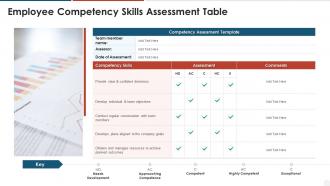
Employee competency skills assessment table
Try Before you Buy Download Free Sample Product
Audience
Editable
of Time
Our Employee Competency Skills Assessment Table are topically designed to provide an attractive backdrop to any subject. Use them to look like a presentation pro.
People who downloaded this PowerPoint presentation also viewed the following :
Employee competency skills assessment table with all 2 slides:
Use our Employee Competency Skills Assessment Table to effectively help you save your valuable time. They are readymade to fit into any presentation structure.
FAQs for Employee competency
Start with the obvious stuff - technical skills, certifications, whatever hard skills they actually need for the job. But honestly? Most hiring mistakes happen because people skip the soft skills part. Communication and problem-solving are huge. Also look for adaptability and how they work with others. Cultural fit matters way more than people think - I've seen great candidates bomb because they just didn't mesh with the team vibe. Keep it to maybe 5-7 things max though, otherwise you'll drive yourself crazy trying to evaluate everything.
Here's my take: figure out what actually makes people succeed at your company first. Generic competency stuff is pretty much useless - I've watched so many places mess this up. Look at your strategic priorities and work backwards. Innovation matters? Then test for creative problem-solving, not just whether someone can follow procedures. Don't forget to bake your values into the criteria too. You want cultural fit, not just technical skills. Make your scenarios realistic - like situations people actually deal with day-to-day. The whole point is connecting individual performance to what drives results for the business.
Honestly, mixing a few different approaches works way better than just picking one thing. Start with 360-degree feedback and behavioral interviews - those are solid. Direct observation is clutch too, plus skills assessments if they make sense for the role. Peer reviews can be helpful but watch out, they sometimes turn into popularity contests which is annoying. Match your method to what you're actually measuring though - like don't give someone a written test to see if they can lead people, that's pointless. I'd build a basic competency framework first, then grab 2-3 methods that actually fit how your team works.
Honestly, tech makes the whole assessment thing so much easier. Instead of doing everything manually, you can automate skill tests and track how people improve over time. The analytics give you real insights into what your team's actually good at - and where they're struggling. AI tools are pretty solid at catching skill gaps you'd probably miss on your own. Your employees can knock out self-assessments whenever and get feedback right away, which beats waiting around for formal reviews. Having everything centralized in one system is clutch for figuring out training priorities too.
Oh totally do the self-assessment thing first! It gets people thinking about their own skills before you jump into evaluations. Nobody wants surprise feedback, you know? When they reflect on themselves first, they're way more bought in. You'll also see how self-aware they actually are - sometimes there's a huge gap between what they think and reality (which is... interesting). Just make sure you give them solid criteria to follow, otherwise you'll get answers that are all over the place. Makes planning their development so much easier when you have that baseline.
Skip the generic personality stuff and talk about actual work behaviors - like "you nailed those project deadlines" vs "you're organized." Don't just dump assessment scores on them either (I've watched managers do this and it's painful). Connect everything to real examples they'll remember from their job. Then work together on next steps - honestly, this makes such a difference because it doesn't feel like you're lecturing them. Make it collaborative, not just another review where you talk at them. Oh, and definitely circle back in a couple weeks to see how things are going.
Honestly, the biggest pain is gonna be pushback from employees who think you're judging them. Managers often have no clue how to run these things either. But here's what really kills me - departments rating stuff completely differently. Like, "proficient" means totally different things to different teams, which is nuts. Most places also jump in without figuring out what they're actually measuring first. Oh, and everyone does the assessment, gets their results, then absolutely nothing happens afterward. My take? Pick one department to test it out. Figure out your definitions before you start. And definitely connect results to actual development plans, not just reviews.
Once a year minimum, but that's honestly pretty bare bones. Critical roles or stuff that changes fast? I'd bump it to every 6 months. New hires and leadership people often get quarterly check-ins, which actually works pretty well from what I've seen. The main thing is don't let people skip them because everyone's "swamped" - that always happens. Try to line up your schedule with performance reviews so it's not random extra work. Start annual and see how it goes, then adjust based on how quickly skills go stale in your field.
Honestly, competency assessments can actually get people more engaged if you don't mess them up. Nobody wants surprise evaluations that feel like gotcha moments - that's just asking for trouble. Frame them as development tools instead. When employees see exactly where their gaps are and get real development plans, they're way more motivated to stick around. Plus you get solid data to build learning paths that actually match what they want to do career-wise. I've seen this work really well when people feel like you're genuinely invested in helping them grow, not just checking boxes.
So basically, you gotta match your assessments to what each role actually needs. Look at your job descriptions first - what skills really matter? Tech roles need hands-on stuff, managers need communication chops. Mix up your methods too - 360 feedback works great for leaders, peer reviews for team players. I'd honestly skip the generic rating scales everyone uses. Create role-specific ones instead. Like, a developer's assessment should look nothing like a sales manager's, you know? The whole point is figuring out what makes someone good at *that* specific job.
Focus on stuff that actually matters for the job - don't let personal biases creep in. Document everything (trust me on this one). Same process for everyone in similar roles, no exceptions. Give people a heads up about what you're evaluating beforehand. When someone screws up, stick to what they did wrong, not who they are as a person. Honestly, HR will thank you later if you keep everything objective and tied to actual job requirements. The paper trail thing might seem annoying but it'll save your ass if anyone challenges the assessment.
Honestly, multiple evaluators are your best bet here. Get at least two people assessing each employee separately, then have them compare notes. Ditch vague stuff like "good communication skills" - that's just asking for bias. Instead, use specific, measurable behaviors you can actually point to. Train your assessors on unconscious bias (we're all guilty of it). Document everything with real examples, not just gut feelings. I'd start by looking at your current forms - where can you swap subjective opinions for concrete criteria? The whole point is getting personal feelings out of the equation as much as possible.
Honestly, competency assessments are amazing for succession planning. They reveal exactly what skills your team has versus what you actually need for key positions. Way better than promoting someone just because they've been around forever, you know? You'll spot high-potential people who already have the right stuff, plus identify who needs more development time. The cool part is you can build targeted training for succession candidates so they're not scrambling when a role opens up. I'd start by figuring out what competencies matter most for leadership roles, then see how your people stack up against those.
Honestly, those assessment results are goldmines for figuring out what training you actually need. Just look for the patterns - which skills keep scoring low? Sometimes it's super obvious, like when literally everyone bombed that new software thing we rolled out last quarter. Once you spot the gaps, prioritize based on how many people need help and what'll impact the business most. Way better than just dumping random training courses on people and crossing your fingers. The whole point is getting specific about what folks actually need instead of guessing.
Honestly, ditch the whole "performance review" vibe entirely. Start by having them assess themselves first - way less awkward than blindsiding someone with criticism. Then you can actually have a real conversation about where they want to grow instead of just lecturing them. I always connect it back to stuff they actually care about, like getting promoted or learning new skills. The trick is being genuine about wanting to help their career, not just going through HR motions. Oh, and definitely celebrate wins publicly when they improve. Makes a huge difference in buy-in.
-
Colors used are bright and distinctive.