


Leadership management training powerpoint presentation slides





Try Before you Buy Download Free Sample Product
 Impress Your
 Audience
 100%
100% Editable
 Save Hours
 of Time


Our Leadership Management Training Powerpoint Presentation Slides are topically designed to provide an attractive backdrop to any subject. Use them to look like a presentation pro.
People who downloaded this PowerPoint presentation also viewed the following :
Content of this Powerpoint Presentation
Slide 1: This slide introduces Leadership Management Training. State your Company name.
Slide 2: This slide displays the Content of the presentation.
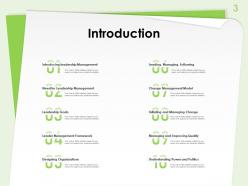
Slide 3: This slide displays the Introduction of the presentation.
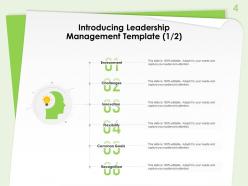
Slide 4: This slide showcases Introducing Leadership Management Template.
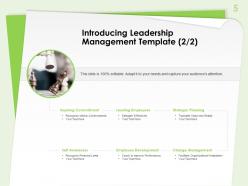
Slide 5: This slide describes Introducing Leadership Management Template with- Inspiring, Commitment, Recognize Others’ Achievements, Leading Employees, Delegate Effectively, Strategic Planning, Translate Vision Into Reality, etc.
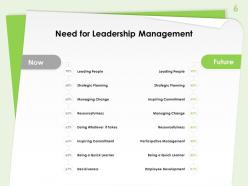
Slide 6: This slide displays Need for Leadership Management.
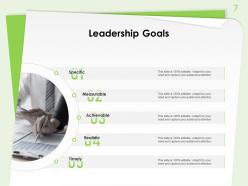
Slide 7: This slide showcases Leadership Goals with- Specific, Measurable, Achievable, Realistic, Timely.
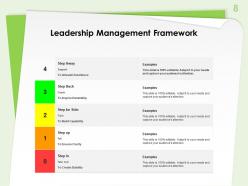
Slide 8: This slide showcases Leadership Management Framework.
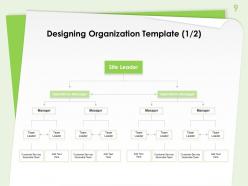
Slide 9: This slide describes Designing Organization Template.
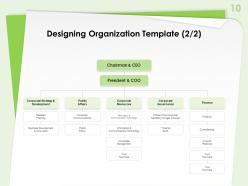
Slide 10: This slide also describes Designing Organization Template with- Chairman & CEO, President & COO, Corporate Strategy & Development, Strategic Planning, Business Development & Innovation, Corporate Governance, Office of the corporate secretary & legal counsel, etc.
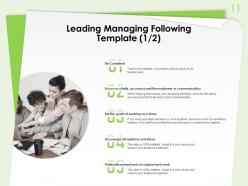
Slide 11: This slide displays Leading Managing Following Template.
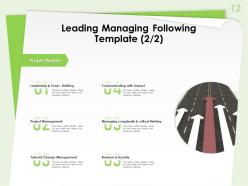
Slide 12: This slide showcases Leading Managing Following Template with- Project Name, Leadership & Team - Building, Project Management, Talent & Change Management, Communicating with Impact, Managing Complexity & Critical Thinking, Business in Society.
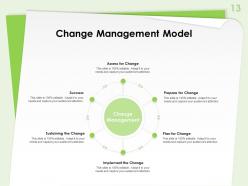
Slide 13: This slide showcases Change Management Model.
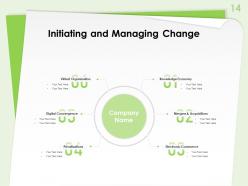
Slide 14: This slide describes Initiating and Managing Change.
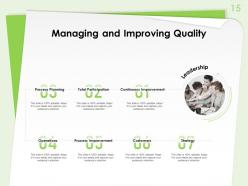
Slide 15: This slide displays Managing and Improving Quality containing- Leadership, Continuous Improvement, Total Participation, Process Planning, Strategy, Operations, Process Improvement, etc.
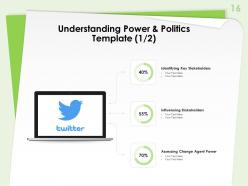
Slide 16: This slide displays Understanding Power & Politics Template.
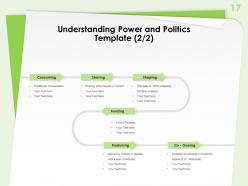
Slide 17: This slide discusses Understanding Power and Politics Template.
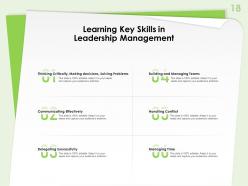
Slide 18: This slide displays Learning Key Skills in Leadership Management.
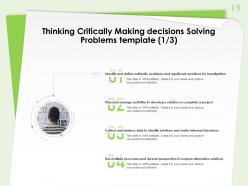
Slide 19: This slide showcases Plan and manage activities to develop a solution or complete a project.
Slide 20: This slide presents Thinking Critically Making Decisions Solving Problems Template.
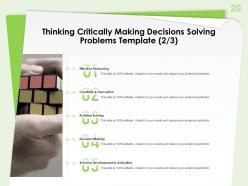
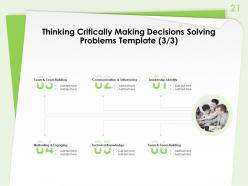
Slide 21: This slide displays Thinking Critically Making Decisions Solving Problems Template.
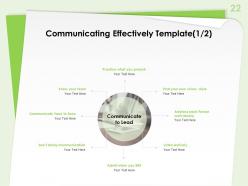
Slide 22: This slide showcases Communicating Effectively Template.
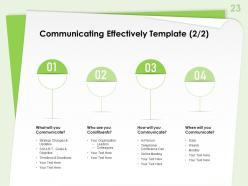
Slide 23: This slide also displays Communicating Effectively Template.
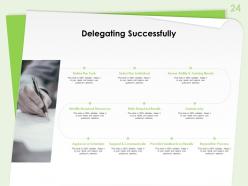
Slide 24: This slide describes Delegating Successfully containing- Define the Task, Select the Individual Assess ability & training needs, State Required Results, Identify Required Resources, etc.
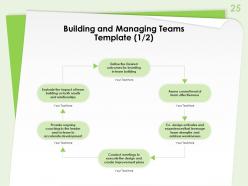
Slide 25: This slide showcases Building and Managing Teams Template.
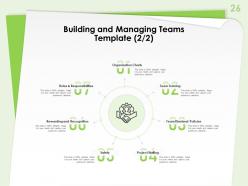
Slide 26: This slide showcases Building and Managing Teams Template with- Organization Charts, Team Training, Team Dismissal Policies, Project Staffing, Safety, Rewarding & Recognition, Roles & Responsibilities.
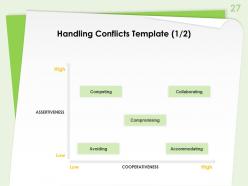
Slide 27: This slide showcases Handling Conflicts Template.
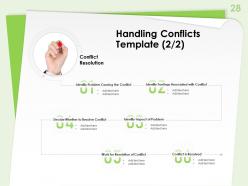
Slide 28: This slide displays Handling Conflicts Template with Conflict Resolution.
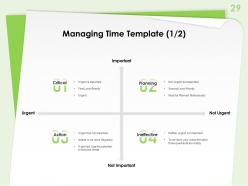
Slide 29: This slide displays Managing Time Template.
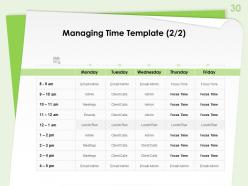
Slide 30: This slide also displays Managing Time Template.
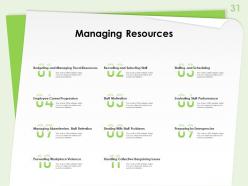
Slide 31: This slide showcases Managing Resources.
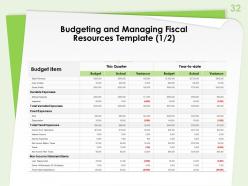
Slide 32: This slide presents Budgeting and Managing Fiscal Resources Template.
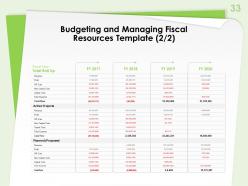
Slide 33: This slide showcases Budgeting and Managing Fiscal Resources Template.
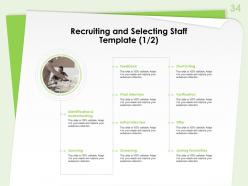
Slide 34: This slide describes Recruiting and Selecting Staff Template.
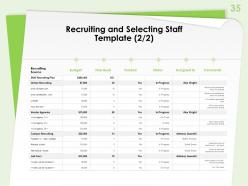
Slide 35: This slide displays Recruiting and Selecting Staff.
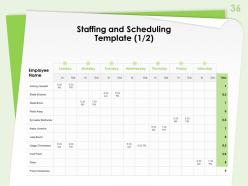
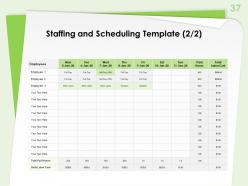
Slide 36: This slide showcases Staffing and Scheduling.
Slide 37: This slide also showcases Staffing and Scheduling in tabular form.
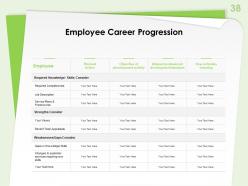
Slide 38: This slide showcases Employee Career Progression.
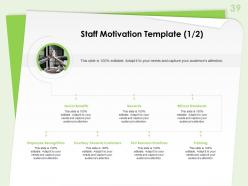
Slide 39: This slide displays Staff Motivation Template.
Slide 40: This slide showcases Staff Motivation with- Working Conditions, Company Polices, Job Security, Pay & Benefits, Relationships, Supervision, Status, Employee Motivation.
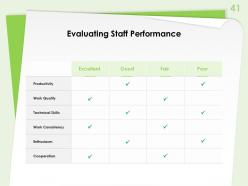
Slide 41: This slide describes Evaluating Staff Performance.
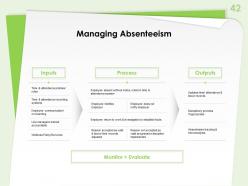
Slide 42: This slide displays Managing Absenteeism.
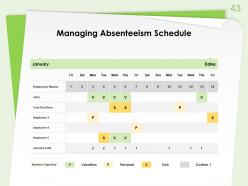
Slide 43: This slide showcases Managing Absenteeism Schedule.
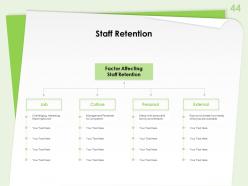
Slide 44: This slide displays Staff Retention.
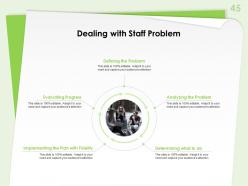
Slide 45: This slide describes about Dealing with Staff Problem.
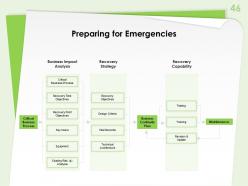
Slide 46: This slide showcases Preparing for Emergencies displaying- Critical Business Process, Business Impact Analysis, Critical Business Process, Recovery Time Objectives, Recovery Point Objectives, Key Users Equipment, etc.
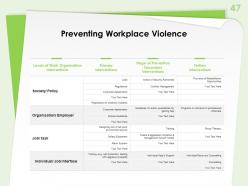
Slide 47: This slide showcases Preventing Workplace Violence.
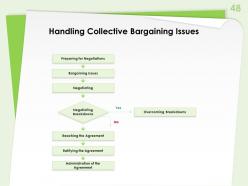
Slide 48: This slide showcases Handling Collective Bargaining Issues.
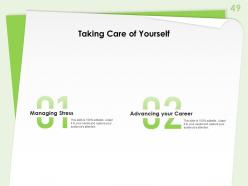
Slide 49: This slide describes Taking Care of Yourself displaying- Managing Stress and Advancing your Career.
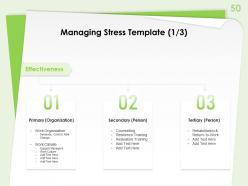
Slide 50: This slide showcases Managing Stress Template.
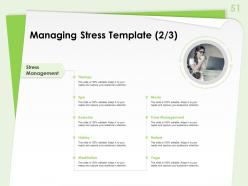
Slide 51: This slide also showcases Managing Stress with- therapy, spa, exercise, hobby, meditation, yoga, nature, time management.
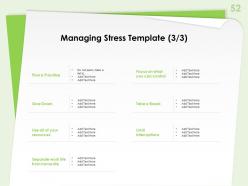
Slide 52: This slide is continued with Managing Stress Template.
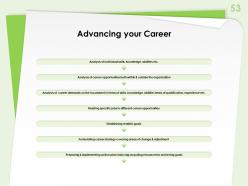
Slide 53: This slide describes Advancing Your Career.
Slide 54: This slide displays KPI Metrics & Dashboards
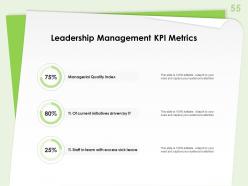
Slide 55: This slide displays Leadership Management KPI Metrics.
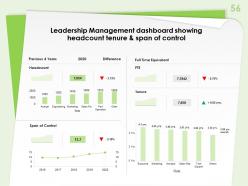
Slide 56: This slide showcases Leadership Management Dashboard Showing Headcount Tenure & Span of Control.
Slide 57: This slide is titled as Additional Slides for moving forward.
Slide 58: This slide reminds of Coffee Break.
Slide 59: This is Our Team slide with Names and Designations.
Slide 60: This is Our Mission slide with Vision and Goal.
Slide 61: This slide displays Targets of the Company.
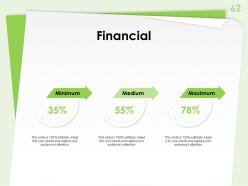
Slide 62: This is Financial slide.
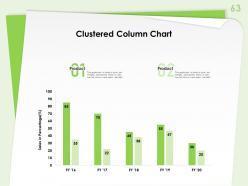
Slide 63: This slide displays Clustered Column Chart for Comparison of products.
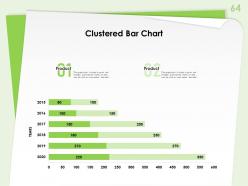
Slide 64: This slide displays Clustered Bar Chart.
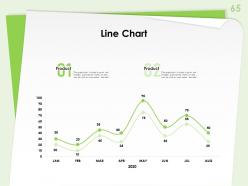
Slide 65: This slide shows Line Chart for Comparison of two products.
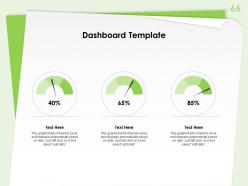
Slide 66: This is Dashboard Template.
Slide 67: This slide displays Linear Diagram
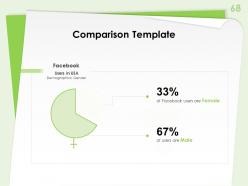
Slide 68: This is Comparison Template.
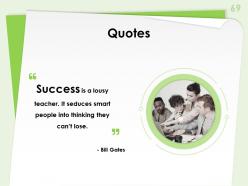
Slide 69: This slide displays motivational quotes.
Slide 70: This slide is titled as Post It Notes. Post your important notes.
Slide 71: This is Thank You slide with Contact details.
Leadership management training powerpoint presentation slides with all 71 slides:
Use our Leadership Management Training Powerpoint Presentation Slides to effectively help you save your valuable time. They are readymade to fit into any presentation structure.



FAQs for Leadership management training
Honestly? Good leaders just get a few things right. Communication that's actually clear, not corporate BS. They read the room well - like, they have emotional intelligence and can make hard calls when everyone's freaking out. Being real matters too because people spot phonies instantly. The leaders I respect most? They listen way more than they talk and switch up their style depending on who they're dealing with. Oh, and they're obsessed with helping their team grow instead of hogging all the work. Pick one thing you suck at and work on it this week.
Honestly, you've gotta tailor everything to what each industry actually deals with. Healthcare folks need crisis management and patient safety stuff, but tech companies? They're more worried about leading remote teams and driving innovation. Manufacturing is all about safety and keeping operations smooth. How you deliver matters too - retail managers want quick mobile modules they can squeeze in between shifts, while finance execs prefer those intensive workshop deep-dives. Start by actually talking to people in each field first. Find out what keeps them up at night, then build your training around those real scenarios. Way more effective than generic leadership fluff.
Look, you can't lead people if you can't read the room or handle your own emotions first. EQ is what separates managers who just give orders from leaders people actually want to follow. Better emotional intelligence means you'll handle conflict smoother, figure out what motivates different personalities, and get team buy-in on decisions. Sure, technical skills matter, but without EQ? Good luck getting anyone to stick around. I learned this the hard way honestly. Start simple - just notice how your energy affects everyone else's mood during meetings.
Honestly, you need both quick wins and long-term data. Right after training, grab participant feedback - was it actually useful or just another boring session? The real magic happens in 3-6 months though. Check 360 reviews, engagement scores, retention rates for their teams. I mean, if people are still quitting left and right, the training probably sucked. Also track promotions and new leadership roles afterward. Oh, and this is crucial - measure everything BEFORE you start training so you can actually prove it worked instead of just crossing your fingers.
Dude, VR training is absolutely blowing up right now - your team can practice tough conversations without any real stakes. There's also this gamification thing where leadership scenarios become like... actual games with points and levels. Sounds silly but honestly works great. AI coaching tools will analyze how you communicate and make decisions, then give you targeted feedback. Oh, and micro-learning is perfect if people hate long workshops - just 5-10 minute skill-building sessions instead. I'd probably start with VR platforms first though, the engagement rates are insane and people actually remember what they learned.
Honestly, ask them open-ended questions instead of just handing over answers - way better for getting those lightbulb moments. Share your own screwups too, not just wins. Makes you seem human, you know? Give feedback right when stuff happens rather than saving it for reviews. Listen more than you talk - junior people actually come up with surprisingly good ideas sometimes. Oh, and pair them with different mentors if you can. Everyone's got their own strengths to offer. The variety helps them figure out what clicks for them.
Honestly, the biggest pain is getting leadership to actually care - which is pretty ironic when you think about it. People treat these programs like mandatory sit-through-and-zone-out sessions. Measuring real impact? Good luck with that. Leadership skills take forever to develop, so proving ROI is nearly impossible. Most programs are way too generic and don't fit your actual workplace culture. Oh, and without follow-up, everyone forgets the content in like two weeks max. Start small with people who actually want to be there. Make the scenarios relevant to what they deal with daily, then add coaching or peer groups to keep things going.
Honestly, diverse leadership makes such a huge difference. Different backgrounds mean people actually challenge each other's thinking instead of just nodding along - you avoid those blind spots that kill good decisions. It's pretty obvious when you think about it, but diverse teams just connect better with diverse customers and employees. The research backs this up too; these companies crush it on innovation and profits compared to the same-old leadership teams. Oh, and your people feel way more engaged when they see leaders who actually represent them. I'd start by looking at who's currently in charge and figuring out where the gaps are.
Yeah, leadership training definitely works! The numbers are pretty convincing - engagement jumps 15-25% and turnover drops by like 40%. Good managers who actually know how to give feedback and develop people make employees feel way more valued. Bad bosses are honestly the worst - I've been there and it's miserable. The trick is focusing on real coaching skills instead of boring theory stuff. Oh, and figure out where your biggest leadership problems are first. That way you're not just throwing training at random issues. When people see a clear growth path and don't hate their manager, they stick around.
So you'll want to break people into small groups every 15-20 minutes - like breakout rooms for role-playing and getting feedback from each other. That mimics those natural conversations you'd have in person. Polls and shared whiteboards work great too, way better than just staring at slides for an hour (we've all been there, right?). Keep sessions shorter but do them more often. Oh, and pair people up between sessions so they can practice together - having that accountability partner makes a huge difference. Trust me, interactive beats lecture-style every time when you're dealing with screens.
Dude, follow-up coaching is seriously the difference between wasted money and actual results. People forget training content in like two weeks without reinforcement. Coaching helps them practice the stuff in real situations and actually stick with new habits. Kind of like how I need my trainer to keep showing up or I'd just quit the gym after a week, you know? Leaders get stuck on problems and need someone to talk through it with. I'd say plan for 3-6 coaching sessions over a few months after any big leadership program. Trust me, it's worth the investment.
Build feedback right into the training from day one - don't just tack it on later. Start with 360 reviews upfront, then do regular check-ins with participants and their teams throughout. Monthly pulse surveys work great too. The key is creating safe spaces where people can actually be honest, like peer coaching or mentor setups. Honestly, I've watched so many programs crash because they saved all the feedback for the end. Make it ongoing instead. Quick team temperature checks let leaders practice taking input and pivoting their style in real-time, which is where the real growth happens.
Honestly, cross-functional training is clutch for breaking down department silos. Your future leaders stop thinking so narrowly about just their area. Communication gets way better between teams. People actually start understanding how finance connects to marketing connects to ops - you know? The relationships they build early on pay off huge later when they need to collaborate. Problem-solving becomes more creative too since you're mixing different perspectives. Oh and definitely push for real projects, not just sitting in a classroom talking theory. That hands-on stuff makes all the difference.
Start by building diversity into everything from day one - your facilitators, examples, case studies. Don't just use the same old corporate success stories everyone's heard a million times. Actively go after people from underrepresented groups instead of hoping they'll apply (spoiler: they usually won't). Build real psychological safety so people actually share their struggles, not just the polished version. Oh, and tackle unconscious bias directly in your content - can't dance around it. Keep collecting feedback because you'll miss stuff otherwise. Short version: be intentional about inclusion or it won't happen.
Honestly, culture is everything when it comes to leadership training. If your workplace doesn't actually support what people learn, they'll just go back to doing things the old way. It's like - why bother training someone to give feedback if your managers still shut down every suggestion? You need buy-in from the top and systems that actually reward the new behaviors. People also need to feel safe trying new things without getting burned for it. I've seen so many companies blow money on these programs when their culture basically fights against everything being taught. Do a reality check first - does your environment even want the leadership style you're pushing?
-
Helpful product design for delivering presentation.
-
Very unique and reliable designs.
-
Great quality slides in rapid time.
-
Designs have enough space to add content.
-
Great product with effective design. Helped a lot in our corporate presentations. Easy to edit and stunning visuals.