

Talent Management Framework Performance Management




Try Before you Buy Download Free Sample Product
 Impress Your
 Audience
 100%
100% Editable
 Save Hours
 of Time


Our Talent Management Framework Performance Management are topically designed to provide an attractive backdrop to any subject. Use them to look like a presentation pro.
People who downloaded this PowerPoint presentation also viewed the following :
Content of this Powerpoint Presentation
Slide 1: This slide introduces Talent Management. State Your Company Name and get started.
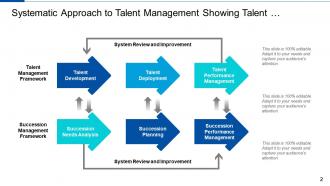
Slide 2: This slide presents Systematic Approach to Talent Management Showing Talent which System Review and Improvement, Talent Management, Framework Succession, Management Framework, Talent Development, Succession, Needs Analysis, Talent, Deployment, Succession, Planning, Talent, Performance Management, Succession Performance Management.
Slide 3: Talent & Organizational Management Framework Showing … Success Criteria Foundational Processes Engagement & Development Value Role Hierarchy Performance Management Leadership Conferences
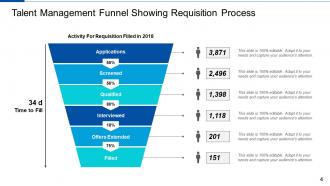
Slide 4: This slide presents Talent Management Funnel Showing Requisition Process which further presents- Offers Extended, Interviewed, Filled, Qualified, Screened, Applications, Time to Fill.
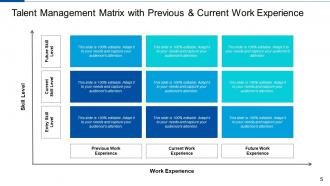
Slide 5: This slide showcases Talent Management Matrix with Previous & Current Work Experience which further showcases- Previous Work Experience, Current Work Experience, Future Work Experience, Entry Skill Level, Current Skill Level, Future Skill Level, Work Experience, Skill Level.
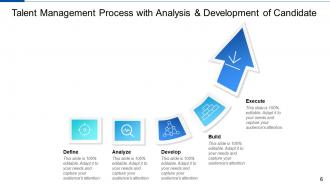
Slide 6: This slide presents Talent Management Process with Analysis & Development of Candidate- Define, Analyze, Develop, Build, Execute.
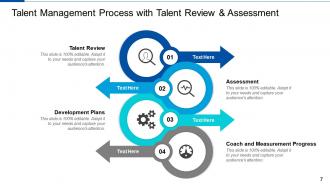
Slide 7: This slide showcases Talent Management Process with Talent Review & Assessment- Talent Review, Development Plan, Coach and Measurement Progress, Assessment.
Slide 8: This slide presents Talent Management Showing Man Silhouettes with Magnifying Glass
Slide 9: Talent Management Showing Man Silhouettes with Upward Arrows.
Slide 10: This slide presents Talent Management Showing Man Silhouettes with Upward Arrows.
Slide 11: This is a Thank You image slide with Address, Email and Contact number.
Talent Management Framework Performance Management with all 11 slides:
Use our Talent Management Framework Performance Management to effectively help you save your valuable time. They are readymade to fit into any presentation structure.
FAQs for Talent Management
Okay so you need five main things: talent acquisition, development, performance management, succession planning, and retention. Get the right people, help them grow, track how they're doing, prep future leaders, keep your stars from leaving. Most companies suck at this though - they treat each piece like a separate checkbox instead of connecting everything. Map out your talent gaps first, then work backwards. Create actual career paths people can see, give regular feedback (not just annual reviews, ugh), and tie it all to what your business actually needs. Oh, and don't forget ongoing learning opportunities.
Honestly, don't just pick your current superstars - that's where most companies mess up. High potential people show learning agility and adapt fast to new stuff. They lead without needing a fancy title. I'd look for folks who actively ask for feedback and volunteer for tough projects. The best ones influence their teammates naturally. Get input from managers, do some 360 reviews, maybe throw in behavioral assessments. Oh, and define what "high potential" actually means for your company first - sounds obvious but you'd be surprised how many skip that step. Mix of data beats gut instinct every time.
Honestly, you can't do talent management well anymore without decent tech. AI recruiting tools handle resume screening now. Performance software tracks employee growth. The data analytics piece is kind of a pain at first though - there's so much of it. But here's what's really cool: you can personalize everything for employees. Custom learning, predictive stuff that shows who might quit. My advice? Look at whatever you're still doing manually and see what can be automated. ATS systems alone will save you hours on hiring.
Look at your business goals first - seriously, don't just guess at this stuff. Expanding internationally? Hire people with global experience and train your current team on international ops. Going digital? Focus on tech skills. Here's what I'd do: figure out what skills you're missing, then build programs to fill those gaps. The whole point is making sure your hiring and training actually helps hit business targets. Otherwise you're just throwing money around hoping something sticks. Oh, and actually track if it's working - sounds obvious but most companies skip this part entirely.
You want both the hard numbers and the softer stuff. Retention rates and internal promotions are obvious ones to track. Time-to-fill roles too. Performance ratings help, but honestly engagement surveys are kinda worthless unless you time them right. Look at who's actually joining development programs and whether your top people stick around long-term. Exit interviews are where the real insights are - people finally tell you why they're bailing. Don't go crazy with metrics though. Pick maybe 3-4 and check them quarterly. Otherwise you'll just drown in spreadsheets.
Look, D&I totally reshapes how you handle hiring through performance reviews - basically every talent thing. First step? Dig into your current numbers and see who's actually getting hired, promoted, kept around. That data will tell you exactly what's broken. Then you gotta hunt down bias in your processes (way trickier than people think tbh). Mix up where you recruit, standardize interviews so it's fair, check if promotions are equitable. Oh and ditch the one-size-fits-all mentality - different people need different career paths. Start with the data though, that's your roadmap.
Honestly, most companies are terrible at this - they just dump new people at a desk with zero guidance. Start planning their first week before they arrive. Give them a buddy (not just their manager), set clear 30-60-90 day goals, and do regular check-ins. Sure, cover the obvious stuff like role expectations and company policies, but also help them figure out the unwritten rules. Like who actually makes decisions around here, you know? The cultural stuff is just as important as the technical training. Do it right and people actually stick around instead of bailing after three months.
Honestly? Make it about their career, not just checking boxes. Have managers talk about where people actually want to go and what skills they'd need. Give them real time to learn - even 2 hours a week helps. Budget for courses or conferences too. Here's what really works though: celebrate when someone uses new skills at work, not just when they finish some training module. Get people sharing knowledge - lunch sessions, mentoring, whatever. And here's the kicker - you've got to actually promote the people who invest in learning. Otherwise it's just BS and everyone knows it.
Honestly? It usually comes down to three big things: people feeling underpaid, zero growth opportunities, and crappy managers. I've seen so many good people bounce because they're stuck or undervalued. Regular pay checks against market rates help, but you really need clear paths up the ladder too. And managers who actually coach instead of just dumping work on people - that's huge. Oh, and give your stars some meaty cross-department projects so they don't die of boredom. The real game-changer though? Actually sit down with each person, figure out what they want career-wise, then don't let those development plans collect dust.
Ditch those annual reviews - they're honestly terrible. Monthly check-ins work way better than trying to remember what happened six months ago. Be specific about behaviors and outcomes, not fuzzy stuff like "needs better communication skills." Always connect feedback to goals you've already talked through together. Here's the thing though - make it actually two-way. Ask what they need from you and listen when they talk about where they want their career to go. Yeah, it feels like more meetings at first, but it beats that awkward yearly conversation where everyone's just going through the motions. Start doing regular touchpoints now.
Honestly? Remote work flips talent management on its head. You can hire from anywhere now, which is amazing. But your whole recruitment game has to change - you're looking for people who can work independently and have solid digital skills. Onboarding becomes way more crucial since you can't just show them around the office. Performance reviews need to focus on what people actually accomplish, not whether they're at their desk at 9am (which was always dumb anyway). The tricky part is building company culture when nobody's grabbing coffee together. You have to get creative about connecting people.
Honestly, just figure out what each generation actually cares about. Boomers want that job security and official recognition stuff. Gen X? They're all about balance and being left alone to do their thing. Millennials will literally ask for feedback constantly - which isn't the worst thing, but wow they really need that validation and growth opportunities. Gen Z expects everything to be flexible and meaningful, plus they want to see exactly where their career's heading. Don't try some blanket approach that'll just annoy everyone. Mix up your benefits and communication styles so people can actually engage how they want to.
Honestly, if your people aren't engaged, nothing else works. Like, you can throw all the training programs you want at them, but they won't care. Engaged employees actually want to grow - they'll jump on development opportunities and stick around longer. They perform better too, which is kind of obvious when you think about it. The cool thing is they become your unofficial recruiters since happy people attract other good people. I'd say measure your engagement levels first before trying to fix retention or performance problems. It's literally the foundation everything else sits on.
Honestly, your employer brand is just your rep as a workplace - and it matters way more than people think. Show off what makes you different: company culture, values, chances to grow. Current employees need to actually be happy though, because word gets around fast. Top candidates do their homework before applying anywhere these days. When your brand's solid, good people will come to you instead of the other way around. Oh, and definitely use social media and your careers page for this stuff. Start by asking your best people what they'd say about working there - they'll give you the real story.
Look, most companies totally blow this - they wait until someone quits then scramble around like headless chickens. Spot your high-potential people early and make actual development plans for them. Map out your critical roles and have 2-3 internal candidates ready for each one. Give these future leaders stretch assignments and let them work across different departments so they actually get the business. Oh, and tell them they're being developed! Otherwise they'll bounce. Do regular talent reviews throughout the year - not just some annual thing you check off a list.
-
Professional and unique presentations.
-
Topic best represented with attractive design.
-
Thanks for all your great templates they have saved me lots of time and accelerate my presentations. Great product, keep them up!