

Performance Management Cycle Powerpoint Slide Images




Try Before you Buy Download Free Sample Product
 Impress Your
 Audience
 100%
100% Editable
 Save Hours
 of Time


Conjure up attractive bargains with our Performance Management Cycle Powerpoint Slide Images. Get folks to indulge in commercial activity.
People who downloaded this PowerPoint presentation also viewed the following :
Performance Management Cycle Powerpoint Slide Images with all 5 slides:
Exert your influence with our Performance Management Cycle Powerpoint Slide Images. Folks will acknowledge your helpful contribution.
FAQs for Performance Management Cycle
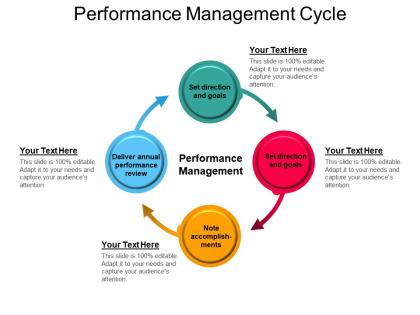
So there are four stages: planning, monitoring, reviewing, and developing. First you'll set clear goals with your team. Then monitor their progress - not just in formal meetings but through regular chats. Review stage is where you evaluate how they did against those goals (honestly most managers hate this part and leave it till the last minute). After that, figure out what training they need. The real trick? Don't make it a once-yearly nightmare. I swear by monthly 15-minute check-ins instead of those dreaded annual reviews. Way less stressful for everyone.
Okay so SMART goals are still the way to go - specific, measurable, achievable, relevant, time-bound. But here's the thing that drives me crazy: managers always mess up the "achievable" part. They either make goals ridiculously easy or completely impossible. Instead of just telling people what their goals are, get them involved in setting them. Have employees suggest their own targets based on what the business needs, then work together to make them realistic. Each goal should tie back to bigger team stuff and company strategy. Oh, and don't pile on like 8 different goals - stick to 3-5 max or they'll lose focus. Monthly check-ins help too.
Dude, forget those awful yearly reviews - continuous feedback is where it's at. Just check in with your team regularly, give them quick course corrections, and actually celebrate the good stuff when it happens. Way less awkward than dumping everything on them once a year! I swear, even 10-minute weekly chats make a massive difference. Your people will always know where they stand instead of guessing. Makes the whole performance thing feel more like... I dunno, actual conversations? Plus you're not scrambling to remember what happened 8 months ago during review season.
Honestly, the whole "here's what you screwed up" thing just tanks morale every time. Instead, flip it - spend most of your time talking about where they want to go career-wise and what support they need to get there. Ask stuff like "what challenges actually excite you?" or "where do you see yourself in two years?" Set goals together rather than just telling them what to fix. Oh, and don't wait for formal reviews to have these conversations. Regular check-ins work way better. Always wrap up with concrete next steps you'll both commit to.
Honestly, you need both the hard numbers and the softer stuff to really know how someone's doing. Goal completion rates are obvious. But also look at quality metrics - error rates, customer feedback, whatever matters for their specific job. I always ask for peer input and self-assessments too because the data doesn't tell the whole story. Pick maybe 3-5 things that actually show success in their role, not just what's easiest to track. Oh and don't forget - how they hit their targets matters just as much as hitting them.
So basically you want your personal goals flowing down from what the company's trying to achieve - like a pyramid thing where yours support your team's stuff, then department goals, then the big picture business strategy. Makes total sense when you think about it that way! Usually you'll hash this out with your manager during goal-setting time. The trick is being specific enough that you can actually track if you're winning, but still connected to something that actually matters for the org. Oh and always ask yourself "how does this help the company win?" - sounds cheesy but it works.
Dude, structured rating scales are way better than just winging it with open-ended stuff. Train your managers to spot their own biases - we're all guilty of having teacher's pets, let's be real. Get feedback from multiple people instead of just one boss making all the calls. Oh, and keep performance notes all year long because nobody remembers what happened in March when December reviews roll around. Try calibration sessions where managers compare their ratings together. Sometimes I think that's the most eye-opening part. You need systems that basically force objectivity since hoping people won't be biased is... optimistic at best.
Honestly, the automation piece is a game changer - no more drowning in scheduling and reminder emails. Performance platforms let you track goals as they happen instead of those awkward once-a-year sit-downs. Getting 360 feedback becomes way less painful too. AI's gotten pretty good at spotting skill gaps and suggesting training, which is cool I guess. The data insights are actually useful for seeing patterns across your team. Oh, and definitely pick something that plays nice with whatever HR system you're already stuck with - trust me on that one.
Oh man, where do I even start? Most companies totally screw up manager training - like, these poor managers have zero clue how to give decent feedback. It's honestly painful to watch. Then you've got unclear goals that leave everyone confused about what they're supposed to be doing. Employee buy-in is another huge issue because leadership wants one thing but employees hear something completely different. And don't get me started on vague performance metrics - total bureaucratic mess. My advice? Fix your manager training first, then create some actually useful goal templates. That should help... hopefully.
Oh man, you definitely need solid rubrics first - like actually spell out what "good performance" looks like for each role. Then get your managers together to practice rating the same examples until they're not all over the place. I've watched this go sideways when one manager thinks something's amazing while another calls it mediocre. So awkward when employees compare notes later! Do those calibration sessions regularly too, not just once. Otherwise you'll have situations where Sarah and John do identical work but get totally different ratings just because their bosses have different standards.
Self-assessments are honestly a game-changer. Your team reflects on their work before you even meet, which makes everything flow better. When people evaluate themselves first, they're way more engaged in the actual conversation. You'll spot interesting gaps between how they see their performance and how you do - that's where the real development happens. It also shows you care about their input, not just your own take on things. I usually have people send theirs 3-5 days early so I can actually think through my responses. Makes me look more prepared too, which doesn't hurt.
Honestly, start with super clear expectations right from the beginning - none of that vague "do your best" stuff. Check in regularly instead of waiting for those dreaded annual reviews. Here's what I've learned the hard way: people need to feel safe enough to actually own their mistakes without getting their heads chopped off. Document conversations (boring but necessary). Call out good accountability when you see it, and deal with problems fast before they snowball. Oh, and skip the corporate speak - just have real conversations about what's actually happening. Trust me, it works way better than dancing around issues.
So performance management is basically like having a map of everyone's strengths and weak spots. Those regular check-ins? They're gold for figuring out who's ready to move up and who needs training in specific areas. Employees actually stay more engaged when they can see where they're headed career-wise - nobody wants to feel stuck, you know? Plus you get real data on your high-performers so you can create development plans that actually make sense. Oh, and it helps with succession planning too. Honestly, the whole thing just makes talent decisions way less of a guessing game.
PIPs totally flop when they're vague, so get super specific about what needs fixing. Like instead of "better communication," describe exactly what that looks like day-to-day. Meet with them regularly and actually give them tools to succeed - training, a mentor, whatever. Document everything (obviously). The trick is framing it right - not "you suck" but more "let's figure out how to get you back on track together." I honestly think most managers mess this up by making it feel like punishment instead of help. Oh, and deadlines matter too - people need concrete goals to hit.
Oh definitely move away from those awful yearly reviews - most companies are doing quarterly check-ins now, some even monthly. Real-time feedback is where it's at though. Like, why wait six months to tell someone they messed up? Makes zero sense. Also seeing way more employee-driven goals instead of bosses just dictating everything from above. Development talks are replacing those stupid numerical ratings too, which honestly is about time. Start with bi-weekly one-on-ones if you can - seriously makes a huge difference even if it feels like overkill at first.
-
Great product with effective design. Helped a lot in our corporate presentations. Easy to edit and stunning visuals.
-
Great product with highly impressive and engaging designs.