


Example Of Talent Management Powerpoint Presentation Slides




Try Before you Buy Download Free Sample Product
 Impress Your
 Audience
 100%
100% Editable
 Save Hours
 of Time


HR professionals can now present a crisp presentation within moments using Example Of Talent Management PowerPoint Presentation Slides. Our talent management PPT theme is an impressive virtual tool that aptly represents vital HRM strategies. Highly-visual format of workforce management PowerPoint slideshow is designed to showcase the fundamentals of fulfilling talent requirements within an organization. Demonstrate the talent management methodology, and also provide an overview of talent planning using staffing management PPT template. This comprehensive personnel management PowerPoint deck helps you to explain recruitment sources, talent retention based on performance, and performance management. Also, elaborate on performance coaching, and performance feedback through neat tabular formats included in this human resource management PPT presentation. Portray employee motivation action plan and factors via impactful data visualization tools of this HR management PowerPoint theme. So, download this human capital assessment PPT slideshow to showcase the alignment of workforce requirements with the organizational objectives.
People who downloaded this PowerPoint presentation also viewed the following :
Content of this Powerpoint Presentation
Slide 1: This slide introduces Example of Talent Management. State Your Company name and begin.
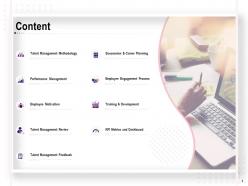
Slide 2: This slide displays Table of Content.
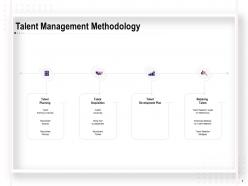
Slide 3: This slide shows Talent Management Methodology.
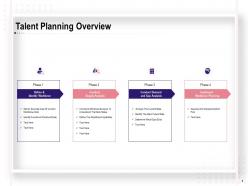
Slide 4: This slide presents Talent Planning Overview.
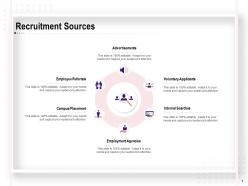
Slide 5: This slide shows Recruitment Sources.
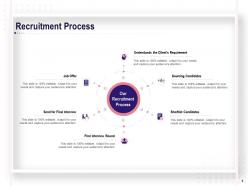
Slide 6: This slide shows Recruitment Process.
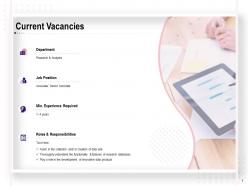
Slide 7: This slide displays Current Vacancies
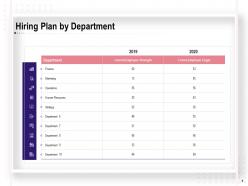
Slide 8: This slide presents Hiring Plan by Department.
Slide 9: This slide showcases Recruitment Tracker
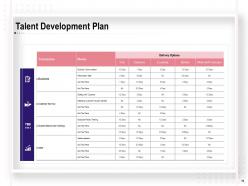
Slide 10: This slide depicts Talent Development Plan.
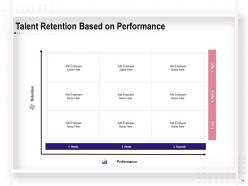
Slide 11: This slide shows Talent Retention Based on Performance
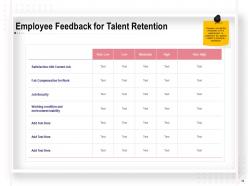
Slide 12: This slide showcases Employee Feedback for Talent Retention
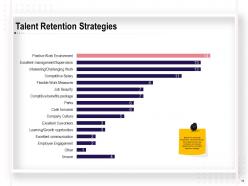
Slide 13: This slide depicts Talent Retention Strategies.
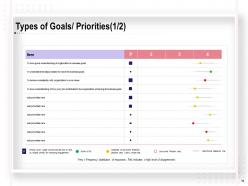
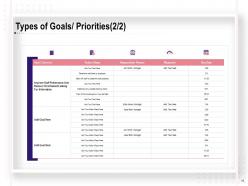
Slide 14: This slide showcases Types of Goals/ Priorities.
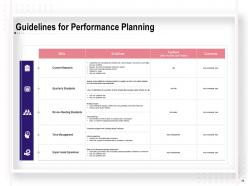
Slide 15: This slide showcases Guidelines for Performance Planning
Slide 16: This slide displays Types of Goals/Priorities.
Slide 17: This slide showcases Types of Goals/Priorities.
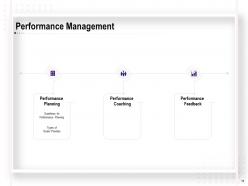
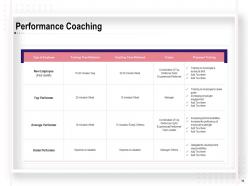
Slide 18: This slide depicts Performance Coaching
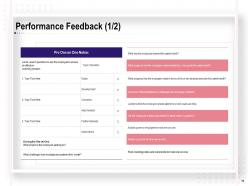
Slide 19: This slide presents Performance Feedback.
Slide 20: This slide presents Performance Feedback.
Slide 21: This slide shows Action Plan of Employee Motivation.
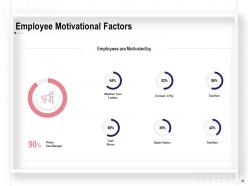
Slide 22: This slide displays Employee Motivational Factors.
Slide 23: This slide shows Action Plan for Employee Motivation.
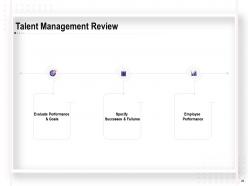
Slide 24: This slide depicts Talent Management Review.
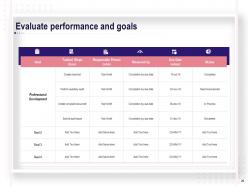
Slide 25: This slide showcases Evaluate Performance and Goals.
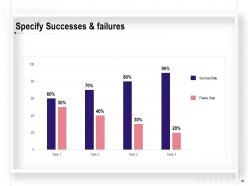
Slide 26: This slide presents Specify Successes & Failures.
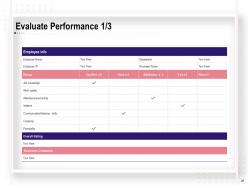
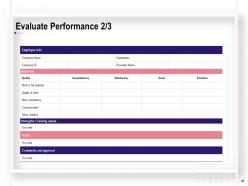
Slide 27: This slide presents Evaluate Performance.
Slide 28: This slide presents Evaluate Performance.
Slide 29: This slide presents Evaluate Performance.
Slide 30: This slide depicts Talent Management Feedback.
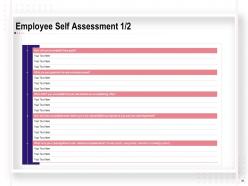
Slide 31: This slide shows Employee Self Assessment.
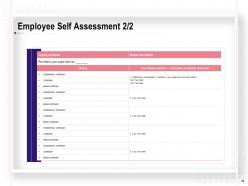
Slide 32: This slide shows Employee Self Assessment.
Slide 33: This slide shows 360 Degree Feedback- Employees.
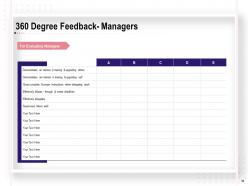
Slide 34: This slide shows 360 Degree Feedback- Managers For Evaluating Managers
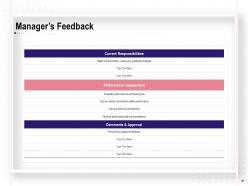
Slide 35: This slide displays Manager’s Feedback.
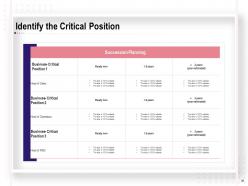
Slide 36: This slide Covers the ways to Identify the Critical Position.
Slide 37: This slide showcases the ways Identify the Critical Position.
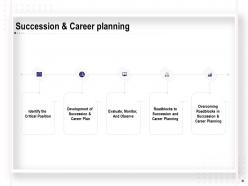
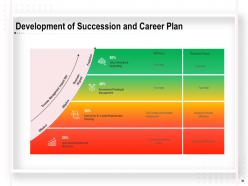
Slide 38: This slide shows Development of Succession & Career Plan
Slide 39: This slide shows Evaluate, Monitor, & Observe
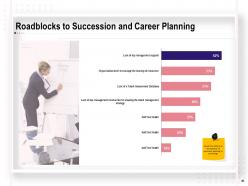
Slide 40: This slide presents Roadblocks to Succession and Career Planning.
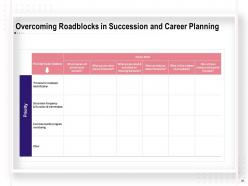
Slide 41: This slide shows Overcoming Roadblocks in Succession and Career Planning.
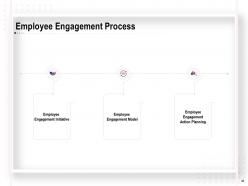
Slide 42: This slide shows Employee Engagement Process.
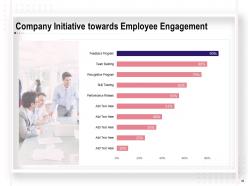
Slide 43: This slide showcases Company Initiative Towards Employee Engagement.
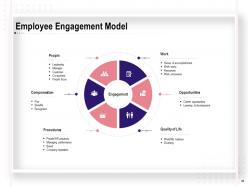
Slide 44: This slide showcases Employee Engagement Model.
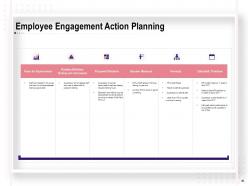
Slide 45: This slide showcases Employee Engagement Action Planning
Slide 46: This slide represents Training & Development.
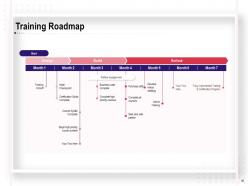
Slide 47: This slide depicts Training Roadmap.
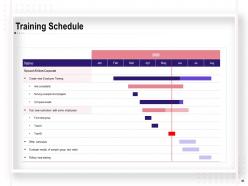
Slide 48: This slide showcases Training Schedule.
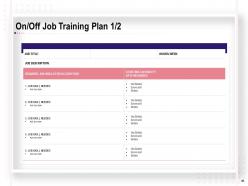
Slide 49: This slide showcases On/Off Job Training Plan.
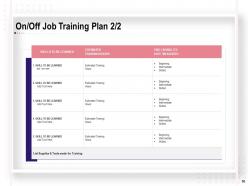
Slide 50: This slide shows On/Off Job Training Plan.
Slide 51: This slide shows KPI Metrics and Dashboard.
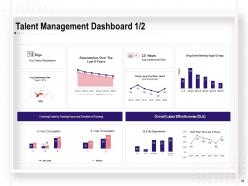
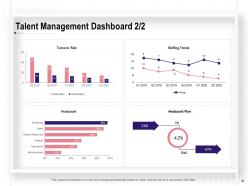
Slide 52: This slide depicts Talent Management Dashboard.
Slide 53: This slide showcases Talent Management Dashboard.
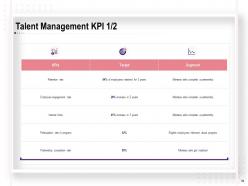
Slide 54: This slide depicts Talent Management KPI.
Slide 55: This slide showcases Talent Management KPI.
Slide 56: This is Example of Talent Management Icons Slide.
Slide 57: This slide is titled as Additional Slides
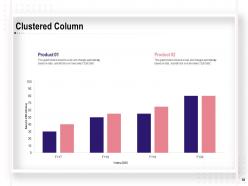
Slide 58: This slide displays Clustered Column chart for comparison of products.
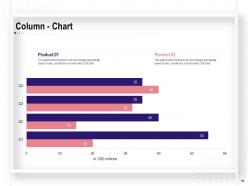
Slide 59: This slide displays Column - Chart with product Comparison.
Slide 60: This is About Us slide to showcase Company specifications.
Slide 61: This slide is titled as Post It Notes. Post your important notes.
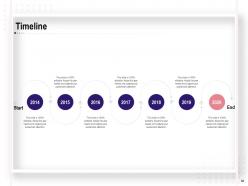
Slide 62: This slide displays Timeline process.
Slide 63: This is Marketing Dashboard Template.
Slide 64: This is Our Team with Names and Designations.
Slide 65: This is Financial slide. Showcase Finance related stuff here.
Slide 66: This is Our Mission slide with Mission, Vision and Goal.
Slide 67: This is Thank You slide with Contact details.
Example Of Talent Management Powerpoint Presentation Slides with all 67 slides:
Use our Example Of Talent Management Powerpoint Presentation Slides to effectively help you save your valuable time. They are readymade to fit into any presentation structure.












FAQs for Example Of Talent Management
So you've got five main pieces to tackle: finding talent, developing people, managing performance, planning for succession, and keeping good folks around. Honestly, most places totally bomb at succession planning - then act shocked when their star player quits! Start by figuring out who your high performers are and create actual career paths for them. Your performance reviews should connect to development plans, not just be some yearly thing you check off. Also, dig into what actually motivates each person on your team. Different things drive different people, you know? I'd start with an audit of what you're already doing and fix the biggest gaps first.
Look for people who go beyond what's expected and can get others on board without being their boss. The quiet problem-solvers are often better bets than your flashiest performers, honestly. Give them stretch projects or cross-team work to see how they handle it. You'll want folks who jump at tough assignments and actually want feedback instead of avoiding it. They adapt when things change too. Regular check-ins with your team leads help you catch rising talent early - sometimes they spot people you'd miss.
Honestly, engaged employees are your best bet for stopping turnover. People don't quit jobs they actually love - sounds obvious but you'd be surprised how many managers miss this. Regular check-ins help a ton. So does recognizing good work instead of just pointing out problems. The real magic happens when you give people projects that actually matter to them and match their career goals. Oh, and engaged workers basically become free marketing for your company culture. They'll tell their friends how great it is to work there, which makes recruiting way easier down the road.
Honestly, tech can save you so much headache with hiring. Automated resume screening cuts through the pile fast, and those AI matching tools actually work pretty well now. I'd start with applicant tracking - that's where you'll see the biggest win right away. Predictive analytics help spot who might bail before they do (super helpful). Your team will love self-service portals too - beats paperwork any day. Just make sure whatever you pick plays nice with your current systems. Nobody needs another data mess to clean up later.
So the big stuff happening right now? AI screening tools are everywhere, and companies are finally ditching the whole "must have a degree" thing for skills-based hiring. Remote work opened up talent pools like crazy. Internal promotions are huge too - way cheaper than external recruiting. Candidate experience matters more than ever because one bad Glassdoor review can mess you up. Diversity metrics aren't optional anymore, and flexible work is basically expected now. Honestly, just focus on building your brand on social media and upskill your current people. It's so much easier than constantly hiring new folks.
D&I work actually changes everything about how you handle talent. Your hiring pool gets way bigger, people stick around longer, and teams get more creative. Look, some execs still treat this like box-checking (eye roll), but building inclusive practices into recruiting and promotions gives you access to different perspectives. That leads to smarter decisions. Employees feel valued too, so performance goes up while turnover drops. I'd start by checking your processes for bias - maybe see where representation falls short at different levels. The retention savings alone make it worth doing right.
Definitely focus on retention rates and how many people you're promoting internally - those tell you if folks actually want to stick around. Time-to-fill for positions matters too. Engagement scores are huge, plus tracking if people are actually finishing training programs. Performance trends and succession planning coverage round it out nicely. Honestly, those analytics dashboards are a nightmare to navigate sometimes, but they're not totally useless. I'd grab maybe 4-5 metrics that actually match what your company cares about. Otherwise you'll just end up drowning in data you never look at. Oh, and 360 feedback improvements are solid gold if you can track them properly.
So basically, connect your training programs directly to career paths and promotions. Figure out what skills people actually need for their next role, then build training around those specific gaps. Performance reviews are perfect for spotting development needs - use those conversations to create personalized learning plans. The thing is, it can't feel like busy work. People need to see how this training gets them promoted or helps them move internally. I've noticed the companies that do this well treat L&D like a real investment in people's futures, not just checking boxes. Start by looking at your current programs - do they actually match up with where people want to go career-wise?
Honestly, most companies treat it like a yearly box-checking thing instead of an actual strategy. Don't just do annual reviews and call it good. Promoting people based on how long they've been there? That's a recipe for disaster. And succession planning can't just be "well, Sarah could probably figure out Bob's job if he leaves" - that's not real planning. Here's what kills me though: everyone obsesses over their star performers but totally ignores developing the middle tier. Also, when HR operates in its own bubble separate from business strategy, you can't actually align talent with what the company needs. Map out your critical roles first and spot the gaps before your next planning cycle hits.
First thing - figure out what skills you actually need to hit your business goals. Expanding internationally? You'll want people with language skills or market experience. Then build your whole hiring strategy around that. Get your HR folks into those strategy meetings (trust me on this one). They need to spot talent gaps before you're desperately posting jobs on LinkedIn at midnight. Everything should connect - recruiting, training programs, even how you measure performance. You're basically working backwards from where you want the business to go. Sounds obvious but most companies totally miss this.
Honestly, remote work flips talent management completely upside down. You can hire from anywhere now, which is amazing, but good luck onboarding someone when they're 8 time zones away. At least we finally ditched the whole "are they at their desk" thing for actual performance metrics - took long enough, right? The real pain point is culture and keeping people engaged without those random coffee conversations. Digital tools help, but you gotta be super intentional about creating connection opportunities. I'd start by looking at what processes totally bomb in a virtual setup and go from there.
Honestly, ditch the annual review nonsense and do monthly one-on-ones instead. Weekly check-ins work even better if you can swing it. Your managers need training on giving actual useful feedback - not just "good job" but specific stuff people can act on. Oh, and feedback can't only happen when someone screws up, that's toxic as hell. Set up peer feedback sessions too. Mentorship programs are clutch for development conversations. The whole point is making feedback feel normal, not like you're getting called to the principal's office. Start small though - even baby steps will shift how your team thinks about growth.
Honestly, talent management is like walking a legal minefield these days. Your hiring has to follow equal opportunity rules - no discrimination stuff. Document everything with performance reviews and promotions so you're covered. Pay equity audits are non-negotiable now (which, good - it's about time). Terminations? Follow procedures and keep detailed records. Oh, and don't mess around with employee privacy - handle their personal data like it's radioactive. My old boss learned this the hard way. Work closely with legal and HR to review policies regularly. Trust me, it'll save you from serious trouble later.
Start by figuring out who could actually do these jobs - don't just look at the obvious people, think about transferable skills too. Give your best employees stretch assignments and rotate them around so they see the bigger picture. Honestly, most companies suck at this because they only think about it once a year. You need regular check-ins where you're actually talking through people's growth paths. Oh, and don't keep potential successors guessing about their future - that's how you lose good people. Create real development plans and stick to them. It's basically like chess but with careers, which sounds dramatic but it's true.
So performance management is basically how you figure out who's ready for what next. Regular check-ins help you spot skill gaps before they become problems - way better than waiting for those awful annual reviews. Focus most of your conversations on future stuff, like what training they need or if they're ready for bigger projects. Honestly, I've seen too many managers miss obvious talent because they only look backwards at what went wrong. Make it 70% about growth and development, 30% reviewing past work. It's your best shot at keeping good people and getting them where they need to be.
-
Best way of representation of the topic.
-
It saves your time and decrease your efforts in half.