Integrated talent management framework for organization

Integrated talent management framework for organization
Slide 1 of 2
Favourites Favourites

Try Before you Buy Download Free Sample Product

Audience Impress Your
Audience
Editable 100%
Editable
Time Save Hours
of Time
The Biggest Sale is ending soon in
0
0
:
0
0
:
0
0
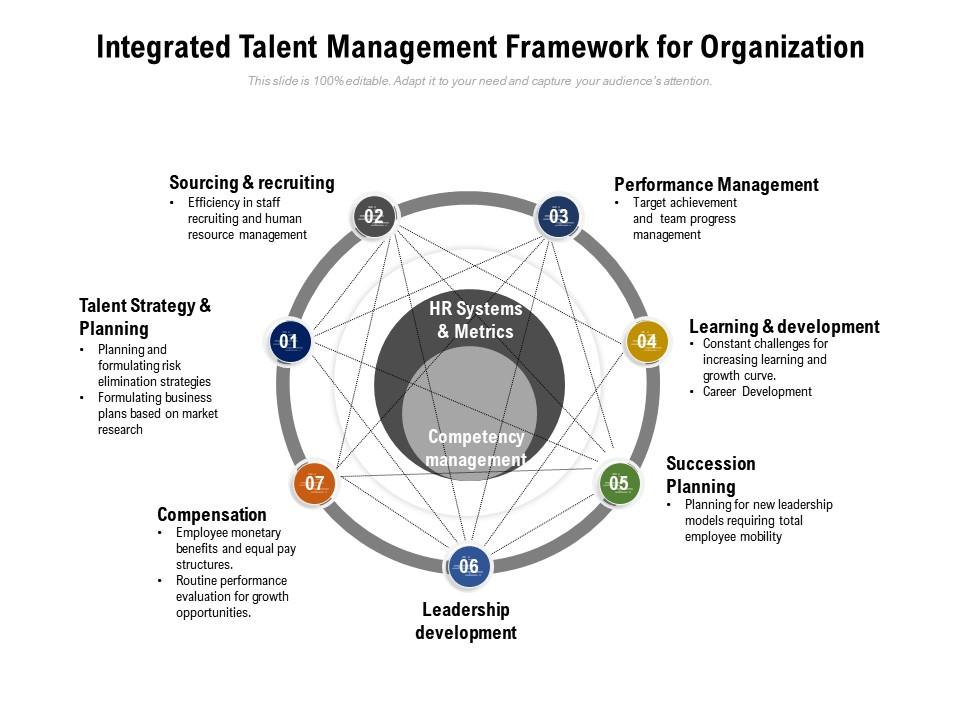
Presenting this set of slides with name Integrated Talent Management Framework For Organization. This is a seven stage process. The stages in this process are Performance Management, Succession Planning, Leadership Development, Compensation, Talent Strategy Planning, Learning Development. This is a completely editable PowerPoint presentation and is available for immediate download. Download now and impress your audience.

FAQs for Integrated talent management

You need talent acquisition, development, performance management, succession planning, and retention strategies - but here's the thing, they can't work in silos. Picture it like a pipeline where recruitment feeds into development programs, then performance reviews, then succession planning. I've seen companies mess this up by keeping everything separate. The real breakthrough happens when these pieces actually connect through shared data and processes. Honestly sounds like a lot at first, right? Start by figuring out where your biggest gaps are between these areas, then just pick one connection to fix first.

Look, I know it sounds super basic, but first figure out what your company actually wants to accomplish. Talent teams get weirdly disconnected from this stuff all the time. Then just match your hiring and training to those goals. Expanding globally? Focus on people with international experience. Innovation-heavy company? Invest in upskilling programs. Every talent decision should support where you're headed - sounds simple but honestly most places mess this up. Schedule regular check-ins with leadership so you don't end up chasing the wrong priorities when things shift.

So tech basically ties together all your HR stuff - recruiting, performance reviews, training, succession planning - into one system that actually works. No more switching between like 5 different platforms (seriously, who has time for that?). AI does the heavy lifting on candidate matching and spotting skill gaps, plus you get actual useful data instead of guesswork. The automation part alone is a lifesaver. I'd say start by looking at what you're using now and figure out where things aren't connecting - fix those pain points first.

Honestly, data analytics is a game-changer for spotting stuff you'd miss otherwise. Which job boards actually work? Your analytics will tell you. Same with predicting if candidates will succeed - look at their skills assessments and how they'd fit culturally. You can even catch flight risk employees before they start polishing their resumes (been there!). For training, the numbers show exactly where your team's skill gaps are and which programs actually help. My advice? Start simple - pick something like time-to-hire and figure out what's really driving it.

Honestly, just bake it into their actual performance reviews - makes it feel legit instead of optional. I love those "failure parties" some companies do (sounds ridiculous but people actually open up). Lunch-and-learns work too, or have folks share cool stuff they learned in team meetings. Give them actual money for courses and time to mess around with new skills. Oh, and definitely cheer when someone tries something risky, even if it flops. The whole point is making learning feel normal, not like homework they're dodging after work.

Look, engagement and retention are basically your report card for talent management. Get the basics right - career paths, development, decent pay, managers who don't suck - and people will actually want to stay. It creates this weird cycle where engaged employees do better work, making your programs more successful, which keeps everyone happy. Honestly though, forget overall retention numbers for a sec. What really matters is whether your top performers are sticking around. That's how you know if you're actually managing talent well or just checking boxes. High performer retention = you're doing something right.

Don't treat onboarding like some separate thing you just check off - that's where most places mess up. Connect it to your whole talent system from day one. Link new hire goals straight into performance reviews and career paths. Your platform should create personalized learning that flows into long-term development plans. Honestly, it's kind of obvious but so many companies miss this. Managers need to see everything together - hiring data, early performance stuff, skill gaps. Map those connections before people even start. Makes the whole process way smoother.

Start with mapping out what skills your team actually has right now versus what you need for your business goals. Most people totally overthink this part, but it's really just two lists you're comparing. Get the real scoop through employee reviews, assessments, and what managers are saying. Look ahead at where your industry's going and what capabilities that means you'll need. Once you spot those gaps, you can tackle them with training, hiring the right people, or moving folks around internally. Oh and make this something you do regularly - not just once and forget about it.

So employer brand is just your rep as a workplace, but honestly it's everything when you're trying to get good people. Strong brand means candidates come to you instead of the other way around. Nobody wants to work somewhere embarrassing - they want something they can actually brag about on social media. You'll get way more applicants to choose from, and here's the thing I've noticed: people with solid personal brands only want to work for companies that don't suck. Figure out what actually makes your place different first though.

Stop treating succession planning like some once-a-year torture session. Weave it into everything you're already doing - performance reviews, career chats, those weekly 1:1s. Every time you meet with someone, ask yourself who could step into their role tomorrow (spoiler: probably nobody, but that's the point). Connect it to your training programs so people actually get prepped for bigger roles. I learned this the hard way when my star performer quit with zero notice. Make it feel natural, not like paperwork. Your future self will thank you when you're not scrambling to fill critical positions.

Honestly, you'll want to track both leading and lagging stuff to really see what's happening. Start with retention and engagement scores - those usually predict everything else. Time-to-fill, internal promotions, how fast new people hit their productivity goals. Performance rating trends too. Cost-per-hire and training ROI are huge since executives eat that financial data up. Don't go crazy though - pick maybe 5-7 metrics that actually matter for your business goals. I've seen teams track like 20 things and it's just noise at that point. Focus on what tells you if people want to stay and grow there.

Here's what I'd do - weave D&I into every step instead of slapping it on later. Write inclusive job posts, get diverse interview panels. Performance reviews need to catch bias (this stuff is sneaky). Actively spot high-potential people from underrepresented groups in your development programs. Don't skip succession planning - diverse leaders won't just appear out of nowhere. Track D&I metrics during regular talent reviews and actually hold managers accountable. Too many companies do this backward then act shocked when their C-suite is all the same type of person.

Honestly, the worst part is when your systems don't talk to each other at all. Like, recruiting software over here, performance stuff over there - it's a mess. Your employee data gets scattered everywhere and you can't see the big picture. Getting leadership on board is brutal too because everyone wants different things. Sales team wants bodies in seats ASAP, HR wants good hires... you get the idea. Plus people hate change, obviously. Here's what worked for me though - pick one thing to integrate first. Show it actually saves money or time, then slowly add more pieces. Way less overwhelming than trying to fix everything at once.

Honestly, feedback loops are game-changers for talent stuff. You're basically creating this ongoing conversation where employees can tell you what's working and what sucks. Then you can actually fix things instead of waiting a whole year to figure out people are unhappy. Monthly check-ins work way better than those dreaded annual reviews - people feel heard, and you get real insights into who's ready for promotion or thinking about leaving. I mean, it's pretty obvious when you think about it, but most companies still do the once-a-year thing. You'll catch problems early and people won't feel like they're shouting into the void.

So these programs are basically your talent pipeline's best friend. You spot high-potential people early and build the skills they'll need down the road. It's all about bridging that gap between where someone is now and where your company needs them later. Plus people stick around longer when they see a real growth path - nobody wants to feel stuck, right? Succession planning gets way easier too. Just don't make it some generic leadership course that sounds good on paper. Make sure it actually connects to what your business is trying to accomplish.

Ratings and Reviews

0% of 100
Review Form
Write a review
Most Relevant Reviews

No Reviews