


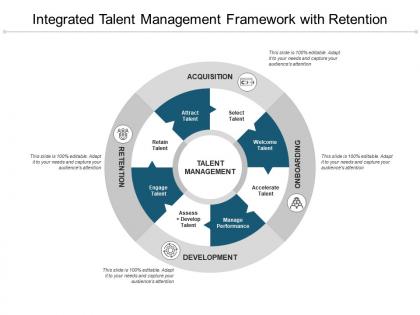
Integrated talent management framework with retention




Try Before you Buy Download Free Sample Product
 Impress Your
 Audience
 100%
100% Editable
 Save Hours
 of Time


Our Integrated Talent Management Framework With Retention allow you to function effortlessly. They make you feel in the groove.
People who downloaded this PowerPoint presentation also viewed the following :
Integrated talent management framework with retention with all 5 slides:
Be considered groovy with our Integrated Talent Management Framework With Retention. They contain contemporary chic.



FAQs for Integrated talent management
Look, it really comes down to paying people fairly and giving them actual flexibility - not just saying you do. Recognition is huge too, even just a "hey, great job on that project" makes people stick around. Clear growth opportunities matter, and honestly? Work-life balance that's real, not the fake stuff companies advertise. Oh, and managers who don't suck - feeling valued by your boss is everything. Team dynamics play into it too since nobody wants to dread seeing their coworkers. My advice? Just ask your people what they need instead of guessing. Most companies get this totally wrong.
Mix it up with pulse surveys (like 3-5 quick questions) monthly or quarterly, then do deeper annual ones for stuff like career growth and manager issues. Low response rates? That's actually telling you something about engagement right there. I'd also grab themes from exit interviews - people are brutally honest when they're leaving anyway. Don't try launching everything at once though. Pick one approach and stick with it first. The consistency matters way more than having some perfect system from day one.
Dude, culture is literally everything when it comes to keeping good people. I've watched talented folks bail from high-paying gigs because their boss was a nightmare, then take pay cuts to work somewhere they actually enjoyed showing up. People will turn down recruiters throwing money at them if they love their team and feel supported. The trick is making it real though - not just some BS mission statement on the wall. Like, does your manager actually have your back? Can you grow without playing politics? Those daily interactions matter way more than fancy perks. Get that right and retention becomes so much easier.
Dude, it really comes down to your manager. People bail when they feel unheard or stuck in dead-end roles. Create that safe space where your team can actually speak up without getting thrown under the bus. Give them clear direction - nobody likes guessing what they're supposed to be doing all day. Recognition matters too, even if it's just acknowledging good work in meetings. Growth opportunities are huge. I've seen too many good people leave because they felt trapped. Oh, and consistent feedback is key - don't wait for annual reviews to tell someone how they're doing. Do this right and they won't be secretly job hunting.
Honestly, most top companies nail three things: good career growth, solid pay packages, and flexible work setups. Google and Microsoft are masters at letting people hop between teams - keeps everyone from getting bored. Recognition stuff works way better than you'd think, even basic peer shoutouts. But here's the real kicker - managers who genuinely give a damn about developing their people. That's everything. Start there if you want better retention. Train your managers to have actual career conversations regularly. Sounds simple but it's like... night and day difference. Worth the investment for sure.
Dude, the numbers don't lie - companies see 30-50% better retention when they actually invest in training their people. Makes total sense though, right? Nobody wants to feel stuck in the same role forever without learning anything. When employees see you're willing to help them grow, they stick around instead of job hunting. Here's the thing most managers mess up - they design training around what THEY think people need. Wrong move. Just ask your team what skills they want to build first. Then create programs around that. People are way more engaged when the training actually connects to where they want their career to go.
Flexible schedules and decent pay are huge. Career growth opportunities too - people hate feeling stuck. Good health benefits matter way more than ping pong tables, trust me. Work-life balance is everything right now. Nobody wants to climb the ladder if it means constant burnout. PTO that you can actually use without guilt? That's gold. Survey your team first though - what works at Google might flop at your company. Every workplace is different, and you'll save yourself time by just asking what they actually want instead of guessing.
Honestly, consistent feedback is huge for keeping people around. Your employees want to know where they stand - surprises during annual reviews just stress everyone out. When you check in regularly and show you care about their growth, they feel valued instead of forgotten about. Make it constructive though, not just criticism. People want to develop their skills and move up, so investing time in guiding them pays off. They'll stick around way longer when they see you're actually invested in their success. I'd say schedule those check-ins monthly if you can swing it.
Honestly, flexible work is a game changer for keeping people. Remote options, flex hours, hybrid stuff - it shows you actually trust your team and get that life happens outside work. Nobody wants to pick between their job and, like, being able to pick up their kids or whatever. The turnover drops big time when people aren't miserable. Plus they'll actually perform better too. Survey your people first though - find out what kind of flexibility they actually want, then try a few things out.
Honestly, diversity and inclusion make such a huge difference for keeping people around. When employees feel like they can actually be themselves at work, they're way more likely to stay. I've seen it firsthand - there's this whole emotional connection that happens when people feel genuinely valued for who they are, not just what they do. Teams with different backgrounds and perspectives also crush it performance-wise, which makes everyone proud to work there. It creates this awesome cycle where success breeds more loyalty. Oh, and nobody wants to feel like they're putting on an act every day at the office - that's exhausting.
Look for the obvious stuff first - people suddenly going quiet in meetings, engagement dropping off, or the classic LinkedIn profile refresh (we've all been there lol). Regular one-on-ones are your best bet though. Actually ask about their workload and where they see themselves going. Don't wait for exit interviews - by then it's too late. Try "stay interviews" instead where you ask current people what would make them consider leaving. Most folks will be straight with you if they trust you won't freak out. Track what you're hearing because patterns usually emerge pretty quickly.
Oh man, this is something I've been thinking about lately too. Start with cross-functional mentorship - people connecting outside their usual teams. Some of my best work friendships happened that way, actually. When you're hiring, look for "culture add" instead of just culture fit. Way better approach. Give your employee resource groups real budget and decision-making power, not just meeting rooms. And yeah, do those listening sessions but you've gotta act on what people tell you. Otherwise it's pointless. The whole thing boils down to making people feel like their different perspectives actually matter, not forcing them into whatever box already exists.
Honestly, if people can't see where they're going in their career, they'll bounce. That's just reality. Your best employees need to see actual growth - promotions, new projects, skill building, whatever. Make those paths super clear and actually doable, not just BS promises. I've seen too many companies wonder why people leave when there's literally nowhere to go up. Short sentences work here. Audit how you're promoting people right now. Are you genuinely developing your team or just crossing your fingers they'll stay? Because updating LinkedIn is easier than ever these days, and people will do it.
Honestly, recognition programs work so well for keeping your best people around. Makes them feel actually valued instead of taken for granted. Everyone wants to know their work matters - that's just basic human nature, you know? The trick is making it personal though. Skip the cheesy "employee of the month" plaques. Ask your top performers what they'd actually want - some love public shoutouts, others prefer extra PTO or learning opportunities. I've seen companies mess this up by doing one-size-fits-all recognition that feels hollow. When you get it right though? People develop real loyalty to the company and won't bail for the next offer.
Honestly, exit interviews are where you'll get the real tea about what's broken at your company. Once people are walking out the door, they don't hold back anymore - suddenly they're telling you about that toxic manager or how pay raises are basically mythical. I've seen companies discover the same complaints coming up over and over again, stuff they had no clue was happening. The trick is asking good questions and actually looking for patterns instead of just checking a box. Don't let those insights collect dust in some folder. Use what you learn to fix the problems before more people bail.
No Reviews