


Employee retention strategy template powerpoint templates




Try Before you Buy Download Free Sample Product
 Impress Your
 Audience
 100%
100% Editable
 Save Hours
 of Time


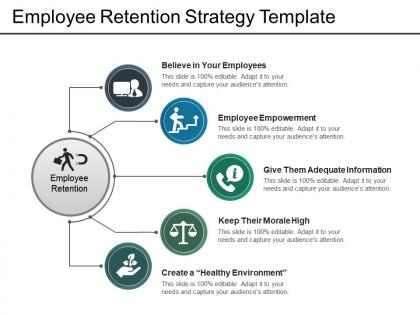
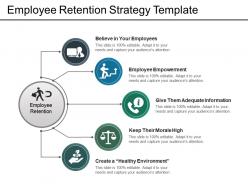
Retain your valuable human resources using our Employee Retention Strategy PowerPoint Templates. Develop strategies for retaining your employees in an efficient and attractive manner. Use our template and guide your teammates on how they can work on retaining the employees. It is a five-step employee retention template. Add icons and make your presentations more interesting. Guide your teammates using this template of employee retention and represent your plans, strategies or policies framed. Represent that employees should be given authority to take part in decision making, build a friendly environment and easily depict that employees should be provided with adequate information, all such things can be easily illustrated using such a slide. With this template, you can easily guide your audience on how to keep your employees' morale high. It will be very difficult for you to describe your plans and policies for retaining your employees using a pen and a paper so we bring to you these professionally build templates for your convenience.
People who downloaded this PowerPoint presentation also viewed the following :
Employee retention strategy template powerpoint templates with all 5 slides:
Energize your career with our Employee Retention Strategy Template Powerpoint Templates. They assist in handling ambition.

FAQs for Employee retention strategy
Honestly, start with why people are bailing in the first place. Competitive pay and benefits are obvious - but that won't keep anyone around if everything else sucks. Focus on giving people growth opportunities and actually recognizing good work. Flexible schedules help too. Most people quit bad managers, not bad jobs, so train your leadership team properly. Oh, and don't guess what's broken - just survey your current team first. They'll tell you exactly what needs fixing, then you can prioritize from there instead of throwing money at random stuff.
Track your turnover rate quarterly and compare it to last year - that's your main indicator. Employee engagement surveys matter too since unhappy people bail faster. Also watch internal promotion rates and how long it takes to fill positions. Exit interviews can be goldmines if you actually listen to the patterns. Here's the annoying part though: these numbers lag behind your efforts by months, so don't expect instant results. Set up a simple dashboard and check it monthly with your team. That way you're not flying blind and can adjust when things aren't working.
Dude, culture is HUGE for retention. Like, I've literally watched people bounce from high-paying gigs just because the vibe was awful. Meanwhile, others will stick around for less money when they actually enjoy showing up. Flexibility and growth opportunities matter way more than most managers realize. If your team feels heard and valued, they're not gonna be updating their LinkedIn every week. But toxic culture? That'll make people dread Monday mornings real quick. Just ask your people what actually matters to them - then focus on those things instead of guessing.
Honestly, just talking to people regularly makes such a huge difference. Your team actually feels like you care about them instead of treating them like robots. Weekly check-ins work great - doesn't have to be formal, even grabbing coffee works. People want to know how they're doing, and catching problems early saves everyone from those super awkward "you've been failing for three months" conversations. Trust me, when employees feel comfortable bringing up issues or pitching ideas, they'll actually want to stay. Skip the annual review nonsense and just make it ongoing. Way more effective than cramming everything into one stressful meeting.
Skills training that actually leads somewhere works best - people want clear career paths, not random workshops. Mentorship programs are solid too. Oh, and investing in management training is clutch since most people quit bad bosses, not jobs. Cross-functional opportunities let people explore different areas, which younger employees especially love. Technical certs and tuition help are always popular. Honestly though? Just ask your team what they want to learn. One-size-fits-all programs usually flop. Start there and you'll get way better buy-in than guessing what they need.
Dude, recognition programs can bump up retention by like 20-30% when you actually do them right. People just want to feel valued, you know? Way cheaper than constantly hiring replacements too. Don't just do the lazy annual gift card thing though - that's pretty much useless. Try mixing in public shoutouts, maybe some career development stuff, rewards that actually mean something to each person. Oh and here's what most managers miss - just ask your team what would motivate them. You'll probably get way better ideas than whatever HR suggested.
Honestly, just focus on making them feel less isolated - that's the biggest thing. Regular check-ins are huge, and don't micromanage just because you can't physically see them working. Give clear advancement opportunities so they're not stuck in limbo forever. Flexible schedules are great but actually respect them (don't message at 9pm). Yeah, team building events help, though half of them are pretty cringe. Good tech tools matter more than you'd think - nobody wants to deal with laggy video calls daily. But really? Just ask your current team what sucks. They'll give you the real answers.
Yeah, good pay definitely keeps people around longer. Market-rate compensation means they won't be constantly scrolling LinkedIn or taking recruiter calls. It shows you actually give a damn about them too. But honestly, it's not just salary anymore - benefits, equity, remote options, career growth all matter now. My old company learned this the hard way when half our team left in three months. If you keep losing people to better offers, time to do a pay audit and fix things before everyone good walks out the door.
Honestly, burnout kills retention faster than bad pay sometimes. People bolt when they're exhausted and can't disconnect from work. I've watched solid employees quit just because they never got a break. Flexible schedules help tons. So does actually respecting when people are off the clock - no random emails at 9pm, you know? And for the love of god, let people use their vacation days without guilt-tripping them. Quick win? Just ask your team what balance means to them. Everyone's different. Some want remote options, others just need predictable hours. Companies that figure this out don't hemorrhage talent like the rest.
Honestly, your boss makes or breaks whether people stay. Micromanagers are the worst - nobody wants someone breathing down their neck constantly. But when leaders actually trust you to do your job and give real feedback (not just criticism), it's completely different. I've watched entire teams flip around just because they got rid of some toxic manager. People will literally quit good jobs over bad bosses, which is kind of crazy when you think about it. The best managers give you direction but don't hover. That balance is everything.
Honestly, buddy system works wonders - pair them with someone who isn't their boss. Map out their first 30-60-90 days so they're not wandering around confused. Those random coffee introductions? Super underrated but they actually help tons. Don't overwhelm them week one though - I've seen that backfire. Give them some easy wins first so they feel useful, then pile on more stuff gradually. Show them how their role connects to the big picture too. Oh, and check in with them regularly, not just during those awkward formal review meetings.
Oh totally - engaged employees are like 87% less likely to bail compared to the disengaged ones. Makes sense though, right? People stick around when they feel valued and connected to what they're doing. But here's where companies mess up - they think it's all about the fancy perks. Really it's about meaningful work, chances to grow, and actually listening to your team. My old boss used to do these random coffee chats just to hear what was bugging us, and honestly? That did more for retention than any office amenities ever could.
Honestly, the usual team building stuff gets old fast. Try cross-department mentorship instead - people actually enjoy connecting outside their normal work bubble. Employee resource groups work well too, especially around shared hobbies or backgrounds. Here's something that sounds weird but totally works: storytelling sessions during all-hands meetings where people share career wins or random life stuff. Also let employees do lunch-and-learns on whatever they're obsessed with - could be work stuff or like, I dunno, mushroom foraging. Just pick one thing first and see what clicks with your team's vibe.
Honestly, exit interviews are pure gold for figuring out what's broken. You'll start hearing the same stuff over and over - bad managers, crazy workload, zero growth prospects. That repetition? That's literally your to-do list right there. But here's the thing - most companies just file these away and forget about them (which is so dumb). Track what people keep saying. Share it with leadership. Actually DO something about it. Oh, and definitely tell your current team what changes you're making based on feedback. They need to see you're listening, not just going through the motions.
Yeah, diversity and inclusion definitely help with retention. People want to feel like they actually belong at work, not just survive there. When your team feels valued for who they are, they'll stick around longer. Honestly, I've seen it firsthand - diverse teams just crush it performance-wise too. Employees get way more engaged when they see leadership that reflects them and policies that actually make sense for different backgrounds. My advice? Take a hard look at your current culture first. Then ask your team what inclusion really means to them. You might be surprised by their answers.
-
Designs have enough space to add content.
-
Awesome use of colors and designs in product templates.