


Employee Retention Proposed Action Plan




Try Before you Buy Download Free Sample Product
 Impress Your
 Audience
 100%
100% Editable
 Save Hours
 of Time


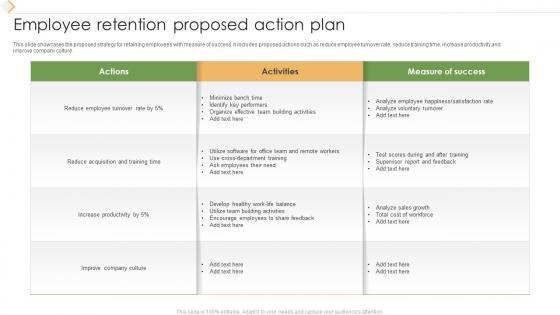
This slide showcases the proposed strategy for retaining employees with measure of success. It includes proposed actions such as reduce employee turnover rate, reduce training time, increase productivity and improve company culture.
People who downloaded this PowerPoint presentation also viewed the following :
Employee Retention Proposed Action Plan with all 6 slides:
Use our Employee Retention Proposed Action Plan to effectively help you save your valuable time. They are readymade to fit into any presentation structure.





FAQs for Employee Retention
Look, competitive pay is huge, but flexible work and growth opportunities matter just as much. People leave when they feel stuck, so clear career paths are key. Bad managers will kill retention faster than anything - honestly, I've seen entire teams quit because of one terrible boss. Recognition helps too, but it has to be real, not some cheesy corporate thing. Work-life balance and mental health support are becoming deal-breakers for a lot of people. Oh, and definitely survey your team first. You might think it's all about money, but they could prioritize completely different stuff.
Dude, culture is HUGE for keeping people around. If your workplace actually matches what employees care about and they feel respected, they'll stick with you. But toxic environments? People literally flee - even for less money, which blows my mind but I get it. Good cultures build real connections beyond just the salary. Trust develops naturally. People find actual meaning in their work and form genuine friendships. My old boss used to say happy employees don't job hunt, and honestly he wasn't wrong. Want better retention? Take a hard look at whether your culture lifts people up or burns them out.
Honestly, onboarding can make or break whether someone sticks around. Those first few weeks? They're everything. Get it right and new hires feel like they picked the perfect job. Mess it up and they're updating their LinkedIn by month two - I've watched it happen so many times. Good onboarding isn't just paperwork dumps. Give them a buddy, check in regularly, help them actually understand what's expected. When people feel connected to the team early on, they build confidence faster. Structure matters but keep it personal too. Oh and definitely don't overwhelm them day one - that never ends well.
Honestly, think of employee surveys like a check engine light for your team. Ask people quarterly about management, career stuff, how they're feeling - you'll spot problems way before someone quits. But here's the thing that trips up most managers: you absolutely have to act on what you learn. People get pissed when you ask for their opinion then do nothing with it. I'd start simple next month - just a quick pulse survey. See what patterns come up, then actually make some changes and tell everyone what you did based on their feedback.
Dude, recognition is seriously underrated for keeping people around. Companies that do it right have 31% less turnover - which is wild when you think about how simple it is. Your team just wants to feel like their work actually matters, you know? Even basic stuff like calling someone out in meetings or having people give each other props makes a huge difference. Just don't be generic about it - "good job" doesn't cut it. Be specific about what they did well. Maybe try weekly kudos or highlight wins at your next all-hands? Honestly beats losing good people over something so fixable.
Yeah, pay definitely matters for keeping people around. I've seen so many good employees bail when they realize they're making way less than market rate - like why stick around when you could get 20% more elsewhere, right? Health insurance and 401k matching are huge too, not just base salary. Flexible PTO is becoming pretty standard now. You should probably benchmark your comp against similar companies once a year or so. In this job market especially, people aren't shy about jumping ship if they feel underpaid.
Poor management is usually the biggest culprit - people really don't quit jobs, they quit terrible bosses. Growth opportunities matter too. When someone feels stuck or unappreciated, they're already mentally checking out. Train your managers properly (seriously, so many companies skip this). Build clear career paths. Actually recognize good work when you see it. Money isn't always the main issue unless you're paying way below market. Oh, and do exit interviews AND stay interviews with current people. Don't wait until they're handing you their resignation to ask what's wrong.
Honestly, these programs work because people want to feel valued, not just used up until they quit. Give someone real mentoring and challenging projects? You're telling them they have a future there. That connection matters way more than most companies realize. The training itself builds skills they actually want anyway - confidence, strategic thinking, all that good stuff. But here's the thing - skip the generic workshop garbage. People see right through that. Create actual career paths with real timelines so they know what's next, not just vague promises about "growth opportunities."
Honestly, work-life balance is probably the
-
Great quality slides in rapid time.
-
SlideTeam has helped me take my presentation to the next level. Everyone at the office is impressed! I’ll be using their designs for a long-long time.