

Target Operating Model With Key Components Comprehensive Guide To KPMG Strategy SS




Try Before you Buy Download Free Sample Product
 Impress Your
 Audience
 100%
100% Editable
 Save Hours
 of Time


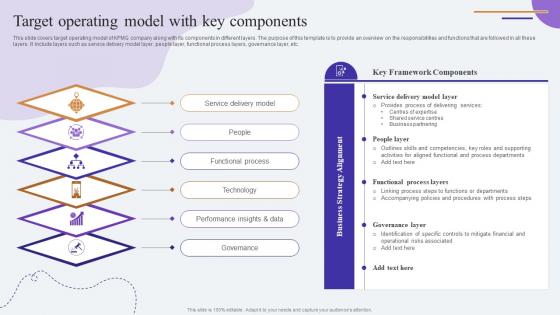
This slide covers target operating model of KPMG company along with its components in different layers. The purpose of this template is to provide an overview on the responsibilities and functions that are followed in all these layers. It include layers such as service delivery model layer, people layer, functional process layers, governance layer, etc.
People who downloaded this PowerPoint presentation also viewed the following :
Target Operating Model With Key Components Comprehensive Guide To KPMG Strategy SS with all 6 slides:
Use our Target Operating Model With Key Components Comprehensive Guide To KPMG Strategy SS to effectively help you save your valuable time. They are readymade to fit into any presentation structure.





FAQs for Target Operating Model With Key Components Comprehensive Guide To
Honestly, there are five main pieces you gotta get right with a TOM: who does what (org structure), how work actually flows (processes), your tech setup, decision-making rules, and how you measure success. The real killer is when companies nail the technology but their org chart is a complete disaster - happens more than you'd think. Your processes should shape how you're structured, not the other way around. Oh, and definitely map out where you are now before designing where you want to go. Trust me, it'll save you headaches later.
Honestly, start with your goals and work backwards from there. Map out how your processes, tech, people, and governance all connect to what you're actually trying to achieve. Don't just copy what other companies are doing - I've watched that blow up so many times. Figure out what specific capabilities you need, then build everything around enabling those. Oh, and do regular check-ins because your strategy's gonna shift. Your operating model needs to move with it. I'd kick things off with a gap analysis to see where you stand versus where you need to be.
Look, tech is what makes or breaks your whole TOM setup. Without the right systems, your processes just don't work - period. I always tell people to map out what tech you've got now before designing anything else. Your current stack shapes literally everything: how teams collaborate, what you can actually deliver, even your culture around making decisions. It's like plumbing in a house - super unsexy but try running operations without it. Once you know where you stand tech-wise, then figure out what gaps you'll need to fill for your future state. Trust me, skip this step and you're setting yourself up for pain later.
So you'll want to kick things off by explaining the "why" upfront - like what's actually in it for everyone, not just generic corporate speak. Get your key players involved in building the plan instead of just dumping it on them later. I'd do workshops and feedback sessions, that kind of thing. Honestly, people just want to feel like they're not being bulldozed by another reorganization. Find your cheerleaders early and arm them with good talking points - nobody trusts the C-suite announcements anyway. Oh, and don't sugarcoat the timeline or pretend it'll be painless. Address the messy stuff directly.
Don't build your TOM without talking to the people who'll actually use it every day - that's how you get something that works on paper but totally bombs in real life. Keep it simple too, because overcomplicated systems just confuse everyone. Oh, and here's something people always mess up: they think they can just launch it overnight. You need time for people to adjust. Test small pieces first with real teams instead of guessing what might work. Their feedback is way more valuable than whatever sounds good in meetings. Start tiny, see what breaks, then fix it.
Think of your business model as the "what" - what you're selling and who's buying it. Pretty simple concept. Your target operating model? That's the messy behind-the-scenes stuff - how you'll actually organize teams, set up processes, pick your tech stack, all that internal machinery. Like, your business model might be "SaaS for small businesses," but your TOM figures out whether you need a sales team or just self-serve signups, what your customer support looks like, how engineering talks to product... honestly gets pretty complex fast. Always nail down your business model first, then build the operating model around it.
Track both operational stuff and financial metrics to see if your TOM's actually doing anything. Cycle times, cost per transaction, productivity ratios - that kind of thing. Customer satisfaction matters too because being efficient while delivering crap is pointless. Revenue per employee and margins show the money side. Don't go crazy though - pick maybe 5-7 metrics that actually connect to what you're trying to achieve. I've seen teams drown in data and miss the obvious stuff. Set up monthly dashboards and review with leadership so you catch problems before they get ugly.
Honestly, modular is the way to go from day one - processes that can flex, people trained across different areas, tech that actually scales with you. Do quarterly stress-tests where you throw different scenarios at your model and see what breaks. Customer habits shift? New regulations drop? Competitors doing something weird? You need triggers already mapped out for when to pivot. I can't tell you how many rigid setups I've watched turn into total boat anchors. Quick health checks against what's happening in the market will save you from those massive overhauls that nobody wants to deal with.
Dude, culture is HUGE for this stuff - way bigger than most execs think. Look, you can build the prettiest new processes ever, but if they clash with how people actually behave? Dead on arrival. Say your team loves collaborating but your new model boxes everyone into separate departments. Recipe for disaster. Here's the thing - your culture and operating model have to mesh. Period. I'd start by taking a brutally honest look at your current culture (and I mean brutal). Then either build around what you've got or plan some serious culture shifts alongside everything else. Oh, and those culture changes? They take forever, so factor that in.
So a target operating model is basically your team's collaboration playbook - it shows who does what and when to hand things off. Like, marketing knows exactly when to bring in product people, or sales knows who actually makes pricing calls. Pretty much cuts through all that "wait, whose job is this?" chaos. Honestly, most companies skip this step and then wonder why everything feels messy. You'll want to start with whatever's causing the biggest headaches between teams right now. Then design workflows around those pain points. Way better than just having an org chart that nobody really follows anyway.
Honestly, skip the boring text-heavy docs that nobody reads. Visual stuff works way better - org charts, process flows, anything people can actually look at and get it. Map out who does what and how teams work together. The "why" matters more than just listing changes, you know? Real examples help tons instead of corporate speak. Oh, and don't just email documents around - that's where TOM stuff goes to die. Do workshops where people can ask questions and actually engage with it. You've gotta show them the journey from where you are now to where you're going.
Dude, change management is make-or-break for TOM stuff. Your leaders have to be visibly on board first - otherwise forget it. Communication is huge too - tell people WHY this matters and what they get out of it. Find some champions in different departments who can push it from the inside. Training helps obviously, but honestly? I'd start socializing changes way early, track how many people actually use it, and be flexible if something's not working. Oh and measure adoption rates religiously. The whole thing falls apart if your team won't actually use the model.
Honestly? A target operating model makes you completely rethink where your people and money go. You're gonna have to move staff around, maybe cut some redundant roles, and shift budget from old systems to new tech. The whole thing gets political fast - everyone wants their piece. But here's the thing: the model actually helps cut through all that drama by giving you solid reasons for decisions instead of just office politics. I'd start by looking at where your resources are now versus where the TOM says they should be. That gap will basically write your roadmap for you.
Honestly, analytics are your best bet here - they'll reveal the real gaps between where you are now and where you want to be. Look at your process performance and how you're actually using resources versus what looks good on paper. The data doesn't sugarcoat anything. You can run different scenarios before making big changes, which saves you from costly mistakes. I'd pick maybe 3-5 key metrics that directly connect to your goals and track those religiously as you make adjustments. Customer touchpoints are huge too - they show bottlenecks you probably didn't even know existed.
Honestly, people hate change - that's your biggest hurdle right there. Even when they know something's broken, they'd rather stick with the devil they know, you know? Then there's the whole budget thing. Leadership always wants improvements but doesn't want to actually pay for them or give you the time. Oh, and good luck getting decent data to track if anything's actually working - most systems are a mess. Quick wins are your friend though. Start there, show some results that translate to real money saved or made. That's literally the only language executives speak fluently.
-
Use of icon with content is very relateable, informative and appealing.
-
SlideTeam’s readymade presentations have landed my unique images with my bosses in the past and it continues to reward me.