


Governance Operating Model For Data Management





Try Before you Buy Download Free Sample Product
 Impress Your
 Audience
 100%
100% Editable
 Save Hours
 of Time


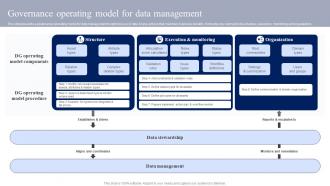
The slide presents a governance operating model for data management to optimize use of data and take actions that maximize business benefits. It includes key elements like structure, execution, monitoring and organization.
People who downloaded this PowerPoint presentation also viewed the following :
Governance Operating Model For Data Management with all 6 slides:
Use our Governance Operating Model For Data Management to effectively help you save your valuable time. They are readymade to fit into any presentation structure.





FAQs for Governance Operating Model
You need data stewards first - that's honestly the most crucial part. Without clear ownership of each data domain, everything else falls apart. Then build your policies, quality processes, and security controls around those people. Governance committees help with decisions and keeping everyone accountable. Metadata management is a pain but you can't skip it or things get chaotic quickly. Oh, and grab some tech tools to automate the monitoring stuff - makes life way easier. Start small though. Don't try to build the perfect framework right away.
Grab a framework like DAMA-DMBOK or just make your own checklist - whatever works. Check your data quality processes, who's actually responsible for what, policy docs, lineage tracking, compliance stuff. Survey people across different departments because they'll tell you what's really broken (and trust me, there's always more than you think). Most companies are pretty surprised by how messy things actually are once they dig in. The whole point is finding specific gaps so you can fix the stuff that'll actually make a difference first.
So data stewards are like your data quality watchdogs - they're constantly checking for accuracy and catching problems before they snowball. They create validation rules, audit datasets, and handle all the regulatory compliance stuff (which honestly sounds boring but someone's gotta do it). These people also translate between the tech team and business folks, which is super valuable. Oh, and they're basically data librarians but actually crucial for keeping your reports clean. Seriously though, loop them in early if you're having data issues - they'll prevent you from spending weeks cleaning up messy datasets later.
So yeah, regulations basically dictate your whole data governance setup. Healthcare has HIPAA breathing down their necks for patient data. Financial companies deal with SOX and PCI stuff. GDPR hits pretty much any tech company touching EU data (which is everyone, let's be honest). Different industries have different risk appetites and audit headaches. You'll need to map out which regulations apply to you first, then build your policies and access controls around the strictest ones. Honestly, it's kind of like playing regulatory Jenga - one wrong move and everything falls apart.
Honestly, first thing you need is someone at the C-level who actually cares - otherwise it's just another useless committee. Pull in people from IT, legal, business units, data teams. But keep it small! Like 6-8 people tops or you'll never get everyone in the same room. Make sure everyone knows their role and who gets to make what decisions. Oh, and go for some quick wins early on - builds credibility fast. The big thing though? Give them real budget to actually do stuff. I've seen way too many committees that just write reports nobody reads.
Dude, automation tools are a lifesaver for data governance stuff. Get platforms that auto-discover and classify your data - saves you from manually cataloging everything like some kind of digital librarian. Lineage tools track data flows automatically, and quality monitoring catches problems before they blow up. Access controls get way simpler with good governance platforms. I made the mistake once of trying to do audit trails by hand... never again. Pick something that plays nice with whatever tech you're already using. Don't create more headaches for yourself. Just tackle your biggest pain point first and automate that.
Honestly, the hardest part is usually people thinking you're just adding more bureaucracy. Teams hate feeling slowed down by new rules. Your data's probably a mess too - spread across different systems that don't talk to each other. Oh, and people get weirdly protective about their datasets. I swear some folks act like you're stealing their firstborn! Then there's the whole "who owns what" confusion, plus trying to make old systems follow new policies when they weren't designed for it. Start with just one team though. Get a few wins under your belt first, then expand.
Honestly, small businesses have it easier here - you can make changes super fast and actually see results right away. Plus you'll avoid those expensive compliance screwups. Big companies? They get better at managing risk across all their messy departments, but man, it takes them ages to see anything happen. If you're small, just start with basic data quality stuff and security policies. You're probably already pretty close to your data anyway. Larger orgs really need this to stop different teams from making everything a total disaster. But here's the thing - regardless of your size, don't go crazy at first. Pick one dataset that actually matters and nail that before you expand to everything else.
Honestly, don't make this just the IT department's problem - everyone needs to get comfortable with data. Basic dashboard training is where I'd start, plus teaching people what good vs. bad data looks like. Most folks are actually pretty smart about this stuff once you strip away the jargon. Find someone in each team who's naturally good with numbers to be the go-to person. Here's the thing though - you've gotta show people how data skills will actually make their day easier, not just pile on more work. Celebrate when teams use data to make decisions. Oh, and focus on problems they already care about solving.
Okay so first thing - get buy-in from the executives or you're dead in the water. Then figure out what each team actually wants. Legal probably hates compliance headaches, marketing wants faster data access, etc. Don't lead with governance frameworks and boring stuff - show them quick wins they can see right away. I swear, half of this is just not talking like a robot when you explain things. Oh and here's the key part: let stakeholders help design the rules instead of just dropping policies on them. Nobody likes being told what to do, but they'll follow something they helped create.
So metadata management is basically how you actually make data governance work in real life. Like, you can't govern stuff you can't see or track down, you know? Metadata acts like your inventory system - tells you what data exists, where it's stored, who owns it, and how to handle it based on your rules. Governance sets the "what should happen" while metadata management handles the "making it actually happen" part. Honestly, without decent metadata, your governance framework is just paperwork nobody reads. Oh, and definitely start with your most important data assets first - don't try to catalog everything at once or you'll go crazy.
Honestly, you gotta look at both the techy stuff and business impact. Data quality scores are obvious - plus how fast your team fixes broken data. But the real gold is measuring if people can actually find what they need faster now. Are they spending less time cleaning messy datasets? Track user adoption too because let's be real, the fanciest governance means nothing if everyone ignores it. Oh and decision-making outcomes, though that one's trickier to pin down. Start with maybe 4 solid metrics instead of going overboard - you'll just overwhelm yourself otherwise.
So basically, data governance is like setting up rules before disaster strikes. Map out what data you actually have first - most companies are shockingly clueless about this. Then you'll know who can access what, where your sensitive stuff lives, and how to protect it better. Regular audits help catch problems early. When breaches do happen (and they will), you can respond way faster and contain damage instead of panicking. Plus regulators won't think you're completely incompetent, which is always nice. Honestly though, just knowing what data exists and where is half the battle.
Look, data governance stops you from making decisions based on gut feelings or those random Excel files floating around. You'll actually trust your numbers when there's clear ownership and quality standards. Ever been in those awkward "which report version are we using?" meetings? Yeah, governance fixes that mess. Teams get faster access to solid data and waste way less time second-guessing their analysis. Honestly, cross-department collaboration gets so much smoother too. Just start with your most important datasets - figure out who owns what first, then build from there.
Okay so first thing - sort your data by how sensitive it is, then build user groups around that. Give people only what they actually need for their job (sounds obvious but you'd be surprised). Everyone's gonna complain they need access to everything - they don't. Use data masking for your test environments, that helps a ton. Set up those automated access reviews too, they're honestly a lifesaver. The real trick is catching permission creep early with regular audits. I learned this the hard way at my last job - people accumulate permissions like they're collecting Pokemon cards.
-
Very well designed and informative templates.
-
Amazing variety of PowerPoint slides. Really helpful in designing professional presentations.