


Data governance maturity model and assessment




Try Before you Buy Download Free Sample Product
 Impress Your
 Audience
 100%
100% Editable
 Save Hours
 of Time


Our Data Governance Maturity Model And Assessment are topically designed to provide an attractive backdrop to any subject. Use them to look like a presentation pro.
People who downloaded this PowerPoint presentation also viewed the following :
Data governance maturity model and assessment with all 2 slides:
Use our Data Governance Maturity Model And Assessment to effectively help you save your valuable time. They are readymade to fit into any presentation structure.
FAQs for Data governance maturity
So there are five main pieces to focus on: people & organization (who does what, reporting structure), processes (how decisions get made), technology (the actual tools), data quality stuff, and tracking your progress with KPIs. Most companies are way too confident about where they stand - I see this all the time. The maturity model basically goes from "we're winging it" to "we've got our act together." You'll want to do a honest baseline assessment first. Figure out which areas are the biggest mess, then tackle those. Don't try to fix everything at once or you'll just frustrate everyone.
So there's basically five things to look at: strategy, people, processes, tech, and data quality. Most companies use frameworks like DAMA-DMBOK or just make their own scorecard. Here's the thing though - you've gotta be really honest about where you actually stand, not where you wish you were. That's always the brutal part. Start by figuring out what policies you have (might be zero, that's fine), who actually makes data decisions, and whether you follow any consistent processes. Score each area 1-5. Once you map it all out, the gaps become super obvious pretty quickly.
Track the basics first - data quality scores, compliance rates, how many stewards you actually have. Response times for incidents matter too. User adoption of your governance tools is honestly way more telling than most people realize. Also measure data lineage coverage if you can. The trick is balancing "do our policies exist" with "are people actually following them." I'd stick to maybe 5-7 metrics tops - otherwise you'll just get lost in endless dashboards that nobody looks at. Better to track fewer things consistently than try to measure everything and burn out.
Look, think of it as your compliance cheat sheet basically. You assess where you're at right now, then work toward the next level. Each step up means you're adding stuff like data tracking, privacy controls, audit trails - boring but necessary things. Here's the cool part though: when new regulations hit (and they always do), you won't be freaking out because the groundwork's already there. Higher maturity = way easier to show regulators you're not being sketchy with data. Honestly beats the alternative of scrambling last minute.
Get C-level sponsors first - they're the ones who can actually unlock budgets and clear obstacles. Without them you're screwed, honestly. Then set up data stewards for each area who get both the business side and technical stuff. Your IT folks handle implementation while business users validate what actually makes sense. Oh, and definitely get a program manager to wrangle everyone - learned that one the hard way on a previous project. Main thing is crystal clear ownership. If people don't know what they're responsible for, you'll get endless finger-pointing when things go wrong.
Honestly, most companies think they're way more advanced than they actually are - super common mistake. Do a real assessment of where you stand first. Then grab 2-3 specific things from the next level up and make a roadmap that won't kill your team. Quick wins are everything here. Leadership needs to see progress fast or they'll lose interest. Start boring but smart - data quality stuff, basic governance policies. Save the fancy analytics for later when you've got some credibility built up. Trust me, jumping ahead never works out.
First thing - get specific people responsible for your data quality, not just "whoever has time." Build some standard processes for how you collect and store everything. Most companies totally bomb at this because nobody actually knows what the rules are, so training matters way more than people think. Set up regular monitoring so you catch problems before they snowball. Oh, and don't expect miracles right away - this stuff takes forever to really stick. But if you're consistent with these basics, you'll see your data governance actually start working instead of just existing on paper.
So data quality is basically what separates the amateurs from the pros in governance. When you're starting out, you're just putting out fires constantly - bad data breaks something, you scramble to fix it. Been there, it sucks. But as you get better at this stuff, you start catching problems before they happen. You'll set up automated checks, create standards for accuracy and completeness. The whole thing becomes way more predictable. My advice? Map out what's currently broken and figure out which fixes you can automate first. That's usually the fastest way to stop feeling like everything's on fire all the time.
Honestly, the tech part isn't what kills you - it's getting people to actually care about governance. Everyone's all "yes we want data-driven decisions!" until you tell them they need to follow standards, then suddenly they're too busy. Plus you've got teams hoarding their data like dragons with gold. Nobody wants to own anything either, which is super fun when something breaks. The whole culture shift thing is brutal. I'd say pick one team that's already bought in and prove it works there first. Way easier than trying to change the entire company at once.
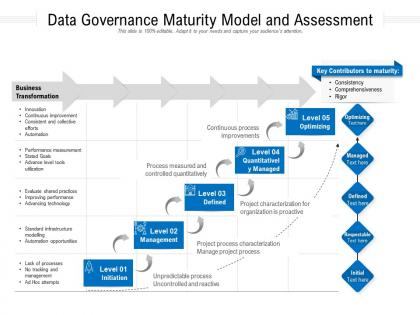
Totally! The basic framework works across industries - you just need to tweak it for your specific stuff. Healthcare has to deal with HIPAA, finance is all about regulatory reporting and risk stuff. Manufacturing cares more about operational data quality than, say, retail which is obsessed with customer analytics. The five levels stay the same though (initial to optimized). What changes are the actual practices and metrics you use to measure each level. Map out your industry's main regulations first, then figure out what data matters most to you. From there, just adjust the assessment criteria to match. It's honestly way more straightforward than people make it sound.
So technology speeds up data governance by handling all the tedious manual work that slows teams down. Data catalogs can auto-discover and classify your assets, lineage tools track data flows, and quality monitoring catches problems early. Those new AI classification tools are actually pretty impressive - way better than they used to be. But here's what I've learned the hard way: if your governance processes are already a mess, automation just creates organized chaos at lightning speed. Get your policies sorted first, then add tech to scale up what's working.
Culture's honestly everything when it comes to data governance. You can throw money at fancy tools and policies, but if people don't actually care about data quality or think it's someone else's problem, you're screwed. I've seen this so many times - organizations get stuck because nobody wants to take ownership. The ones that actually succeed? They have teams who are genuinely curious about their data and work together on it. Before you do anything else, figure out what's blocking people. Are they hoarding info? Just don't give a damn about quality? Fix those attitudes first, then worry about processes.
Start with building trust through quick wins - honestly, this part's crucial. Map out who you're dealing with first, then pick one group to focus on. Executives want their dashboards, data folks need training, IT wants clear processes. Don't try to boil the ocean here. Once you've got some momentum, flip from just sending updates to actually collaborating with them on governance policies. Make it feel like partnership, not compliance theater (because nobody has time for that). Set up feedback loops and adjust your style as you go. Oh, and meet people where they are - some will be way ahead, others still catching up.
So basically, the maturity model tells you where you're at right now and where you need to go. It's like a roadmap showing your current spot versus your goal. The framework? That's your actual toolkit - all the roles, policies, and daily workflows you'll be using. They're way better when you use them together, tbh. I'd start with the maturity assessment first to figure out what level you're at, then let that guide which parts of the framework to focus on. No point trying to tackle everything at once - that's just setting yourself up for chaos. Makes way more sense to prioritize based on what gaps you find.
So Capital One went from total data chaos to this solid centralized system that fixed their risk management issues. Netflix did something cool - they let people self-serve their analytics but kept quality checks in place. Mastercard got different teams working together on data stuff and cut inconsistencies by like 60%. The thing that stands out? They all started with small pilot programs instead of trying to change everything at once. Honestly makes sense when you think about it. Check out how they structured their governance committees if you're doing something similar.
-
Nice and innovative design.
-
Wonderful templates design to use in business meetings.
-
Content of slide is easy to understand and edit.
-
Use of different colors is good. It's simple and attractive.