


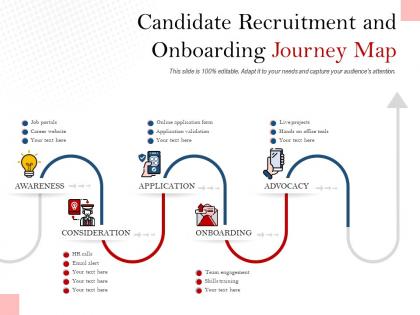
Candidate recruitment and onboarding journey map




Try Before you Buy Download Free Sample Product
 Impress Your
 Audience
 100%
100% Editable
 Save Hours
 of Time


Our Candidate Recruitment And Onboarding Journey Map are topically designed to provide an attractive backdrop to any subject. Use them to look like a presentation pro.
People who downloaded this PowerPoint presentation also viewed the following :
Candidate recruitment and onboarding journey map with all 2 slides:
Use our Candidate Recruitment And Onboarding Journey Map to effectively help you save your valuable time. They are readymade to fit into any presentation structure.
FAQs for Candidate recruitment and
Honestly, it comes down to just not being shitty to people. Communicate clearly from day one - tell them your timeline, stick to it, and for God's sake don't ghost anyone for weeks. Your interviewers need to actually show up prepared and engaged, not like they're doing candidates some huge favor. I'd also give feedback when you can. Even people you reject should walk away thinking "wow, they handled that professionally." Quick responses to questions go a long way too. Oh, and be real about what the job's actually like - nobody wants surprises on day one. It's literally just treating people how you'd want to be treated.
Send surveys to everyone who interviews - got the job or not. Keep them super short though, like 5-7 questions tops because people already feel awkward after rejection. Ask about timing, how prepared interviewers seemed, stuff like that. For finalists, phone calls are way better since you actually get real feedback when they're talking. Oh and definitely stalk your Glassdoor reviews - that's where people tell the brutal truth. Set up automatic emails so you don't forget, then check the data monthly for patterns.
Honestly, how you communicate during hiring is make-or-break for your company reputation. Candidates remember when you keep them updated versus leaving them hanging - and trust me, they'll tell their friends either way. Quick responses and clear timelines show respect. Even rejections can leave people with good impressions if you're thoughtful about it. I've literally seen people recommend companies that turned them down because the process felt human. Set expectations early about timing and actually follow through. Your communication style gives candidates a preview of what working there would be like.
Automate the boring stuff - confirmations, scheduling, status updates. Candidates hate being left in the dark about where they stand. But use real humans for interviews and feedback, obviously. I mean, chatbots work fine for basic questions at weird hours, but nobody's trying to discuss their dream job with some algorithm lol. The trick is letting tech handle all the administrative nonsense while actual people do the conversations that matter. Remove the friction without losing that human touch where it counts.
Honestly? Just be super upfront about everything. Send them the agenda beforehand - who they're meeting, what each part looks like, all that stuff. It cuts their stress in half because they can actually prep instead of spiraling about unknowns. Give them your contact info too so they can ask questions. Start with some casual chat when they arrive - helps them chill out. And please, PLEASE follow up fast afterward. The waiting game is brutal. I learned this the hard way when I was hiring last year. Basically just act like you're having them over for dinner, not putting them on trial.
Dude, employer branding is huge. It's literally the first thing candidates see before they even hit "apply." You're setting expectations about what it's actually like to work there. Here's the thing though - if your real workplace sucks but you're advertising free snacks and "work-life balance," people will feel totally scammed. I've watched this disaster play out so many times. A good brand pulls in people who'll actually thrive there. It also scares away the wrong fits, which honestly saves everyone time. Just don't oversell the perks if your management is trash.
Ugh, the worst thing companies do is just disappear after interviews - like, at least send a rejection email? Long, drawn-out processes kill momentum too. Half the time job descriptions are total fiction compared to what they actually want. Then you get interviewers who obviously didn't even glance at your resume beforehand. Getting passed around to five different people for scheduling is exhausting. Oh, and unclear timelines where you're just sitting there wondering if they forgot you exist. Word travels fast when companies treat people badly, so quick follow-ups and being upfront about realistic expectations goes a long way.
Honestly, giving real feedback makes such a huge difference. Candidates don't want to feel like just another number, you know? When you take a few minutes to actually comment on their interview - like maybe they nailed the technical questions but seemed nervous - they remember that. Even people you reject will respect your company way more. My friend got detailed feedback from a place that didn't hire her and she still recommends them to everyone. Generic rejection emails are whatever, but thoughtful notes help people improve. Try mentioning one strength and one growth area. It's literally five extra minutes but your reputation will thank you.
Honestly, start with post-interview surveys to get real candidate satisfaction scores. Time-to-hire is obvious but crucial - people hate waiting around. Your offer acceptance rate tells you a ton too. Drop-off rates are probably the most revealing though. They show exactly where your process is broken. Don't sleep on tracking communication response times either. Oh, and definitely monitor Glassdoor reviews since that's where candidates vent. Here's the thing - survey people you reject. Sounds counterintuitive but they'll give you the brutal truth about what actually sucks in your process.
Look, when companies actually put effort into diversity stuff, candidates notice right away. It's way better than those cookie-cutter job posts everyone ignores. Having diverse interview panels matters. So does writing job descriptions that don't sound like they're only for one type of person. People want to see you're serious about inclusion - not just checking boxes. Honestly, it makes candidates way more excited about working there. You end up with a bigger talent pool too, which is obviously good for business. Plus candidates are more likely to say yes because they trust the culture is real, not fake.
Look, I've seen this firsthand - when you make your application process actually bearable, way more people finish it. We're talking 60% fewer dropouts in some cases. Nobody wants to spend 45 minutes uploading their resume three different ways, you know? Keep it under 20 minutes max and only ask for the basics upfront. Save all the detailed questions for later rounds when they're already hooked. Quality goes up too because people aren't rushing through just to get it over with. Time your current process - I bet it's longer than you think. That's usually the wake-up call most companies need.
Start the whole process before they even walk in - shoot them a welcome package, tech details, that first week schedule. Nothing kills the vibe like showing up and waiting around for IT to magically find your laptop. Get them a buddy (not their boss though, that's weird). I'd do weekly check-ins the first month, then maybe dial it back. Build in some early wins so they don't feel lost. The whole point is making them feel like you actually want them there, not just filling a seat. A solid 90-day roadmap helps too.
Your hiring managers are literally the first impression candidates get of your company. Train them on basic interview skills and how to give decent feedback - some of these people have never learned how to talk to humans professionally, which is honestly kind of scary. Role-play different situations with them. Teach them to actually sell the position instead of just grilling people. Templates help, but they also need real conversation skills. Set clear timeline expectations too. Oh, and remind them that rejected candidates might apply again later or become clients, so don't be jerks about it.
Social media's honestly your best bet for showing what it's really like to work there. Get your current people to post about their actual day - the good stuff they genuinely love about the job. LinkedIn and Instagram work great for this. Quick responses to comments matter way more than you'd think. Shows you're not just ghosting candidates. Oh, and skip the boring "we're hiring" posts - nobody cares about those. Instead, share real employee stories and behind-the-scenes content. Maybe create a hashtag so candidates can document their experience too. Authenticity beats polished corporate content every time.
Honestly, communication is everything with remote hiring - these people are sitting at home wondering if you forgot about them. Video calls are a must for important interviews because talking to a blank screen sucks for everyone. Tell them upfront how your remote setup actually works, what tools you use, all that stuff they can't figure out by walking around your office. Quick response times become way more important when everything's happening through screens. Oh, and if you can swing it, do some kind of virtual team intro or show them around digitally. Trust me, it makes a huge difference in how connected they feel to the role.
-
Informative design.
-
Unique research projects to present in meeting.
-
Appreciate the research and its presentable format.
-
Informative presentations that are easily editable.