


Hr candidate recruitment evaluation form




Try Before you Buy Download Free Sample Product
 Impress Your
 Audience
 100%
100% Editable
 Save Hours
 of Time


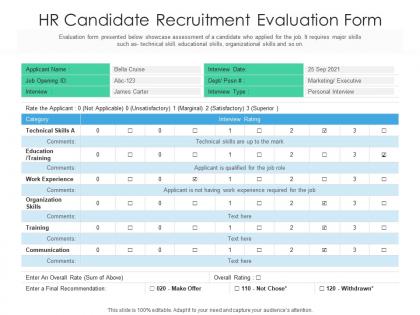
Evaluation form presented below showcase assessment of a candidate who applied for the job. It requires major skills such as technical skill, educational skills, organizational skills and so on.
People who downloaded this PowerPoint presentation also viewed the following :
Hr candidate recruitment evaluation form with all 2 slides:
Use our HR Candidate Recruitment Evaluation Form to effectively help you save your valuable time. They are readymade to fit into any presentation structure.
FAQs for Hr candidate
Honestly, start with the basics - time-to-hire, cost-per-hire, and quality of hire. Track your offer acceptance rate too. But here's the thing that actually matters: retention. If people are bailing after 6 months, your screening process sucks. I'd also look at where your best hires come from (source effectiveness) and whether hiring managers are happy with who you're sending them. They're stuck working with these people, so their feedback is gold. Oh, and candidate experience scores help too - word travels fast about terrible interview processes. Pick maybe 3-4 metrics max. Don't try tracking everything or you'll go crazy.
Honestly, AI screening tools have been a lifesaver for me. I use them to weed out unqualified resumes first - saves hours of mindless scrolling. For tech roles, platforms like HackerRank test actual coding skills way better than asking "tell me about yourself" for the hundredth time. Video analysis tools can even spot communication patterns and culture fit (though sometimes I wonder if they're just fancy guesswork). The sweet spot is letting algorithms handle the boring initial filtering, then you focus on the candidates who actually made it through. Trust me, your sanity will thank you.
Honestly, employer branding is a game-changer for getting good people to actually want to work for you. Candidates are checking out your Glassdoor reviews and stalking your social media anyway - might as well make it work in your favor. Quality people will apply instead of you having to beg them, which saves you so much time. Plus it helps when you can't outbid Google on salary, you know? I'd start by asking your favorite employees what they actually like about the job (not the generic stuff), then just put that everywhere you recruit.
Just build it right into your scorecard - track pipeline diversity, who's on interview panels, final hiring ratios by demographics. Start simple though. See where people drop off in your process and look for patterns there first. Measure both the early stuff (which sourcing channels work) and end results (who you actually hire). Here's the thing - don't just keep this in HR. Make hiring managers see these numbers too, or nothing changes. Set targets for each role, review quarterly. Way better than just crossing your fingers and hoping it works out.
For personality stuff, Big Five and Myers-Briggs work well to see if someone fits your team vibe. Cognitive tests are solid for checking problem-solving skills. Situational judgment ones show how they'd actually handle weird workplace drama - honestly those can be pretty revealing. Emotional intelligence assessments matter a lot if you're hiring managers. Don't go overboard though. Pick maybe 1-2 that actually match what the job needs instead of making candidates jump through a million hoops. These should back up your interviews, not replace talking to people. Oh, and definitely still call their references.
You gotta nail down what you're actually hunting for first - skills, experience, whether they'll mesh with the team, whatever. Let HR do the initial filtering and scheduling headaches. You focus on the technical stuff that actually matters for the role. I've watched this crash and burn so many times when nobody knows who's supposed to do what part. Check in with each other regularly during busy hiring periods - trust me, you'll need to pivot. Both of you should use the same evaluation criteria, maybe whip up a basic scorecard so you're comparing apples to apples. Makes defending your final picks much less painful later.
Honestly, the biggest traps are unconscious bias (we all do it), rushing when you're desperate to fill a role, and not setting clear criteria beforehand. Don't let one person make the final call either. I've seen teams get burned by skipping reference checks - such a rookie mistake! Build scorecards for consistency and train your interviewers on bias stuff. Take decent notes too. Short sentences help. The hardest part is sticking to your process when things get crazy, but that's exactly when you need it most.
Dude, candidate feedback is seriously underrated. Most companies just ghost people after interviews, which is insane because you're missing out on free intel about what's broken in your process. When candidates tell you your questions were weird or it took forever to hear back, that's actionable stuff right there. I'd focus on the basics - timing, how well you communicated, interview quality, the whole vibe. Quick survey after each interview works great. Then actually review the responses monthly (this is where most people drop the ball). You'll start seeing patterns pretty fast, and those insights will save you from losing good people to dumb process issues.
Track your time-to-hire, cost-per-hire, and quality scores first - most companies collect this stuff but never look at it. Survey candidates and hiring managers to find where things get stuck. Try A/B testing different interview styles to see what actually works. I'd also dig into your best employees' backgrounds since that'll help you write better job posts. Oh, and don't try to do everything at once. Pick one thing this week and go from there. You'll be surprised how much patterns start showing up once you're actually paying attention to the data.
Look, AI definitely speeds up resume screening and catches patterns humans miss. But here's the catch - it's swapping human bias for algorithmic bias, which honestly might be worse since you can't see it happening. These systems learn from old hiring data that's already biased against certain groups. The efficiency gains are real though, no question there. Just don't trust it blindly - you'll need to audit for discrimination regularly and have actual people review its picks. Oh, and maybe test it on diverse candidate pools first?
Look for three main things: strategic thinking, emotional intelligence, and adaptability. Can they see the big picture beyond just day-to-day stuff? EQ is massive - I've watched brilliant people fail hard because they couldn't handle relationships or read situations properly. You'll also want someone flexible since everything changes so fast these days. Oh, and make sure they've actually developed other people, not just hit their own numbers. Ask behavioral questions about real situations they've faced. That's way more telling than hypotheticals.
Give it at least a year, maybe two, before you really know if someone's working out. Performance reviews and whether they stick around - that's what actually matters. Those 90-day snapshots? Pretty much useless IMO. Also check engagement scores and what their teammates think of them. The real wins are hitting their targets, not jumping ship, and actually growing in the role. I'd say set up those quarterly reviews with managers to see how new people are doing. Oh, and promotion rates down the line - forgot that one but it's huge.
Yeah, cultural fit matters but honestly it's gotten pretty tricky to navigate. You'll want to figure out if someone meshes with your team's work style and values - like how they communicate or collaborate. Just don't fall into that trap where "cultural fit" secretly means hiring carbon copies of everyone else. That's where companies get in trouble, you know? Focus more on whether they align with your actual values and can work well with the team. Oh, and definitely write down what cultural fit even means for your specific role before you start interviewing people. Makes the whole thing way less subjective.
Honestly, you've gotta stay flexible with your hiring criteria based on what's happening in the market. Talent shortage in your field? Time to focus on potential over perfect experience - kinda like dating in a small town, you adjust your standards lol. Remote work blowing up means digital collaboration skills matter way more now. Same goes for new tech certifications or whatever's hot in your industry. I'd check salary surveys and see what competitors are doing, then tweak your evaluation process every few months. The market shifts fast these days.
Oh man, remote hiring can be tricky! Start with structured video interviews - same questions for everyone so you're not all over the place. Get your team using shared scorecards to evaluate together. Honestly, the tech check thing is a lifesaver... nothing worse than spending 20 minutes troubleshooting someone's mic. Skip the hypotheticals and give them actual work to do - take-home projects or virtual simulations work great. Don't forget to see how they communicate since that's everything when you're remote. Write notes right after or you'll forget half the details!
-
Helpful product design for delivering presentation.
-
Enough space for editing and adding your own content.
-
Editable templates with innovative design and color combination.
-
Great product with effective design. Helped a lot in our corporate presentations. Easy to edit and stunning visuals.