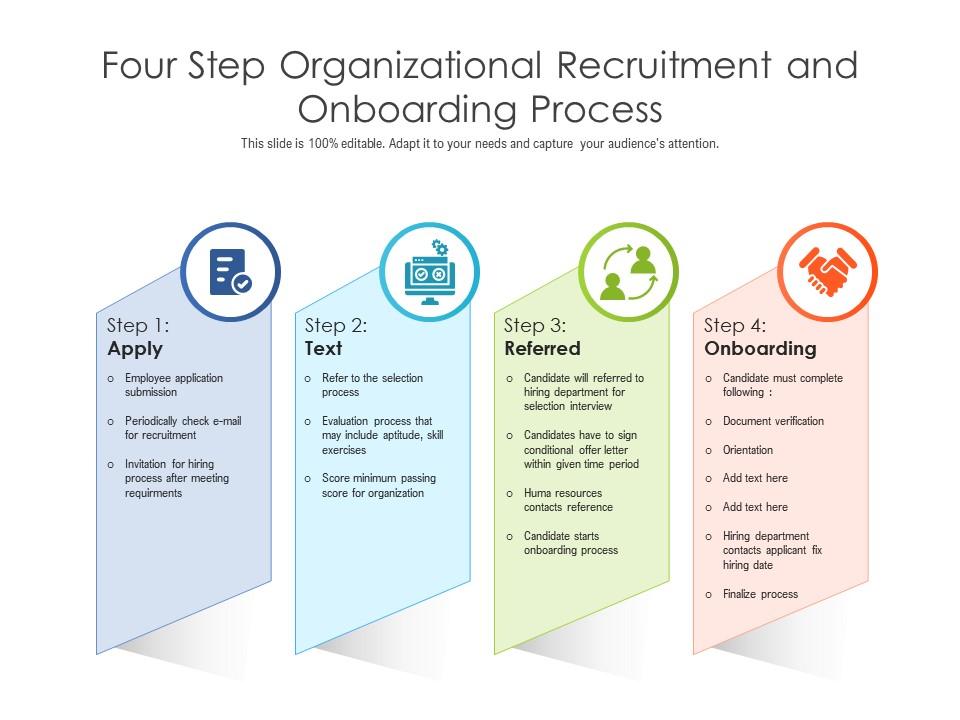
Four step organizational recruitment and onboarding process
Try Before you Buy Download Free Sample Product
Audience
Editable
of Time
Our Four Step Organizational Recruitment And Onboarding Process are topically designed to provide an attractive backdrop to any subject. Use them to look like a presentation pro.
People who downloaded this PowerPoint presentation also viewed the following :
Four step organizational recruitment and onboarding process with all 2 slides:
Use our Four Step Organizational Recruitment And Onboarding Process to effectively help you save your valuable time. They are readymade to fit into any presentation structure.
FAQs for Four step organizational recruitment
Key stages of an effective recruitment process include job analysis and planning, sourcing and attracting candidates, screening and interviewing, assessment and selection, and offer negotiation. These stages streamline hiring by defining clear requirements, expanding candidate pools, and ensuring thorough evaluation, with many organizations finding that structured processes reduce time-to-hire while improving candidate quality and retention rates.
Technology enhances recruitment and onboarding by streamlining candidate screening, automating administrative tasks, and personalizing employee experiences through AI-powered matching, digital workflows, and virtual reality training modules. These solutions enable faster hiring cycles, reduce manual paperwork, and improve new hire engagement, with many organizations finding that integrated platforms deliver significant cost savings while creating more compelling candidate experiences.
Organizations should track time-to-fill, cost-per-hire, quality-of-hire scores, candidate experience ratings, offer acceptance rates, and retention rates within the first year. These metrics work together to provide comprehensive insights into recruitment effectiveness, with many companies finding that combining speed and quality indicators, rather than focusing solely on hiring velocity, ultimately delivers better long-term outcomes and stronger competitive advantage.
Employer branding significantly impacts talent acquisition by enhancing company reputation, differentiating from competitors, and communicating organizational values effectively. Strong employer brands streamline recruitment processes, reduce hiring costs, and attract higher-quality candidates, with many organizations finding that strategic branding initiatives ultimately deliver faster placements, improved employee retention, and enhanced competitive advantage in increasingly tight talent markets.
Candidate experience significantly influences recruitment success by affecting brand reputation, talent pool quality, and hiring outcomes throughout the selection process. A positive experience enhances employer branding, increases offer acceptance rates, and generates referrals, while poor experiences can damage company reputation and deter top talent, ultimately impacting organizational competitiveness.
Organizations can identify cultural fit by incorporating behavioral interviews, team-based assessments, scenario-based questions, culture-specific case studies, and peer interaction sessions into their interview process. These methods enable recruiters to evaluate candidates' values, work styles, and team collaboration approaches, while also allowing candidates to experience the company environment firsthand, ultimately ensuring mutual alignment and reducing turnover rates.
Effective job descriptions include clear role responsibilities, specific required qualifications, company culture insights, growth opportunities, and transparent compensation ranges. These elements streamline recruitment by attracting qualified candidates while deterring mismatched applicants, with many HR departments finding that detailed, authentic descriptions reduce interview time by 40% and improve new hire retention significantly.
Remote onboarding requires enhanced digital communication, virtual mentor assignments, structured video check-ins, and comprehensive online resource libraries, while in-office onboarding leverages face-to-face interactions, physical workspace tours, and informal networking opportunities. Companies like tech startups and consulting firms find that remote employees need more intentional relationship-building activities and clear digital workflows, ultimately delivering consistent engagement across both formats.
Common onboarding pitfalls include information overload, lack of structured guidance, insufficient role clarity, missing cultural integration, and inadequate feedback mechanisms. These challenges often overwhelm new hires and reduce retention, with many organizations finding that streamlined processes, clear expectations, and regular check-ins significantly enhance employee engagement and accelerate productivity timelines.
Feedback from new hires can be effectively gathered through structured surveys at 30, 60, and 90-day intervals, one-on-one check-ins with managers, anonymous digital feedback platforms, and focus groups. These methods enable organizations to identify onboarding gaps, enhance training programs, and improve retention rates, with many companies finding that systematic feedback collection significantly streamlines their recruitment processes and delivers better employee experiences.
Onboarding training resources should include role-specific skill modules, company culture and values orientation, compliance and policy documentation, mentorship programs, and interactive technology platforms. These resources streamline new hire integration by delivering structured learning paths, fostering cultural alignment, and providing ongoing support systems, with many organizations finding that comprehensive onboarding programs significantly reduce turnover while accelerating productivity and employee engagement.
Organizations can improve diversity and inclusion by implementing blind resume screening, partnering with diverse professional organizations, expanding recruitment channels beyond traditional networks, and establishing diverse interview panels. These strategic approaches help eliminate unconscious bias while broadening talent pipelines, with many companies finding that diversified recruitment processes ultimately deliver stronger innovation, better decision-making, and enhanced competitive advantage in increasingly global markets.
Key legal considerations include equal employment opportunity compliance, background check regulations, wage and hour law adherence, disability accommodation requirements, and proper documentation practices. These safeguards streamline hiring by ensuring fair candidate evaluation, minimizing discrimination risks, and maintaining regulatory compliance, with many organizations finding that structured legal frameworks ultimately enhance their talent acquisition while reducing costly litigation exposure.
Organizations should review recruitment strategies quarterly for tactical adjustments and conduct comprehensive annual reviews for strategic overhauls, while monitoring key metrics like time-to-hire and candidate quality continuously. With many companies finding that quarterly assessments enable rapid response to market changes, this approach helps maintain competitive talent acquisition, streamline hiring processes, and ultimately deliver better candidate experiences in an increasingly dynamic employment landscape.
Referrals serve as powerful recruitment tools by leveraging existing employees' networks to identify qualified candidates, reducing hiring costs, accelerating time-to-fill, and improving cultural fit through trusted recommendations. Organizations encourage referrals through structured incentive programs, referral bonuses, recognition systems, and gamification strategies, with many companies finding that referred candidates demonstrate higher retention rates and faster onboarding success.
-
Easy to edit slides with easy to understand instructions.
-
Great designs, really helpful.
-
Very unique and reliable designs.
-
Visually stunning presentation, love the content.
-
Excellent template with unique design.