

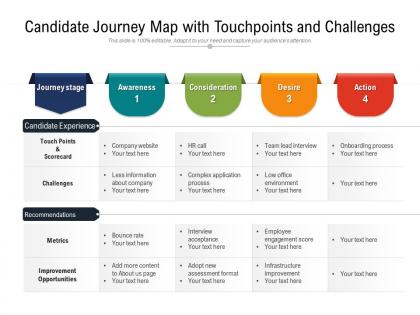
Candidate journey map with touchpoints and challenges




Try Before you Buy Download Free Sample Product
 Impress Your
 Audience
 100%
100% Editable
 Save Hours
 of Time


Our Candidate Journey Map With Touchpoints And Challenges are topically designed to provide an attractive backdrop to any subject. Use them to look like a presentation pro.
People who downloaded this PowerPoint presentation also viewed the following :
Candidate journey map with touchpoints and challenges with all 2 slides:
Use our Candidate Journey Map With Touchpoints And Challenges to effectively help you save your valuable time. They are readymade to fit into any presentation structure.
FAQs for Candidate journey map with
Honestly, most companies totally blow it before they even get to interviews. There are five stages you should map out: awareness, application, screening, decision-making, and onboarding. But here's the thing - if your application process is a pain in the ass, you've already lost good people. Job posts need to actually sound appealing, not like corporate word vomit. Track where candidates drop off in each stage. The awareness and application parts? That's where you can really stand out from other companies. Fix those friction points first - way more impact than obsessing over interview questions.
So candidate journey mapping is basically tracking every single interaction people have with your company during hiring. You'll quickly see where candidates are dropping off - like if your application takes 45 minutes to complete (ugh) or people never hear back after interviews. It's honestly like having a roadmap of what's broken in your process. Map out one recent hire's experience from start to finish first. Then you can fix the annoying parts, communicate better, and actually start attracting good people instead of driving them away with a terrible experience.
So I'd definitely start with Miro or Lucidchart - both are super easy for mapping out all the touchpoints. Honestly, my favorite thing is doing sticky note workshops where you actually walk through every single step with your recruiting team. It sounds cheesy but it works! For collecting data, send surveys to candidates right after each stage. Google Analytics helps track the careers page stuff too. But here's the thing - just talk to your recent hires about what their experience was really like. Interview the ones who got hired AND the people who bailed halfway through. Oh, and start with mapping just one role first before you go crazy trying to do everything.
Honestly, data analytics is a game-changer here. Track stuff like how many people actually finish applications, your response times, and satisfaction scores at every step. You'll spot patterns you totally missed before - maybe your job posts sound intimidating or scheduling interviews is a total mess (happens more than you'd think). Check conversion rates between stages and survey responses. Also look at how people behave on your website. It gives you real proof of what's actually broken instead of just guessing what candidates hate about your process.
So employer branding is basically your company's reputation and first impression rolled into one. Candidates research you just as much as you're researching them these days - which honestly still catches some companies off guard. Your brand affects everything from who applies to whether top people actually accept your offers. Job posts, Glassdoor reviews, social media presence - all of it shapes the candidate experience. People decide if they even want to work for you before they hit "apply." Quality of applicants goes up when your brand's solid. Quick tip: audit your online presence and make sure it matches what you want candidates to think about your company.
Honestly, just ask them! Send quick surveys after applications, interviews, rejections - even during onboarding if they make it that far. Most candidates will be pretty straight with you when you actually bother asking. Then map what they're saying to each stage so you can spot where things get messy. Here's the thing though - don't be one of those companies that collects all this feedback and does nothing with it. Actually fix the stuff that's broken and check if your satisfaction scores get better. Oh, and if hitting every touchpoint feels like too much work right now, just pick one or two to start with.
Honestly, most teams just document their own internal stuff without actually talking to candidates first. Big mistake! You end up mapping what you *think* is happening vs reality. I'd definitely interview some recent hires before you even start - their stories will surprise you. Also don't make it super generic. Different roles = different experiences, so get specific about personas. Oh and emotions matter way more than people realize - candidates remember how you made them feel, not just your process steps. Skip the assumptions, go straight to the source.
Look, the hiring process is basically a preview of what it's like to work there. Candidates who get treated well during interviews? They show up way more engaged and stick around longer. But if you're ghosting people or making them do weird assignments for free - honestly, that's just setting yourself up for trust issues later. Nobody forgets how you made them feel when they were vulnerable and job hunting. Good experiences build loyalty before someone even says yes to your offer. Bad ones create doubt from their first day. I'd definitely ask your recent hires what annoyed them most about the process. You'll probably spot some easy fixes right away.
Your ATS probably already tracks where people bail during applications - check those completion rates first. Chatbots grab instant feedback, and analytics tools show you the whole funnel visually. Video interview data, assessment scores, communication logs - all of it paints the full picture when you connect the dots. Predictive analytics are pretty cool too, they'll flag issues before candidates get fed up and ghost you. Just don't go survey-crazy at every step because people hate that. Real-time insights from every touchpoint help you spot exactly where things go sideways. Start by seeing what data you're already collecting before buying new tools.
Break down your candidate journey by demographics - career level, generation, industry stuff like that. Entry-level people need way more hand-holding and employer branding content. Senior folks? They want streamlined processes and direct access to the actual decision-makers. Gen Z is all about mobile-first and instant responses, but older candidates still prefer phone calls (which honestly makes sense). Survey your current candidates first to see what they actually want - don't just guess. Then build out maybe 2-3 different journey maps for your main groups and adjust your messaging accordingly.
Honestly, start with whatever's causing you the biggest headache right now - maybe it's people dropping out mid-process or taking forever to fill roles. Track your application completion rates and time-to-hire for sure. Candidate satisfaction surveys are clutch too, plus where people are bailing in your funnel. I'd also watch offer acceptance rates and which job boards actually bring decent candidates (some are total duds). Oh, and don't sleep on just asking candidates directly what sucked about your process - they'll be brutally honest if you give them the chance. Pick like 3-4 metrics max to start or you'll drown in data.
Dude, storytelling is a game-changer for candidate experience. Our brains are wired to remember stories over boring bullet points - it's wild how much better they stick. Get real stories from your current team about their career paths, daily struggles, big wins, whatever feels authentic. Then sprinkle these throughout job posts, your careers page, interviews. Even rejection emails hit different with a personal touch. I swear, sharing how Sarah from marketing pivoted from retail beats generic "growth opportunities" every time. People connect emotionally when they see themselves in someone else's journey. Start collecting those stories now - you'll have gold for every stage of hiring.
Honestly? Don't just dump your values on the careers page and call it a day. Go through each step of hiring and ask if it actually matches what you claim to believe. Transparency matters? Post salary ranges and be real about the job. Value teamwork? Get multiple people involved in interviews instead of making candidates face some intimidating solo interrogation (seriously, those suck). Your recruiters need to genuinely get your culture, not just spit out corporate speak. Pick your top 3 values, audit one role against them, then fix the worst problems first.
Get everyone together - HR, hiring managers, IT, marketing, even facilities if you have to. Walk through one recent hire's whole experience from start to finish and you'll quickly spot where things get messy. Have each team own their part of the process. Marketing might finally realize their career page is trash, or IT discovers people can't even apply on their phones (happens more than you'd think). The key is making sure everyone sees the big picture instead of just focusing on their own stuff. Then fix the worst pain points first.
Remote hiring totally flips the script on how you connect with candidates. No more bumping into people in hallways or getting that instant gut feeling about whether they'd fit in. Everything happens through screens now, which is honestly kind of a relief since those "office vibes" were pretty hit-or-miss anyway. You'll need to get creative with showing your company culture virtually. Over-communicate at every step because candidates can't pick up on subtle cues anymore. The whole process becomes more structured, but hey - at least people who live across the country can actually apply now. Focus on making those video calls feel like real conversations instead of interrogations.
-
Enough space for editing and adding your own content.
-
Best way of representation of the topic.