Journey map for leadership development program

Rating:
95%
Journey map for leadership development program
Slide 1 of 2

or

Favourites Favourites

Try Before you Buy Download Free Sample Product

Audience Impress Your
Audience
Editable 100%
Editable
Time Save Hours
of Time
The Biggest Sale is ending soon in
0
0
:
0
0
:
0
0
Rating:
95%
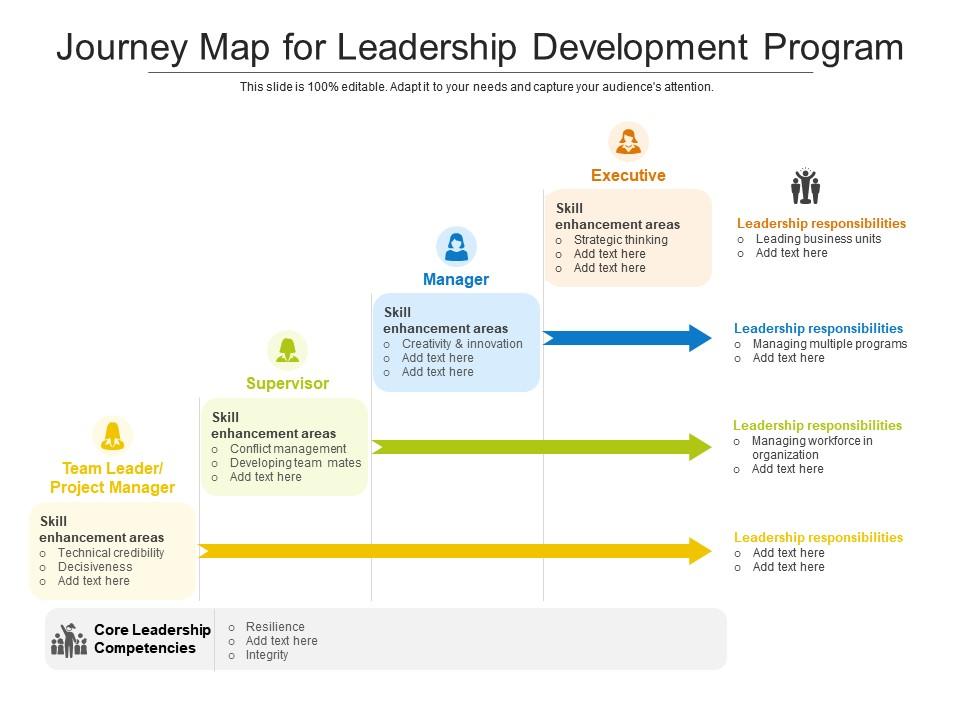
Introducing our Journey Map For Leadership Development Program set of slides. The topics discussed in these slides are Project Manager, Leadership Competencies, Skill Enhancement. This is an immediately available PowerPoint presentation that can be conveniently customized. Download it and convince your audience.

FAQs for Journey map for

Dude, forget that old-school "I'm the boss" mentality - it's totally dead. Three things matter now: emotional intelligence, being adaptable, and talking to people like they're actual humans. You gotta read the room and pivot fast when stuff changes. Also, people want leaders who listen and admit mistakes instead of pretending they know everything. Create space where your team can mess up without getting destroyed for it. Oh, and get comfortable with uncertainty because... well, everything's constantly shifting anyway. Start asking your team questions instead of just barking orders at them.

Start with 360 feedback - get input from bosses, peers, and reports on current skills and gaps. Use competency assessments like Hogan or DDI for benchmarking. Honestly, way too many companies skip this "where are we now" step and jump straight into training programs, which never works. Check your succession planning depth too - who's actually ready to move up? Also track promotion rates and retention of high-potential people. Oh, and don't forget internal mobility metrics - sometimes your best talent is already there, just in the wrong spots.

Dude, emotional intelligence makes or breaks leaders. I've watched super smart people crash and burn because they couldn't read the room or connect with their team. You gotta start with yourself first - like when you're having a rough day, notice how it messes with your judgment. Once you nail that self-awareness thing, reading other people gets way easier. It's honestly the difference between being someone people follow versus someone they just tolerate. Plus you'll handle conflicts better and actually build real trust instead of that fake corporate stuff. The technical skills matter, but this emotional piece? That's where the magic happens.

Here's what worked for us - mentorship programs where you pair high-performers with senior leaders. Cross-functional projects are gold too, they really push people out of their comfort zones. That rotation thing I mentioned? Way more effective than I thought it'd be. Give emerging leaders actual decision-making power on small stuff first, then build from there. Formal training and 360 feedback matter, but honestly the real magic happens when you stop waiting for people to just naturally develop. Map out development paths now - like, who do you see leading in 2-3 years? Start there and work backwards.

Honestly, mentors are amazing because they've been where you want to go. They'll tell you the stuff no training program covers - like which battles to pick and how to actually handle difficult conversations. The feedback is instant too, which beats waiting months for a performance review. What I love most is having someone who genuinely wants you to succeed. It's weirdly motivating when someone believes in you more than you believe in yourself sometimes. If you're looking for one, just think about leaders you admire and send them a message. Worst they can say is no, right?

Look, having diverse voices around the leadership table changes everything. You get way better decisions because nobody's sitting in an echo chamber anymore. Different backgrounds bring fresh problem-solving approaches – and honestly, the innovative ideas that come out of it are pretty impressive. Your team trusts you more when they see you actually value different perspectives. Plus you'll connect with way more customers and markets. Oh, and retention improves big time when people feel heard. Try this: next meeting, actively ask for opposing viewpoints. You'll be surprised how much sharper your thinking gets.

Honestly, you've gotta read the room first. High-performing teams? Step back and let them do their thing - micromanaging will just piss them off. But new people or when everything's on fire? Be way more hands-on. I learned this one the hard way lol. Creative stuff works best when you're more like a facilitator, while crazy deadlines usually need you being more structured about it. Watch what actually energizes your team vs what makes them check out mentally. Oh, and just ask them directly what kind of leadership helps them win - sounds obvious but most managers never do this.

Honestly, the trickiest part is getting people to actually care - most see it as fluff training they have to sit through. Then there's the follow-through problem. Companies do these sessions and... that's it. No practice, no reinforcement. It's wild how many places teach leadership skills but their own managers act completely different. Also measuring if it actually worked? Good luck with that one. You really need to tie everything back to what they're dealing with day-to-day and build in some way to keep people accountable after. Otherwise you're just checking a box.

Honestly, feedback is such a game-changer for leadership development. People have zero clue about their blind spots until someone actually tells them - I've seen it happen so many times. Regular 360 reviews or even simple check-ins help team members understand how they're actually affecting others. The trick is making it feel safe, not like some ambush situation. Try monthly peer feedback rounds where everyone shares what someone did well plus one growth area. Oh, and make sure it goes both ways - leaders giving AND receiving feedback. Creates this continuous learning thing that actually works.

Honestly, start with a 360 feedback assessment - those things will humble you real quick by showing what you can't see about yourself. LinkedIn Learning's pretty solid for building specific skills, and don't sleep on good leadership books (I swear I get more from reading than sitting through another workshop). Find yourself a mentor if you can, then flip it and mentor someone else down the road. Podcasts are perfect for commutes too. Oh, and hit up some conferences for the networking - that's where the real connections happen. Just pick 2-3 things that actually work for how you learn instead of bouncing around everywhere.

Oh man, succession planning is HUGE - most companies totally blow this. Map out who could replace your key people before you're scrambling when someone quits. I learned this the messy way when our best manager left with zero notice. Start by looking at your current team and figuring out where you're most screwed if someone leaves tomorrow. Then give your potential successors real challenges, not just busy work. Mentoring helps too. Honestly, the stretch assignments are what really develop people though - they need to actually do harder stuff, not just shadow someone.

Start with psychological safety - nobody's gonna pitch ideas if they're scared of getting shut down. Celebrate the smart failures, not just wins. Give people actual time to mess around with new stuff (like 10% of their week, whatever works). Here's the thing though - you gotta participate yourself, not just tell everyone else to be creative. Ask "what if" questions all the time. Push back when people say "that's how we've always done it." Oh, and actually DO something with the good ideas people bring you. Nothing kills innovation faster than watching suggestions vanish into thin air.

Honestly, you gotta track both the immediate stuff and what happens months later. Do quick surveys right after training to see if people actually learned anything. The real magic happens when you check back 3-6 months out - are they using it? 360 feedback is clutch because coworkers will tell you if someone's actually changing. I mean, promotions within a year are pretty telling too. Business metrics matter - like did team engagement go up? Oh, and definitely set those checkpoints before you start the whole thing.

First thing - map out what leadership skills actually match your company's goals. If you're cutting costs, don't waste time on innovation workshops, you know? Focus development programs on the specific gaps that'll move the needle on your strategy. Honestly, most companies screw this up by treating it like a checkbox exercise. Measure how it impacts real business results, not just who showed up. Think of it as investing in your strategy, not some fluffy HR thing. Oh, and review it quarterly - business changes fast and your leadership development should too.

Oh man, digital leadership training has totally changed the game. You can do VR simulations now that are honestly kind of crazy realistic - way better than those boring all-day seminars we used to sit through. The AI coaching gives you instant feedback, plus there's personalized learning paths that actually adapt to how you learn. I've been messing around with some of these platforms lately. You'll find mentors from anywhere in the world, and the analytics show exactly what you're nailing vs what needs work. Check out LinkedIn Learning or MasterClass - you can squeeze sessions in whenever instead of blocking out entire days.

Ratings and Reviews

95% of 100
Review Form
Write a review
Most Relevant Reviews
  1. 80%

    by Darrel Burns

    Attractive design and informative presentation.
  2. 100%

    by Doug Carroll

    Great designs, really helpful.
  3. 100%

    by Efrain Harper

    Qualitative and comprehensive slides.
  4. 100%

    by Earle Willis

    Topic best represented with attractive design.

4 Item(s)

per page: