

Data governance program powerpoint presentation slides






Try Before you Buy Download Free Sample Product
 Impress Your
 Audience
 100%
100% Editable
 Save Hours
 of Time


Showcase data management practices with our content ready Data Governance Program PowerPoint Presentation Slides. Establish processes to ensure effective data management using Information Architecture PPT slides. Data management can enable better planning, minimize rework, optimize staff effectiveness. The information technology governance PowerPoint complete deck contains ready to use slides such as the need for data governance, why companies suffer from data governance, automated data governance, framework, roles and responsibilities, ways to establish data management process, improvement roadmap, etc. The easy to understand data migration program PPT visuals are fully editable. You can modify, color, text, and font size. It has relevant templates to cater to your business needs. Utilize visually appealing information architecture PowerPoint templates to define a set of data management procedures and plans. Data governance is a quality control discipline, assess data accuracy consistency and timeliness. Download this professionally designed information governance program presentation deck to manage, improve, monitor and protect organizational information. Clientele grows with our Data Governance Program Powerpoint Presentation Slides. Give a big boost to your customer base.
People who downloaded this PowerPoint presentation also viewed the following :
Content of this Powerpoint Presentation
Slide 1: This slide introduces Data Governance Program. State Your Company Name and begin.
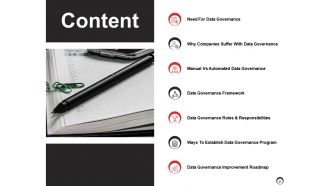
Slide 2: This slide shows Content of the presentation.
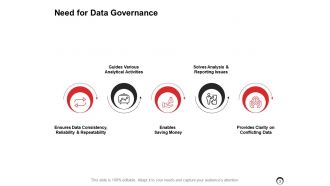
Slide 3: This slide presents Need for Data Governance describing- Guides Various Analytical Activities, Solves Analysis & Reporting Issues, Ensures Data Consistency, Reliability & Repeatability, Enables Saving Money, Provides Clarity on Conflicting Data.
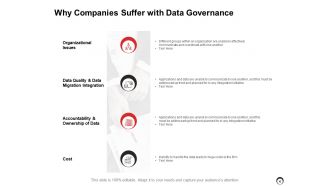
Slide 4: This slide showcases Why Companies Suffer with Data Governance.
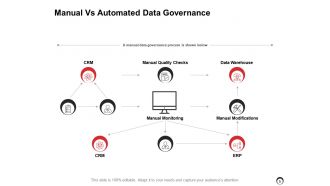
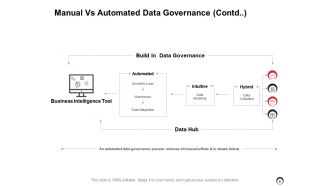
Slide 5: This slide displays Manual Vs Automated Data Governance with related chart.
Slide 6: This is another slide continuing Manual Vs Automated Data Governance.
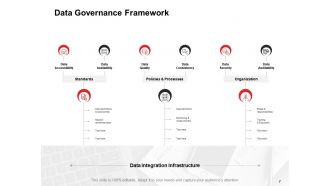
Slide 7: This slide represents Data Governance Framework describing- Standards, Policies & Processes, Organization.
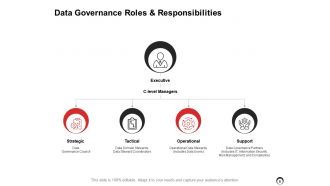
Slide 8: This slide shows Data Governance Roles & Responsibilities describing- Strategic, Tactical, Operational and Support.
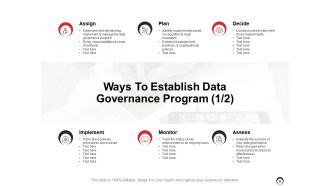
Slide 9: This slide presents Ways To Establish Data Governance Program describing- Assign, Decide, Plan, Implement, Assess and Monitor.
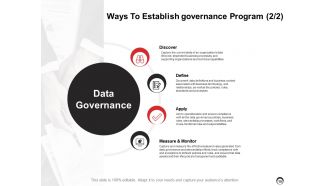
Slide 10: This slide displays Ways To Establish governance Program describing- Discover, Define, Apply, Measure & Monitor.
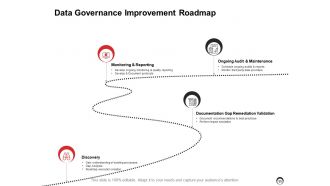
Slide 11: This slide represents Data Governance Improvement Roadmap describing- Discovery, Documentation Gap Remediation Validation, Monitoring & Reporting, Ongoing Audit & Maintenance.
Slide 12: This slide showcases Data Governance Program Icons.
Slide 13: This is Our Mission slide with related imagery and text.
Slide 14: This is Our Team slide with names and designation.
Slide 15: This is About Us slide to show company specifications etc.
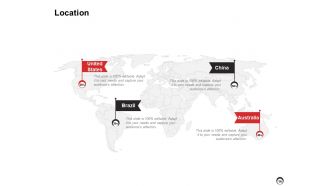
Slide 16: This is a Location slide with maps to show data related with different locations.
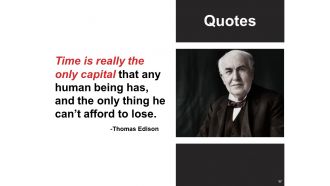
Slide 17: This is a Quotes slide to convey message, beliefs etc.
Slide 18: This is a Comparison slide to state comparison between commodities, entities etc.
Slide 19: This is an Idea Bulb & Brain slide to state a new idea or highlight information, specifications etc.
Slide 20: This is a Target slide. State your targets here.
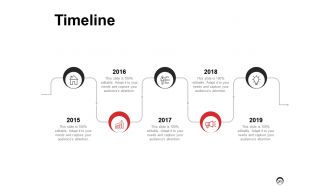
Slide 21: This is a Timeline slide to show information related with time period.
Slide 22: This is a Financial slide. Show your finance related stuff here.
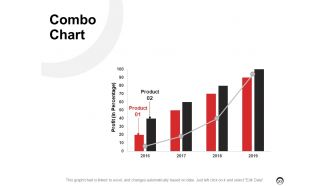
Slide 23: This slide shows Combo Chart with two products comparison.
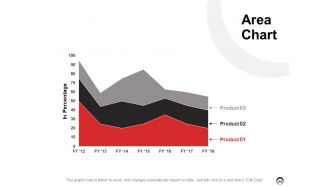
Slide 24: This slide presents Area Chart with three products comparison.
Slide 25: This is a Thank You slide with address, contact numbers and email address.
Data governance program powerpoint presentation slides with all 25 slides:
Identify your biggest assets with our Data Governance Program Powerpoint Presentation Slides. Elaborate on areas of core competency.



FAQs for Data governance program
Okay so you need five things that actually matter. Someone has to own each chunk of data - like really own it, not just pretend to. Set up quality standards and track them (boring but necessary). Write policies for who can access what and how they use it. Data lineage tracking is huge - you gotta know where everything comes from and where it goes. Oh, and create a governance committee that can actually make decisions instead of just talking in circles for hours. Honestly though? Start with just one department first. Prove it works there before trying to fix your entire company at once.
Check your current setup across five main areas: policies, data quality, who does what, tech infrastructure, and compliance stuff. Most companies are shocked when they actually audit what they have - it's usually messier than expected. Score each area 1-5 or use frameworks like DAMA-DMBOK if you're feeling fancy. Don't just look at what's written down though. What's really happening day-to-day matters more than fancy documents nobody reads. Be honest about the gaps so you can fix what'll actually move the needle.
So you'll want a Chief Data Officer or someone similar running the show - they handle strategy and get the executives on board. Data stewards are crucial too, basically your subject matter experts who actually understand the data and make daily calls on quality stuff. Then grab some data custodians for the technical bits and business analysts to translate between the tech people and everyone else. Honestly, I've seen too many companies skip the clear ownership part and then wonder why their governance turns into pointless meetings. Just make sure each person knows exactly what they're responsible for upfront.
Look, data governance basically sets up processes that keep you compliant without constantly scrambling to catch up. Clear policies for collecting, storing, and using data that match regulations like GDPR. Everyone knows their role too. Automated controls and audit trails are where it gets good - trust me, you don't want to track compliance stuff manually. It's such a headache. Your framework handles data quality and consent management, which are honestly the biggest compliance nightmares. I'd start by mapping your current data flows and figuring out where you're most vulnerable to violations.
Honestly, leadership has to actually walk the walk first - using data themselves instead of just preaching about it. Get everyone trained up on self-service dashboards so data doesn't feel scary. When teams nail a data-driven decision, celebrate it! Recognition really does work. Someone needs to own data quality too, can't just be everyone's job and no one's job, you know? Those "data storytelling" sessions where people share cool insights they found are gold. Oh, and definitely start with small pilot projects - builds momentum way better than going big right away. Make it feel helpful, not like extra work.
So data governance is basically your big-picture rules and policies - like the playbook for how data should work in your company. Stewardship? That's the actual people doing the work every day. Governance tells you what needs to happen, stewards make it happen. Without stewards, your fancy policies just sit there collecting dust (seen this way too many times). But stewards need those governance rules or they're just making stuff up as they go. Best approach is figuring out your main data areas first, then getting specific people responsible for each one. Makes everything way more manageable.
Ugh, honestly the worst part is always the people who just refuse to change anything. Everyone thinks their department's data is special and off-limits. Then you've got data quality that's all over the map - some systems are decent, others are complete garbage. Leadership never gives you enough budget or time either, which is fun. Oh and trying to connect old legacy stuff with new governance tools? Total nightmare. But here's what worked for me - pick one small team first. Get them sorted, show off those wins, then use that momentum to convince everyone else it's worth doing.
Track your data quality scores and compliance audit results - those are the easy wins to show. Time saved is huge too, like when people stop wasting hours hunting for decent data. I swear that metric alone usually covers the whole program cost. Financial stuff gets trickier but look at fewer regulatory fines and faster decisions. User adoption rates matter - are people actually following your standards or just ignoring them? Oh, and set up those quarterly reviews with leadership. Show them real examples where better data helped someone make a smarter call faster.
Honestly, AI and ML can save you so much time with data governance - all that boring manual stuff gets automated. ML algorithms will classify and tag your data automatically, catch quality problems as they happen, and flag weird access patterns that might mean trouble. Plus AI tools can map where your data flows between systems and spot sensitive info like PII without you having to hunt for it. The algorithms actually get smarter over time too, which is pretty neat. My advice? Start with something simple like data classification first. Prove it works there before you go crazy expanding everywhere else.
Yeah, so it really depends on what industry you're in. Healthcare and finance are super locked down - HIPAA, GDPR, all that compliance stuff means they can't mess around. Manufacturing and retail? Way more chill, they mostly just worry about customer data and keeping things running smoothly. Tech companies are kind of in between, though honestly they tend to get more creative with how they handle things. Oh and don't just copy what other companies do - your framework needs to actually fit your specific regulations and risks, you know?
Honestly, metadata management is like having good labels on everything in your house - you don't realize how much you need it until you're frantically searching for something at 2am. It's your data's ID card basically, telling you what it is, where it came from, who's responsible for it. Your whole data governance falls apart without it because how can you enforce policies on stuff you can't even identify properly? I'd say start small though - just catalog your most important data first, then build out standards as you go. Way less overwhelming that way.
Honestly, most stakeholders see these meetings as total time-wasters, so you've got to flip that script. Send them updates that actually matter - like how your data decisions affected their quarterly numbers, not some bland status report. Mix up who's in the room so it's not the same three people talking every time. Quick feedback loops work wonders too. People need to feel heard, and when they see you actually act on their complaints? Game changer. Oh, and definitely grab coffee with your biggest influencers outside the formal meetings - keeps them bought in. The whole thing falls apart if you can't connect governance wins back to stuff they genuinely care about.
Start with basic buckets - public, internal, confidential, restricted. Pretty standard stuff based on how sensitive the data is. Tag everything at the source and automate it because trust me, nobody's gonna manually classify data consistently. For lineage, map out how your data moves from original systems through all the transformations to where it ends up. There are tools that can auto-discover these connections which saves tons of headache. The real trick is putting both in a central catalog that people actually use. Otherwise you're just making fancy documentation that'll collect digital dust. Been there, done that.
Dude, you NEED good documentation - it's literally what holds everything together. I've watched teams waste months trying to figure out mystery data flows because nobody wrote anything down (total chaos). Start with your most important stuff first: data definitions, quality rules, who can access what, processing steps. Build from there bit by bit. Think of it like a playbook anyone can grab and actually understand what's going on. Without it? You're basically guessing at data ownership and compliance stuff. Trust me, future you will thank present you for doing this properly.
Honestly, start with your most important datasets - don't try to fix everything at once. Build validation checks right into your pipelines so problems get caught early. Get some automated monitoring tools (seriously, they're lifesavers) and set up regular audits. Documentation is boring but super important - you need to actually define what good data looks like for each dataset. Oh, and assign someone to own the quality metrics, otherwise everyone assumes someone else is handling it. The whole thing should feel routine, not like this massive project you're dreading.
No Reviews