

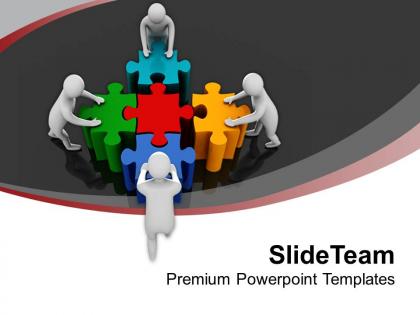
Team pushing colorful puzzles teamwork powerpoint templates ppt themes and graphics 0213




Try Before you Buy Download Free Sample Product
 Impress Your
 Audience
 100%
100% Editable
 Save Hours
 of Time


Boost your team with our ready to implement team pushing colorful puzzles teamwork PowerPoint templates ppt themes and graphics 0213. This predesigned colorful puzzles teamwork is made with the 3d men showcasing teamwork and puzzles. Our people PowerPoint templates provide the perfect balance. Your weighty ideas will get the ideal impetus. You can safely bank on our business PowerPoint templates. They will provide a growth factor to your valuable thoughts. If you are a team leader or a manager who need to motivate his team members to product the best result, then our template will highly suitable. Best part of downloading this colorful puzzles teamwork PPT template is that you are planning to create presentation on team development, mission analysis, goal specification, motivation and confidence building, social communication, developing relationships, team monitoring and backup behavior, systems monitoring, human-relations movement's, you can employ this template slides. Application of this template in your presentation will leave a remarkable impact on the team members. Download this team with our ready to implement team pushing colorful puzzles teamwork PPT slide.You are backing a deserving cause. Our Team Pushing Colorful Puzzles Teamwork Powerpoint Templates Ppt Themes And Graphics 0213 will provide yeoman service.
People who downloaded this PowerPoint presentation also viewed the following :
Team pushing colorful puzzles teamwork powerpoint templates ppt themes and graphics 0213 with all 3 slides:
Our Team Pushing Colorful Puzzles Teamwork Powerpoint Templates Ppt Themes And Graphics 0213 are the heartstrings of your brilliant song. Strum them and produce a tune certain to touch the souls of your audience.



FAQs for Team pushing colorful puzzles teamwork powerpoint templates ppt themes
Honestly, it starts with everyone knowing what they're actually supposed to be doing - sounds obvious but you'd be surprised how often that's missing. Trust is huge too. People need to feel like they can rely on each other and actually listen instead of just waiting to jump in with their own thoughts. Play to people's strengths when dividing work rather than splitting everything equally (that rarely works anyway). Don't let conflicts simmer - address them head on. Celebrate wins together and when things go wrong, figure out what happened as a team instead of pointing fingers. Oh, and define what "success" looks like upfront or you'll all be aiming at different targets.
Honestly, having different types of people on your team is a game changer. Someone from marketing thinks totally different than an engineer, you know? They'll catch stuff you'd never notice and suggest wild solutions that actually work. I've watched teams just spin their wheels because everyone had basically the same background - super frustrating to see. Different cultures and experiences mean people naturally question things instead of just nodding along. Oh, and don't just hope it happens automatically. Actually ask people "how would you tackle this differently?" You'd be surprised what comes up when you're direct about it.
Honestly, your team falls apart without good communication - I've seen it happen so many times. People start making assumptions, working on the wrong stuff, and then drama kicks in. You'll catch problems early when everyone's actually talking to each other regularly. Trust builds up naturally too. Set up weekly check-ins (even if they feel excessive at first) and tell your team to share more info rather than less. When people know what's going on, they stop working in their own little bubbles and actually start moving toward the same goals.
Don't let that stuff fester - seriously, I've watched teams completely fall apart when people just ignore problems hoping they'll magically disappear. Super awkward but necessary: you gotta tackle it directly. Make sure everyone feels safe to actually say what's bothering them without it turning into personal attacks. Focus on the actual issue, not who's being annoying. Most of this drama usually comes from people just misunderstanding each other anyway. Listen to what everyone's actually saying, find something that works for the group. Oh, and maybe do regular check-ins so you're not dealing with nuclear meltdowns every few months.
Honestly, just do what you say you're gonna do - sounds basic but half the battle is following through. Weekly check-ins work great for letting people air stuff out. When you screw up (and you will), just own it instead of making excuses. I've seen so many managers try to hide their mistakes and it backfires every time. Be upfront about the messy details your team actually needs to know. Give props when someone does good work and back them up in meetings. Oh, and start small! Get a few wins together before jumping into the really tough projects.
Honestly, leadership makes or breaks team dynamics. Good leaders create that psychological safety thing where people actually speak up and take risks without fear. Your team feels confident backing each other up. But toxic leadership? That's when you get backstabbing and people working in silos - been there, not fun. Clear goals help too so everyone's not pulling in random directions. If you're the one leading, just be consistent with communication and follow through on your promises. I know it sounds basic, but so many managers mess this up. Model the collaboration you want to see.
Honestly, you just need a few solid tools that everyone actually uses. Slack or Teams for daily chat stuff. Zoom for meetings - though let's be real, we're all zoomed out by now. Project management is huge - Trello's super visual if your team likes that, or Asana if you want more features. Google Workspace is clutch for sharing docs without the nightmare of emailing files back and forth. Maybe throw in Notion if you're feeling fancy. But seriously, don't go overboard. Pick like 3-4 max and make sure everyone's on board, otherwise you'll just confuse people.
Honestly, I'd focus on two things - the numbers and how people actually feel. Are you hitting deadlines? Is decision-making faster? Those are easy to track. But here's the thing - if your team hates working together, none of that matters. I'd do monthly check-ins where everyone rates collaboration 1-10, then actually dig into why they picked that number. Also watch for natural cross-team stuff happening without you forcing it. Oh, and pulse surveys work great for gauging trust levels. The "soft" metrics are harder to measure but they're what really make or break team success.
Honestly? Skip the boring PowerPoint stuff and go for hands-on programs. Problem-solving simulations work great, plus role-playing exercises where people actually practice together. Conflict resolution and active listening are huge - way more useful than those awkward trust falls (though they're pretty funny). You definitely want follow-up coaching sessions because this stuff doesn't stick after just one workshop. I'd do a half-day thing first, then maybe monthly check-ins to keep it going. Oh, and make sure there's real feedback training - people are terrible at giving criticism constructively.
Honestly, you've gotta be super clear about what you expect right from the start. Don't just set goals - actually follow up on them regularly, not when stuff hits the fan. Here's the tricky part: celebrate when people admit they screwed up instead of throwing them under the bus. I know, sounds backwards but it works. Your team needs to feel safe bringing up problems early before they become disasters. Oh and definitely own your mistakes first - like actually say "I messed this up" and show how you're fixing it. Try asking everyone what they could own better at your next meeting.
Ugh, three things always torpedo projects: terrible communication, nobody knowing what they're supposed to do, and scope creep. Seriously, I've watched so many good ideas die from this stuff. Before anything else, nail down who's responsible for what and when it's due. Regular check-ins help too - but not those soul-crushing weekly meetings where people just read status updates. Some team members will go off and do their own thing, others get stuck tweaking details forever. Catch problems early or they'll explode later. Oh, and write down roles from day one. Sounds tedious but it prevents so much unnecessary conflict.
First, figure out what your project actually needs. Then match people based on their strengths and what they're genuinely good at. Put your detail person on quality stuff, big-picture thinker on strategy, people person with stakeholders - you get it. Don't just grab whoever's free or has seniority (learned this the hard way). That's how you get perfectionists stuck brainstorming, which is torture for everyone involved. Ask people what they actually enjoy doing versus what makes them want to hide. Define who decides what upfront. Trust me, nobody wants to figure out ownership issues mid-project when things get messy.
Oh totally, team size makes a huge difference. With 3-5 people you can actually get stuff done fast - less people means way easier communication. But bigger teams? They can handle massive projects, though honestly you'll probably deal with people just checking out mentally when there's like 12 voices trying to talk at once. I've seen it happen so many times. Most projects work best with 5-7 max. If you're drowning in too many people, just split into smaller groups that check in with each other regularly. Way less headache that way.
Honestly, feedback is like having a GPS for your team - shows you when you're going the wrong direction before you end up completely lost. Don't wait for quarterly reviews or disasters to happen. Weekly check-ins work way better than formal stuff, in my experience. Just quick "what's working, what sucks" conversations. People need to feel safe being honest though, otherwise they'll just nod and smile while everything burns. Oh, and focus on fixing processes, not calling people out. Always end with actual next steps or it's just venting that makes everyone feel worse.
Honestly, team-building stuff works because you get to see people outside their usual work personalities. Like, turns out the quiet guy from accounting is actually pretty funny when he's not crunching numbers! Doing challenges or even just grabbing lunch together gives you shared experiences and inside jokes. Plus you figure out how different people solve problems, which makes working together way easier later. The trick is finding activities that don't just cater to super outgoing people - I've seen too many awkward trust falls, lol. Start simple with team lunches or quick group challenges first.
-
Informative design.
-
The content is very helpful from business point of view.