


Technology Transformation PowerPoint PPT Template Bundles




Try Before you Buy Download Free Sample Product
 Impress Your
 Audience
 100%
100% Editable
 Save Hours
 of Time


Our Technology Transformation PowerPoint PPT Template Bundles are topically designed to provide an attractive backdrop to any subject. Use them to look like a presentation pro.
People who downloaded this PowerPoint presentation also viewed the following :
Technology Transformation PowerPoint PPT Template Bundles with all 17 slides:
Use our Technology Transformation PowerPoint PPT Template Bundles to effectively help you save your valuable time. They are readymade to fit into any presentation structure.






FAQs for Technology Transformation PowerPoint
Technology transformation in modern businesses encompasses cloud migration, data analytics integration, automation implementation, digital workflow optimization, and cybersecurity enhancement. These elements work together by streamlining operations, enabling real-time decision-making, and reducing manual processes, with many organizations finding that this strategic combination ultimately delivers improved operational efficiency and sustainable competitive advantage.
Organizations can effectively assess their technological capabilities through comprehensive audits of existing systems, infrastructure scalability, data architecture, cybersecurity frameworks, and integration capabilities. These evaluations help identify gaps and opportunities across departments, with many companies finding that strategic assessments ultimately streamline transformation roadmaps, optimize resource allocation, and deliver competitive advantages.
Cloud computing serves as the foundational enabler for technology transformation by providing scalable infrastructure, seamless data integration, enhanced collaboration capabilities, and cost-effective resource allocation across organizations. Through cloud platforms, businesses in healthcare, finance, and manufacturing streamline operations, accelerate innovation cycles, and enhance customer experiences, while reducing infrastructure costs and enabling rapid scaling in an increasingly digital marketplace.
Artificial intelligence enhances operational efficiencies during technology transformation by automating routine processes, analyzing vast datasets for strategic insights, and enabling predictive maintenance across systems. Through machine learning algorithms, organizations streamline resource allocation, minimize downtime, and accelerate decision-making processes, with many financial institutions and manufacturing companies finding that AI integration delivers significant cost reductions and competitive advantage.
Organizations face challenges including resistance to change, insufficient training, integration complexities, budget constraints, and legacy system compatibility issues. These obstacles can significantly impact implementation timelines and adoption rates, with many companies finding that comprehensive change management strategies, phased rollouts, and stakeholder engagement ultimately deliver smoother transitions and better outcomes.
IoT integration drives technology transformation by connecting operational systems, enabling real-time data collection, and automating decision-making processes across enterprise infrastructure. Through smart sensors and connected devices, organizations streamline manufacturing workflows, enhance supply chain visibility, and optimize resource allocation, with many retail and healthcare institutions finding that IoT delivers significantly improved operational efficiency and customer experiences.
Companies can ensure employee buy-in through comprehensive change management strategies including transparent communication about transformation goals, extensive training programs, involving key employees in decision-making processes, and demonstrating quick wins. Organizations like banks and healthcare systems find that addressing concerns early, providing continuous support, and clearly connecting new technologies to improved job efficiency and career development opportunities ultimately delivers higher adoption rates and smoother transitions.
Data analytics drives technology transformation insights by identifying performance gaps, predicting implementation outcomes, measuring user adoption rates, and benchmarking against industry standards. Through advanced analytics platforms, organizations streamline resource allocation, minimize transformation risks, and accelerate deployment timelines, with many enterprises finding that data-driven approaches ultimately deliver 40% faster implementation cycles and significantly enhanced competitive positioning.
Technology transformation enhances customer experience through personalized interactions, omnichannel integration, real-time support, predictive analytics, and automated service delivery. These advancements enable businesses to deliver faster response times, seamless cross-platform experiences, and proactive solutions, with many retail and financial services organizations finding that strategic technology adoption significantly increases customer satisfaction and loyalty.
Organizations can measure technology transformation success through key performance indicators including operational efficiency metrics, cost reduction analysis, user adoption rates, system performance benchmarks, and customer satisfaction scores. These measurements enable leadership to track ROI, identify optimization opportunities, and demonstrate strategic value, with many enterprises finding that comprehensive dashboards combining financial, operational, and user experience data ultimately deliver the clearest transformation impact assessment.
Cybersecurity implications include increased security frameworks, enhanced risk assessment protocols, compliance requirements, data protection measures, and employee training programs. These considerations drive organizations to implement zero-trust architectures, continuous monitoring systems, and secure-by-design principles, ultimately delivering stronger operational resilience and competitive advantage while maintaining customer trust in an increasingly digital landscape.
Staying updated with emerging technologies is crucial for organizational transformation, as it ensures competitive advantage, operational efficiency, and market relevance in an increasingly digital landscape. Organizations that actively monitor technological advances can strategically integrate solutions like AI, cloud computing, and automation, ultimately delivering enhanced customer experiences, streamlined processes, and sustainable growth advantages.
Companies should establish cross-functional innovation teams, encourage experimentation through pilot programs, provide continuous learning opportunities, create safe spaces for calculated risk-taking, and implement feedback loops for rapid iteration. Organizations like banks and healthcare institutions find that combining structured innovation processes with employee empowerment initiatives ultimately accelerates transformation success while building competitive advantage.
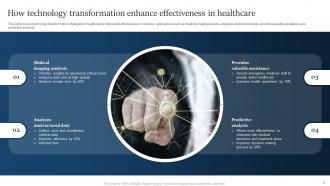
Technology transformation varies significantly across sectors, with healthcare focusing on patient care digitization and telemedicine, finance emphasizing automated risk assessment and fraud detection, and manufacturing prioritizing smart automation and predictive maintenance. While healthcare institutions streamline patient experiences through electronic records, financial services accelerate loan approvals and trading decisions, and manufacturers optimize production efficiency, ultimately delivering sector-specific competitive advantages tailored to unique operational demands.
Leadership drives successful technology transformation by establishing clear vision, securing adequate resources, fostering organizational buy-in, and managing change resistance throughout implementation phases. Effective leaders in sectors like healthcare and financial services create cross-functional collaboration, communicate strategic benefits consistently, and maintain momentum during challenging transitions, ultimately delivering enhanced operational efficiency and competitive advantage.
-
“One of the best experiences with SlideTeam for my presentation.Everything on time, communication is efficient and price is reasonable. All good in one place.”
-
Great quality slides in rapid time.