


Template and background with food pyramid health ppt powerpoint




Try Before you Buy Download Free Sample Product
 Impress Your
 Audience
 100%
100% Editable
 Save Hours
 of Time


Our Template And Background With Food Pyramid Health Ppt Powerpoint are topically designed to provide an attractive backdrop to any subject. Use them to look like a presentation pro.
People who downloaded this PowerPoint presentation also viewed the following :
Template and background with food pyramid health ppt powerpoint with all 2 slides:
Use our Template And Background With Food Pyramid Health Ppt Powerpoint to effectively help you save your valuable time. They are readymade to fit into any presentation structure.

FAQs for Template and background with food pyramid
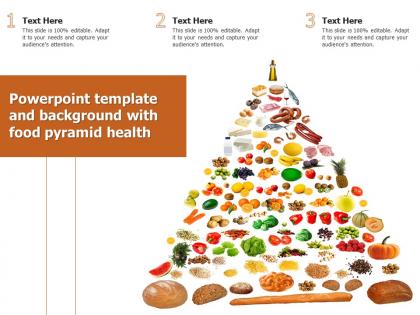
The traditional food pyramid includes grains at the base, vegetables and fruits in the middle tiers, proteins and dairy in smaller portions, and fats at the top. This hierarchical structure influences dietary choices by emphasizing portion control and balanced nutrition, with many healthcare organizations and educational institutions finding that visual representation streamlines meal planning and enhances nutritional awareness across diverse populations.
The food pyramid has evolved from emphasizing grains and carbohydrates to prioritizing vegetables, lean proteins, and healthy fats, while reducing processed foods and added sugars. These revisions reflect advancing nutritional research and changing dietary needs, with healthcare institutions, schools, and wellness organizations finding that updated guidelines enhance patient outcomes, improve educational programs, and ultimately deliver better public health results.
Food pyramid templates can be customized by replacing standard protein sources with plant-based alternatives, substituting grains with gluten-free options, adjusting portion recommendations, and incorporating specialized nutrient guidelines for specific dietary restrictions. Healthcare providers, nutritionists, and wellness programs increasingly leverage these customized templates to deliver personalized dietary guidance, ultimately enhancing client compliance and health outcomes while addressing diverse population needs.
Portion control serves as the foundation of the food pyramid model by defining recommended serving sizes for each food group, ensuring balanced nutrient intake while preventing overconsumption. In presentations, this can be effectively communicated through visual comparisons, interactive portion size demonstrations, and real-world examples showing how proper portions from grains, proteins, and vegetables work together to optimize health outcomes and support sustainable eating habits.
Visual aids enhance understanding of food pyramid concepts by making abstract nutritional information concrete, engaging multiple learning styles, and simplifying complex dietary relationships through colors, proportions, and interactive elements. Educational institutions, from elementary schools to corporate wellness programs, find that visual presentations significantly improve retention rates, enable faster concept comprehension, and ultimately deliver more effective health education outcomes across diverse learning environments.
Common misconceptions include believing the food pyramid applies universally to all individuals, that all grains are equally nutritious, and that the serving sizes shown represent single-meal portions rather than daily totals. These misunderstandings can be addressed through personalized nutrition education, highlighting whole grain benefits over refined options, and demonstrating proper portion control, with many healthcare organizations finding that visual presentations significantly enhance patient understanding and dietary compliance.
The food pyramid emphasized hierarchical food groups with grains as the base, while MyPlate focuses on balanced portions across five food groups on a single plate. MyPlate streamlines nutritional guidance by emphasizing portion control, vegetable variety, and reduced dairy emphasis, with many nutritionists finding that this visual approach delivers clearer meal planning and better dietary adherence.
Strategies include culturally adapted educational materials, community-based nutrition programs, school integration initiatives, healthcare provider training, and socioeconomic accessibility improvements. These approaches enhance adherence by incorporating traditional foods into pyramid frameworks, delivering targeted messaging through trusted community leaders, and addressing barriers like cost and availability, with many public health organizations finding that culturally sensitive interventions significantly improve long-term dietary compliance.
Interactive elements can be integrated through clickable food categories revealing nutritional details, animated portion size demonstrations, drag-and-drop meal planning activities, and embedded quizzes testing dietary knowledge. These features transform static presentations into engaging educational experiences, with healthcare professionals, nutritionists, and wellness educators finding that interactive formats significantly improve audience retention and practical application of nutritional guidelines.
Popular overlooked nutrients in standard food pyramid templates include omega-3 fatty acids, vitamin D, magnesium, probiotics, and antioxidants like lycopene and anthocyanins. These essential nutrients enhance immune function, bone health, and cardiovascular wellness through targeted supplementation and diverse food choices, with many nutritionists finding that customized pyramid presentations ultimately deliver more comprehensive dietary guidance and better health outcomes.
Cultural variations significantly influence food pyramid structures by prioritizing regional staples, traditional preparation methods, and locally available ingredients over standardized recommendations. Mediterranean pyramids emphasize olive oil and fish, Asian versions feature rice and soy products, while Latin American templates highlight beans and corn, with many nutritionists finding that culturally-adapted pyramids enhance dietary compliance and better reflect sustainable, accessible eating patterns.
Including physical activity alongside the food pyramid creates a comprehensive wellness framework that addresses both nutritional intake and energy expenditure, recognizing that sustainable health requires balancing calories consumed with calories burned. This integrated approach helps healthcare providers, schools, and wellness programs deliver more effective education by demonstrating how proper nutrition and regular exercise work synergistically, ultimately enabling individuals to achieve better long-term health outcomes while reducing obesity rates.
Technology and apps complement food pyramid templates through personalized meal planning, nutrition tracking, barcode scanning for ingredient analysis, and interactive educational features. These digital tools streamline dietary management by automatically calculating nutritional values, suggesting balanced meal combinations, and providing real-time feedback, with many healthcare providers and wellness programs finding that integrated approaches ultimately deliver better patient engagement and sustained healthy eating habits.
Research-backed benefits include improved nutrient balance, reduced chronic disease risk, better weight management, enhanced cardiovascular health, and increased dietary fiber intake. These evidence-based outcomes help healthcare professionals, nutritionists, and wellness organizations demonstrate measurable health improvements to patients and clients, ultimately delivering more effective dietary guidance and better long-term health outcomes.
Feedback from health professionals enhances food pyramid templates by ensuring nutritional accuracy, cultural dietary considerations, age-appropriate portion recommendations, and evidence-based food categorizations. These insights enable template designers to create more clinically relevant materials that resonate with diverse patient populations, while healthcare providers find that professionally-vetted resources improve patient education outcomes and dietary compliance significantly.
-
Top Quality presentations that are easily editable.
-
It saves your time and decrease your efforts in half.