

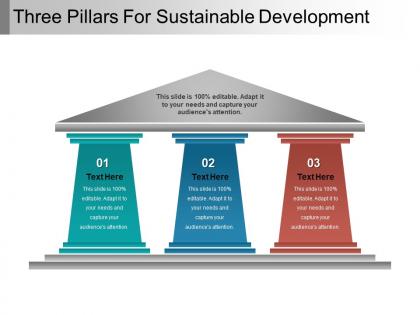
Three pillars for sustainable development powerpoint guide





Try Before you Buy Download Free Sample Product
 Impress Your
 Audience
 100%
100% Editable
 Save Hours
 of Time


Chickens automatically hatch with our Three Pillars For Sustainable Development Powerpoint Guide. Don't wait before you count them.
People who downloaded this PowerPoint presentation also viewed the following :
Three pillars for sustainable development powerpoint guide with all 5 slides:
Our Three Pillars For Sustainable Development Powerpoint Guide are a handy device. Help folks assimilate your thoughts.


FAQs for Three pillars for sustainable
So there's this three-legged stool thing (I know, super cringey but it actually makes sense). You've got environmental protection, economic growth, and social equity - all three have to work together or everything crashes. Can't just chase profits while trashing the planet, you know? Take renewable energy policies - they need to make financial sense, be good for the environment, AND not screw over certain communities. I always run sustainability stuff through those three filters when I'm looking at it. Saves you from missing obvious problems later. Oh and honestly? Most failed green initiatives I've seen totally ignored one of those three legs.
Yeah, totally doable! Start with the boring efficiency stuff first - LED lights, going paperless, better equipment. Not sexy but it actually saves real money while being green. My old company saved like 3k just on lights lol. Then hunt for sustainable suppliers. Some are pricier upfront but way cheaper long-term. Track everything though - you'll need those numbers to convince your boss this isn't just feel-good nonsense. Pick one small thing to test first, see what happens, then expand from there. Way easier than trying to overhaul everything at once.
Honestly, tech is what's gonna make sustainable stuff actually work at scale. Renewable energy is finally cheap enough to compete. AI helps optimize everything from water usage to supply chains. There's apps connecting small farmers directly to buyers now - pretty cool stuff. Even blockchain (yeah I roll my eyes too) actually makes sense for tracking where products come from. But here's the thing - technology isn't automatically good for the planet. You have to build it with sustainability in mind from day one. Whenever you're working on something tech-related, just think: does this help people waste less or get fairer access to resources?
So basically, renewable energy cuts your carbon footprint because you're not burning fossil fuels that release all those greenhouse gases. Solar, wind, hydro - they're naturally replenishing so we won't run out like we will with oil and coal. Way less pollution too. Countries get more energy independent, which is honestly pretty smart geopolitically. The costs keep dropping which is nice because I remember when solar panels were crazy expensive. If you're trying to be more sustainable, switching to renewables is probably the single biggest thing you can do environmentally.
Honestly, it's super complicated. Clean water and green jobs? Obviously amazing for marginalized communities. But - and this pisses me off - most projects just steamroll in without asking what people actually want. You end up displacing families or destroying cultural sites because some planners thought they knew better. Short sentences work here. Communities need to be involved from the very beginning, not just brought in later to rubber-stamp decisions. I've seen too many "solutions" that look perfect in reports but totally miss the mark for real people.
So basically you want mixed-use stuff where people can walk to work and shops without needing cars all the time. Transit-oriented development is where it's at - cities that get this right early on don't hate themselves later. I'd honestly start by figuring out transit routes first, then pack density around those spots. Think up instead of out, you know? Saves the natural areas. Oh and don't forget green corridors and water management - that stuff matters way more than people realize. Vertical growth beats sprawl every time.
So there's basically three ways to think about this stuff - environmental (like carbon footprint, waste), social (community health, education), and economic (jobs, income gaps). The UN has these SDG indicators that are super thorough but honestly? They're kind of a mess to navigate. Pick 3-5 metrics that actually match what you're doing. If it's clean water, track water quality and how many people you're reaching - don't try measuring everything under the sun. That'll just drive you crazy. Focus on data you can realistically collect on repeat. Way more useful than some fancy framework you can't maintain.
So basically when countries sign stuff like the Paris Climate Accord, it creates this framework that shapes their policies. Your country gets targets to hit and reporting standards to follow - plus it often opens up funding they wouldn't have otherwise. Think of it like everyone's working from the same playbook, though honestly some countries get pretty creative with how they interpret things! Short version: these agreements directly influence what resources are available and which direction policies go. You should probably check what your region has actually committed to since that'll tell you a lot about future priorities.
Look, sustainable farming is basically what keeps us fed long-term. Farmers who take care of their soil, don't waste water, and keep ecosystems healthy? They're the ones whose land will still be producing food when we're old. It's like - you can push land hard for quick results, but you'll wreck it. Then what? I honestly think more people should buy from local sustainable farms when they can. Short bursts of high yields mean nothing if you've destroyed the soil. We need that land working for decades, not just a few seasons.
Honestly, once people actually understand how their choices affect things, they totally change their behavior. Like when my neighbor finally realized why plastic bags suck - boom, she switched to reusable everything. Communities that do workshops or just chat about this stuff see people start carpooling and composting. The trick is keeping it real, not preachy. Show them actual benefits instead of just scaring them with climate disasters. I'd say start with your friends and family first. Share what you've learned - it spreads faster than you'd think when it comes from someone they trust.
Honestly, it's mostly about money and priorities. Poor countries are juggling so much - unemployment, crumbling infrastructure, people who can't afford basic needs. Environmental stuff gets pushed aside when you're in survival mode, you know? They need industry to create jobs, but that usually means more pollution. Technical know-how is another huge barrier. Green tech is expensive and complicated. International funding helps, but - and this might sound cynical - politicians need to see how going green actually creates jobs fast. Otherwise they won't bite. The whole "long-term benefits" pitch doesn't work when people are struggling today.
NGOs are like the bridge between regular people and those big sustainability projects. Governments and corporations miss tons of stuff at the local level - that's where NGOs shine with their grassroots connections. They're out there educating communities, pushing for policy changes, and actually working with the people dealing with environmental problems firsthand. Someone's gotta call out companies for greenwashing too, which they do pretty well. They also get different groups talking to each other for partnerships that don't suck. Honestly, if you want to make a real difference in sustainability, teaming up with local NGOs is your best bet.
So CSR is basically about balancing profit with doing good for the planet and people. Companies that get this right are thinking long-term instead of just chasing quick cash - which honestly just makes more business sense now anyway. You're talking about creating real jobs, cutting down environmental damage, building up communities. All while still making money, obviously. It flips the whole economy from just taking resources to actually giving back. Oh and if you're thinking about this for your company, maybe start by looking at what you're doing now and see where profit and purpose can work together?
Look, the magic happens when businesses and governments actually work together instead of playing tug-of-war. Joint R&D labs work great. So do green tech incubators with real money behind them. Tax incentives help too, but only when they match what companies actually need - not some random "save the planet" nonsense that misses the point completely. Co-developing regulations beats having rules shoved down your throat any day. Pick one specific sustainability problem in your field, then hit up your local economic development office. They're usually desperate for these partnerships anyway.
Biodiversity is basically nature's insurance policy - more species means ecosystems can handle whatever gets thrown at them. When you've got diverse plant and animal populations, you get all the free services like bees pollinating crops, wetlands cleaning water, and forests soaking up carbon. It's honestly pretty wild how it all connects. Resilient ecosystems bounce back from droughts, storms, whatever. That stability keeps communities fed and employed, especially people who rely directly on natural resources. My biggest takeaway? Any developer worth their salt should run biodiversity assessments before breaking ground. Saves headaches later.
-
Easy to edit slides with easy to understand instructions.
-
Excellent work done on template design and graphics.