


Sustainable business strategy powerpoint slide




Try Before you Buy Download Free Sample Product
 Impress Your
 Audience
 100%
100% Editable
 Save Hours
 of Time


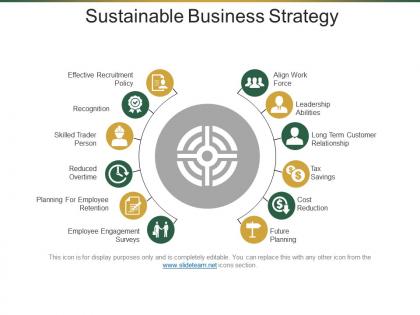
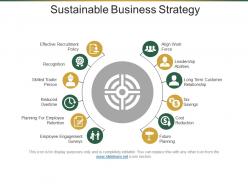
Get this Sustainable Business Strategy PowerPoint Slide and prepare PPT presentations on topics of sustainable development. A sustainable organization mainly focuses on making eco-friendly decisions as well as follow numerous practices that would meet its goals without any harm to the surrounding. You can use the sustainable business strategy presentation slide design to elaborately cover topics such as designing an ecological organization, sustainable enterprise, living system principles, and many more. The business sustainability strategy PPT template is ideal for company owners, HR professionals, head of departments, consultants, subject matter experts, trainers, educators, as well as all the related individuals can make the most of this template. The organization sustainability PPT slide elaborates on the concept of sustainable as well as the green organization in various ways. Almost every professional who wants to bring needed change in the organization can use this sustainable business plan template for PowerPoint slide design. The sustainable business PowerPoint template is suitable for environmentalists as well as professionals who belong to non-profit organizations.
People who downloaded this PowerPoint presentation also viewed the following :
Sustainable business strategy powerpoint slide with all 5 slides:
Create an atmosphere of eagerness with our Sustainable Business Strategy Powerpoint Slide. They get folks buzzing with energy.


FAQs for Sustainable business
So there are basically three main areas to think about - environmental stuff, social responsibility, and making sure it's actually profitable long-term. That's the "triple bottom line" thing you might've heard of. Environmental means cutting carbon emissions, reducing waste, using fewer resources. Social covers how you treat employees, impact on your community, ethical sourcing practices. The tricky part? Making sure these changes don't kill your profits. I'd honestly just pick one area first and get some quick wins. Don't try to tackle everything at once or you'll burn out fast.
Start with 3-5 solid KPIs that actually matter to your business - carbon reduction, waste diversion, energy savings, whatever fits. Don't get caught up tracking everything under the sun because you'll drown in data (I've seen this happen so many times). Mix hard numbers with softer stuff like how engaged your employees are with green initiatives. Industry benchmarks are clutch for knowing if you're making real progress or just fooling yourself. Third-party audits help validate everything too. The key is picking metrics that connect to your bottom line, not just feel-good numbers.
You absolutely need to get your stakeholders involved - customers, employees, investors, the whole crew. They'll tell you what sustainability issues actually matter instead of you just winging it. Each group has totally different ideas about what "sustainable" even means, honestly. Without their input, you're gonna miss major risks and opportunities. When people help create the strategy, they're way more likely to back it later rather than fight you on changes. Start by figuring out who your key players are, then just ask them directly - surveys, casual conversations, focus groups, whatever works. Trust me, it's worth the upfront effort.
Honestly, the money thing hits first - new equipment and certifications aren't cheap. Your team will probably push back too since people hate changing routines they're used to. Supply chains get messy when you're hunting for sustainable materials that cost more and take forever to source. Oh, and don't even think about doing everything at once - that's a recipe for disaster. Break it into chunks instead. Most companies I know say it's way less painful that way, though the first few months still suck.
Look, sustainability isn't just about being green - it's actually a smart money move when you do it right. Start with stuff that cuts costs immediately, like energy efficiency or reducing waste. People are way more willing to buy from sustainable brands now (I literally check this when I'm shopping). Pick one pilot project that clearly shows you'll make money back. The trick is finding initiatives that fit what you're already doing instead of bolting them on as an afterthought. Best case scenario? You solve an environmental problem while beating your competition. Start small though - don't try to revolutionize everything at once.
Okay so honestly, start with the stuff you can actually measure right now - carbon footprint, energy/water use, waste reduction. Employee satisfaction scores matter too. The financial side is huge though, like cost savings from efficiency improvements. Leadership always cares more about those numbers anyway lol. Supply chain sustainability and how customers perceive you are worth tracking. But don't go crazy - pick maybe 5-7 metrics that actually make sense for your industry. I've seen companies try to track everything and it becomes a mess. Build up your tracking systems gradually instead of trying to do it all at once.
So first thing - map out your whole supply chain because you'll probably be shocked at where the worst environmental damage is happening. Local suppliers are your friend since they cut down transport emissions big time. Pick vendors who actually care about the environment, not just ones who say they do. Transportation's where you can make a real dent though - bundle shipments together and find greener shipping options. Oh, and don't forget to put sustainability requirements right in your contracts with suppliers. Then actually check if they're following through, because some will just ignore it otherwise.
Honestly, the biggest wins are saving money and looking good to customers. Energy costs drop since renewable prices keep falling, and you won't get hit by crazy oil/gas price swings anymore. Tax breaks help with ROI too. Your budgets become way more predictable, which finance teams love. Plus recruiting gets easier - people actually want to work for companies doing this stuff now. Regulatory headaches decrease since you're ahead of the curve. Oh, and investors are basically expecting it at this point. I'd start with an energy audit to see where you're bleeding the most money first.
Honestly, just start with the easy stuff that'll save you money anyway. LED bulbs, programmable thermostats - basic things that cut your energy bill. Digital receipts instead of paper, buy supplies in bulk to reduce all that packaging waste. Remote work is huge too if you can swing it - less office overhead. Oh, and here's something cool: team up with other local businesses to share suppliers and split shipping costs. Way more efficient. Don't try to change everything at once though. Pick like 2-3 things this quarter and actually stick with them. The habit changes matter more than the fancy green tech stuff, at least when you're starting out.
CSR is like the backbone of sustainable business - it turns your values into real decisions. Environmental impact, employee wellbeing, community stuff, ethical sourcing. All that matters now. Some execs still treat it as fluff though, which honestly drives me nuts. It affects everything from supply chains to hiring to product dev. The trick is making your CSR work actually match your business goals instead of just looking good on paper. Oh, and start by checking where your current practices already hit sustainability targets - you're probably doing more than you think.
Honestly, innovation's where sustainability stops being just an expense and starts making you money. Look at your biggest environmental headaches first - then figure out how tech or process tweaks could flip those into advantages. Recycled materials, energy-efficient systems, circular models where your waste feeds someone else's process. People will literally pay more for stuff that's genuinely sustainable now (wild, right?). Don't just think "green" - completely reimagine how you do things. Map out where you're hurting the environment most, then brainstorm solutions that'll cut waste and create new income streams.
Dude, regulations are basically forcing companies to care about sustainability now. You can't ignore it anymore with all these carbon reporting rules and supply chain transparency stuff coming down the pipe. The ESG disclosure requirements alone are wild - like, every company's scrambling to figure it out. But here's the thing: it actually creates a fair playing field for everyone. Plus it pushes companies to get creative with their operations. My advice? Get ahead of this stuff before new rules drop, because playing catch-up sucks and costs way more.
Honestly, there's so much you can do with tech for this stuff. Smart sensors track your energy use in real-time, which is pretty cool to see actually. AI can optimize your supply chain to cut waste, and going cloud-based means less physical equipment. The automation part saves way more resources than you'd think. Going paperless with digital platforms is obvious but works. Remote work kills your carbon footprint too. Oh, and data analytics shows you exactly where you're wasting money - I mean resources. Start with energy monitoring though. You'll see quick wins there and it'll motivate you to tackle other areas.
Dude, the circular economy thing is actually a game-changer for businesses. So instead of that whole "buy stuff, make stuff, throw it away" cycle, you're basically designing everything to get reused or recycled. Your material costs drop since you're not always buying new resources, plus you save on waste disposal - honestly didn't realize how much companies spend on just throwing things out until recently. Customers are way more into brands that do this environmental stuff now too. I'd say pick one product and figure out how to make it last longer or turn the waste into something useful.
Be super specific with your data and timelines - people can spot fake green stuff instantly. Pick ONE thing you're doing well and go deep on that story instead of trying to cover everything. Meet your customers where they already are, whether that's Instagram, your website, whatever. Honestly, most sustainability content is just meaningless fluff that makes my eyes glaze over. Share real numbers and actual progress updates. The storytelling part matters too - connect what you're doing to stuff people genuinely care about. Don't just throw around buzzwords and hope it sticks.
-
Best Representation of topics, really appreciable.
-
Easily Editable.