


Moving toward environment sustainability powerpoint presentation slides




Try Before you Buy Download Free Sample Product
 Impress Your
 Audience
 100%
100% Editable
 Save Hours
 of Time


Presenting our Moving Toward Environment Sustainability PowerPoint Presentation Slides that will assist you to take a step toward responsible technology utilization and curbing its negative implications on the environment. Review trends and growth patterns in global environmental technology with our expertly created technologically-safe PPT graphics. Elaborate on the role of developing technologies that are ecologically secure and focus on the resource consumption and emissions by taking the aid of these clean technology PPT templates. With this green impact PPT slideshow, you can educate your clients about the company’s core values, vision, and mission and how it engages in curbing environmental issues. Call attention to the customizable solutions you provide for air, water, and waste treatment through these thought-provoking energy-efficient PPT slides. Create a roadmap to achieve the set targets and aims for the company’s development by using these professionally crafted eco-techno PPT layouts. You can also introduce your team and even present client testimonials with the help of this eco-friendly PPT presentation. Download our completely adaptable conservationist PPT slides and impress your audience with your skills.
People who downloaded this PowerPoint presentation also viewed the following :
Content of this Powerpoint Presentation
Slide 1: This title slide introduces Moving Towards Environment Sustainability. Add the name of your company here.
Slide 2: This is the Agenda slide for Moving Toward Environment Sustainability.
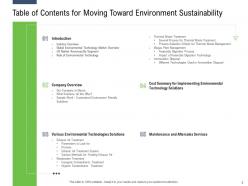
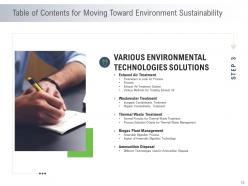
Slide 3: This slide contains the Table of Contents for Moving Toward Environment Sustainability. It includes - Maintenance and Aftersales Services, Introduction, Company Overview, etc.
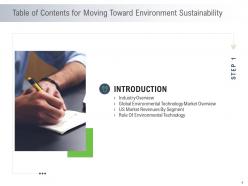
Slide 4: This is a table of content slide showing the NTRODUCTION.
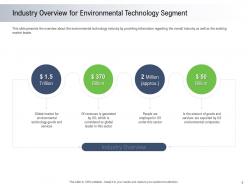
Slide 5: This slide presents the Industry Overview for Environmental Technology Segment.
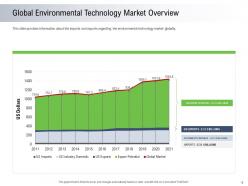
Slide 6: This slide presents the Global Environmental Technology Market Overview.
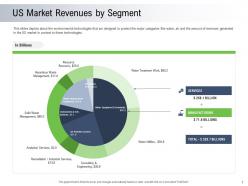
Slide 7: This slide presents the US Market Revenues by Segment.
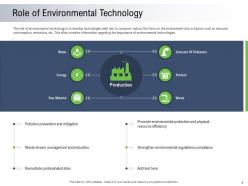
Slide 8: This slide presents the Role of Environmental Technology.
Slide 9: This is a table of content slide showing the COMPANY OVERVIEW.
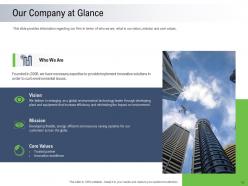
Slide 10: This slide presents the Our Company at Glance.
Slide 11: This slide presents What Solutions do We Offer?
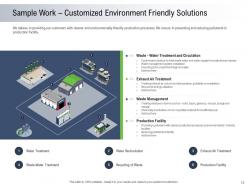
Slide 12: This slide presents the Sample Work – Customized Environment-Friendly Solutions.
Slide 13: This is a table of content slide showing the VARIOUS ENVIRONMENTAL TECHNOLOGIES SOLUTIONS.
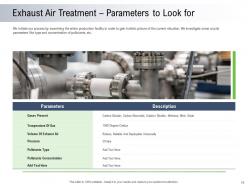
Slide 14: This slide presents the Exhaust Air Treatment – Parameters to Look for.
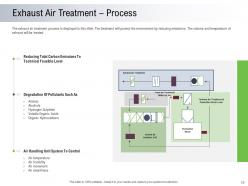
Slide 15: This slide presents the Exhaust Air Treatment – Process.
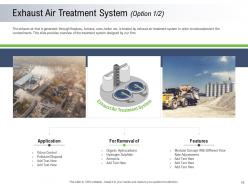
Slide 16: This slide presents the Exhaust Air Treatment System (Option 1/2). It provides an overview of the treatment system designed by our firm.
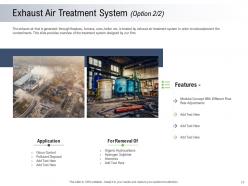
Slide 17: This slide presents the Exhaust Air Treatment System (Option 2/2). The exhaust air that is generated is treated by an exhaust air treatment system in order to reduce/prevent the contaminants.
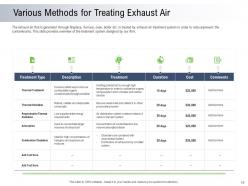
Slide 18: This slide presents the Various Methods for Treating Exhaust Air.
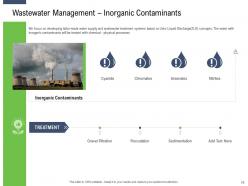
Slide 19: This slide presents the Wastewater Management – Inorganic Contaminants.
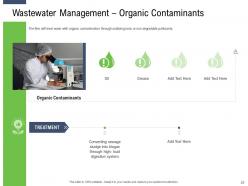
Slide 20: This slide presents the Wastewater Management – Organic Contaminants.
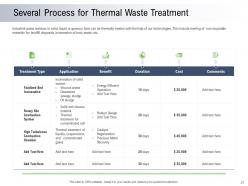
Slide 21: This slide presents the Several Process for Thermal Waste Treatment.
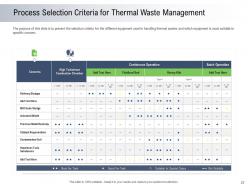
Slide 22: This slide presents the Process Selection Criteria for Thermal Waste Management.
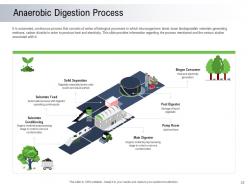
Slide 23: This slide presents the Anaerobic Digestion Process.
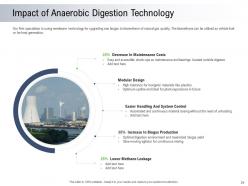
Slide 24: This slide presents the Impact of Anaerobic Digestion Technology.
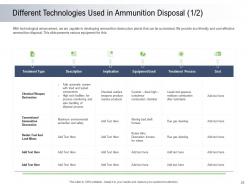
Slide 25: This slide presents the Different Technologies Used in Ammunition Disposal (1/2). With technological advancement, we are capable of developing ammunition destruction plants that can be customized.
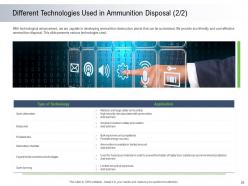
Slide 26: Different Technologies Used in Ammunition Disposal (2/2). We provide eco-friendly and cost-effective ammunition disposal. This slide presents various technologies used.
Slide 27: This is a table of content slide showing the COST SUMMARY FOR IMPLEMENTING ENVIRONMENT TECHNOLOGY SOLUTIONS.
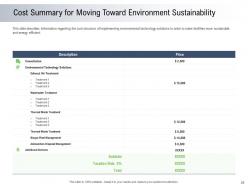
Slide 28: This slide presents the Cost Summary for Moving Toward Environment Sustainability.
Slide 29: This is a table of content slide showing the MAINTENANCE AND AFTERSALES SERVICES.
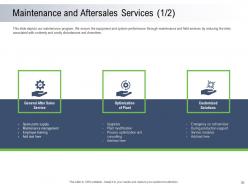
Slide 30: This slide presents the Maintenance and Aftersales Services (1/2). We ensure the equipment and system performance through maintenance and field services.
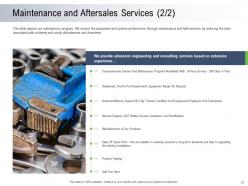
Slide 31: This slide presents the Maintenance and Aftersales Services (2/2). We provide advanced engineering and consulting services based on extensive experience.
Slide 32: This is the Moving Toward Environment Sustainability - Icons Slide.
Slide 33: This slide introduces the Additional Slides.
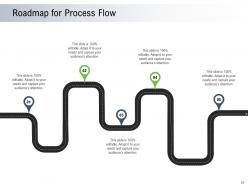
Slide 34: This slide presents the Roadmap for Process Flow.
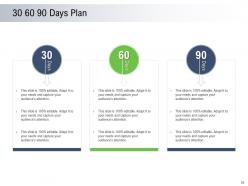
Slide 35: This is a slide with a 30 60 90 Days Plan to set goals for these important intervals.
Slide 36: This slide shows the members of the company team with their name, designation, and photo.
Slide 37: This slide presents the Client Testimonials.
Slide 38: This slide provides the Mission for the entire company. This includes the vision, the mission, and the goal.
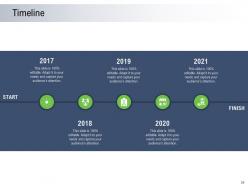
Slide 39: This slide is a Timeline template to showcase the progress of the steps of a project with time.
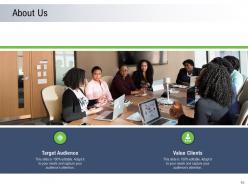
Slide 40: This slide contains the information about the company aka the ‘About Us’ section. This includes the Value Clients, the Target Audience, and Preferred by Many.
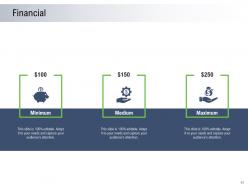
Slide 41: This slide presents the Financial data with the data’s numbers at minimum, medium, and maximum percentage.
Slide 42: This slide presents Our Goal.
Slide 43: This is a Thank You slide where details such as the address, contact number, email address are added.
Moving toward environment sustainability powerpoint presentation slides with all 43 slides:
Use our Moving Toward Environment Sustainability Powerpoint Presentation Slides to effectively help you save your valuable time. They are readymade to fit into any presentation structure.






FAQs for Moving toward environment sustainability
So basically you want to integrate green infrastructure with sustainable transport and resource efficiency. Green building standards are huge. Plus renewable energy, waste reduction, walkable neighborhoods with decent public transit. Water management too - stormwater systems, urban wetlands, all that stuff. I know it sounds overwhelming but everything connects once you get into it. Your planning decisions should cut environmental impact while making life better for residents. Oh, and honestly? Start with an audit of what you're doing now. Figure out which component would make the biggest difference for your specific situation first.
Honestly, renewable energy is huge for long-term sustainability because it breaks us free from fossil fuels - which are finite and ridiculously polluting. Solar, wind, hydro... they all naturally replenish without depleting anything or dumping carbon everywhere. The infrastructure costs upfront, but then the "fuel" is basically free forever. That's wild when you think about it. We can meet our energy needs now without completely screwing future generations. My neighbor got solar panels last year and won't shut up about his electric bill, but he's got a point - even small changes help.
Honestly, real change starts when people see their neighbors doing stuff. You could start a community garden or organize neighborhood cleanups - even carpooling makes a difference. I've noticed the best movements happen when someone picks something they actually care about and just asks if others want in. Small actions spread fast when they're visible. Like, my friend started buying eco products in bulk for her block and now half the street does it. Community gardens are probably my favorite though - people love free tomatoes. Pick one thing you're passionate about and see who bites. That's how grassroots stuff actually works.
Yeah totally doable! I'd hit the cost-cutting stuff first - LED lights, better insulation, going paperless (which honestly saves way more than you'd think). Solar panels are pricey upfront but they'll pay for themselves. Don't blow your budget on fancy green tech right away. Customers actually give a shit about this stuff now, so definitely use it in your marketing. You can even charge a bit more if you position it right. Oh and start small - test what works before going all in. The operational changes alone will surprise you.
Honestly? Transportation's your biggest bang for buck - even just carpooling a couple times a week helps. LED bulbs are dirt cheap now and actually make a difference. Oh, and the food thing is wild - I had no idea meat production was such a huge factor until recently. You don't have to go full vegetarian or whatever, but maybe try "Meatless Monday" or hit up the farmer's market when you can. Better insulation pays for itself too if you own your place. Just pick whatever doesn't feel like a total pain and go from there.
Dude, water conservation is actually huge for the environment. Every drop you save means less energy needed for treatment plants, plus you're protecting ecosystems from getting sucked dry. Shorter showers and fixing those annoying leaky faucets make a real difference. Your carbon footprint shrinks too since there's less pumping and heating involved. Rivers and oceans get less wastewater dumped into them - which honestly should be obvious but here we are. If you're redoing your yard anyway, drought-resistant plants are a game changer. Small stuff adds up way faster than you'd think.
Ugh, so basically our kids are gonna get stuck with a way harder world. Think extreme weather everywhere, water shortages, food getting crazy expensive - just surviving will be tough enough, let alone living sustainably. All the stuff we don't even think about? Gone or super pricey for them. They'll have to invent brand new tech while dealing with climate refugees and economic chaos. Honestly makes me feel kinda guilty about my Amazon habit lol. But yeah, whatever sustainable choices we make now actually matter for how screwed they'll be later.
Honestly, the trick is weaving it into everything instead of making it its own boring class. Math students can crunch climate data. Business kids analyze environmental case studies. Art classes focus on sustainable design - that stuff's actually pretty cool when you see it in action. Literature has tons of eco-fiction too. Don't force connections though, find where it naturally fits your existing courses. Then maybe try some cross-department projects where students solve actual campus problems. Way more engaging than textbook theory.
So basically developing countries are stuck in this impossible situation. They desperately need economic growth to get people out of poverty, right? But they're working with tiny budgets and don't have the infrastructure for clean tech. Meanwhile you've got immediate crises like hunger competing with environmental stuff that pays off way later. Most are still making money from mining or other messy industries too. The tricky part is figuring out how to grow without doing the whole "trash everything first, fix it when we're rich" thing like we did. Honestly seems like there should be more help available for this.
So basically, when countries sign international deals like the Paris Agreement, they're locked into hitting certain targets - which means their domestic policies have to change to match. Pretty smart system actually. Nations have to report back regularly on their progress, and nobody wants to look like the slacker country at these big summits. The agreements also open up funding and tech sharing that makes going green way more doable. Here's the thing though - if you're trying to predict what's coming in your industry, just look at what international commitments your government recently made. Those deals are like a crystal ball for future regulations.
Dude, precision farming is crazy cool - drones and sensors target exactly where crops need water or fertilizer instead of just dumping it everywhere. Vertical farms blow my mind too, they use like 95% less water and grow stuff year-round indoors. AI can actually spot crop diseases before farmers even see symptoms, which is wild. Gene editing's creating drought-resistant plants without the whole GMO drama. Oh, and John Deere's doing some sick tech stuff now, not just tractors anymore. AeroFarms is worth looking up if you're into this - their setups look like something from sci-fi movies.
Electric buses and trains are honestly game-changers for cutting emissions. More frequent routes make such a difference too - nobody wants to wait around forever, you know? Solar panels on station roofs are pretty smart. The real trick is connecting everything smoothly - bus to bike-share to subway without the hassle. Those real-time apps help tons with planning (saves me from standing around confused). Oh, and definitely fill out your city's transit surveys if they have them. You could even join a local transportation committee to actually push for this stuff.
Okay so biodiversity is like nature's backup plan. More species = more stable ecosystems. Here's why it matters: if one species dies out, others can jump in and do similar jobs. It's honestly pretty clever how it works. Diverse areas are also just better at the basics - cleaning water, moving nutrients around, keeping climate in check. I always think of it like... you wouldn't want all your friends to have the exact same skills, right? Same logic applies to ecosystems. When you're looking at environmental stuff, species variety is usually your best clue about whether an ecosystem will actually survive long-term.
Honestly, companies pay way more attention to what we buy than people realize. Like when everyone started wanting plant-based stuff, suddenly every major food company had to scramble and create their own alternatives - it was crazy how fast that shifted. Same thing happened with electric cars pushing automakers to actually invest seriously. Your wallet is basically your vote. I mean, one person switching to sustainable brands won't change everything overnight, but when millions of us do it? That's real market pressure. Even small changes in what you consistently buy can reshape whole industries over time.
So here's the thing - waste management is literally the foundation of zero waste. Without tracking and sorting everything properly, you're basically shooting in the dark. Do a waste audit first (trust me, you'll be horrified at what you discover). Then follow the hierarchy: reduce what you can, reuse stuff, recycle next, and only use energy recovery when nothing else works. Honestly, most companies have no clue where their biggest waste sources even are. You've gotta measure everything or you can't fix the real problems. It's like... how do you lose weight without knowing what you eat, right?
-
Great quality slides in rapid time.
-
The content is very helpful from business point of view.
-
Easy to edit slides with easy to understand instructions.
-
Great experience, I would definitely use your services further.