


Green Marketing Powerpoint Presentation Slides




Try Before you Buy Download Free Sample Product
 Impress Your
 Audience
 100%
100% Editable
 Save Hours
 of Time


Introducing our professionally designed PowerPoint presentation on Green Marketing which explores the concept of sustainable marketing and its significance. It highlights our companys plans to transition from traditional marketing to a sustainable approach. Our Responsible marketing deck delves into the reasons behind this change in marketing strategy, redefining goals, and shifting the focus towards sustainable marketing. It also provides a comprehensive understanding of the four critical aspects of the sustainability Marketing Mix. Furthermore, our Customer oriented marketing PPT includes a dedicated module on green marketing, outlining our commitment to sustainability and focusing on the three pillars of sustainable marketing. It also emphasizes the importance of adhering to sustainable marketing principles and working towards sustainability. Additionally, our Sustainable business growth module covers various sustainable marketing strategies, such as the development of sustainable products and cost effective measures. It also addresses communication strategies for sustainable activities, including internal and external communication, establishing a committee to track sustainable initiatives, and highlighting the impact of our companys sustainable marketing approach. Get instant access.
People who downloaded this PowerPoint presentation also viewed the following :
Content of this Powerpoint Presentation
Slide 1: This slide introduces Green Marketing. Commence by stating Your Company Name.
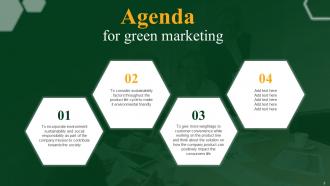
Slide 2: This slide depicts the Agenda of the presentation.
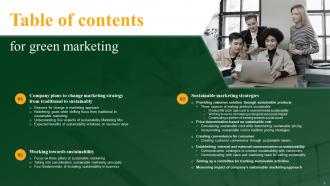
Slide 3: This slide includes the Table of contents.
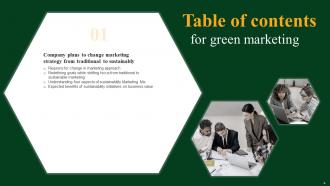
Slide 4: This slide highlights the Title for the Topics to be discussed further.
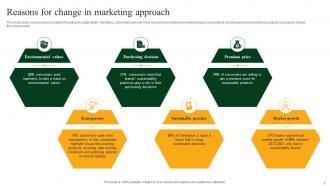
Slide 5: This slide covers various reasons behind focusing on sustainability marketing. ,
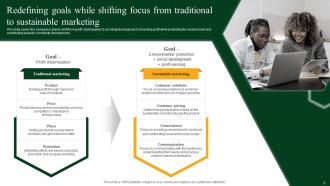
Slide 6: This slide focuses on Redefining goals while shifting focus from traditional to sustainable marketing.
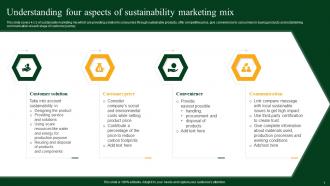
Slide 7: This slide deals with Understanding four aspects of sustainability marketing mix.
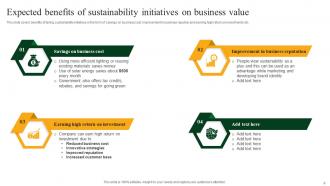
Slide 8: This slide covers benefits of taking sustainability initiatives.
Slide 9: This slide includes the Heading for the Contents to be covered next.
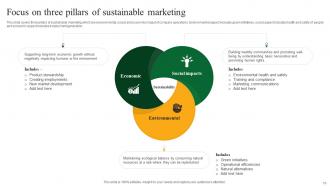
Slide 10: This slide covers three pillars of sustainable marketing which are environmental, social and economic impact of company operations.
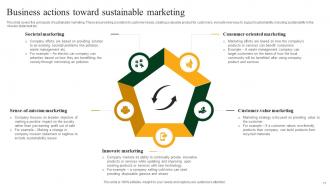
Slide 11: This slide showcases the Business actions toward sustainable marketing.
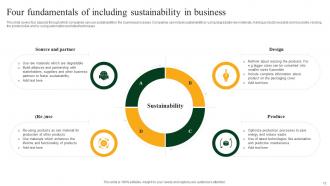
Slide 12: This slide portrays four aspects through which companies can use sustainability in the business processes.
Slide 13: This slide displays the Title for the Ideas to be discussed further.
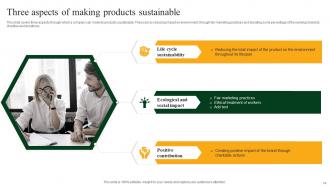
Slide 14: This slide highlights the Three aspects of making products sustainable.
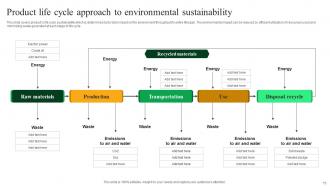
Slide 15: This slide covers product’s life cycle sustainability which is determined by its total impact on the environment throughout its entire lifespan.
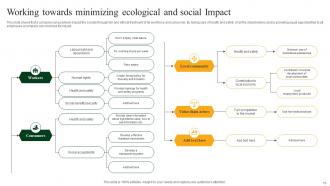
Slide 16: This slide shows that a company can positively impact the society through fair and ethical treatment of its workforce and consumer.
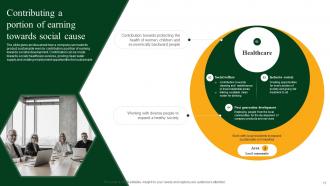
Slide 17: The slide gives an idea about how a company can make its product sustainable even by contribution a portion of earning towards societal development.
Slide 18: This slide highlights the Heading for the Ideas to be covered in the next template.
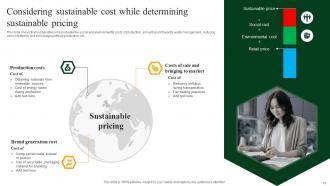
Slide 19: This slide shows that sustainable prices includes the social and environmental costs of production, amount spent towards waste management, etc.
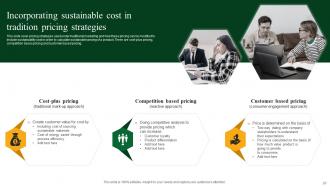
Slide 20: This slide focuses on Incorporating sustainable cost in tradition pricing strategies.
Slide 21: This slide contains the Title for the Contents to be discussed further.
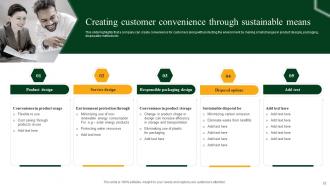
Slide 22: This slide highlights that a company can create convenience for customers along with protecting the environment.
Slide 23: This slide exhibits the Heading for the Topics to be covered in the upcoming template.
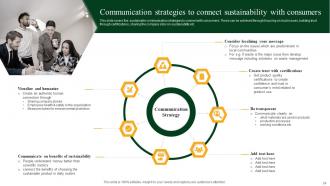
Slide 24: This slide covers five sustainable communication strategies to connect with consumers.
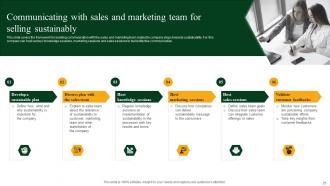
Slide 25: This slide portrays the framework for building communication with the sales and marketing team related to company steps towards sustainability.
Slide 26: This slide indicates the Title for the Ideas to be discussed further.
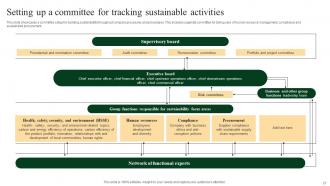
Slide 27: This slide showcases a committee setup for building sustainability throughout company processes and procedures.
Slide 28: This slide reveals the Heading for the Ideas to be covered in the upcoming template.
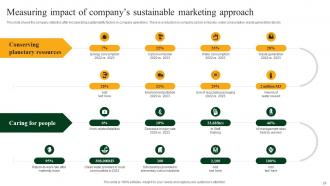
Slide 29: This slide shows the company statistics after incorporating sustainability factors in company operations.
Slide 30: This is the Icons slide containing all the Icons used in the plan.
Slide 31: This slide is used for depicting some Additional information.
Slide 32: This is the About us slide. State your company-related information here.
Slide 33: This is Meet our team slide. State your team-related information here.
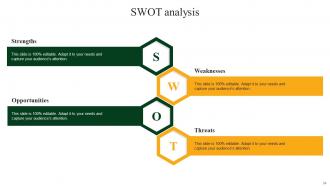
Slide 34: This slide represents the SWOT analysis.
Slide 35: This slide contains the company's vision, mission, and goal.
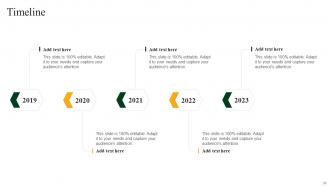
Slide 36: This slide displays the Timeline of the organization.
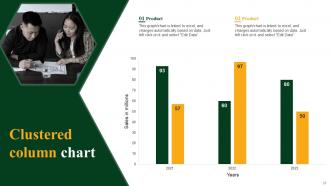
Slide 37: This is the Clustered column chart slide.
Slide 38: This is the Idea generation slide for encouraging fresh ideas.
Slide 39: This slide states the firm's targets.
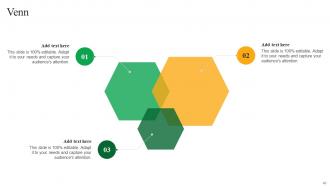
Slide 40: This is the Venn diagram slide.
Slide 41: This is the Puzzle slide with related imagery.
Slide 42: This is the Thank you slide for acknowledgement.
Green Marketing Powerpoint Presentation Slides with all 47 slides:
Use our Green Marketing Powerpoint Presentation Slides to effectively help you save your valuable time. They are readymade to fit into any presentation structure.











FAQs for Green Marketing
So basically green marketing means you're focusing on environmental stuff instead of just typical product features. Your whole message becomes "buy better" rather than "buy more" - which honestly feels way less pushy. You've gotta be super transparent though because people will call out greenwashing in a heartbeat and that'll tank your reputation. The tricky part is making sure everything actually aligns with reducing environmental impact while you're still trying to hit your sales goals. I'd start by looking at your current campaigns and seeing where you can add authentic environmental angles. It's definitely different from regular marketing but in a good way.
Honestly, you've gotta drop the vague "eco-friendly" stuff - people see right through that now. Get specific with real numbers, certifications, actual metrics. Tell stories too, like how you source materials or what your team's doing green-wise. Consistency matters across everything - website, social, packaging, even those little email signatures (though who reads those anymore lol). Back up every single claim with data people can actually check. The storytelling part works surprisingly well. Just don't try to fake it because consumers have gotten pretty good at spotting greenwashing BS.
Honestly, consumer perception makes or breaks everything with green marketing. People are super skeptical about greenwashing these days - and rightfully so, tbh. Even if you're doing legit sustainable stuff, it'll backfire if your messaging feels fake or like you're just jumping on trends. You've got to match your actual practices with what you're saying. Being transparent is huge here. Show people the real changes you're making instead of hiding behind buzzwords. I'd focus on making genuine improvements first, then just tell people about them straight up. Trust builds when they can see you're not BS-ing them.
Honestly, start with the basics - track your eco product sales and see how much traffic your sustainability pages get. Customer surveys are where you'll get the real gold though, just ask them straight up what made them buy and if they see your brand differently now. Social engagement on green posts tells a story too. Oh, and don't forget the actual environmental stuff like your carbon footprint - people can smell BS from a mile away these days. Mix the hard numbers with what customers are actually telling you. Pick maybe 3-4 things that match your goals and stick with tracking them consistently.
Companies love throwing around buzz words like "eco-friendly" without any real proof behind them. They'll slap green leaves on packaging while their factories are still polluting like crazy. My personal favorite annoying trick? When they brag about being "CFC-free" even though CFCs were banned decades ago - like, congrats on following the law I guess? Look for actual certifications from legit organizations instead of trusting their marketing. Research their overall practices, not just what they want you to see. Those measurable claims with third-party verification are your friend here.
Honestly, you don't need tons of cash for this. Look at what eco-stuff you're already doing and just talk about it more - social media, your website, wherever. Digital receipts are super easy to switch to. Partner with local green groups for free cross-promotion (win-win situation). Got recycled paper or less packaging? Make that part of your story. People genuinely want to support businesses that give a damn about the environment. Even tiny changes become good content. Oh, and authenticity is everything here - customers can smell fake green marketing from miles away. Start small and build from there.
Look at Patagonia, Tesla, and all those organic food brands - they absolutely crushed green marketing. Patagonia's "Don't Buy This Jacket" thing was honestly brilliant reverse psychology. Tesla made electric cars actually desirable instead of just... practical. Here's the deal though - authenticity is everything. People can spot fake eco-friendly BS immediately. You need real sustainable practices first, then tell that story honestly. Don't just list green features; connect them to what your customers actually care about. I'd start by finding one genuinely sustainable thing you're already doing and build your messaging around that.
Honestly, social media is perfect for green marketing because you can find people who genuinely give a shit about sustainability - they're already there talking about it. Target those eco-conscious crowds directly. When your content hits right, they'll share it themselves which is way more trustworthy than paid ads. Behind-the-scenes stuff works great too - show your actual sustainable practices instead of just claiming you're green. Most younger buyers live on these platforms anyway, so that's where the money is. My advice? Find where your eco customers are already chatting and jump in naturally.
Honestly, get some legit certifications - they're like having a neutral party vouch for you instead of just claiming you're eco-friendly. Energy Star, USDA Organic, Fair Trade... those actually mean something to people. Customers are so over companies making up green claims. Pick ones your audience will recognize though, not just random labels. I learned this the hard way when I tried explaining some obscure certification to my mom last week - total blank stare. The whole point is removing that "yeah right" skepticism when people see your environmental claims. Third-party validation beats self-promotion every time.
Cost is gonna hit you first - sustainable stuff is pricey upfront and kills your margins. Consumers are also crazy skeptical about greenwashing since everyone's been BS'ing about being eco-friendly. Supply chain overhauls take forever too, and honestly, measuring real environmental impact is way harder than it looks. My take? Pick one product line to start with. Be super transparent about what you're actually doing (not just what sounds good). Oh, and make sure you've got data to back up everything - people will call you out if you don't.
Honestly, you've gotta build the green stuff right into your product from the start - can't just slap some eco labels on later. Pick sustainable materials, cut down packaging, design things to last or be recyclable. People aren't dumb about greenwashing anymore, so whatever you claim better be real. Your whole supply chain matters too. I'd focus on like one or two legit environmental wins and talk about those specifically instead of just saying "eco-friendly" or whatever. Oh and document everything! You'll need proof when people start asking questions about your claims.
Honestly, eco-conscious consumers can spot BS greenwashing instantly, so skip the vague "eco-friendly" fluff. Give them real data and specific benefits instead. Tell stories about your actual sustainability efforts - certifications, partnerships with environmental groups, that kind of stuff. Behind-the-scenes content works really well too. Social media's perfect for this since these people love sharing causes they're passionate about. Oh, and make it super easy for them to actually do something - recycling programs, carbon offsets, whatever fits. I'd start by going through your current messaging and swapping out any fluffy language for concrete examples.
Okay so cultural differences are *huge* when it comes to green marketing - like way more than people realize. In Scandinavia, eco-messaging hits different than it does in other markets where it might seem pretentious or whatever. Collectivist cultures usually care more about community benefits, while individualistic ones want to know what's in it for them personally. Religious stuff, economics, history - it all matters. Sometimes I think marketers forget how much local environmental concerns vary too. You can't just translate your campaign and call it good. Each market needs messaging that actually speaks to their specific values and what they're worried about environmentally.
Dude, partnerships are a game-changer for green marketing. You get instant credibility when you team up with legit environmental orgs or other eco brands - basically you're borrowing their street cred. Way smarter to tackle sustainability stuff together than trying to be the lone hero anyway. Shared marketing costs are nice too, honestly. Just make sure you pick partners whose values actually match yours and won't make your audience roll their eyes. Oh, and the content opportunities from collabs? *Chef's kiss* - way more authentic than anything you'd cook up solo.
Honestly, tech is pretty solid for fixing trust issues in green marketing. Blockchain creates records nobody can mess with for your supply chain. IoT sensors give you real environmental data instead of guesses. QR codes are weirdly effective too - customers scan and see exactly where stuff came from. AI can crunch sustainability numbers automatically, which saves you from doing it manually (thank god). The whole point is showing actual data, not just making claims. I'd start small though. Maybe track your packaging materials first, then expand from there once you've got the hang of it.
-
I was mind-blown by the services that SlideTeam provided me. Thanks a ton!
-
Spacious slides, just right to include text. SlideTeam has also helped us focus on the most important points that need to be highlighted for our clients.