


Marketing environment powerpoint presentation slides




Try Before you Buy Download Free Sample Product
 Impress Your
 Audience
 100%
100% Editable
 Save Hours
 of Time


SlideTeam presents Marketing Environment PowerPoint Presentation Slides replete with gripping visuals and comprehensive subject-oriented content. Market analysis PPT template deck designers have incorporated the fundamentals of the marketing environment to create an aesthetically-sound presentation. Using this business environment scan PowerPoint slideshow addresses the macro and microelements of marketing. You will also find strategy analysis tools in our trading environment research PPT theme. Our team presents an environment review PPT slide that helps you to explain various marketing environment components and their analysis approach. Demonstrate PESTEL analysis for the macro environment and blue ocean strategy for the microenvironment. Consolidate the insights using the environmental scanning PowerPoint template. Other vital methodologies in this marketing investigation PPT like VRIO analysis will assist you to evaluate the company’s resources. Then, our business environment assessment PPT provides insights to your audience about the focal areas that influence marketing strategies. You are only a click away from acquiring this impactful marketing environment review PowerPoint theme.
People who downloaded this PowerPoint presentation also viewed the following :
Content of this Powerpoint Presentation
Slide 1: This slide displays Marketing Environment. State Your Company name and begin.
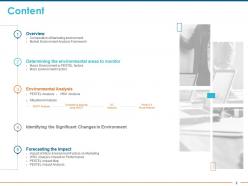
Slide 2: This slide displays Content of the presentation.
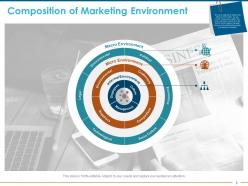
Slide 3: This slide shows Composition of Marketing Environment.
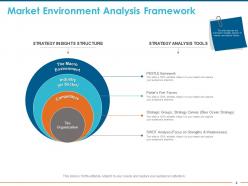
Slide 4: This slide shows Market Environment Analysis Framework.
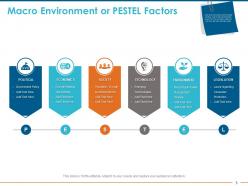
Slide 5: This slide depicts Macro Environment or PESTEL Factors. List down the macro-environmental factors used in the environmental scanning. You can add or alter any point as per your business need.
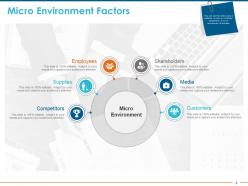
Slide 6: This slide showcases Micro Environment Factors. You can use this slide to give a guideline to work on mentioned components of micro environment of business
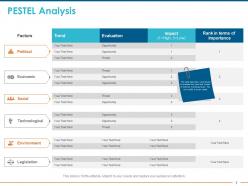
Slide 7: This slide showcases PESTEL Analysis.
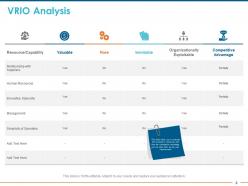
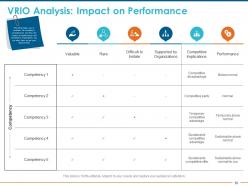
Slide 8: This slide shows VRIO Analysis. This slide helps you to evaluate the company’s resources and thus the competitive advantage, you can alter them as per your requirements
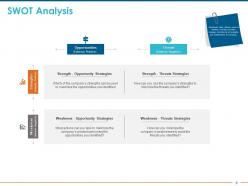
Slide 9: This slide depicts SWOT Analysis. Analyze Strength, Weakness, Opportunity and Threats. Mentioned table defines areas to develop a strong business strategy considering all strengths and weaknesses of company.
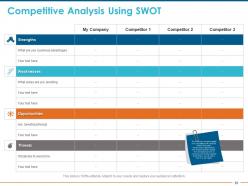
Slide 10: This slide displays Competitive Analysis Using SWOT.
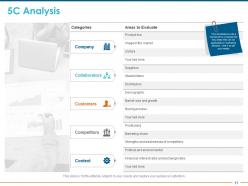
Slide 11: This slide depicts 5C Analysis.
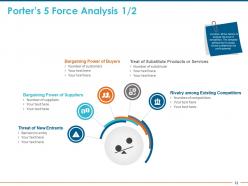
Slide 12: This slide showcases Porter’s 5 Force Analysis. List down all the factors to analyze the level of competition. This template defines the five basis forces to determine the profit potential.
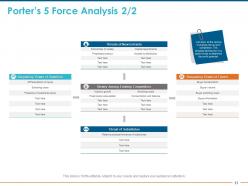
Slide 13: This slide showas Porter’s 5 Force Analysis. List down all the factors to analyze the level of competition. This template defines the five basis forces to determine the profit potential.
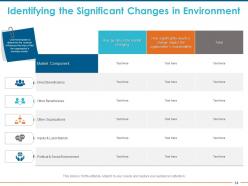
Slide 14: This slide describes to Identify the Significant Changes in Environment. Use the template to determine the external influences that may affect the organization’s business model.
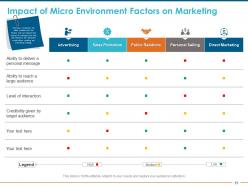
Slide 15: This slide explains the Impact of Micro Environment Factors on Marketing.
Slide 16: This slide shows VRIO Analysis: Impact on Performance. This slide helps you to evaluate the company’s competencies and thus the impact on performance and competitive implications, you can alter them as per your requirements
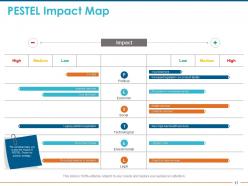
Slide 17: This slide shows PESTEL Impact Map. The template helps you to plot the impact of PESTEL Factor for product strategy.
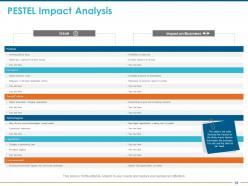
Slide 18: This slide shows PESTEL Impact Analysis
Slide 19: This is Marketing Environment Icons Slide.
Slide 20: This slide is titled as Additional Slides for moving forward.
Slide 21: This slide displays Column Chart with products comparison.
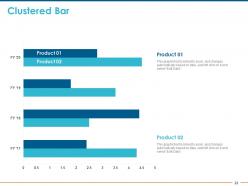
Slide 22: This slide displays Clustered Bar chart with product comparison.
Slide 23: This is Our Mission slide with vision, mission and goals.
Slide 24: This is Our Team slide with Names and Designations.
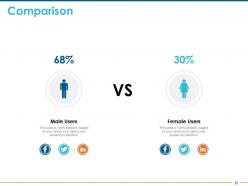
Slide 25: This is Comparison slide showcasing comparison between female and male users.
Slide 26: This is Our Goal slide with Idea, Vision and Target.
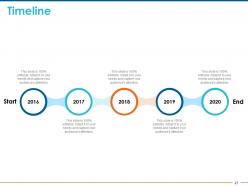
Slide 27: This is Timeline slide.
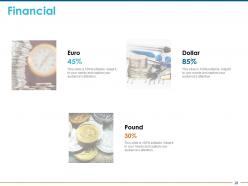
Slide 28: This is Financial slide. Showcase finance related stuff here.
Slide 29: This is Thank You slide with Address, Email address and Contact number.
Marketing environment powerpoint presentation slides with all 29 slides:
Use our Marketing Environment Powerpoint Presentation Slides to effectively help you save your valuable time. They are readymade to fit into any presentation structure.

FAQs for Marketing environment
So marketing environment basically breaks into two chunks - micro and macro. Micro is all the people you deal with directly: customers, competitors, suppliers, distributors. Macro's the big picture stuff like economic trends, tech changes, cultural shifts, political crap, demographics. Look, I get it sounds like a lot to track. But honestly? You don't need to monitor every single thing. Just focus on what actually moves the needle for your business. Maybe set up some kind of monthly check-in to spot changes before they blindside you. Way easier than trying to watch everything at once.
Look, the economy basically controls whether people have cash and want to spend it. Strong economy? Everyone's buying fancy stuff and dreaming big. Recession hits and suddenly they're all about deals and necessities - it's wild how fast priorities change. Your pricing and messaging need to shift with this. What really sucks is inflation screws you twice: higher costs AND customers with tighter budgets. I'd watch employment numbers and consumer confidence reports - they'll give you a heads up before your sales tank.
Cultural trends are everything - they literally dictate what your audience cares about and how they think. Take sustainability for example. If everyone's obsessed with eco-friendly stuff, you'd be nuts not to work that angle somehow. These trends also change where people hang out online and what kind of content they actually want to see. Plus their buying habits shift too. I swear the brands that stay on top of this stuff through social listening and trend reports always seem to crush it. You've gotta adapt fast though, before everyone else catches on.
Honestly, just start stalking your competitors weekly - sounds creepy but it works. Set up Google Alerts and check their websites religiously. I swear you'll catch stuff that changes everything. Build some basic dashboard to track their pricing and new launches. The real trick? Don't wait months to react when you spot something big. Your team needs to move fast, like within days. Oh and make this a weekly thing, not something you remember once a quarter when you're panicking. Social listening tools help too if you've got budget for it.
Tech pretty much runs marketing these days. Social media, data tracking, AI stuff - it's all happening so fast I honestly can't keep up half the time. But here's what's cool: you can actually see what's working now. Real-time customer behavior, automated campaigns, instant strategy changes based on actual data instead of just guessing. My take? Stay curious about new tools but don't go crazy chasing every trendy app that pops up. Focus on whatever actually fixes your specific problems. Way more effective than trying everything at once.
Honestly, legal stuff is what sets the rules for your whole marketing game. Pharma companies need FDA approval before making any health claims, finance has crazy disclosure requirements, and alcohol brands obviously can't market to kids. Even collecting emails hits GDPR and CAN-SPAM laws now. My advice? Don't wait for problems to find you - do quarterly compliance checks and get tight with your legal team early. I learned this the hard way when a client almost got hammered for some Instagram posts we didn't think twice about. Way better to be boring and compliant than sorry.
Start with a SWOT analysis - threats and opportunities mapped out clearly. PESTEL's handy too for breaking down political, economic, social stuff that might screw you over. Set up Google Alerts to monitor competitors (honestly works better than expensive tools). Survey customers regularly since their preferences shift fast. Industry reports are mind-numbing but they'll prevent brutal surprises later. Oh, and actually review this quarterly - data's useless if you don't act on it. Most people skip that last part and wonder why they're blindsided.
Honestly, demographic changes can totally wreck your business if you're not paying attention. Your customers might be aging out or literally moving away - then what? You've gotta switch up your messaging and maybe even your products. Gen Z doesn't communicate like Boomers at all, so your social media needs to reflect that. Income shifts matter too, plus how families are structured these days. I'd say check your customer data and local census stuff pretty regularly. That way you can make changes before your competition figures it out. Makes sense, right?
Dude, sustainability isn't optional anymore. Younger consumers will literally drop brands that aren't green - it's wild how fast they'll switch. Regulations keep piling up too (feels like every week there's some new packaging rule). Your marketing should highlight real environmental efforts, but don't fake it or you'll get called out for greenwashing. I'd start with an honest look at your current impact. Build some genuine green initiatives first, then promote what you're actually doing. Missing this boat means losing customers and probably facing tighter rules down the road.
Customers are totally flipping the script on marketing these days. The old mass marketing thing? Dead. People research everything themselves now and honestly trust random reviews more than actual ads - which is kind of wild when you think about it. They want personalized stuff, instant responses, and real conversations with brands. Plus they're bouncing between like 10 different platforms instead of just watching TV. My advice? Map out their whole journey from their viewpoint, not yours. And build campaigns that can shift when they inevitably change their minds again.
Dude, globalization is wild - suddenly you're not just competing with the pizza place next door, you're up against everyone online. Which honestly sounds terrifying at first. But flip side? You can reach customers anywhere now, and find suppliers you never knew existed. Your marketing has to step up though because people compare everything instantly these days. I always tell people to lean hard into whatever makes them special locally - like that weird quirky thing only you do. That's your secret weapon when the competition gets crazy global.
Honestly, politics run the whole show when you're marketing internationally. You've got trade rules, regulations, government stability - all that stuff shapes how you price things, where you can sell, what you can even say. China's a perfect example - what works in the US will totally bomb there because it's a completely different political game. Some places have crazy strict ad rules, others won't let foreign companies own much of anything. And political drama? That can torpedo your brand real quick if you're not paying attention. My advice - research the political scene hardcore before jumping into any new market. Oh, and build wiggle room into your plans because politics change fast.
Look, PESTEL analysis is probably your best bet here - covers all the political, economic, social, tech, environmental and legal stuff that could mess with your business. Porter's Five Forces works great for figuring out the competition too. SWOT's useful once you've got the external picture sorted, helps you match threats/opportunities with what you're actually good at. Don't overthink it though - being systematic beats trying to analyze everything at once. Oh, and definitely do some competitor stalking and ask your customers what they think. Start broad with PESTEL, then focus on whatever seems most relevant to your thing.
Watch your actual engagement numbers instead of chasing whatever trend report just dropped. Mix things up - throw some budget at micro-influencers when people want authenticity, jump on video when it's popping off. I swear, brands get so stuck doing the same Instagram thing forever and wonder why their reach tanks. Oh, and don't sleep on new platforms. Keep shifting money between different influencer types based on what's actually working for you. Maybe set aside like 20% each quarter just for testing random stuff? Your metrics will tell you way more than any expert prediction.
Think of customer feedback like having a GPS for your marketing - saves you from driving around lost, you know? You'll spot what's actually working versus what you thought would work. Regular feedback helps you catch trends early and fix stuff that's annoying people. I'd set up monthly check-ins to review everything. The cool part is you might discover opportunities you totally missed before. Way better than shooting in the dark with campaigns. Just don't collect feedback and then ignore it - that's worse than not asking at all.
-
Great product with effective design. Helped a lot in our corporate presentations. Easy to edit and stunning visuals.
-
Awesomely designed templates, Easy to understand.
-
Colors used are bright and distinctive.
-
Attractive design and informative presentation.