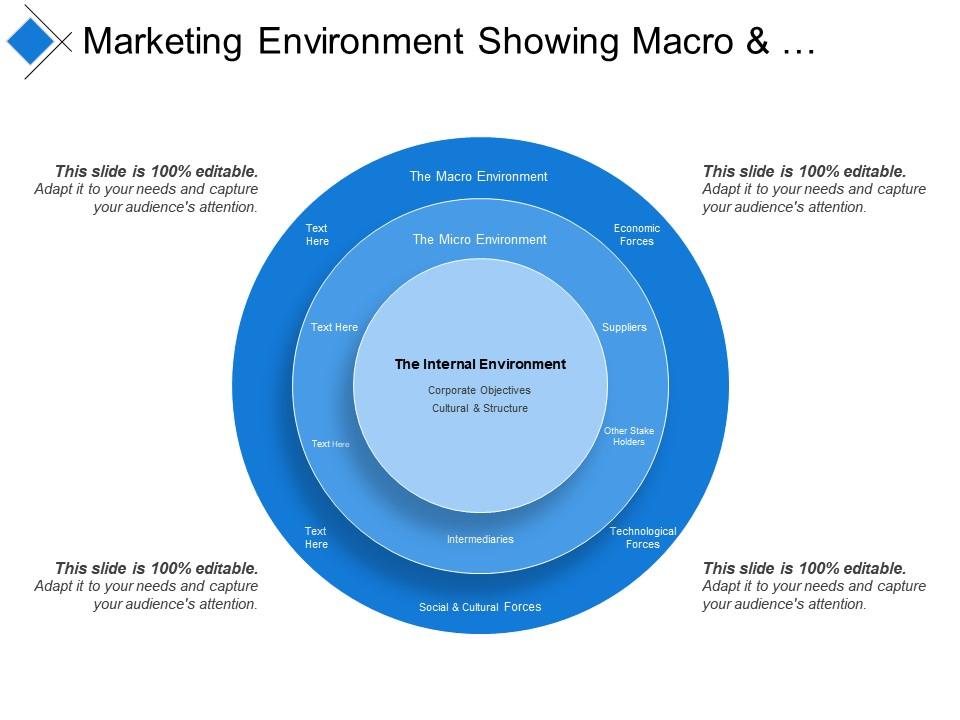
Marketing environment showing macro and micro environment

Rating:
80%
Marketing environment showing macro and micro environment
Slide 1 of 5
Favourites Favourites

Try Before you Buy Download Free Sample Product

Audience Impress Your
Audience
Editable 100%
Editable
Time Save Hours
of Time
The Biggest Sale is ending soon in
0
0
:
0
0
:
0
0
Rating:
80%
Presenting this set of slides with name - Marketing Environment Showing Macro And Micro Environment. This is a four stage process. The stages in this process are Micro Environment Macro Environment.

People who downloaded this PowerPoint presentation also viewed the following :

FAQs for Marketing environment showing macro

So there's basically two big buckets to watch: micro and macro stuff. Micro is the close-to-home things - your customers, competitors, suppliers, that whole crew. Macro's the bigger picture like economic trends, tech changes, political drama, demographics. TBH it feels like drinking from a fire hose when you think about it all! My advice? Pick maybe 3-4 things that actually matter for your business and just focus on those. I'd start with whatever might mess with how your customers buy stuff - that's where you'll feel the pain first anyway.

So basically, you've got two levels working on your marketing strategy. Your micro stuff - customers, competitors, suppliers - hits your daily choices directly. Competitor drops their prices? You're scrambling. Macro factors are the big picture things: economy tanking, new laws, tech disruptions. Those mess with your long-term plans. COVID was insane for this - everyone had to go full digital literally overnight. I'd say audit both regularly, though honestly the macro stuff is harder to predict. Short bursts of checking work better than overthinking it.

Honestly, consumer behavior shifts mess with everything in your marketing world. People start shopping differently or caring about new stuff? You're scrambling to change your targeting and messaging. COVID was wild - everyone went digital overnight and traditional retail just... died for a while. Your competitors are doing the same dance, trying to figure out what customers want now. Even suppliers get pulled into it because we're all chasing the same moving target. Watch those behavior patterns though - they'll tip you off to what's coming next way before it actually hits.

Honestly, tech keeps flipping the script on how we connect with customers. Social media and AI have totally changed everything - plus everyone expects super personalized experiences now. New marketing tools drop literally every week (kinda overwhelming tbh). But the data insights you get are insane compared to old-school methods. My advice? Stay curious about new stuff but don't chase every trendy platform. Pick tools that actually fix problems for your audience. I learned this the hard way after wasting time on platforms my customers weren't even using.

Look, competitors basically set the bar for everything you do. Your pricing has to make sense compared to theirs. Product features too. And honestly? They train your customers to expect certain things - like if everyone else does free shipping, you're stuck doing it too or looking cheap. You've gotta watch what they're doing because one solid campaign can mess with your market share real quick. I'd say check their moves regularly so you can either copy what works or find ways to stand out. It's exhausting but that's just how it goes.

Honestly, just split it into internal stuff (what you're good/bad at, your resources) and external (competitors, customers, the whole economic mess). SWOT analysis sounds boring but it actually works - I still use it all the time. Then dig into who you're competing against and how your customers behave. Surveys and social media monitoring give you real data instead of guessing. Industry reports help too. The thing is, you can't just do this once a year and forget about it. Markets change way too fast now, so make it a regular thing you check on.

Look, the economy basically controls everything about your marketing. When times are tough, people get super picky about spending and gravitate toward cheaper options - so you've gotta tweak your messaging accordingly. High interest rates kill big purchases too (cars, houses, that kind of stuff). Inflation's the real kicker though because it hits you from both sides - your costs go up while customers have less buying power. I'd honestly just keep tabs on economic trends and be ready to shift your campaigns before everyone else catches on. Flexibility is everything here.

Honestly, you've gotta pay attention to what's trending culturally because that's what your audience actually cares about right now. Like during COVID, every brand suddenly became all "we're here for you" - and it worked because people needed that message. If sustainability's hot in your space, play up those eco-friendly features. Wellness trending? Lean into that. Ignore these shifts and you'll get roasted on Twitter for being out of touch. Set up some Google Alerts for trends in your industry (saves so much time) and maybe check your campaigns every few months to see if they still hit right. Cultural moments move fast these days.

Honestly, you've gotta stay on top of this stuff or it'll bite you later. Set up some alerts for regulatory changes and have someone actually check them regularly - can't just set it and forget it. Get to know some lawyers who really get your industry (seriously worth the investment). When new rules drop, figure out fast how they'll mess with your operations and marketing. Then change your policies before you're scrambling at the last minute. That's always the worst position to be in. Start by looking at what you're doing now against whatever's coming down the pipe this quarter.

Look, sustainability isn't optional anymore - customers actually research this stuff before buying. Younger people especially. You've got to weave environmental messaging into everything now. Sustainable packaging, eco-friendly suppliers, the whole deal. But here's the thing - don't fake it because greenwashing will blow up in your face faster than you can say "carbon neutral." Start by checking what you're already doing right environmentally. Those authentic stories? That's your gold mine right there. Green practices used to be bonus points, now they're basically table stakes.

Honestly, market research is like having a good radar system for your business. You're scanning for trends, watching what customers actually do (not what they say they'll do), and keeping an eye on competitors so they don't catch you off guard. Track economic changes, new regulations, cultural shifts - basically anything that might mess with your strategy. I know it sounds boring, but it's way better than flying blind and making expensive mistakes. Figure out which external factors actually matter to your business first. Then set up some kind of regular system to monitor them. It's not a crystal ball, but it's pretty close.

So globalization is wild - suddenly you can sell to people across the globe through online stuff, but now you're also going head-to-head with huge international companies that have way more money. Pretty intimidating, right? Here's the thing though: you've got something they don't. Maybe it's knowing your community inside and out, or that personal touch customers actually remember. Figure out what makes you irreplaceably YOU as a local business. Then use digital tools to show off that authenticity. It's honestly your best shot at staying competitive without losing what makes you special.

Honestly, politics can totally derail your marketing plans when you least expect it. New regulations hit and suddenly you're scrambling to rewrite everything - GDPR was a nightmare for email marketing, remember? Government changes mess with consumer confidence too, so campaigns that tested well can just... flop. Political drama shifts how people spend money, which sucks when you've already locked in your budget. Plus there's always some new law that forces you to pull ads from certain areas. My advice? Stay on top of political news that affects your markets. Being flexible beats getting blindsided every time.

Your segments basically shift because your customers shift - pretty straightforward. Millennials hit their 30s and boom, they're not renting anymore, they're buying houses. Age groups evolve, people relocate, income changes. You can't just set your demographics once and forget about it (learned this the hard way at my last job). Short bursts work better than long-term assumptions. Check your data regularly and don't be afraid to completely scrap segments that aren't working. Sometimes you'll need to split groups, other times merge them. The trick is staying flexible instead of chasing people who've already moved on.

Honestly, start with Google Trends - it's free and you'll probably get addicted like I did. For social stuff, Hootsuite catches sentiment changes before they blow up. Market research reports from Nielsen give you the big picture view. I always stalk competitors on SEMrush too, plus their social feeds obviously. Customer surveys are huge but everyone forgets about them. Oh, and those industry reports from IBISWorld are solid if you need the full landscape. Just start with the free tools first, then upgrade when you actually need more data.

Ratings and Reviews

80% of 100
Review Form
Write a review
Most Relevant Reviews
  1. 80%

    by Clyde Sullivan

    Appreciate the research and its presentable format.
  2. 80%

    by Dee Hicks

    Professional and unique presentations.

2 Item(s)

per page: