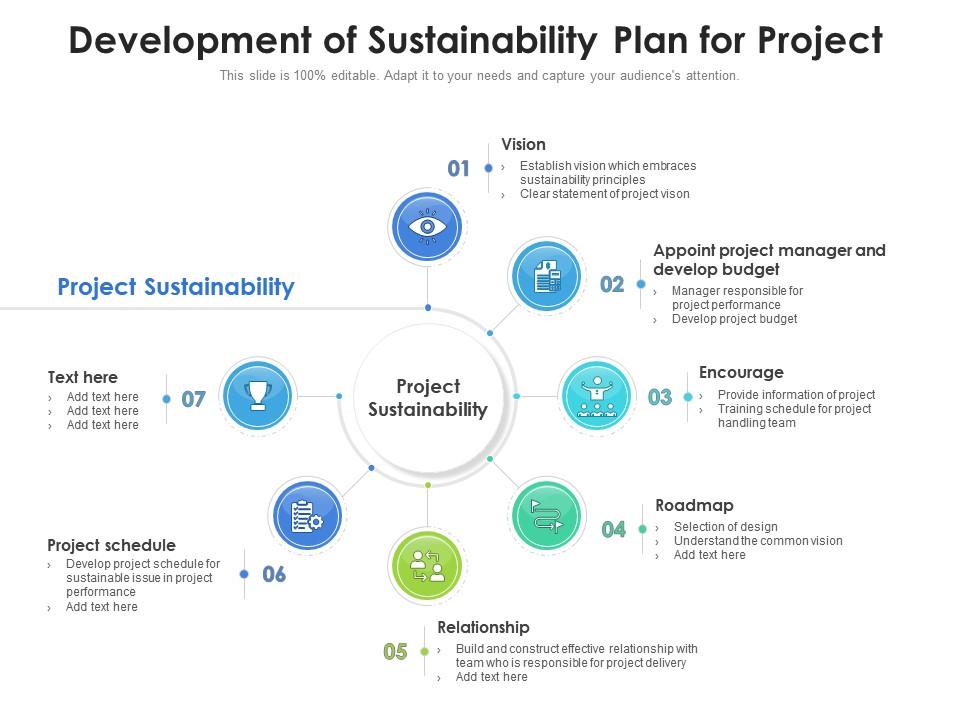
Development Of Sustainability Plan For Project
Try Before you Buy Download Free Sample Product
Audience
Editable
of Time
Our Development Of Sustainability Plan For Project are topically designed to provide an attractive backdrop to any subject. Use them to look like a presentation pro.
People who downloaded this PowerPoint presentation also viewed the following :
Development Of Sustainability Plan For Project with all 2 slides:
Use our Development Of Sustainability Plan For Project to effectively help you save your valuable time. They are readymade to fit into any presentation structure.
FAQs for Development Of Sustainability
Okay so you need five main things for a solid sustainability plan. First, figure out your baseline - where are you now? Then set specific goals with actual deadlines, not just "reduce waste" but like "cut office waste 30% by September." You'll need clear strategies for hitting those targets and someone who actually owns each piece (this is where most plans die btw). Regular check-ins are crucial too. Oh, and don't try to fix everything at once - pick 2-3 areas max. Also get other departments on board early since this stuff always involves everyone somehow.
Honestly, get people involved from the very beginning - don't wait until you've already decided everything. Map out who's actually affected: employees, customers, suppliers, community folks, investors. Then give them real ways to contribute through surveys, focus groups, workshops where they can genuinely change things. Some people absolutely hate meetings though, so maybe try online platforms or just grab coffee with them one-on-one. Here's the thing - you have to show them how their feedback actually changed your plan. Nothing kills engagement faster than people feeling like you're just going through the motions. Keep those feedback loops visible and update everyone regularly on progress.
Think of data analysis as your roadmap for sustainability stuff. First, you gotta figure out your baseline - carbon footprint, energy use, waste, all of it. Otherwise you're just throwing darts in the dark hoping something sticks. The numbers help you spot where you're bleeding the most resources so you can focus there first. Honestly, leadership won't care about your green initiatives unless you can show them actual ROI later. Start by digging through whatever data you already have lying around in different systems - there's probably more useful stuff than you think. Short version: measure everything, then act smart about it.
Start by picking 3-5 metrics you can actually track without going crazy - energy use, waste reduction, water consumption, carbon emissions, that kind of thing. Honestly, most companies try to measure everything and end up measuring nothing well. Get your baseline numbers first, then check in monthly or quarterly to see what's working. Cost savings from efficiency improvements are usually the easiest sell to leadership. Don't ignore the softer stuff either - how employees and customers feel about your sustainability push matters more than you'd think. Keep it simple at first.
Honestly, stakeholder buy-in is gonna be your biggest headache. Everyone thinks they know what should be prioritized, but actually getting reliable baseline data? Way harder than people expect. Budget's always tight too - especially when leadership treats sustainability like some optional add-on instead of core business. Scope creep will absolutely destroy you if you're not careful. I've seen plans turn into these bloated monsters trying to fix everything. Don't do that to yourself. Pick maybe 3-5 things you can actually measure and nail those first. Get a few wins, show some results, then expand. Way easier to get more resources once you've proven it works.
Start with stuff that cuts costs AND helps the environment - energy efficiency, waste reduction, that kind of thing. They basically pay for themselves pretty fast. Your board's gonna want quarterly numbers, so break bigger projects into chunks you can report on every few months. Honestly, the trick is framing long-term stuff as "we're protecting against future risks" instead of just environmental feel-good projects. Quick wins first to get everyone excited, then you can tackle the bigger sustainability goals. It's all about finding that sweet spot where green actually means more green in your pocket.
So you've got a few good options here. GRI Standards are probably your best bet - super comprehensive for reporting. UN SDGs give you those 17 big-picture goals to work toward. TCFD is solid if climate stuff is your main concern. ISO 14001 is thorough but honestly kind of boring - it's all about environmental management systems. B Corp has a really user-friendly assessment tool too. My take? Don't try to do everything at once. Pick one framework that actually fits your industry and what your stakeholders care about. You can always add more later once you've got the hang of it.
Look, your sustainability stuff will only work if the company culture actually backs it up. When leadership talks the talk but then makes decisions based purely on quarterly numbers? Everyone notices that BS real quick. You need people to see sustainability reflected in performance reviews, budgets, the whole deal. Find those employees who already get it - they're your secret weapon for changing minds without it feeling forced. Otherwise you're just creating another policy nobody follows. Culture beats strategy every single time, especially with this stuff.
Honestly, making sustainability part of your actual strategy isn't just feel-good stuff anymore - it saves you real money through efficiency improvements. Top talent wants to work somewhere meaningful, and customers are picking sustainable brands over competitors. Regulatory stuff is only getting stricter too, so you're basically future-proofing your business. The innovation piece is huge - when you start thinking sustainably about everything, new revenue ideas just pop up. My advice? Pick one business process where going green could actually cut costs or improve performance. That's your easiest first win to get momentum going.
Honestly, just tackle the free wins first - do an energy audit, swap those old bulbs for LEDs, make sure everyone's actually recycling right. Most small businesses waste way more than they think! Don't try changing everything at once though. Going paperless helps, buying refurbished gear saves cash, partnering with local suppliers cuts shipping costs. Oh and definitely track your changes so you can see real numbers. I'd pick maybe three super easy things this month and just build from there. Once you get rolling it gets addictive.
There's a bunch of solid options depending on your budget. Software like Sustainability Cloud or Persefoni are great for tracking emissions, but honestly? Excel or Google Sheets work fine when you're starting out. I've seen way too many companies get stuck researching the perfect tool instead of just beginning somewhere. GRI Standards give you a decent framework to follow. IoT sensors are cool for real-time data if you want to get fancy later. Start with EPA's free guides first - they're actually pretty helpful. You can always upgrade to paid tools once you figure out what you actually need.
Skip the corporate BS and just tell people exactly what you're doing - like "cutting emissions 30% by 2027" instead of some vague "going greener" nonsense. Stories work way better than boring data dumps, honestly. Use visuals too. Be everywhere your audience hangs out - Instagram, community stuff, wherever. Here's the thing though: don't pretend you're perfect. Share your wins AND your struggles. People actually respect companies more when they're upfront about the hard parts. Oh, and post updates regularly so it doesn't look like you forgot about your own goals after the first month.
Regulations basically set your baseline - the stuff you can't skip. Carbon reporting, waste targets, environmental standards... they'll drive your priorities and deadlines. Honestly feels overwhelming at first, but they're actually good guardrails. I'd scan what applies to you early on so you're building compliance in from the start instead of panic-adding it later (been there, not fun). Also keep an eye on what's coming down the pipeline - new policies usually hint at where things are heading long-term. Way easier than scrambling to catch up.
Honestly, partnerships are a game-changer for sustainability stuff. You can split costs on big initiatives instead of eating the whole budget yourself. Plus you get access to expertise your team might not have - like if they're great at renewable energy and you're not. The reach is huge too since you're tapping into their audience. I mean, going it alone on climate goals just sounds exhausting. Try mapping out who else in your network cares about this stuff, then pitch one small project together. Could be joint energy purchasing, waste programs, whatever makes sense. Start small though - don't go crazy right away.
Ugh, climate change is making sustainability planning so much harder - you can't just set goals and forget them anymore. The whole baseline keeps moving! Weather patterns shift, supply chains get disrupted, new regulations pop up. So your plans need to be super flexible. What works now might be useless in five years, honestly. But here's the thing - this chaos is actually pushing companies to get more creative and think bigger picture. My advice? Build in flexibility from day one. Don't lock yourself into rigid targets. Check your data regularly and pivot when you need to.
-
Use of different colors is good. It's simple and attractive.