Building a successful sustainability plan for business

Rating:
100%
Building a successful sustainability plan for business
Slide 1 of 2
Favourites Favourites

Try Before you Buy Download Free Sample Product

Audience Impress Your
Audience
Editable 100%
Editable
Time Save Hours
of Time
The Biggest Sale is ending soon in
0
0
:
0
0
:
0
0
Rating:
100%
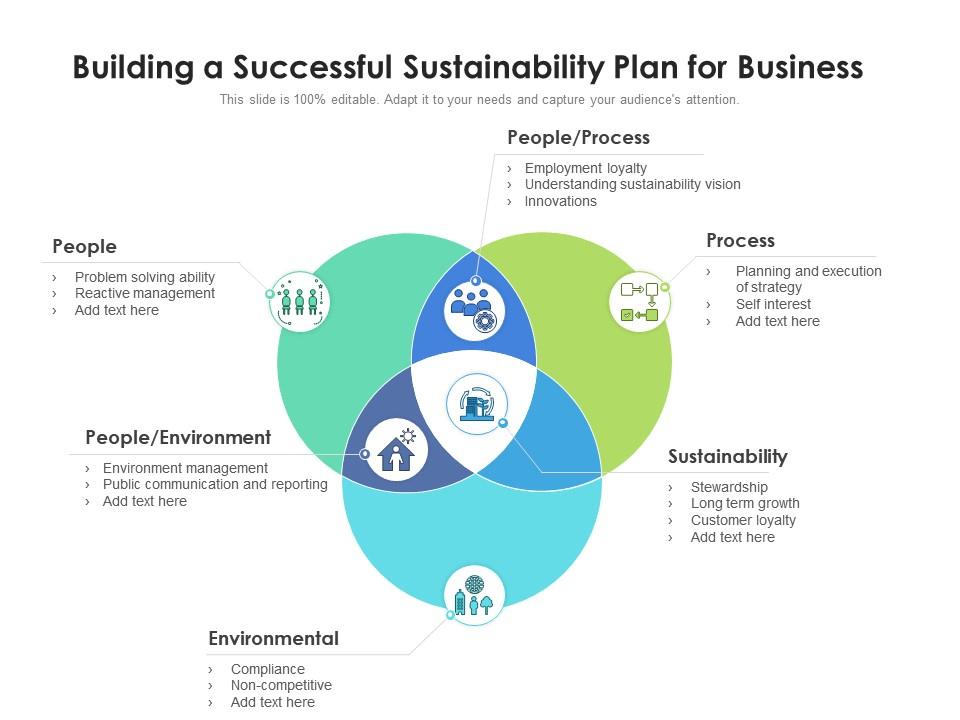
Introducing our premium set of slides with Building A Successful Sustainability Plan For Business. Ellicudate the six stages and present information using this PPT slide. This is a completely adaptable PowerPoint template design that can be used to interpret topics like Process, Sustainability, Environmental, People, Planning. So download instantly and tailor it with your information.

People who downloaded this PowerPoint presentation also viewed the following :

FAQs for Building a successful sustainability

So there's three big things: environmental stuff (cutting waste, carbon footprint), social equity (fair wages, helping communities), and making sure it's actually profitable. Most companies treat them like separate boxes to check, which is honestly pretty dumb. The magic happens where all three overlap - like when reducing waste saves money AND helps the planet. Economic viability just means your green initiatives can't tank your business long-term. Look for spots where you're already doing two out of three. Those are your easiest wins to build on.

Start with GRI or SASB frameworks - they're solid for tracking the basics like emissions and energy use. Here's where most companies screw up though: they try measuring everything right away. Total chaos. Just pick 3-5 metrics that actually make sense for your industry first. Get your baseline numbers, then check progress every quarter. Oh, and definitely get third-party verification if you want anyone to take your data seriously. Build simple systems now with stuff you can easily track. You can always add more complex measurements later once you've got the basics down.

Look, renewable energy is basically your best bet for hitting sustainability goals without breaking the bank. Solar and wind are way cheaper now than they used to be - honestly surprised more companies haven't switched already. The energy sector causes like 70% of global emissions, so that's where you'll get the biggest impact. You can cut carbon emissions massively while still keeping everything running. My advice? Start with an energy audit of your current setup, then see what renewable options make sense for your facilities. Hydro's great too if you're near water sources.

Honestly, the small stuff really does add up. Switch to LEDs, unplug your chargers when you're not using them - saves money too. Walk or bike places when you can instead of driving. I've been eating way more plant-based meals lately and it's actually easier than I thought it'd be. Oh, and buy less random crap in general lol. Transportation is probably the biggest thing though. Don't try to change everything at once - just pick like 2 or 3 things that won't make you miserable and stick with those.

Dude, precision agriculture is huge right now - GPS tractors that only dump fertilizer where it's actually needed, cutting waste by like 30-40%. Vertical farms are wild too, way more food per square foot with LEDs and hydroponics, though the electricity bills must be insane. Oh, and regenerative stuff like cover cropping is literally bringing dead soil back to life by fixing the microbiome. It's pretty crazy what they're doing. Check out John Deere's tech platforms and this company called Plenty - they're leading the charge on most of this innovation.

So basically the circular economy is the opposite of how we usually do things. You know how it's normally take-make-throw away? This flips that - keeps stuff in the loop way longer through recycling, fixing things up, reusing materials. Kind of mimics how nature works actually, where nothing really gets wasted (though I guess that's kinda cheesy to say). Regular systems just keep extracting new resources and create tons of waste. Circular design tries to eliminate waste from the beginning. For your sustainability stuff, think about how you can get materials cycling back into production instead of dumping everything.

Oh man, where do I even start? The visibility thing is brutal - you literally have no clue what's happening with your suppliers' suppliers. Are they using child labor? Who knows! Sustainable materials cost way more upfront too, which sucks when you're trying to hit budget targets. Half your suppliers probably don't even care about sustainability goals anyway. It's honestly like trying to herd cats on steroids. My advice? Map out your entire supply chain first. Sounds boring but you can't fix what you can't see, right?

So basically, cities can push sustainable living by cramming housing, shops, and offices together in walkable spots. Less driving, more public transit - you get it. Green stuff makes a huge difference too: bike lanes, parks, energy-smart buildings. Mixed-use neighborhoods are where it's at honestly. Oh, and smart zoning prevents cities from just sprawling everywhere and eating up nature. Transit-oriented development is probably the biggest game-changer though - that's where you'll see real impact if your city's actually trying. Some places nail this combo and it's pretty cool to see.

So basically, when you use sustainable materials, you're cutting way down on resource extraction and manufacturing emissions. Plus way less waste when products hit end-of-life. The carbon footprint reduction is huge across the whole lifecycle - that's probably the biggest benefit. Most of these materials are biodegradable or recyclable too, so you're not just dumping more stuff in landfills. Honestly, customers expect this now anyway. I'd start simple though - audit what materials you're currently using and pick just one or two to swap out first.

Don't treat sustainability like some separate subject - weave it everywhere instead. Math classes can analyze climate data, social studies tackles environmental justice, science explores green chemistry. Literature? Eco-fiction is actually pretty engaging stuff. Make it connect to what's happening in their actual neighborhoods, you know? I'd probably start with just one project between two teachers first - like math and science working together on something local. Then build from there. Kids get way more invested when they see how this stuff affects their real lives, not just some abstract concept.

Honestly, the trick is making it feel personal first. Connect those green initiatives to what your employees actually care about - their kids' future, saving money, whatever resonates. Set up some friendly competition with energy challenges or waste reduction contests (people get weirdly competitive about this stuff). Get some sustainability champions going who can rally their teams from the inside. Oh, and definitely celebrate the wins! Share progress updates so they see their efforts aren't just disappearing into the void. Make participation super easy and you'll be golden.

Honestly, your buying choices have way more impact than you'd think. Companies literally watch what sells and what doesn't - if eco-friendly stuff flies off shelves, they'll scramble to make more sustainable products. I've seen brands completely overhaul their packaging just because customers kept asking for greener options. But yeah, it goes the other way too. Don't buy sustainable? They won't bother making it. Even grabbing the recycled paper towels instead of regular ones sends a signal. It's kinda crazy how much corporations will bend over backwards when they smell profit in sustainability.

So basically governments are putting price tags on pollution while making green stuff cheaper. Carbon pricing, renewable subsidies, stricter emissions - that whole thing. They're also doing green building codes and EV incentives. Oh, and they only buy from eco-friendly suppliers now which is kinda smart actually. The EU's Green Deal is huge right now but every country's doing their own version depending on their politics. Honestly if you're tracking this for work I'd watch the carbon pricing stuff - that's where the real business impact is gonna hit.

Honestly, tech is completely changing the sustainability game. AI can optimize energy use in factories, IoT sensors cut agricultural waste, and blockchain makes supply chains way more transparent. What's wild is how predictive analytics now prevents equipment breakdowns before they happen - saves tons of resources. Smart grids balance renewable energy automatically, and apps let companies track their carbon footprint instantly. Even manufacturing automation cuts material waste big time. My advice? Figure out where you're bleeding the most resources first, then see what tech solutions are already out there for that specific problem.

Honestly, non-profits are like the unsung heroes of climate action. They jump into all the messy stuff that governments dodge and companies won't touch - conservation, research, policy lobbying, you name it. What's cool is they can actually tell the truth about uncomfortable environmental realities without worrying about profits or votes. Plus they're amazing at getting regular people fired up and organized across different countries. My cousin volunteers with one that does ocean cleanup - it's pretty inspiring stuff. If you want to help out, just find one that matches what you care about and maybe donate or volunteer your skills.

Ratings and Reviews

100% of 100
Write a review
Most Relevant Reviews
  1. 100%

    by Damian Stevens

    Nice and innovative design.
  2. 100%

    by Chase Howard

    Great designs, really helpful.

2 Item(s)

per page: