

Sustainability Action Plan Powerpoint Ppt Template Bundles





Try Before you Buy Download Free Sample Product
 Impress Your
Audience
 100%
Editable
 Save Hours
of Time


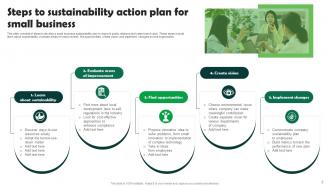
Introducing our comprehensive PowerPoint PPT presentation on the Sustainability Action Plan. This informative resource is designed to guide organizations towards a more sustainable future. With a focus on project sustainability management, it provides a step by step checklist to ensure sustainable practices are integrated into every project phase. The presentation also outlines a robust financial sustainability plan, empowering businesses to enhance their economic resilience while minimizing environmental impact. Our business sustainability financial governance action plan framework equips organizations with effective strategies to align their financial goals with sustainable practices. Furthermore, the included yearly action plan facilitates the implementation and monitoring of sustainability initiatives throughout the year. Unlock the power of sustainability and create a lasting positive impact with our comprehensive PPT.
People who downloaded this PowerPoint presentation also viewed the following :
Sustainability Action Plan Powerpoint Ppt Template Bundles with all 17 slides:
Use our Sustainability Action Plan Powerpoint Ppt Template Bundles to effectively help you save your valuable time. They are readymade to fit into any presentation structure.









FAQs for Sustainability Action Plan Powerpoint
So there's this whole "three pillars" thing - environmental, social, and economic sustainability. Basically you're juggling planet protection, treating people right, and not going broke. Cut waste, switch to renewables, pay fair wages, think long-term instead of just this quarter's numbers. I know it sounds like a lot! But seriously, don't try doing everything at once. Pick something you're already decent at - maybe cutting energy costs or working with diverse suppliers. Build momentum there first. Those small wins add up way faster than trying to revolutionize everything overnight.
So basically, sustainable design is all about looking at the whole lifecycle of whatever you're making. Pick renewable or recycled materials when you can. Design stuff that'll actually last instead of breaking after a year (looking at you, fast fashion). Think about manufacturing and shipping too - those add up carbon-wise. The biggest thing? Don't treat environmental impact like an afterthought. Build it into your process from day one. I'd start by looking at what you're doing now and figuring out where you can swap in better alternatives. It's honestly not as hard as people make it sound.
Hey! So renewable energy is basically what makes most sustainability plans actually work. You swap out fossil fuels for solar, wind, hydro - stuff that doesn't dump CO2 everywhere. The crazy part is how cheap it's gotten lately, which honestly makes the whole thing way easier to sell to executives. Companies can keep growing without trashing the planet, which is kind of the whole point. If you're trying to hit those net-zero goals everyone's talking about, renewables aren't optional anymore. It's really the only path that makes sense long-term.
Transportation's honestly the biggest thing - take the bus more, walk when you can, maybe look at electric if you're buying a car anyway. At home just do the basics: LED bulbs, turn the heat down a couple degrees, unplug stuff. Food surprised me though - way bigger impact than I thought. Less meat, local groceries, don't let things rot in your fridge. But seriously, pick like 2 things you'll actually do instead of making some crazy list you'll abandon in a week. Start small.
Honestly, money's the biggest pain. These projects need crazy upfront costs and good luck getting people to pay more now for benefits they won't see for years. Old zoning laws are a mess too - they weren't designed for green stuff at all. Coordinating everyone is brutal. Developers want one thing, city planners another, and don't get me started on community meetings lol. Technical stuff gets tricky when you're trying to retrofit ancient buildings or hook solar into outdated grids. Start small with pilot projects. Show them the numbers work, then expand from there.
Start with GRI Standards or SASB metrics - they're solid frameworks for tracking carbon, water, waste, all that stuff. Pick 5-10 indicators that actually relate to your business though. Don't just measure everything because it sounds impressive. I've seen companies drown in data and completely lose focus. Third-party verification helps for your biggest metrics. Build consistent collection processes, but honestly? Begin with whatever you can measure reliably right now. You can always expand later once your systems improve. The consistency matters way more than having perfect tracking from day one.
So CSR is like the big umbrella that covers everything - social impact, ethics, community stuff, AND environmental responsibility. Sustainability sits under that umbrella as one piece of the puzzle. Companies mix these up all the time (honestly drives me crazy), but sustainability specifically focuses on environmental impact and future generations. CSR is way broader - it includes things like employee wellbeing and community partnerships too. If you're building a CSR program, map out your social impact goals first, then figure out where your sustainability initiatives fit in. They should definitely overlap, but don't treat them as the same thing.
Honestly, waste management is like the foundation of any good sustainability program. You can't really hit your environmental targets if your waste streams are a mess. Do a waste audit first - that'll show you where the biggest wins are. Proper recycling and composting cuts landfill waste big time, plus reduces methane emissions. The money savings don't hurt either! I'm really into this circular economy thing where waste from one process becomes input for another. Way better than the old take-make-waste approach. It's kind of a no-brainer once you see it in action.
Dude, precision agriculture is where it's at right now. GPS tractors that know exactly where to dump fertilizer, drones checking if your crops look sick - that stuff's already making farmers serious money. Vertical farming's cool too but honestly feels more futuristic than practical for most people. Oh, and CRISPR gene editing is creating these crazy drought-resistant plants. There's also regenerative farming that actually sucks carbon back into soil, which is pretty neat. The whole space moves ridiculously fast though. I'd definitely check out precision ag companies first if you're thinking investments - way better ROI than the flashy indoor farming startups.
Honestly, you don't need to flip everything upside down. Math class? Have them calculate carbon footprints. English can dive into environmental lit, science explores renewable energy. Social studies is gold for climate justice stuff. Once you start noticing these connections, they're literally everywhere - it's kind of crazy. Just don't make it sound preachy or they'll tune out instantly. Project-based learning works great here. Let students tackle actual local problems they can solve. Way more engaging than theoretical stuff, and they'll actually care about what they're learning.
Look, sustainability certification actually pays for itself. Your energy bills drop, waste goes down, and you start attracting customers who'll pay more for green businesses. The marketing angle is honestly pretty sweet - people trust certified companies more and younger employees really want to work somewhere that gives a damn about the environment. Plus you avoid getting hit with regulations later. The whole certification process usually reveals inefficiencies you had no clue about (which is kind of embarrassing but helpful). Figure out which certification fits your industry first though.
Honestly, companies are watching our spending habits way more than we think. Every time you grab the eco-friendly option instead of the regular one, that registers in their sales data. It's basically like voting - your wallet tells them what matters. Pretty soon they're pouring money into green R&D and sustainable supply chains because they see the demand. Even tiny switches make a difference when enough people do them. Like choosing refillable stuff or buying from B-corps. I've started actually tracking what brands I support since it adds up to real market pressure. Companies will literally change their entire strategy if the money's there.
So Patagonia basically made bank by telling people to repair stuff instead of buying new - genius move that also cuts waste. Interface Inc. did something wild too, turning their carpet business completely carbon negative (which is nuts for such a dirty industry). Oh and Unilever saved money AND looked better doing it with their sustainability thing. The key difference? They didn't just slap green initiatives on top of everything. These companies rebuilt their whole approach from scratch. Honestly, you could probably start small - find one wasteful thing at work and see if there's a way to flip it into something useful.
Honestly, tech is a total game-changer for going green. IoT sensors can track your energy usage in real-time, while AI cuts supply chain waste like crazy. Smart building systems alone? They'll slash energy costs by 30% - which is pretty insane if you ask me. Predictive analytics helps manufacturers use way fewer resources too. The best part is once you figure out what works in one spot, you can copy it everywhere else. Oh, and manufacturers love this stuff because it actually saves them money. Start by finding where you're wasting the most, then grab tech that shows you exactly what's happening there.
Honestly, electric cars are everywhere now and it's wild how fast it happened. Hydrogen's picking up steam too, especially for big trucks and buses where batteries get too heavy. Charging stations are popping up like crazy, and all the self-driving stuff is supposed to make routes way more efficient. Car sharing's also huge - why own when you can just grab one through an app, right? Even public transit's getting the electric treatment with better real-time tracking. Everything connects through your phone now which is convenient but also kinda overwhelming sometimes. I'd definitely think about how this might mess with your commute or shipping costs over the next decade.
-
My presentations were a bit amateur before I found SlideTeam’s designs. I’ve been able to find slides for nearly every topic I’ve had to present. Thanks, Slideteam!
-
I didn’t expect such a good service for the money I am paying. But, they exceed my expectations. Great work SlideTeam.