


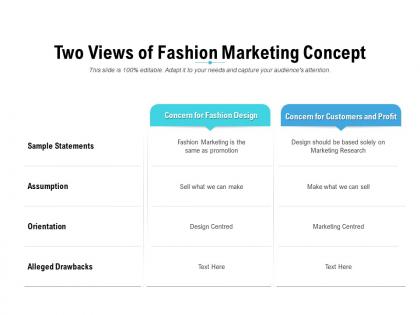
Two views of fashion marketing concept




Try Before you Buy Download Free Sample Product
 Impress Your
 Audience
 100%
100% Editable
 Save Hours
 of Time


Put the details of your logic on our Two Views Of Fashion Marketing Concept. String together your strong argument.
People who downloaded this PowerPoint presentation also viewed the following :
Two views of fashion marketing concept with all 2 slides:
Depict the details on our Two Views Of Fashion Marketing Concept. Knit them together with your views.

FAQs for Two views of
Key elements of a successful fashion marketing strategy include brand storytelling, visual merchandising, influencer partnerships, seasonal campaign planning, and omnichannel customer engagement. These components work together by creating compelling narratives, showcasing products effectively, and reaching target audiences across multiple touchpoints, with many fashion brands finding that integrated approaches ultimately deliver stronger customer loyalty and increased sales conversions.
Social media influencers impact fashion brand promotion by expanding reach, building authentic connections, and driving purchasing decisions through targeted content creation. Through strategic partnerships, fashion brands leverage influencers' established audiences to showcase products authentically, increase brand awareness, and generate measurable sales conversions, with many retailers finding that influencer collaborations deliver higher engagement rates than traditional advertising methods.
Storytelling serves as the emotional bridge connecting fashion brands with consumers, enabling brands to communicate values, heritage, and lifestyle aspirations through compelling narratives. These narratives transform products into experiences, with luxury brands like Chanel weaving heritage stories and streetwear companies creating community-driven content, ultimately building deeper customer loyalty and premium positioning.
Brands leverage consumer data by analyzing purchase patterns, social media engagement, demographic preferences, browsing behaviors, and seasonal trends to inform product development and marketing strategies. Through predictive analytics and customer segmentation, fashion companies optimize inventory decisions, personalize marketing campaigns, and enhance customer experiences, with many retailers finding that data-driven approaches significantly improve conversion rates and reduce overstock costs.
Current trends shaping fashion marketing include influencer partnerships, sustainable brand messaging, augmented reality try-on experiences, personalized product recommendations, and social commerce integration. These strategies enhance customer engagement by creating authentic connections, reducing environmental concerns, and streamlining purchase decisions, with many fashion retailers finding that omnichannel approaches ultimately deliver higher conversion rates and stronger brand loyalty.
Seasonal trends significantly influence fashion marketing strategies by dictating product launches, promotional timing, inventory planning, and campaign messaging throughout the year. Fashion retailers leverage seasonal shifts through targeted advertising campaigns, influencer partnerships, and strategic inventory management, with brands like Zara and H&M successfully adapting their marketing cycles to maximize seasonal demand and drive competitive advantage.
Fashion brand collaborations deliver expanded market reach, shared resources, enhanced creativity, cross-audience exposure, and reduced marketing costs. These strategic partnerships enable brands to access new demographics, share production expenses, and leverage complementary expertise, with many fashion retailers finding that collaborations significantly boost brand visibility while minimizing financial risk in an increasingly competitive marketplace.
Sustainability integration succeeds through authentic storytelling, transparent supply chain communication, and emphasizing quality over quantity messaging. Fashion brands like Patagonia and Eileen Fisher demonstrate that consumers respond positively to genuine environmental commitments, ethical production showcases, and circular fashion initiatives, ultimately building stronger brand loyalty while attracting environmentally conscious shoppers.
The most effective fashion marketing channels include social media platforms like Instagram and TikTok, influencer partnerships, email marketing, fashion shows, and targeted digital advertising. These channels enable brands to showcase visual content, build authentic connections, and reach specific demographics through personalized campaigns, with many fashion companies finding that strategic combinations across multiple touchpoints ultimately deliver stronger brand awareness and higher conversion rates.
Visual merchandising techniques enhance fashion marketing by creating immersive brand experiences, strategically positioning products to maximize appeal, and using color psychology, lighting, and spatial design to influence purchasing decisions. These approaches streamline customer journey mapping, increase dwell time, and boost conversion rates, with many retailers finding that cohesive visual strategies ultimately deliver higher sales and stronger brand loyalty.
Brand identity serves as the foundation of fashion marketing, encompassing visual elements, brand values, messaging consistency, and emotional positioning that differentiate companies in competitive markets. It enables fashion brands to build customer loyalty, command premium pricing, and create lasting connections with target audiences, with successful brands like Nike and Chanel demonstrating how strong identity translates into sustained market leadership and consumer trust.
Digital marketing tools revolutionize fashion product launches through social media campaigns, influencer partnerships, email marketing, virtual try-on experiences, and targeted advertising across platforms. These technologies enable fashion brands to create buzz through Instagram Stories, collaborate with fashion influencers, and deliver personalized product recommendations, ultimately driving higher engagement rates and faster sales conversions while building lasting customer relationships.
Fashion shows and events significantly enhance brand visibility by generating extensive media coverage, creating social media buzz, and establishing direct connections with influencers, buyers, and fashion journalists. These strategic showcases enable brands to demonstrate their creative vision, secure retail partnerships, and build emotional connections with target audiences, ultimately driving sales and reinforcing market positioning in an increasingly competitive fashion landscape.
Customer feedback refines fashion marketing strategies by revealing preferences, identifying gaps, and validating campaign effectiveness through reviews, surveys, and social media insights. Fashion brands leverage this data to adjust messaging, optimize product positioning, and personalize experiences, with many retailers finding that feedback-driven strategies enhance customer loyalty and drive significantly higher conversion rates.
Pricing strategy serves as a critical positioning tool in fashion marketing, directly influencing brand perception, target market accessibility, customer acquisition, and competitive differentiation. Through strategic pricing approaches like premium positioning, psychological pricing, and seasonal adjustments, fashion brands effectively communicate value propositions, drive purchase decisions, and maximize profitability while building sustainable market presence.
No Reviews