


Using AI For Offline Marketing Powerpoint Ppt Template Bundles AI MM




Try Before you Buy Download Free Sample Product
 Impress Your
 Audience
 100%
100% Editable
 Save Hours
 of Time


Our Using AI For Offline Marketing Powerpoint Ppt Template Bundles AI MM are topically designed to provide an attractive backdrop to any subject. Use them to look like a presentation pro.
People who downloaded this PowerPoint presentation also viewed the following :
Content of this Powerpoint Presentation
Slide 1: This slide introduces Using AI for Offline Marketing. State your company name and begin.
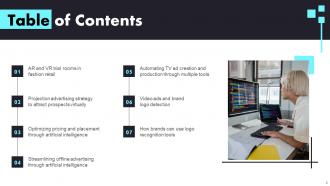
Slide 2: This slide shows Table of Content for the presentation.
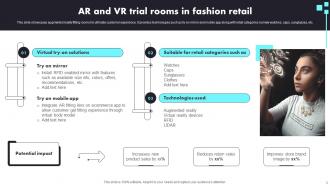
Slide 3: This slide presents AR and VR trial rooms in fashion retail.
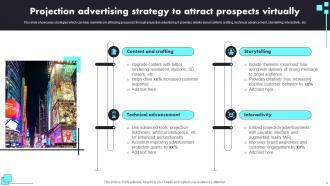
Slide 4: This slide displays Projection advertising strategy to attract prospects virtually.
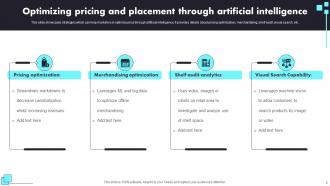
Slide 5: This slide represents Optimizing pricing and placement through artificial intelligence.
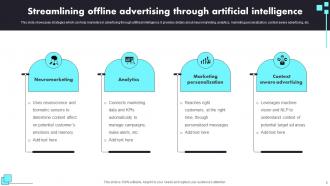
Slide 6: This slide showcases Streamlining offline advertising through artificial intelligence.
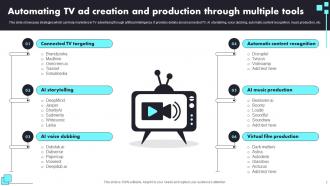
Slide 7: This slide shows Automating TV ad creation and production through multiple tools.
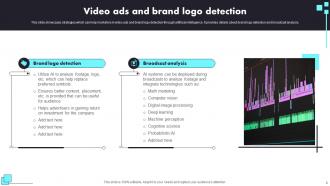
Slide 8: This slide presents Video ads and brand logo detection.
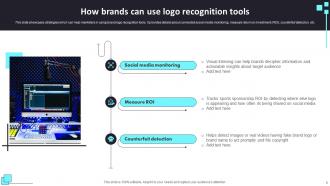
Slide 9: This slide displays How brands can use logo recognition tools.
Slide 10: This is a Thank You slide with address, contact numbers and email address.
Using AI For Offline Marketing Powerpoint Ppt Template Bundles AI MM with all 18 slides:
Use our Using AI For Offline Marketing Powerpoint Ppt Template Bundles AI MM to effectively help you save your valuable time. They are readymade to fit into any presentation structure.









FAQs for Using AI For Offline Marketing Powerpoint Ppt Template
AI enhances traditional offline marketing through dynamic digital signage, predictive analytics for inventory placement, facial recognition for demographic targeting, voice analytics in retail spaces, and IoT-enabled customer journey tracking. These technologies streamline campaign optimization by analyzing foot traffic patterns, personalizing in-store experiences, and automating inventory responses, ultimately delivering higher conversion rates and more strategic resource allocation across physical locations.
AI analyzes consumer behavior for offline marketing through predictive analytics, location-based insights, purchase pattern recognition, sentiment analysis, and demographic segmentation. These technologies enable retailers, restaurants, and service providers to optimize store layouts, timing of promotions, and product placements, ultimately delivering more targeted campaigns and improved customer experiences while maximizing marketing ROI.
AI personalizes offline experiences through predictive analytics, customer behavior modeling, location-based targeting, dynamic content optimization, and real-world interaction tracking. These technologies enable retailers, restaurants, and service providers to deliver customized in-store recommendations, personalized product displays, and tailored service interactions, while streamlining operational efficiency and ultimately enhancing customer satisfaction across physical touchpoints.
Businesses can use AI to predict offline campaign success through historical data analysis, demographic modeling, geographic targeting algorithms, competitor performance tracking, and seasonal trend identification. These predictive analytics enable companies to optimize budget allocation, select high-impact locations, and refine messaging strategies, with many retail and hospitality brands finding that AI-driven insights increase campaign ROI by 20-40%.
AI assists in selecting optimal offline advertisement locations by analyzing demographic data, foot traffic patterns, competitor positioning, and historical campaign performance across different geographic areas. Through machine learning algorithms, retailers and service providers can identify high-conversion zones, predict audience engagement rates, and optimize placement timing, ultimately delivering higher ROI and more targeted customer reach in increasingly competitive physical advertising landscapes.
AI-powered offline marketing tools include computer vision analytics, beacon technology, interactive digital displays, predictive analytics platforms, and smart kiosks with facial recognition capabilities. These technologies streamline customer engagement by analyzing foot traffic patterns, personalizing in-store experiences, and optimizing product placement, with many retailers finding that strategic AI integration ultimately delivers enhanced customer insights and competitive advantage.
AI-driven insights improve targeted mail campaigns by analyzing customer data, purchase histories, demographic patterns, and behavioral triggers to create highly personalized messaging and optimal timing strategies. Through predictive analytics and segmentation algorithms, retailers and financial services companies deliver more relevant offers, reduce waste costs, and achieve significantly higher response rates, ultimately enhancing ROI while strengthening customer relationships.
Successful AI-powered offline campaigns include Coca-Cola's dynamic billboard content optimization, McDonald's AI-driven drive-thru menu personalization, and Sephora's smart mirror installations for personalized beauty consultations. These strategic implementations enhance customer engagement by delivering targeted messaging, optimizing real-time interactions, and creating memorable brand experiences, ultimately driving higher conversion rates and customer satisfaction across retail environments.
AI enhances event engagement through facial recognition for personalized greetings, chatbots providing instant product information, predictive analytics identifying high-value prospects, and real-time sentiment analysis optimizing booth interactions. These technologies streamline lead qualification, automate follow-up scheduling, and deliver personalized experiences, with many exhibitors finding that AI-powered solutions increase conversion rates and generate higher-quality leads.
Implementing AI in offline marketing presents challenges including data integration complexities, high initial investment costs, staff training requirements, measuring ROI accurately, and maintaining customer privacy compliance. While these hurdles exist, many retailers and hospitality businesses find that strategic AI adoption ultimately delivers enhanced customer targeting, optimized resource allocation, and competitive advantages that justify the implementation effort.
AI-driven analytics inform offline promotional material design by analyzing customer behavior patterns, demographic preferences, and engagement metrics from digital touchpoints. These insights enable marketers to optimize color schemes, messaging tone, and visual elements for specific audiences, with retail brands and financial services finding that data-driven design choices significantly increase campaign effectiveness and customer response rates.
AI enhances in-store marketing through personalized digital signage, predictive inventory displays, customer behavior analytics, heat mapping, and automated promotional adjustments. These technologies streamline customer experiences by delivering targeted product recommendations, optimizing store layouts, and timing promotional offers, with many retailers finding that AI-driven in-store strategies significantly increase conversion rates and customer engagement.
Businesses leverage AI to create interactive offline experiences through smart kiosks, personalized digital signage, voice-activated displays, augmented reality installations, and AI-powered product recommendations. These technologies enhance customer engagement by delivering real-time personalization, streamlining in-store navigation, and providing instant product information, ultimately creating memorable experiences that drive sales and build brand loyalty.
Companies should consider data privacy, consent transparency, algorithmic bias prevention, cultural sensitivity, and responsible targeting practices when using AI in offline marketing. These ethical frameworks help retailers, healthcare providers, and financial institutions build customer trust while delivering personalized experiences, ultimately enhancing brand reputation and ensuring sustainable competitive advantage in increasingly regulated markets.
AI technology revolutionizes offline marketing ROI measurement by integrating computer vision, geolocation analytics, facial recognition systems, and predictive modeling with traditional metrics. Through advanced attribution models, brands can track customer journeys from billboard exposure to store visits, while analyzing foot traffic patterns and demographic responses, ultimately delivering precise ROI calculations and strategic insights for optimizing campaign effectiveness.
-
Their products can save your time, effort and money. What else you need. All in one package for presentation needs!
-
I really liked their customized design services. I got my desired template made by their expert team. Thank You!