


Ai Powered Marketing How To Achieve Better Results With Automation Powerpoint Presentation Slides AI CD




Try Before you Buy Download Free Sample Product
 Impress Your
 Audience
 100%
100% Editable
 Save Hours
 of Time


Explore our professionally designed AI Powered Marketing How to Achieve Better Results with Automation PowerPoint presentation, which delves into the strategic use of Artificial Intelligence AI in marketing. This comprehensive deck covers the evolution, process, benefits, statistics, sectorial overview, and future impact of AI in marketing. It also addresses challenges and provides solutions to leverage AI effectively. The presentation showcases use cases across various industries, including E commerce, Banking, Traveling and Hospitality, and Retail. The deck emphasizes foundational focus areas for implementing AI in marketing, such as Usage Steps, Types of Solutions, Customer Journey, and Target Audience Analysis. It guides marketers on integrating AI across digital marketing, social media, websites, and key tasks like user experience, content creation, email automation, and more. It introduces AI technologies like Marketing Automation, Chatbots, Natural Language Processing NLP, Robotic Process Automation RPA, and Metaverse for offline marketing. Additionally, the presentation highlights top AI marketing tools, including ChatGPT3, ChatGPT4, Jasperai, Copyai, Chatfuel, ManyChat, MobileMonkey, Smartlyio, Brand24, Peakai, BrandWatch, SurferSEO, DALL E 2, and Grammarly. These tools can enhance PPC, SEO, Ad Copy, and Copywriting efforts. Real use cases of Monday, Sephora, and Mongoose Media demonstrate the successful implementation of AI marketing strategies. The deck also explores future prospects and the role of AI in shaping the marketing landscape. Don't miss out on this opportunity to elevate your marketing efforts with AI automation. Get access to our powerful artificial intelligence presentation now.
People who downloaded this PowerPoint presentation also viewed the following :
Content of this Powerpoint Presentation
Slide 1: This slide introduces AI-Powered Marketing: How to Achieve Better Results with Automation. State your company name and begin.
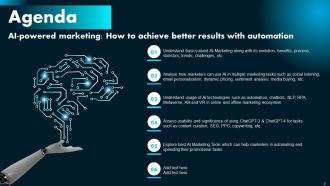
Slide 2: This slide states Agenda of the presentation.
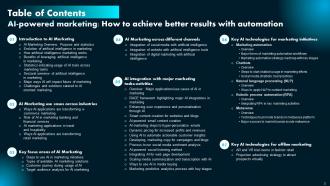
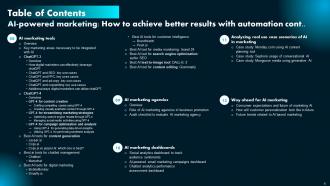
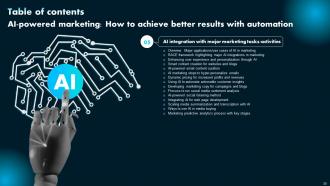
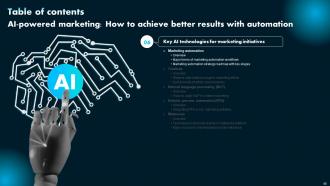
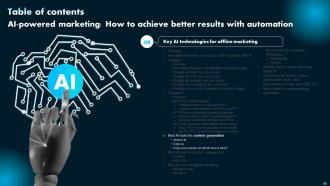
Slide 3: This slide shows Table of Content for the presentation.
Slide 4: This is another slide continuing Table of Content for the presentation.
Slide 5 : This slide highlights title for topics that are to be covered next in the template.
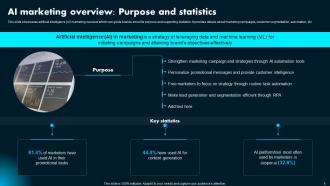
Slide 6: This slide presents AI marketing overview describing Purpose and statistics.
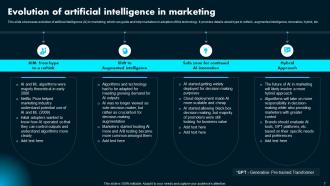
Slide 7: This slide displays Evolution of artificial intelligence in marketing.
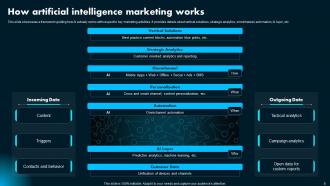
Slide 8: This slide represents How artificial intelligence marketing works.
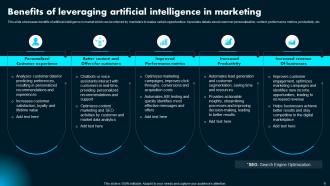
Slide 9: This slide showcases Benefits of leveraging artificial intelligence in marketing.
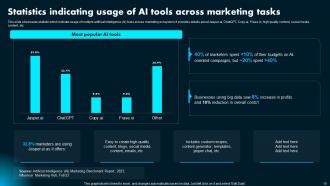
Slide 10: This slide shows Statistics indicating usage of AI tools across marketing tasks.
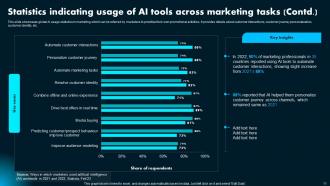
Slide 11: This is another slide continuing Statistics indicating usage of AI tools across marketing tasks.
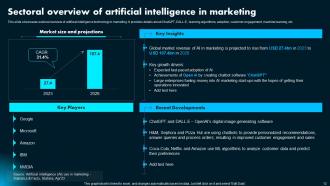
Slide 12: This slide presents Sectoral overview of artificial intelligence in marketing.
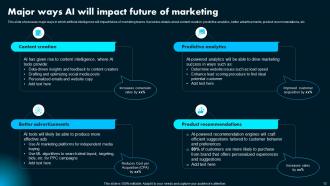
Slide 13: This slide represents Major ways AI will impact future of marketing.
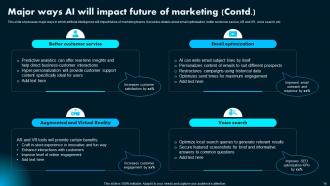
Slide 14: This is another slide continuing Major ways AI will impact future of marketing.
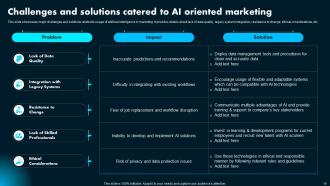
Slide 15: This slide showcases Challenges and solutions catered to AI oriented marketing.
Slide 16: This slide highlights title for topics that are to be covered next in the template.
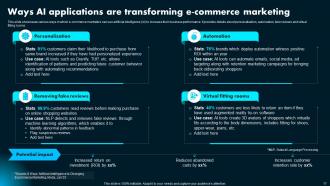
Slide 17: This slide shows Ways AI applications are transforming e-commerce marketing.
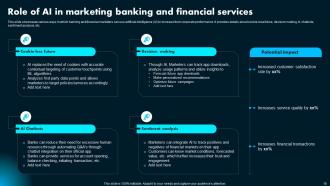
Slide 18: This slide presents Role of AI in marketing banking and financial services.
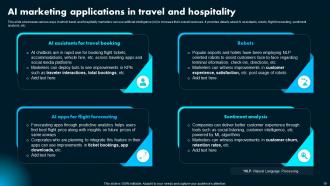
Slide 19: This slide displays AI marketing applications in travel and hospitality.
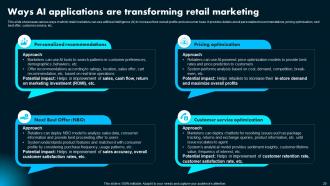
Slide 20: This slide represents Ways AI applications are transforming retail marketing.
Slide 21: This slide highlights title for topics that are to be covered next in the template.
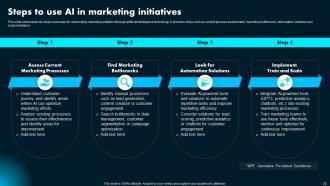
Slide 22: This slide showcases Steps to use AI in marketing initiatives.
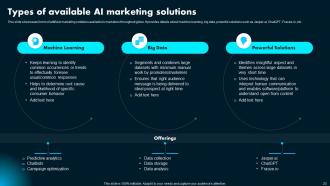
Slide 23: This slide shows Types of available AI marketing solutions.
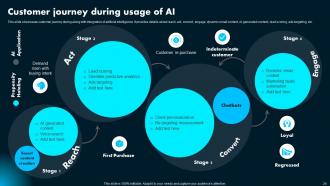
Slide 24: This slide presents Customer journey during usage of AI.
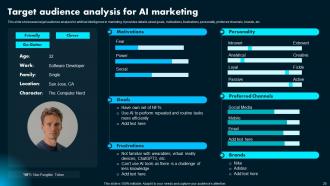
Slide 25: This slide displays Target audience analysis for AI marketing.
Slide 26: This slide highlights title for topics that are to be covered next in the template.
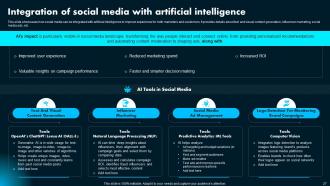
Slide 27: This slide represents Integration of social media with artificial intelligence.
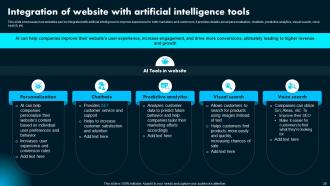
Slide 28: This slide showcases Integration of website with artificial intelligence tools.
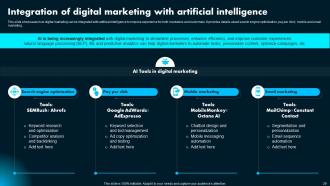
Slide 29: This slide shows Integration of digital marketing with artificial intelligence.
Slide 30: This slide highlights title for topics that are to be covered next in the template.
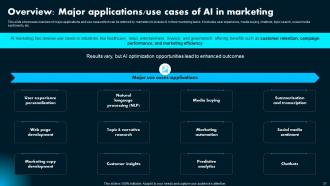
Slide 31: This slide showcases overview of major applications and use cases which can be referred by marketers to include AI in their marketing tasks.
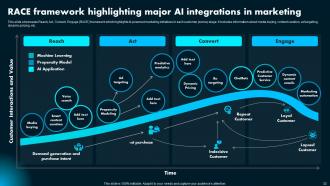
Slide 32: This slide presents RACE framework highlighting major AI integrations in marketing.
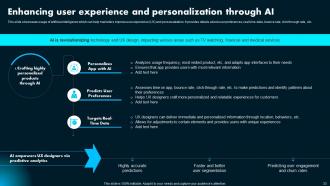
Slide 33: This slide displays Enhancing user experience and personalization through AI.
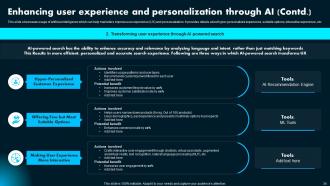
Slide 34: This is another slide continuing Enhancing user experience and personalization through AI.
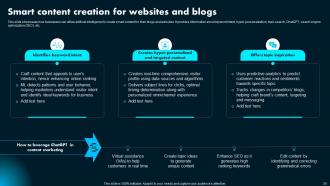
Slide 35: This slide represents Smart content creation for websites and blogs.
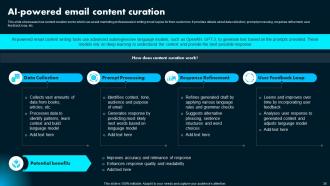
Slide 36: This slide showcases AI-powered email content curation.
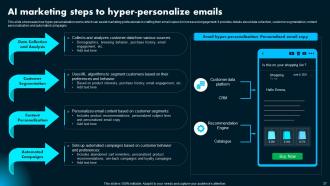
Slide 37: This slide shows AI marketing steps to hyper-personalize emails.
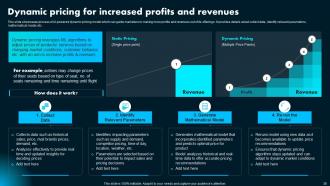
Slide 38: This slide presents Dynamic pricing for increased profits and revenues.
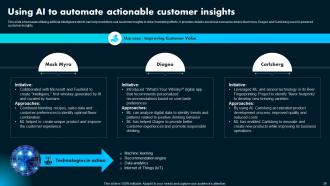
Slide 39: This slide displays Using AI to automate actionable customer insights.
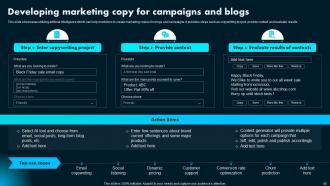
Slide 40: This slide represents Developing marketing copy for campaigns and blogs.
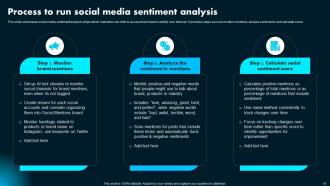
Slide 41: This slide showcases Process to run social media sentiment analysis.
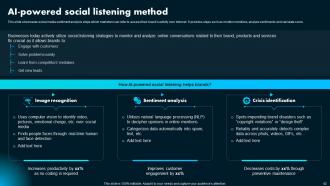
Slide 42: This slide shows AI-powered social listening method.
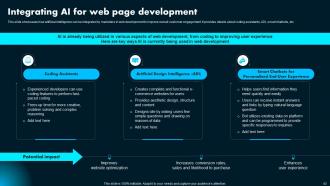
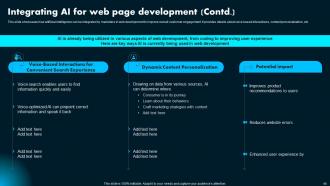
Slide 43: This slide presents Integrating AI for web page development.
Slide 44: This slide displays Integrating AI for web page development.
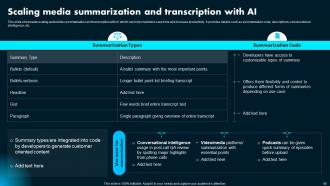
Slide 45: This slide represents Scaling media summarization and transcription with AI.
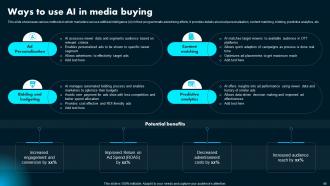
Slide 46: This slide showcases various methods in which marketers can use artificial intelligence (AI) in their programmatic advertising efforts.
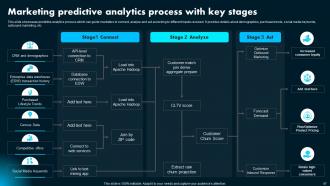
Slide 47: This slide shows Marketing predictive analytics process with key stages.
Slide 48: This slide highlights title for topics that are to be covered next in the template.
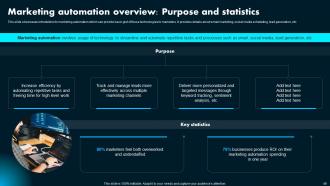
Slide 49: This slide presents Marketing automation overview: Purpose and statistics.
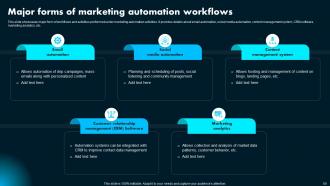
Slide 50: This slide displays Major forms of marketing automation workflows.
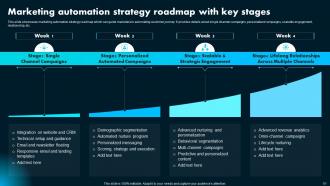
Slide 51: This slide represents Marketing automation strategy roadmap with key stages.
Slide 52: This slide highlights title for topics that are to be covered next in the template.
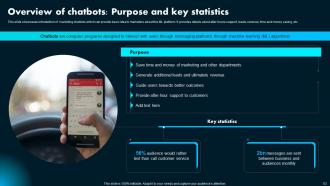
Slide 53: This slide showcases introduction of marketing chatbots which can provide basic idea to marketers about this ML platform.
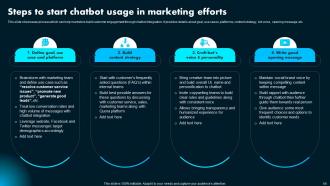
Slide 54: This slide shows Steps to start chatbot usage in marketing efforts.
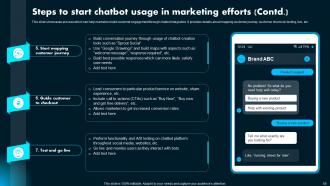
Slide 55: This is another slide continuing Steps to start chatbot usage in marketing efforts.
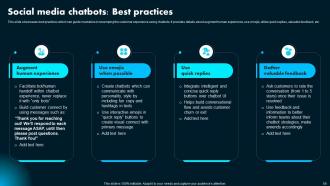
Slide 56: This slide showcases best practices which can guide marketers in revamping the customer experience using chatbots.
Slide 57: This slide highlights title for topics that are to be covered next in the template.
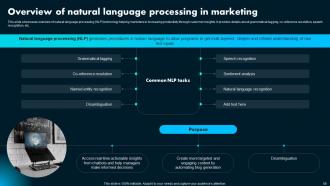
Slide 58: This slide shows Overview of natural language processing in marketing.
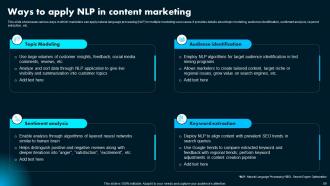
Slide 59: This slide presents Ways to apply NLP in content marketing.
Slide 60: This slide highlights title for topics that are to be covered next in the template.
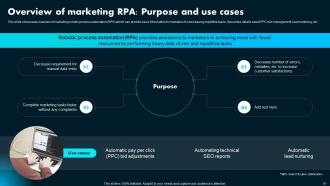
Slide 61: This slide showcases overview of marketing robotic process automation (RPA) which can provide basic information to marketers for decreasing repetitive tasks.
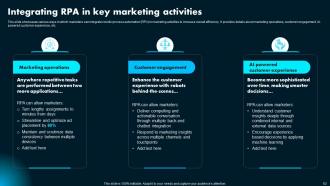
Slide 62: This slide shows Integrating RPA in key marketing activities.
Slide 63: This slide highlights title for topics that are to be covered next in the template.
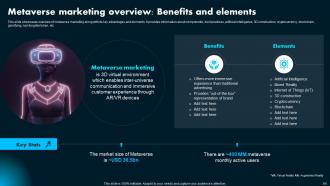
Slide 64: This slide showcases overview of metaverse marketing along with its key advantages and elements.
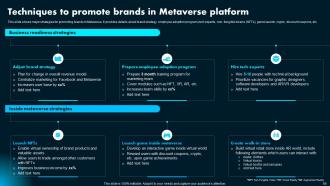
Slide 65: This slide shows Techniques to promote brands in Metaverse platform.
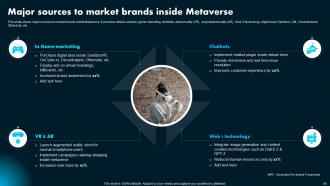
Slide 66: This slide presents Major sources to market brands inside Metaverse.
Slide 67: This slide highlights title for topics that are to be covered next in the template.
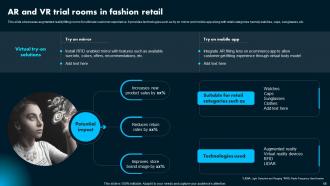
Slide 68: This slide displays AR and VR trial rooms in fashion retail.
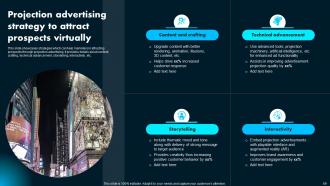
Slide 69: This slide represents Projection advertising strategy to attract prospects virtually.
Slide 70: This slide highlights title for topics that are to be covered next in the template.
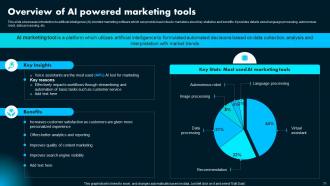
Slide 71: This slide showcases Overview of AI powered marketing tools.
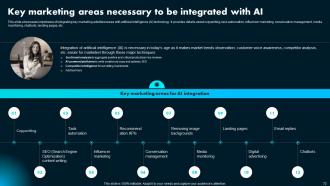
Slide 72: This slide showcases Key marketing areas necessary to be integrated with AI.
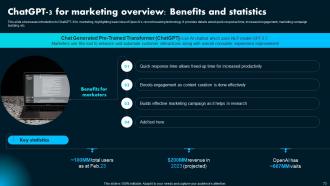
Slide 73: This slide shows ChatGPT-3 for marketing overview with Benefits and statistics.
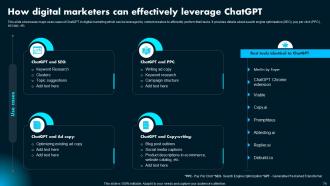
Slide 74: This slide presents How digital marketers can effectively leverage ChatGPT.
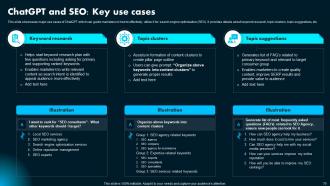
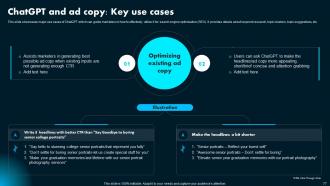
Slide 75: This slide showcases major use cases of ChatGPT which can guide marketers in how to effectively utilize it for search engine optimization (SEO).
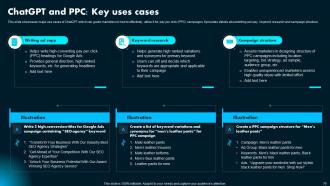
Slide 76: This slide showcases major use cases of ChatGPT which can guide marketers in how to effectively utilize it for pay per click (PPC) campaigns.
Slide 77: This slide displays details about keyword research, topic clusters, topic suggestions, etc.
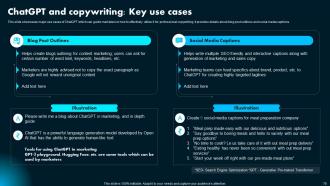
Slide 78: This slide showcases major use cases of ChatGPT which can guide marketers in how to effectively utilize it for professional copywriting.
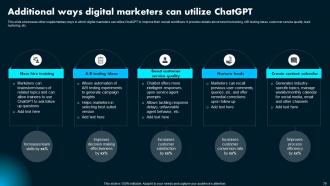
Slide 79: This slide shows Additional ways digital marketers can utilize ChatGPT.
Slide 80: This slide highlights title for topics that are to be covered next in the template.
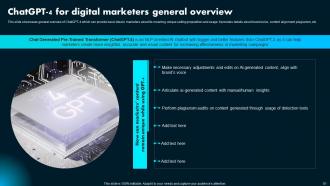
Slide 81: This slide presents ChatGPT-4 for digital marketers general overview.
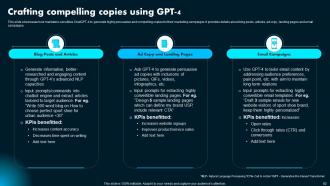
Slide 82: This slide showcases how marketers can utilize ChatGPT-4 to generate highly persuasive and compelling copies for their marketing campaigns.
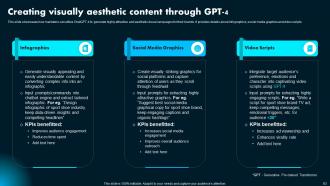
Slide 83: This slide shows Creating visually aesthetic content through GPT-4.
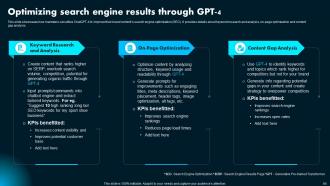
Slide 84: This slide presents Optimizing search engine results through GPT-4.
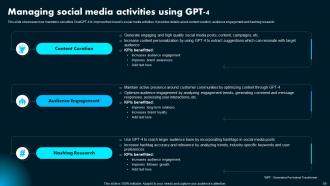
Slide 85: This slide displays Managing social media activities using GPT-4.
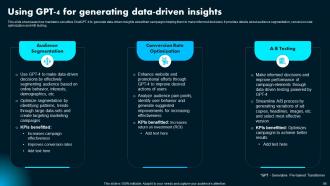
Slide 86: This slide represents Using GPT-4 for generating data-driven insights.
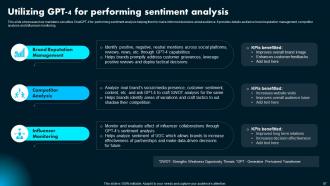
Slide 87: This slide showcases Utilizing GPT-4 for performing sentiment analysis.
Slide 88: This slide highlights title for topics that are to be covered next in the template.
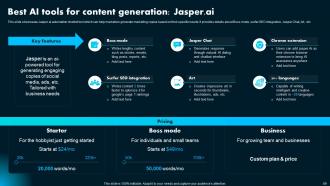
Slide 89: This slide showcases Jasper.ai automation chatbot tool which can help marketers generate marketing copies based on their specific needs.
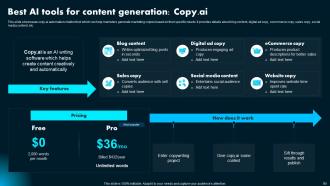
Slide 90: This slide showcases copy.ai automation chatbot tool which can help marketers generate marketing copies based on their specific needs.
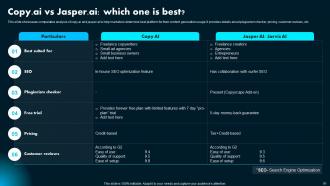
Slide 91: This slide compares Copy.ai vs Jasper.ai: Which one is best?.
Slide 92: This slide highlights title for topics that are to be covered next in the template.
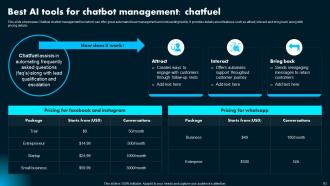
Slide 93: This slide showcases Chatfuel chatbot management tool which can offer great automated lead management and onboarding facility.
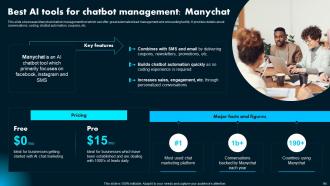
Slide 94: This slide shows Manychat chatbot management tool which can offer great automated lead management and onboarding facility.
Slide 95: This slide highlights title for topics that are to be covered next in the template.
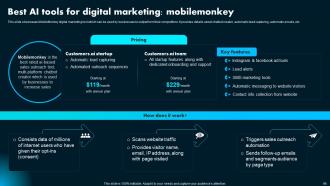
Slide 96: This slide presents Best AI tools for digital marketing: MobileMonkey.
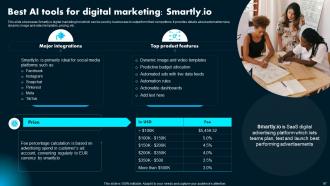
Slide 97: This slide showcases Smartly.io digital marketing tool which can be used by businesses to outperform their competitors.
Slide 98: This slide highlights title for topics that are to be covered next in the template.
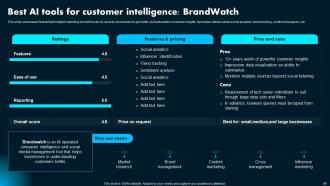
Slide 99: This slide shows Best AI tools for customer intelligence: BrandWatch.
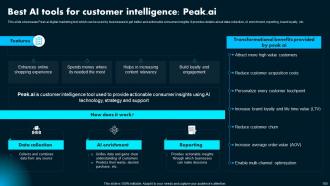
Slide 100: This slide showcases Peak.ai digital marketing tool which can be used by businesses to get better and actionable consumer insights.
Slide 101: This slide highlights title for topics that are to be covered next in the template.
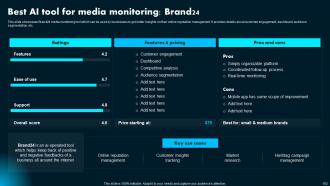
Slide 102: This slide showcases Brand24 media monitoring tool which can be used by businesses to get better insights on their online reputation.
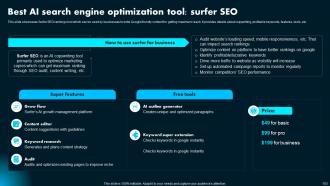
Slide 103: This slide showcases Surfer SEO rankings tool which can be used by businesses to write Google friendly content for getting maximum reach.
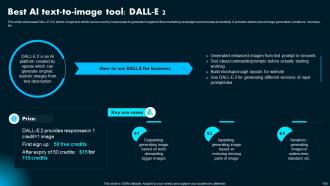
Slide 104: This slide showcases DALL-E 2 AI text-to-image tool which can be used by businesses to generate images for their marketing campaigns.
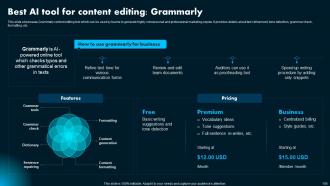
Slide 105: This slide showcases Grammarly content editing tool which can be used by teams to generate highly conversional and professional marketing.
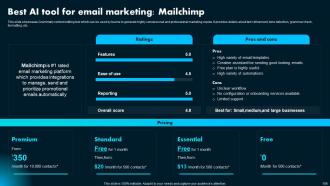
Slide 106: This slide shows Best AI tool for email marketing: Mailchimp.
Slide 107: This slide highlights title for topics that are to be covered next in the template.
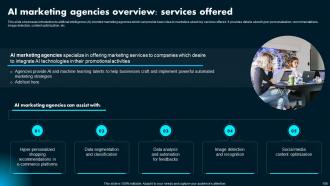
Slide 108: This slide showcases introduction to artificial intelligence (AI) oriented marketing agencies.
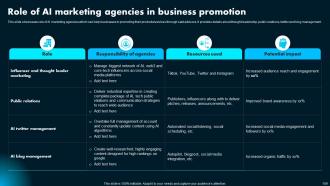
Slide 109: This slide shows Role of AI marketing agencies in business promotion.
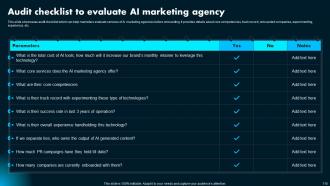
Slide 110: This slide presents Audit checklist to evaluate AI marketing agency.
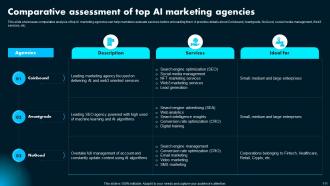
Slide 111: This slide displays Comparative assessment of top AI marketing agencies.
Slide 112: This slide highlights title for topics that are to be covered next in the template.
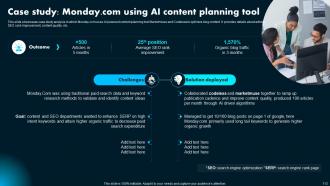
Slide 113: This slide displays Case study of Monday.com using AI content planning tool.
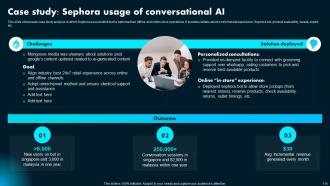
Slide 114: This slide showcases case study analysis in which Sephora uses chatbot tool to optimize their offline and online store operations.
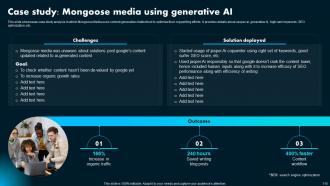
Slide 115: This slide shows case study analysis in which Mongoose Media uses content generation chatbot tool to optimize their copywriting efforts.
Slide 116: This slide highlights title for topics that are to be covered next in the template.
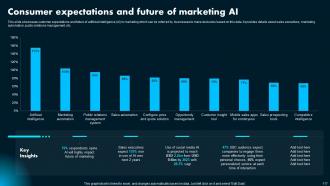
Slide 117: This slide displays Consumer expectations and future of marketing AI.
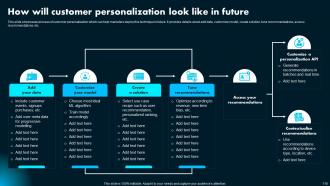
Slide 118: This slide represents How will customer personalization look like in future.
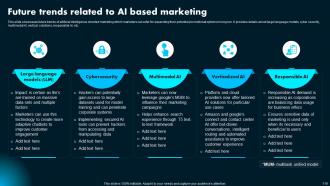
Slide 119: This slide showcases Future trends related to AI based marketing.
Ai Powered Marketing How To Achieve Better Results With Automation Powerpoint Presentation Slides AI CD with all 124 slides:
Use our Ai Powered Marketing How To Achieve Better Results With Automation Powerpoint Presentation Slides AI CD to effectively help you save your valuable time. They are readymade to fit into any presentation structure.





FAQs for Ai Powered Marketing How To Achieve Better Results With Automation Powerpoint Presentation
Dude, AI marketing is honestly pretty sick. Personalization at scale is huge - you can customize emails and ads for each customer without going insane trying to segment everyone manually. Predicting who's gonna churn or convert? AI nails that stuff. It'll also handle your boring A/B tests and crunch campaign data while you focus on strategy. Though I'd say start small - maybe try email personalization first, then expand once you see it actually works. No point going all-in before you know it's worth it, you know?
Honestly, AI is pretty wild for this stuff. It chews through customer data way faster than any human team could manage - finding patterns like people who buy coffee makers also grab organic snacks within 30 days. That connection would've taken us forever to spot manually. What's crazy is how it keeps updating these customer groups automatically as buying habits shift. Instead of sending the same boring email to everyone, you can actually target people with stuff they'll care about. My friend's company saw their open rates jump like 40% just from better segmentation.
So machine learning is what actually powers predictive analytics in marketing. You feed it your customer data and it finds patterns you'd miss - like who's about to quit your service or what someone's likely to buy next. Pretty neat how the algorithms keep getting better over time. You can predict customer lifetime value, figure out optimal ad spending, even forecast product demand. I'd honestly start simple though - maybe just predicting email open rates first, then build from there once you get the hang of it.
So basically you can set up AI to look at what your customers browse, buy, and click on - then it automatically suggests stuff they'd actually want to see. Like how Netflix knows you're gonna binge another true crime doc lol. The crazy part is it gets better over time as it learns their habits. I'd start with your email newsletter first since that's easiest to test. Try different recommendation styles - "similar posts" or "what's trending" - and see what gets people clicking. Once that's working, expand it to your website and social feeds.
Honestly, just don't be shady about it. Privacy and bias are the big two - people hate feeling manipulated by creepy targeted ads that know too much about them. Be transparent about data collection and make sure your AI isn't accidentally discriminating against certain groups. Give customers actual control over their info, not just some buried settings menu. Oh, and always disclose when AI is making decisions about pricing or what content someone sees. I've seen too many companies get roasted for being sneaky about this stuff. Basically treat people like actual humans instead of walking dollar signs.
Honestly, chatbots are a game changer for handling all those repetitive questions your customers ask constantly. Your team gets freed up for the tricky stuff that actually needs a human brain. Customers get instant answers instead of waiting around forever - which let's be real, nobody has patience for anymore. The cool part is they actually learn and improve from each conversation. You can even set them up to jump in proactively, like when someone's clearly stuck on your checkout page or whatever. I'd start simple with just FAQ stuff, then build from there once you see what's working.
Focus on the metrics that actually matter for your bottom line - conversion rates, customer acquisition cost, and lifetime value. Those numbers tell you way more than vanity metrics like clicks and likes (though honestly, clicks still matter a bit). Since AI campaigns usually hit people at multiple touchpoints, tracking attribution gets tricky but it's crucial. Revenue per campaign and ROI are what you really want to watch. Also check how your personalized segments perform compared to generic ones - that gap shows if the AI is worth it. These core metrics will tell you if you're wasting money or not.
Honestly, AI tools are game-changers for cutting down on all that boring campaign maintenance stuff. You know how you'd spend forever tweaking bids and trying to figure out which audiences actually convert? Now that happens automatically while you sleep. The software crunches through tons of data way faster than we ever could and spots patterns in ad performance. A/B testing becomes so much easier too - you can test like 10 variations without losing your mind. I'd start with automated bidding first since that's where most people see immediate results. Then you can actually focus on the fun creative work instead of spreadsheets all day.
Pick one thing first - maybe email personalization or lead scoring. Don't try to do everything at once, that's a recipe for chaos. Your CRM data needs to be clean before you even think about AI tools. I can't tell you how many companies skip this step and then complain when nothing works right. Look for stuff that plays nice with what you already have instead of buying some shiny standalone platform. Test with small groups first. Oh, and actually train your people on reading the AI insights - otherwise you're just paying for fancy reports nobody understands.
So AI basically crawls through all your social mentions, reviews, comments - the whole mess - and figures out if people actually like your brand or if they're pissed off. Way better than those old keyword tools that missed obvious sarcasm. You can get pinged when sentiment tanks, see how you stack up against competitors, and spot exactly which features people are raving about (or trashing). Oh and definitely connect it to your CRM or you'll just end up with useless charts. Real-time alerts are clutch for catching problems early.
Dude, AI basically handles all the boring stuff you hate doing. Email scheduling, social media posts, lead scoring - it runs on autopilot. You can set up A/B tests that run themselves, personalize emails for thousands of people, and schedule content everywhere at once. The data analysis part is pretty sweet too - it watches customer behavior and triggers different workflows automatically. Oh, and it'll even write your first draft of ad copy (though you'll want to punch it up yourself). Honestly, once you get it running, you can focus on the fun creative stuff while it does the grunt work.
So basically these AI tools dig through tons of user data to figure out when and what you should post. They track behavior patterns and can tell you the best times to hit your audience. Facebook and Instagram are already doing this with their ad stuff - honestly it's pretty wild how spot-on they are. The algorithms can even predict what's about to trend before it actually happens, which is kinda crazy. You can also get real-time suggestions for tweaking your content. I'd start with some AI scheduling tools and audience analysis - you'll get insights right away that actually matter.
So AI basically gives you real data instead of just guessing what customers do. You can see actual behavior patterns and predict where people bail out - which honestly blows my mind every time I look at the analytics. It spots stuff you'd miss completely doing it by hand. Real-time updates are huge too since customer habits change constantly. I'd start with tracking your main touchpoints first. You'll be shocked at the gaps in what you thought you knew about how people move through your site.
Honestly, you don't need to spend a fortune on this stuff. I'd start with ChatGPT for writing content - it's dirt cheap. Canva has some decent AI features for making graphics that don't look terrible. Google's Smart campaigns work pretty well for ads too. Oh, and Mailchimp's send-time optimization actually surprised me with how much it helped open rates. Most social media tools like Buffer throw in AI writing help now anyway. My advice? Pick maybe two tools that fix your biggest headaches first. Don't go crazy trying to automate everything right away - I've seen people waste money doing that. Start small, see what works.
Hyper-personalization is getting wild - AI will create unique experiences for every single customer without you lifting a finger. Voice search is everywhere now, so you'll need to rethink your content strategy completely. Predictive analytics are becoming insanely accurate at reading customer minds before they even know what they want. Real-time optimization across channels? That's becoming the baseline expectation, not some fancy add-on. Oh, and conversational AI can handle way more complex stuff than before. Honestly, start playing around with this tech now, even just small tests. The learning curve hits harder than most people think it will.
-
The website is jam-packed with fantastic and creative templates for a variety of business concepts. They are easy to use and customize.
-
They had the topic I was looking for in a readymade presentation…helped me meet my deadline.