


ChatGPT For Creating AI Art Prompts Comprehensive Guide ChatGPT CD




Try Before you Buy Download Free Sample Product
 Impress Your
 Audience
 100%
100% Editable
 Save Hours
 of Time


AI art generation refers to using artificial intelligence AI algorithms and techniques to create visual artworks or artistic content. ChatGPT for creating AI art prompts Comprehensive guide deck involves utilizing machine learning models, specifically generative models, to generate original art pieces or assist human artists. Additionally, our AI art generator template often involves training deep learning models, such as generative adversarial networks GANs, on large datasets of existing artworks or images. Furthermore, the AI art deck covers details related to an overview and the tools and techniques used for creating it. Moreover, Als art prompts cover details related to visual ChatGPT and the role of architectural components of visual ChatGPT. This PPT also covers strategies for using ChatGPT to write AI art prompts and best practices for using ChatGPT art prompts. Lastly, the AI art generation platforms presentation covers details related to comparing top AI generator tools. Get access to our powerful chatgpt ppt templates now.
People who downloaded this PowerPoint presentation also viewed the following :
Content of this Powerpoint Presentation
Slide 1: This slide introduces ChatGPT for Creating AI Art Prompts Comprehensive Guide.
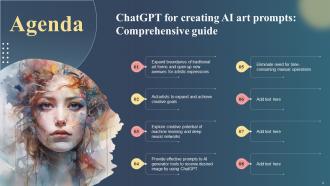
Slide 2: This is an Agenda slide. State your agendas here.
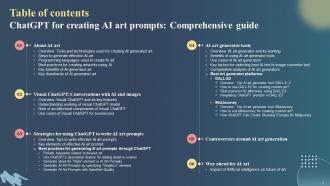
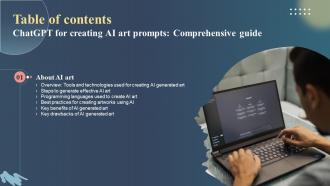
Slide 3: This slide highlights Table of contents for presentation.
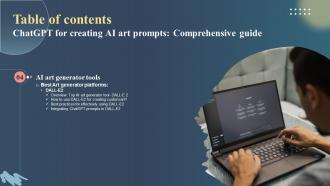
Slide 4: This slide again displays Table of contents.
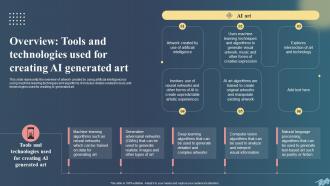
Slide 5: This slide represents the overview of artwork created by using artificial intelligence.
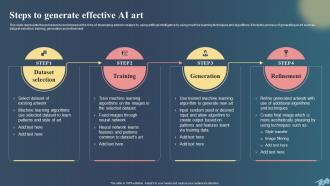
Slide 6: This slide presents the procedure to be followed at the time of developing artwork created.
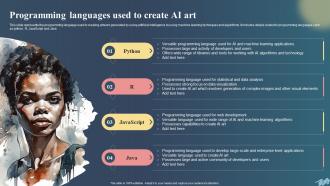
Slide 7: This slide renders the programming language used in creating artwork generated.
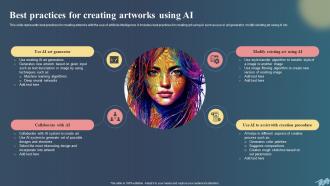
Slide 8: This slide describes best practices for creating artworks with the use of artificial intelligence.
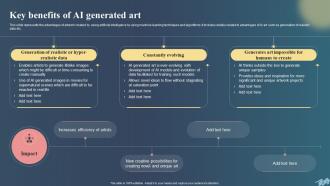
Slide 9: This slide represents the advantages of artwork created by using artificial intelligence.
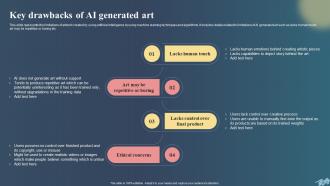
Slide 10: This slide exhibits the limitations of artwork created by using artificial intelligence.
Slide 11: This slide continues Table of contents.
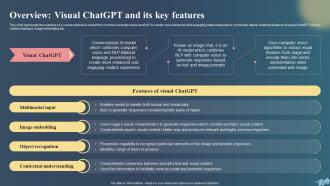
Slide 12: This slide represents the overview of a conversational AI model that combine computer vision and NLP.
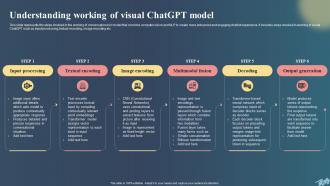
Slide 13: This slide highlights the steps involved in the working of conversational AI model.
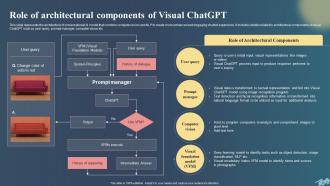
Slide 14: This slide presents the architecture of conversational AI model that combine computer vision and NLP.
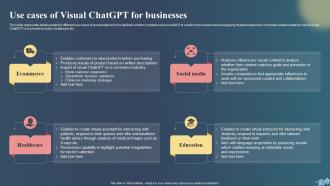
Slide 15: This slide displays details related to different use cases of conversational AI model.
Slide 16: This slide describes Table of contents which is to be discussed further.
Slide 17: This slide represents the strategies to effectively write AI art prompts.
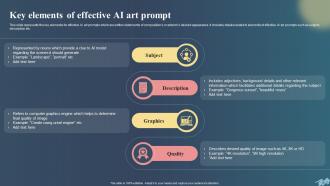
Slide 18: This slide presents the key elements for effective AI art prompts.
Slide 19: This slide depicts another Table of contents.
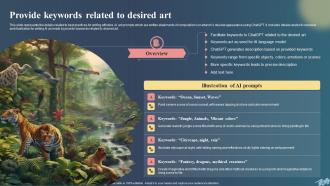
Slide 20: This slide contain the details related to best practices for writing effective AI art.
Slide 21: This slide depicts the details related to best practices for writing effective AI art prompts.
Slide 22: This slide continues the details related to best practices for writing effective AI art prompts.
Slide 23: This slide presents another details related to best practices for writing effective AI art prompts.
Slide 24: This slide again renders the details related to best practices for writing effective AI art prompts.
Slide 25: This slide higlights title of contents which is to be discussed further.
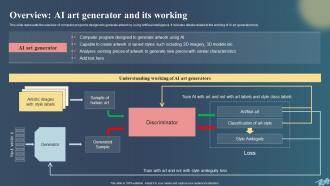
Slide 26: This slide represents the overview of computer programs designed to generate artwork by using AI.
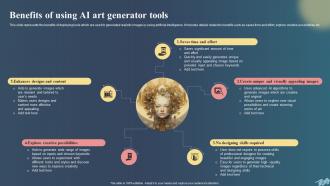
Slide 27: This slide exhibits the benefits of deploying tools which are used to generated realistic images.
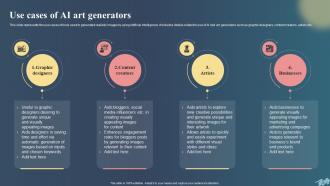
Slide 28: This slide displays the use cases of tools used to generated realistic images by using Artificial intelligence.
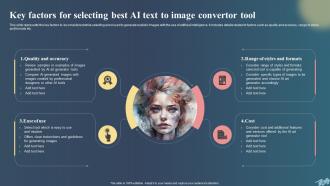
Slide 29: This slide represents the key factors to be considered while selecting a tool used to generate realistic images.
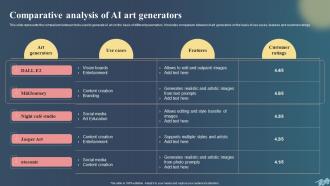
Slide 30: This slide presents the comparison between tools used to generate AI art.
Slide 31: This slide continues Table of contents further.
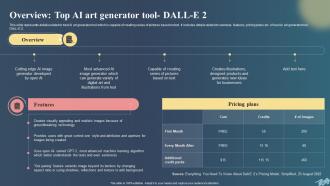
Slide 32: This slide contains details related to best AI art generator tool which is capable of creating series of pictures.
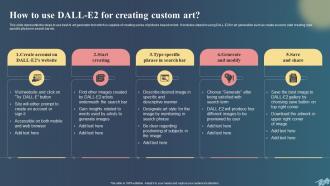
Slide 33: This slide represents the steps to use best AI art generator tool which is capable of creating series of pictures.
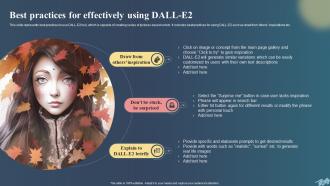
Slide 34: This slide represents best practices to use DALL-E2 tool.
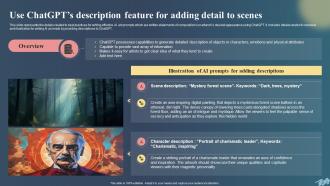
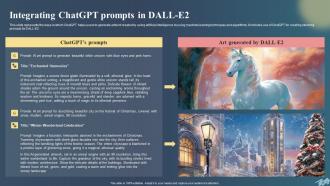
Slide 35: This slide represents the ways in which ChatGPT helps users to generate artwork.
Slide 36: This slide shows title of contents which is to be discussed further.
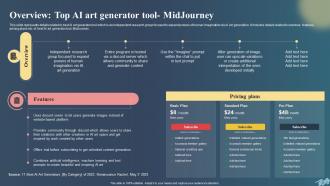
Slide 37: This slide presents details related to best AI art generator tool.
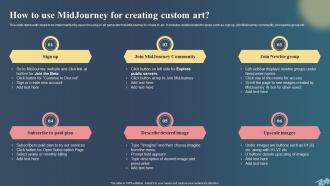
Slide 38: This slide describes steps to be implemented by users for using AI art generator tool-MidJourney.
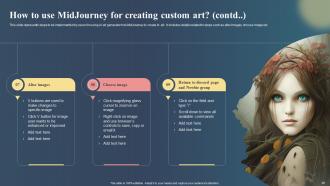
Slide 39: This slide continues steps to be implemented by users for using AI art generator tool-MidJourney.
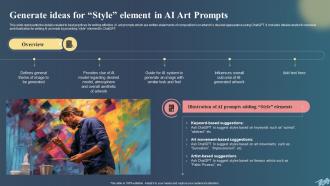
Slide 40: This slide represents the ways in which ChatGPT helps users to generate artwork.
Slide 41: This slide displays Table of contents further.
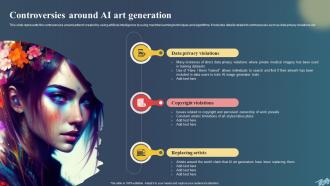
Slide 42: This slide represents the controversies around artwork created by using artificial intelligence.
Slide 43: This slide illustrates Title of contents futher.
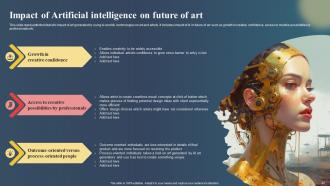
Slide 44: This slide presents the futuristic impact of art generated by using AI and ML technologies.
Slide 45: This slide shows all the icons included in the presentation.
Slide 46: This slide is titled as Additional Slides for moving forward.
Slide 47: This is a Timeline slide. Show data related to time intervals here.
Slide 48: This slide depicts Venn diagram with text boxes.
Slide 49: This slide presents Roadmap with additional textboxes.
Slide 50: This is Our Target slide. State your targets here.
Slide 51: This slide shows SWOT describing- Strength, Weakness, Opportunity, and Threat.
Slide 52: This is a Thank You slide with address, contact numbers and email address.
ChatGPT For Creating AI Art Prompts Comprehensive Guide ChatGPT CD with all 57 slides:
Use our ChatGPT For Creating AI Art Prompts Comprehensive Guide ChatGPT CD to effectively help you save your valuable time. They are readymade to fit into any presentation structure.










FAQs for ChatGPT For Creating AI Art Prompts Comprehensive
Honestly, the key is being super specific about what you want. Like "watercolor portrait of a melancholy cat in Victorian clothing" - way better than just "draw a cat." Throw in colors, lighting details, composition stuff. Technical terms actually work great too - "soft lighting" or "rule of thirds" really make a difference. You can totally reference specific artists or art movements for style. Also mention what it's for - book cover? Social media post? That context helps a ton. Oh, and don't expect to nail it on the first try. I usually end up tweaking my prompts a few times before getting something I actually like.
Honestly, just throw your problem at ChatGPT when you're stuck. Describe what you're working on and ask for weird angles or different color ideas - it's like having that one friend who thinks way outside the box. I always use prompts like "What if I tried..." or "Give me 5 random takes on this." Be specific about where you're at so it can actually push you somewhere new. Oh, and don't overthink it - just start chatting with it next time you hit a creative wall. Works way better than staring at a blank page for hours.
Honestly, digital and concept art get the most out of AI prompts because they're already pretty experimental. Fantasy and sci-fi stuff is perfect for this - AI comes up with these wild combinations you'd never think of yourself. Abstract art works amazing too since AI is great at making random connections that actually look cool. Portraits and landscapes can benefit, but they're so established already that the prompts don't feel as game-changing, you know? I'd say just start with whatever you're already good at, then let the AI push you toward techniques you usually avoid. That's where it gets interesting.
Yeah, mixing up your prompts makes a huge difference. Stick to the same stuff and you'll get repetitive results every time. I see so many people doing generic "sunset over mountains" prompts - drives me crazy honestly. Try weird combinations instead. Reference random art movements, throw in technical terms, mess with different moods. The AI gets pushed into uncharted territory when you combine totally unrelated concepts. That's where you find the actually interesting pieces. Short version: variety breeds originality, so don't play it safe with your prompts.
Honestly, ChatGPT's pretty solid for this stuff. Ask it to generate a bunch of prompt variations - like mixing different art movements or suggesting weird color combos that somehow work. I've had it analyze artwork I love and break down what makes those styles tick, which is actually super helpful. Then you can incorporate those elements into your own thing. It's basically like having a brainstorming friend who doesn't get tired (though sometimes it gets a little too enthusiastic lol). Try asking for 10 variations of whatever style you're working on right now.
Honestly, working with AI totally changed how I approach art. Instead of being the only one creating everything, I'm more like directing the process now. You can blast through tons of concepts super fast - like what used to take me days now happens in minutes. The coolest part? AI handles all the tedious technical stuff while you focus on the big picture and emotional elements. I mean, your vision is still driving everything, but now you've got this crazy powerful tool doing the grunt work. Just think of AI as your creative buddy, not something trying to replace you. Once you start mixing it into your workflow, you'll figure out ways to make your style even stronger.
So basically ChatGPT learned from millions of art prompts to figure out what actually works. It knows which combinations of style, lighting, and mood tend to create good images with DALL-E or Midjourney. Pretty crazy how it picked up on those patterns, right? When you're stuck describing what you want, just ask it to help polish your prompt. I've found it catches stuff I totally missed - like specific lighting details or better ways to describe textures. The AI basically studied all those successful prompt-to-image pairs until it got good at predicting what'll work.
So I've been having my students use ChatGPT to break through those annoying creative blocks - works pretty well! They'll ask for weird prompts like "draw a surreal landscape mixing winter and summer" or get feedback on their concepts. Short prompts work best at first. Then they can get fancy with the details. I also throw it at them for art history discussions or analyzing famous pieces from different angles. Honestly, some of their ideas get way more interesting than what they'd normally come up with. Just let them mess around and see what happens.
Honestly, the copyright stuff is tricky - don't bite someone's style too hard or use their actual work in prompts. The art world's still arguing about whether AI pieces even count as "yours" which... fair point I guess? If you're selling them, think about whether you're screwing over actual artists. Just be upfront about using AI, credit influences when you can. Maybe work WITH artists instead of against them? That seems way cooler anyway. The whole thing's messy but transparency helps.
Yeah totally! Just be super specific about what you want to feel from the piece. Like, start with your main vibe - "environmental destruction" or whatever - then pile on the visual details that match. Colors, symbols, the whole thing. I've found the more you spell it out, the better it turns out. Don't just say "sad painting" - go with something like "melancholic figure in rain-soaked street, muted blues and grays, loneliness vibes." You want both the literal stuff AND the emotional message you're going for. Oh, and honestly? Sometimes I overthink the color part, but it really does make a difference.
Don't be too vague or you'll get boring generic stuff. I learned this the hard way lol. Complex prompts with like 20 elements? They just confuse the AI and half your requests get ignored. Skip the AI-generated prompts too - they're repetitive as hell and miss what makes your idea special. Your first attempt won't be perfect, so iterate. Start simple and specific, then add complexity bit by bit. Oh, and test different ways of saying the same thing. Some phrasings just work better than others for whatever reason. It's honestly kind of a trial-and-error process, but you'll get the hang of it.
Honestly, ChatGPT's pretty solid for speeding up creative stuff. Describe what you're going for and it'll point out issues or suggest totally different angles you hadn't thought of. Kind of like having a brainstorming buddy who doesn't get burnt out - though obviously can't replace actual human creativity, right? What I love is how it catches weak spots in prompts way faster than just randomly trying things. Ask it to roast your current prompt and give you three variations. You'll iterate so much quicker than just throwing stuff at the wall.
Honestly, AI prompts are perfect for breaking out of your usual material ruts. I always get stuck using the same stuff over and over. Try asking for specific combos instead of general ideas - like "what textures work with watercolor but aren't obvious?" You'll get way better suggestions than just asking for "mixed media ideas." The weird material pairings are where it gets interesting. Found objects plus traditional painting? Digital elements mixed with fabric scraps? That's the stuff I never would've thought of on my own. It's like having someone shake up your art supply box.
Oh man, the cultural stuff makes such a huge difference! When you say "Renaissance beauty" vs "1920s flapper," you're gonna get totally different vibes based on what the AI actually knows about those eras. Sometimes the historical accuracy is spot-on, other times you get these weird混合 that make no sense lol. But honestly? Being super specific helps a ton. Don't just say "traditional" - try "Japanese Edo period" or "Victorian Gothic" instead. I always test different cultural references until something clicks with what I'm going for.
Honestly, the coolest stuff coming is multimodal AI - like it gets voice, images AND text all at once. Plus you'll have real-time collaborative prompting where your whole team can build prompts together. The personalization is getting kinda creepy though, AI learns your exact style preferences over time. But here's what's wild: we're moving away from those magic keyword tricks. Prompting becomes actual conversations instead of trying to nail it in one shot. My advice? Start doing back-and-forth with AI now - ask follow-ups, refine through dialogue. Way better than stressing over the "perfect" prompt.
-
Innovative and creative templates with high-quality designs. Helped me with my presentation as the slides were easy to edit.
-
Such amazing slides with easy editable options. A perfect time-saver.