


Artificial Intelligence Company Profile Powerpoint Presentation Slides CP CD




Try Before you Buy Download Free Sample Product
 Impress Your
 Audience
 100%
100% Editable
 Save Hours
 of Time


A corporate profile serves as a comprehensive overview, offering crucial information about an organization that aids investors and stakeholders in assessing its business value and performance. Check out our professionally designed Artificial Intelligence Company Profile PowerPoint Presentation. The profile begins with essential components like an executive summary, company introduction, business model, global presence, historical timelines, product portfolio, affiliated companies, employee base, cultural diversity, and shareholding pattern. Additionally, the Corporate Overview PPT templates provide insights into the Board of Directors, key statistics and figures, and revenue growth spanning from 2018 to 2022. Furthermore, this presentation delves into financial aspects, encompassing gross profit, operating profit, net profit, assets and liabilities, cash flow, total deals executed, and deal value. Lastly, the Data Analytics PPT slides present a detailed business performance analysis featuring competitor and SWOT analyses. They also outline plans, include a sustainability overview, and provide details on Corporate Social Responsibility CSR activities. Download our 100 percentage editable and customizable PowerPoint, compatible with Google Slides, to streamline your presentation process.
People who downloaded this PowerPoint presentation also viewed the following :
Content of this Powerpoint Presentation
Slide 1: This slide introduces Artificial Intelligence. State your company name and begin.
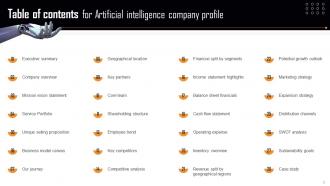
Slide 2: This slide shows Table of Content for the presentation.
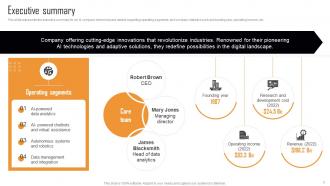
Slide 3: This slide represents the executive summary for an AI company which includes details regarding operating segments, and company statistics such as founding year etc.
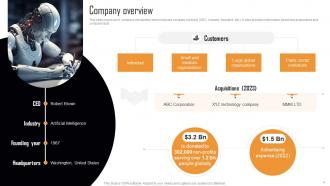
Slide 4: This slide covers an AI company introduction which includes company overview (CEO, industry, founders, etc.). It also provides information about new acquisitions etc.
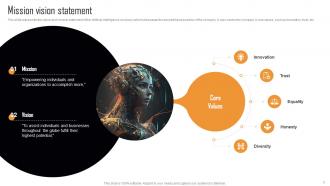
Slide 5: This slide represents the vision and mission statement of the Artificial Intelligence company which showcases the desired future position of the company.
Slide 6: This slide displays the services offered by artificial intelligence companies. It highlights categories such as AI- powered data analytics, chatbots, robotics etc.
Slide 7: This slide represents USP (Unique Selling Proposition) for the artificial intelligence business – advanced AI technology, customized AI solutions, seamless integration etc.
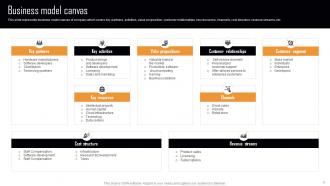
Slide 8: This slide presents business model canvas of company which covers key partners, activities, value proposition, customer relationships, key resources etc.
Slide 9: This slide presents the history and milestones for the artificial intelligence company, highlighting company establishment, establishment of the new segment etc.
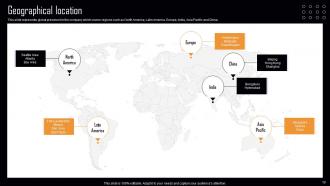
Slide 10: This slide displays global presence for the company which covers regions such as North America, Latin America, Europe, India, Asia Pacific and China.
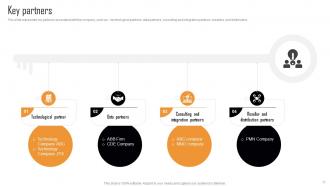
Slide 11: This slide presents key partners associated with the company, such as – technological partners, data partners, consulting and integration partners, resellers etc.
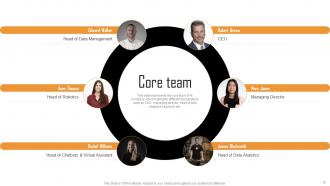
Slide 12: This slide represents the core team of AI company, which highlights different designations such as CEO, managing director, head of data analytics segment, etc.
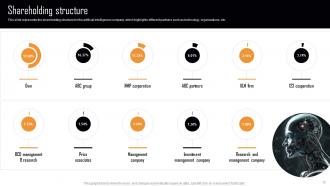
Slide 13: This slide displays the shareholding structure for the artificial intelligence company, which highlights different partners such as technology, organizations, etc.
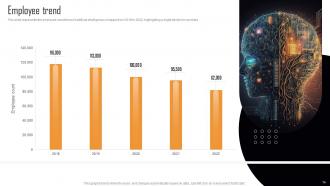
Slide 14: This slide represents the employee count trend of artificial intelligence company from 2018 to 2022, highlighting a slight decline in numbers.
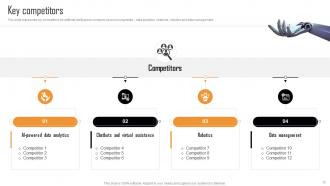
Slide 15: This slide displays key competitors for artificial intelligence company based on segments – data analytics, chatbots, robotics and data management.
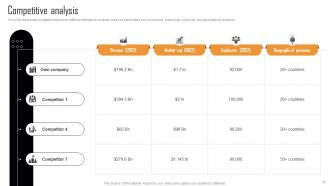
Slide 16: This slide represents competitor analysis for artificial intelligence company based on parameters such as revenue, market cap, employee, and geographical presence.
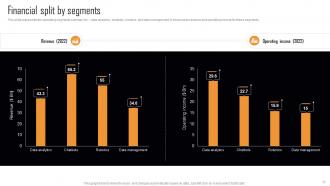
Slide 17: This slide displays the operating segments summary for – data analytics, chatbots, robotics, and data management. It showcases revenue and operating income for these segments.
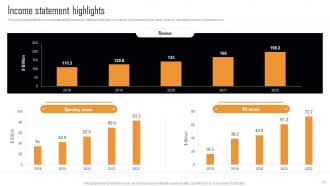
Slide 18: This slide represents the income statement financials for Artificial Intelligence company. It includes last five years’ revenue, operating income, and net income.
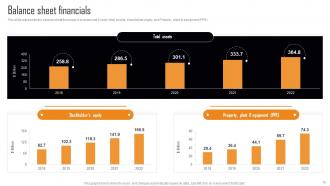
Slide 19: This slide displays the balance sheet financials. It includes last 5 years’ total assets, shareholder equity, and Property, plant & equipment (PPE).
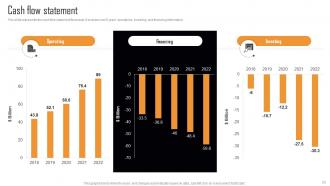
Slide 20: This slide represents the cash flow statement financials. It includes last 5 years’ operations, investing, and financing information.
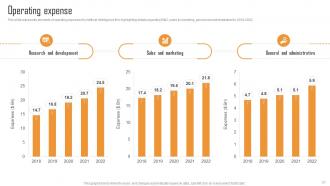
Slide 21: This slide displays elements of operating expenses for Artificial Intelligence firm highlighting details regarding R&D, sales & marketing etc.
Slide 22: This slide represents inventory summary for Artificial Intelligence firm for past 5 years. It covers three types of inventory – raw material etc.
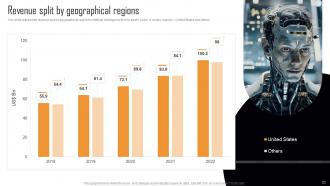
Slide 23: This slide describes revenue spilt by geographical region for Artificial Intelligence firm for past 5 years. It covers regions – United States and others.
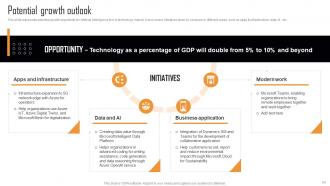
Slide 24: This slide represents potential growth opportunity for Artificial Intelligence firm in technology market. It also covers initiatives taken by company in different areas.
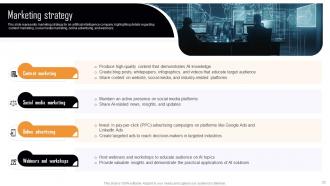
Slide 25: This slide displays marketing strategy for an artificial intelligence company, highlighting details regarding content marketing, social media marketing etc.
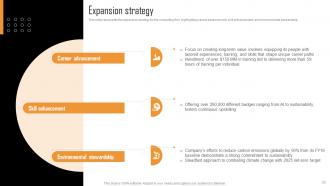
Slide 26: This slide represents the expansion strategy for the consulting firm, highlighting career advancement, skill enhancement, and environmental stewardship.
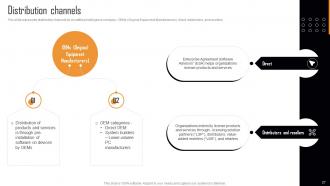
Slide 27: This slide presents distribution channels for an artificial intelligence company– OEMs (Original Equipment Manufacturers), direct, distributors, and resellers.
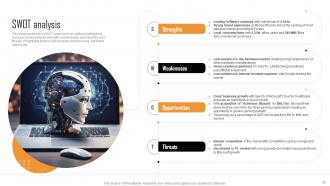
Slide 28: This slide represents a SWOT analysis for an artificial intelligence company showcasing its strengths, weaknesses, opportunities, and threats.
Slide 29: This slide displays future sustainability goals associated with an artificial intelligence company. It includes details regarding carbon neutrality etc.
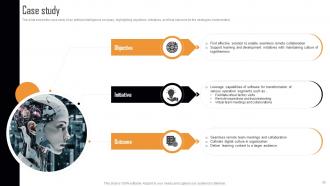
Slide 30: The slide shows the case study of an artificial intelligence company, highlighting objectives, initiatives, and final outcome for the strategies implemented.
Slide 31: This slide shows all the icons included in the presentation.
Slide 32: This slide is titled as Additional Slides for moving forward.
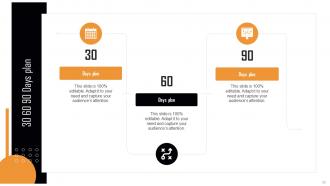
Slide 33: This slide provides 30 60 90 Days Plan with text boxes.
Slide 34: This slide shows Post It Notes for reminders and deadlines. Post your important notes here.
Slide 35: This slide displays Mind Map with related imagery.
Slide 36: This slide presents Roadmap with additional textboxes. It can be used to present different series of events.
Slide 37: This is a Thank You slide with address, contact numbers and email address.
Artificial Intelligence Company Profile Powerpoint Presentation Slides CP CD with all 45 slides:
Use our Artificial Intelligence Company Profile Powerpoint Presentation Slides CP CD to effectively help you save your valuable time. They are readymade to fit into any presentation structure.















FAQs for Artificial Intelligence Company Profile Powerpoint Presentation
Honestly, three main things set us apart. Speed is huge - we're talking 2-3 weeks instead of months. Most competitors hand you these black-box solutions where you have no clue what's happening inside, but we actually show you how decisions get made. Super helpful for compliance stuff. Everything gets customized too - none of that cookie-cutter approach. Your workflows, your industry, all of it matters. The best part? Your team won't be sitting there crossing their fingers hoping the AI does something reasonable. They'll actually get what's going on. Definitely worth checking out our demo comparison sheet if you want to see the speed difference yourself.
So there's this AI ethics board that checks all the big products before they ship. Pretty thorough actually - way more than I thought it'd be when I started. Your team runs algorithms through different datasets to spot bias issues early on. They also bring in outside auditors regularly, which is smart. There's always some ethics checklist you gotta fill out before launching AI stuff, but honestly it's not that bad once you've done it a few times. Oh, and they're pretty serious about data privacy and being transparent about how the algorithms work. Sometimes feels like overkill but I get why they do it.
So we're mainly in healthcare, finance, and retail right now. Healthcare uses our diagnostic imaging stuff and patient analytics. Finance is all about fraud detection and risk assessment - pretty standard stuff. Retail clients can't get enough of our recommendation engines and inventory systems. Manufacturing has been blowing up lately though, which honestly caught us off guard. They're obsessed with predictive maintenance and quality control automation. Oh, and heads up - each industry has completely different compliance rules, so you'll need to adjust your implementation strategy based on whatever regulatory mess you're dealing with. It's kind of a pain but worth it.
So we've got end-to-end encryption covering everything - data transmission, storage, the works. Only authorized people can access sensitive stuff through role-based controls. Before anything touches our training pipelines, we anonymize it first (probably way more than needed, but whatever). Regular security audits keep us honest, plus we stick to SOC 2 standards. Our AI models? We train those on-premise instead of farming out the sensitive work to third-party clouds. Oh, and if you're handling client data, definitely use the secure sandbox - not the regular dev tools.
So we hit bias from a bunch of angles - diverse training data, algorithm audits, team reviews. Can't just set it and forget it, which actually keeps things interesting (who knew?). Before anything goes live, we test across different demographic groups. Document everything because clients won't stop asking about this stuff. Oh, and make bias detection part of your regular routine from day one. Don't try to slap it on later - that never works out well.
Honestly, we just treat our models like they're never really "done" - always tweaking and improving them. New data gets fed back constantly, we're running A/B tests between different versions, and there's real-time monitoring happening 24/7. Monthly retraining cycles keep things fresh, or we'll retrain earlier if performance starts dipping. The whole feedback loop thing is weirdly satisfying to watch once you get hooked on it. Most of our pipeline runs automatically now, so updates happen smoothly instead of those massive quarterly rollouts that break everything. Check the performance dashboard whenever - you can see all the latest numbers there.
Oh totally, we've got some good ones to show. The retail client bumped conversion rates by 23% with our recommendation engine - that one's super easy to walk through. Our logistics company cut delivery times by 18% using route optimization, which was pretty cool to see. But honestly? The healthcare case is where it gets crazy - they reduced diagnostic errors by 31%. Like, actual lives saved, you know? Anyway, all the detailed stuff is sitting in that client success folder on the shared drive. I'd probably start with retail since it's the most straightforward.
So we've got a few solid partnerships going. Microsoft Azure handles our cloud stuff and gives us OpenAI access - honestly their language models are pretty incredible. NVIDIA provides the GPU power, which makes a huge difference when we're training models. Oh, and we work with Stanford and MIT on research - the Stanford team especially kills it with computer vision projects. MIT's more algorithms and data sharing. You should probably peek at our partner portal to see how any of this might mess with your current setup, but in a good way.
Honestly, the first thing we do is sit down with each client for hours just mapping out how they actually work - their data mess, workflows, all the stuff that's driving them crazy. One-size-fits-all is total BS in this space, trust me. After that discovery phase, we build these modular pieces they can snap together depending on what industry they're in and what tech they're stuck with. The trick is making our APIs play nice with whatever ancient systems they've got running instead of telling them to rip everything out. Oh, and document their weird requirements from day one or you'll be rebuilding half the project later!
So basically, ML runs pretty much everything we build. Our predictive tools? ML. Data processing? Also ML. Even the personalization stuff customers see - yep, that too. The algorithms pick up on patterns as they happen, which means you get better insights over time. It's kinda wild how much smarter the systems get. If I were you, I'd check out the recommendation engine first. That's honestly where you'll see the biggest difference right away, and it's pretty impressive what it can do.
Look, AI's gonna flip everything upside down - and I mean *everything*. Routine stuff gets automated. Client experiences become way more personal. Predictive analytics that don't suck for once. Jobs will shift big time, no sugarcoating that. Companies jumping in early? They'll crush it while others scramble to catch up. Honestly, I'd start mapping out what parts of your workflow could use AI help right now. Don't wait around for competitors to eat your lunch - that's always a losing game.
So they've got onboarding sessions and really solid documentation - honestly way better than most companies I've dealt with. You'll get hands-on workshops based on your team's experience level. There's also 24/7 support and an online portal with video tutorials. Oh, and you get a dedicated success manager for your first 90 days which is pretty clutch. Best thing though? When they roll out new features, all the training stuff updates automatically so you're not stuck with old guides.
Honestly, tracking ROI comes down to three basic things: what you're saving, what extra money you're making, and how much faster stuff gets done. The savings part is pretty straightforward - less time processing things, fewer people doing manual work, way fewer mistakes. Revenue's trickier to pin down but you can track conversion rates going up or products launching faster. Efficiency gains are where it gets weird though - sometimes they're massive but take forever to show up in actual numbers. Most companies I've seen hit around 15-25% ROI in year one, but that's all over the place depending on what you're doing. Just set your KPIs early so you're not scrambling later trying to prove it worked.
Honestly, I'm seeing three big changes coming. AI agents that actually finish entire workflows for you - not just answering questions but handling the whole process. Pretty cool stuff. Then there's personalized AI that figures out how you work and adapts to your style instead of forcing you into some cookie-cutter approach. Also, AI will just become part of the background infrastructure rather than this separate thing you consciously decide to use. My take? Look at what repetitive stuff you do now - those tasks are probably getting automated first at your company.
Give your teams freedom to chase crazy ideas without worrying about instant profits. Mix up who works together - when ML people sit with product teams, magic happens. That 20% passion project time? Feels messy but honestly creates our coolest stuff. Hackathons are great, plus we throw "failure parties" to celebrate smart risks that bombed. People need to feel safe pitching weird ideas without getting shot down. Oh, and start asking "what if" way more in meetings - it's such a simple shift but changes everything.
-
Innovative and attractive designs.
-
I discovered some really original and instructive business slides here. I found that they suited me well.