

Artificial intelligence for digital transformation powerpoint presentation slides




Try Before you Buy Download Free Sample Product
 Impress Your
 Audience
 100%
100% Editable
 Save Hours
 of Time


Introducing Artificial Intelligence For Digital Transformation PowerPoint Presentation Slides. With the help of a machine learning PPT template, you can resolve your technical issues very easily. You can highlight the importance of artificial intelligence in business by using a digital transformation PowerPoint presentation complete deck. There are various factors like pattern recognition, prediction, cognitive search, natural language interaction, and natural language generation which you can mention by using this information technology PPT template. If you want to show how AI is useful in meeting digital transformation goals, then use our professionally designed business process automation PowerPoint presentation deck. By using artificial intelligence presentation, you can elaborate on formalized, strategic, converged, innovative and adaptive stages of business automation. With the help of speech recognition PowerPoint presentation slides, you can showcase the major evolution of artificial intelligence technology. Therefore, download this ready-to-use machine learning control PPT template and maintain better service quality and inventory management.
People who downloaded this PowerPoint presentation also viewed the following :
Content of this Powerpoint Presentation
New technologies let businesses change how they do business, how they connect with customers, and what they offer as value. AI is the engine that makes this happen. It helps companies work better, create new products and services, and improve the customer experience. AI-powered analytics and data processing help businesses make choices and predictions in real-time, improve business processes, and find new opportunities.
Ready to digitally transform your business with AI? Lead your company into the future with our exclusive Digital Transformation Training PPT Deck Curriculum!
Using AI in business processes allows companies to add new ideas and work more efficiently without changing their structure. AI improves cooperation, decision-making, prediction and analysis, risk mitigation, business processes, and customer experience, thus speeding up operations.
When Artificial Intelligence and Digital Transformation come together, they change the overall business setting. It changes how businesses work, how choices are made, and what they produce. With the assistance of informative PowerPoint slides, you can demonstrate the significant advancements that have been made in artificial intelligence technology across all business domains.
Do you wish to expedite your digital transformation using AI? Learn the possibilities with our PPT Theme for detailed Technological Digital Transformation.
Our PPT Template design can help you reach digital transformation goals by providing thorough information on business automation's organized, strategic, merging, creative, and flexible steps. Here's how.
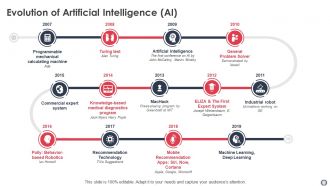
Template 1: Evolution of Artificial Intelligence (AI)
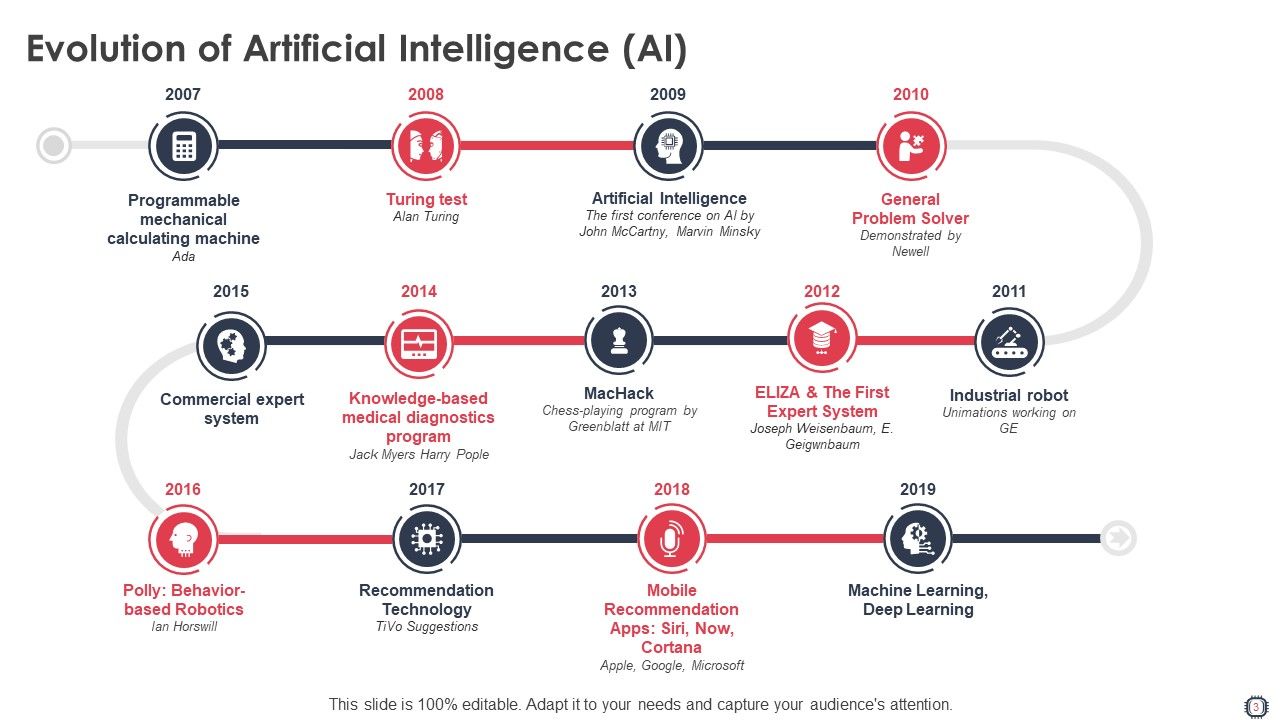
This PowerPoint Template provides an overview of the development of artificial intelligence year by year with eye-catching emoticons and a yearly roadmap. It is a fantastic tool for learning about technological innovation and its uses. Since conversational AI solutions provide organizations with complete platform management, they can address context-free conversation issues. Get this PPT Layout today!
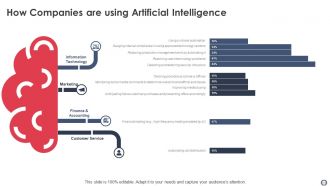
Template 2: How Companies are Using Artificial Intelligence

This PowerPoint Set discusses how businesses deploy artificial intelligence for customer service, finance and accounting, marketing, and information technology. Self-optimizing supply chain systems, cyber-physical systems, and automatic governmental checks that use drone technologies are all examples of AIoT uses. Get this PPT Preset today!
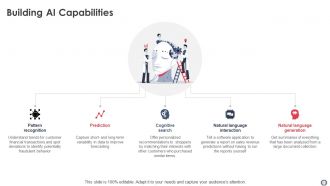
Template 3: Building AI Capabilities

This PPT Template showcases artificial intelligence capabilities created by organizations. These skills include pattern recognition, prediction, cognitive search, natural language interaction, and natural language production. There are many more capabilities that are being developed. Get this PPT Set right away!
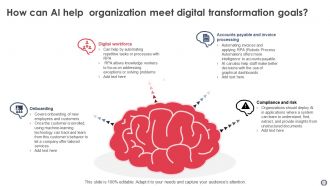
Template 4: How Can AI Help Organizations Meet Digital Transformation Goals
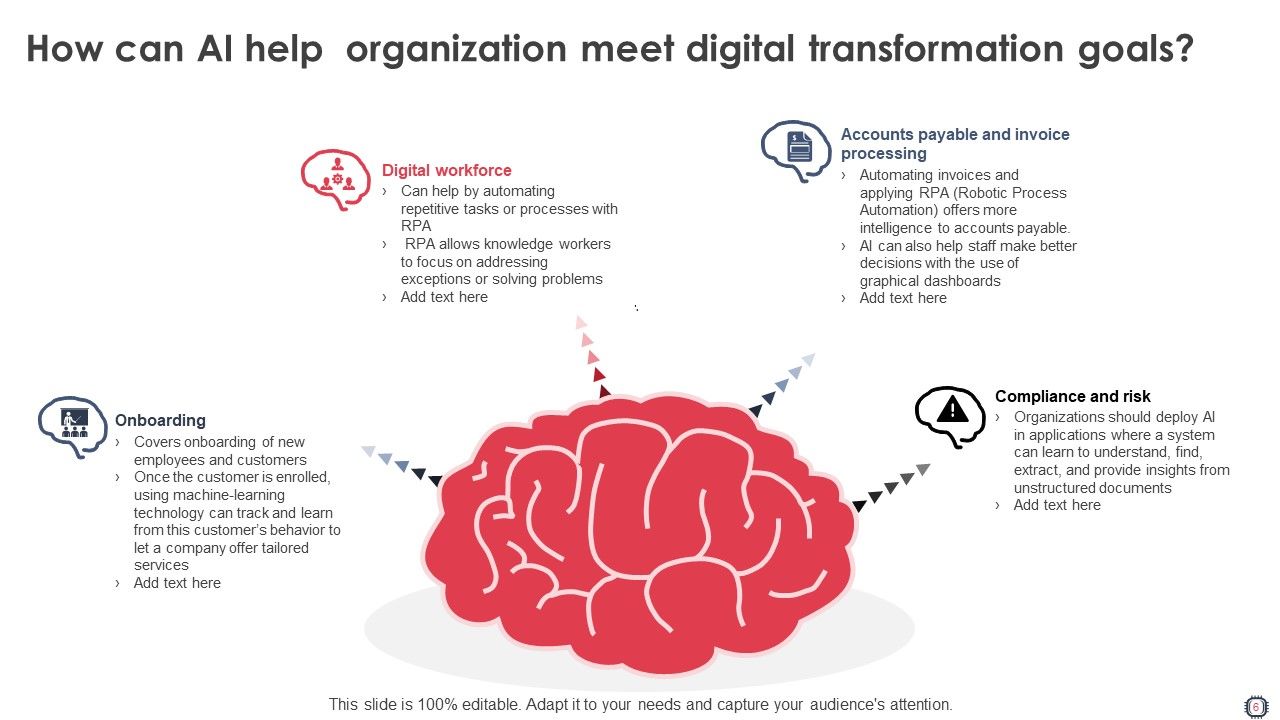
This PPT Deck discusses how AI can help businesses reach their digital transformation goals, including hiring, digital workforce, accounts payable and payment handling, risk management, and compliance. The increasing need for solutions that streamline and include more people in the data science process has made advanced AI applications possible. Get this PPT Set today!
Template 5: Six Stages of Digital Transformation
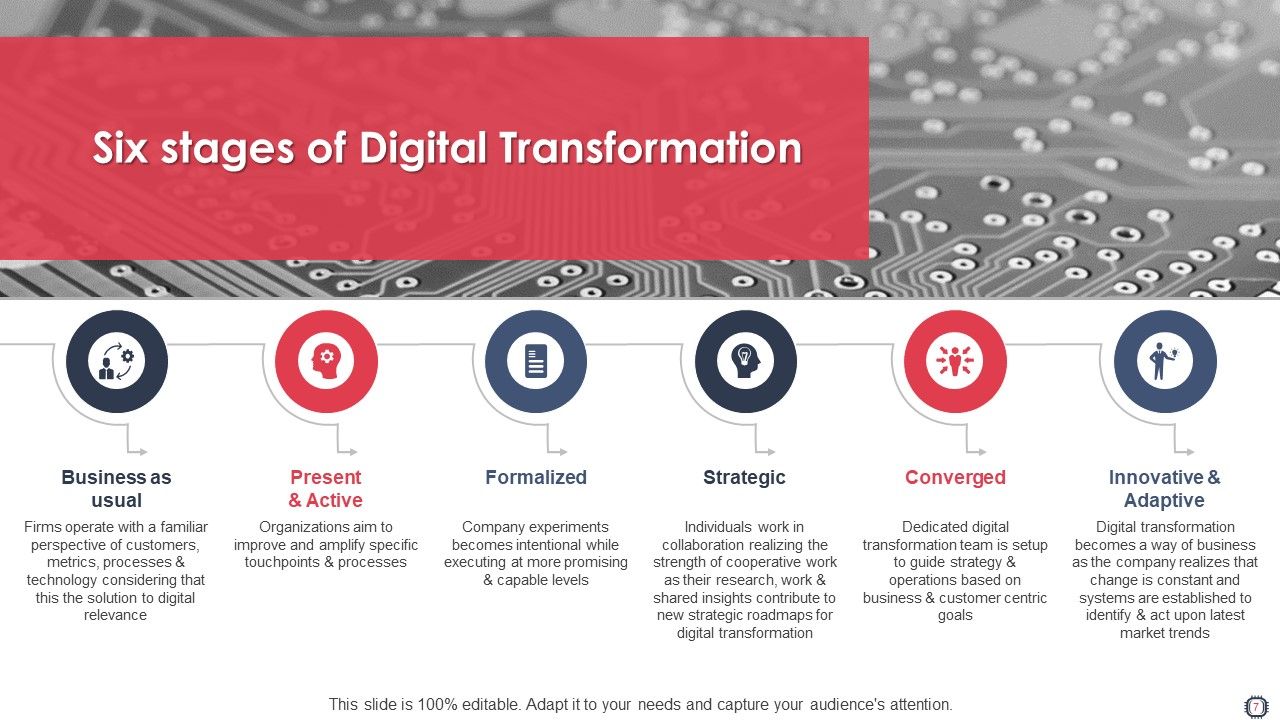
This PPT Template covers the six phases of digital transformation. These stages are business as usual, present and active, formalized, strategic, convergent, inventive, and adaptable. Use this slide to illustrate the improvement in the efficiency of AI-enabled devices to gather, analyze, and use unstructured data sources like chats for the advantage of a business. Get this PPT Template today!
Template 6: AI Best Practices for Digital Transformation
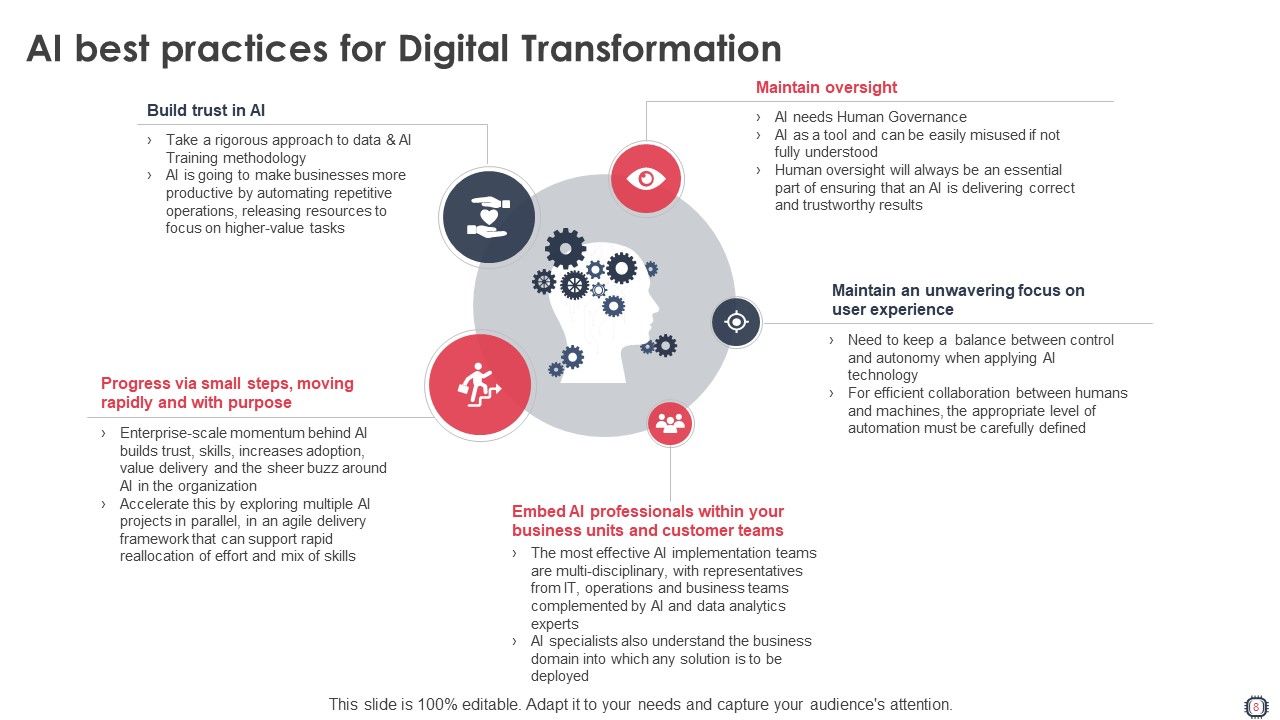
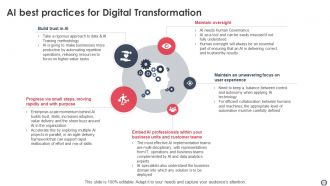
Embedding AI specialists within your business divisions and customer teams is one of the best practices for artificial intelligence, and this PPT Layout covers digital transformation. Other best practices include maintaining supervision, emphasizing user experience, and building confidence in artificial intelligence. Use this slide to get the most out of cutting-edge technology like AI.
Template 7: Challenges of Artificial Intelligence
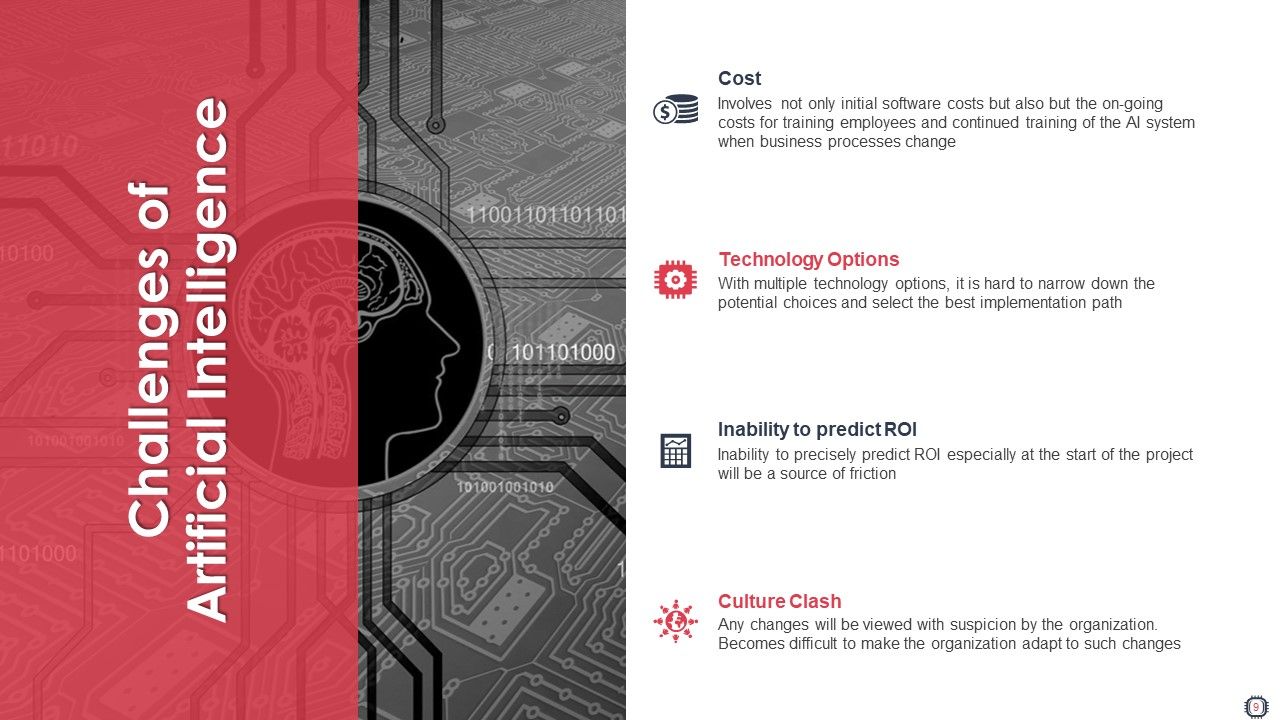
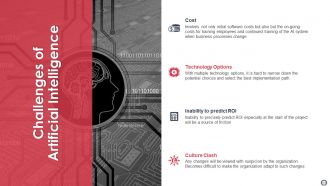
This PPT Template discusses the problems with AI. It showcases challenges such as its high cost, a wide range of technological choices, inability to predict the return on investment (ROI), and cultural clashes. As AI leads the digital revolution, we created a suite of PPT Decks that include AI advising, experimentation, and engineering services to help customers obtain outcomes quickly.
Conclusion
SlideTeam's PPT Templates will help you maximize your digital advancements. This paradigm change brought about by the integration of AI with business processes allows companies to optimize their operations, client interactions, and value offerings. Use our AI-driven visuals to promote your business process and make a stronger impact with your message.
PS. Interested in learning how AI is speeding up and modifying telecom's digital landscape? Access insightful information with our PPT Template on the Role of AI in the Digital Transformation of the Telecom Industry.
Artificial intelligence for digital transformation powerpoint presentation slides with all 18 slides:
Use our Artificial Intelligence For Digital Transformation Powerpoint Presentation Slides to effectively help you save your valuable time. They are readymade to fit into any presentation structure.




FAQs for Artificial intelligence for digital transformation
So basically, narrow AI is what we've got right now - stuff like face recognition, language translation, chess programs. Super good at one specific thing but totally useless outside that. General AI (which honestly doesn't exist yet, movies are lying to you) would be more like... a human brain that can tackle literally anything. Picture narrow AI as that friend who's amazing at fixing cars but can't boil water. General AI would be the annoying overachiever who's somehow good at everything. For your projects though, you'll want to stick with narrow AI since it's actually real and available.
So ML is basically taking over complex decisions that used to need human experts. Healthcare's using it for diagnosing from scans, predicting patient stuff, drug discovery - the works. Finance too - fraud detection, trading algorithms, credit scoring. Your bank's probably already using it to approve loans, which is kinda wild when you think about it. The whole thing works because these systems can crunch insane amounts of data and catch patterns we'd never spot. Honestly if you're in either field, you should probably start learning this stuff now. It's not going anywhere.
Honestly, the main issues I see are bias, transparency, and who's to blame when things go wrong. AI can be super discriminatory if it learns from biased data - think unfair hiring or loan decisions. There's also this "black box" thing where the system can't explain why it made a choice, which is sketchy when it affects people's lives. And when AI screws up, who takes responsibility? If you're thinking about using AI for big decisions, audit it regularly and definitely keep humans involved in the important stuff. Trust me on that one.
Dude, AI is a game-changer for online stores. Those recommendation engines? They can bump your sales by 20-30% just by showing customers stuff they'll actually want based on what they've been browsing. Chatbots handle customer questions 24/7 without you lifting a finger. Search gets smarter too - it figures out what people mean even when they type weird stuff. Behind the scenes, it's managing your inventory and tweaking prices automatically. I'd honestly start with chatbots and recommendations if you're testing the waters. Your customers get faster help and way better product suggestions.
NLP is how AI actually understands human language - it powers chatbots, Siri, Google Translate, all that stuff. You see it everywhere now. Customer service bots reading your angry emails, search engines figuring out what you meant even when you typed it weird. The progress has been insane lately, honestly. Your meeting notes getting auto-summarized? That's NLP. Social media sentiment analysis? Also NLP. If you're building anything with text or speech, you're probably using it without even thinking about it. Pretty much the foundation for any AI that talks back to you.
So there's a few ways to handle this stuff. Most of the work happens during data prep - you gotta make sure your training data actually represents everyone, not just the same groups over and over. Testing across different demographics is huge too. Having diverse teams look at the models helps catch blind spots (obvious but companies still mess this up). Regular audits after deployment are clutch for spotting problems later. Oh, and fairness metrics are pretty standard now - they measure bias so you can tweak things accordingly. Bottom line: build in bias checks from day one, don't just slap them on at the end.
Yeah, AI's shaking things up for sure, but it's not just a simple "robots steal jobs" situation. Some routine stuff will disappear. But we're also seeing tons of new roles pop up - think AI development, data work, that kind of thing. The speed is honestly pretty nuts right now. Creative jobs and anything needing emotional smarts seem safer. Here's the thing though - you'll probably end up working *with* AI tools instead of against them. I'd start learning skills that play nice with AI now, plus double down on the stuff only humans can do well. Make AI work for you, not the other way around.
So basically, deep learning figures out patterns by itself while regular ML makes you do all the feature engineering manually. Like, instead of telling it "look for edges and shapes to find cats," the neural networks just... figure it out somehow? It's actually crazy how well it works. Traditional stuff like decision trees is way simpler though - you'll need less data and they're easier to debug when things go wrong. Deep learning only really pays off when you've got tons of data and complex problems. I'd honestly start with the traditional methods first since they won't make you want to pull your hair out.
Smart grids are where AI really shines - it predicts energy demand and balances renewable sources automatically. Wind turbines and solar panels get predictive maintenance now too, which honestly blows my mind how well it catches problems early. Energy storage is another big one - AI decides when to store power vs release it based on usage patterns. My cousin works in renewables and swears by these AI energy management platforms. They basically tie everything together seamlessly. If you're thinking about going renewable, I'd definitely start there first. Way easier than trying to piece together different systems later.
So AI is what makes self-driving cars actually work - it takes all that sensor data and makes driving decisions in milliseconds. Computer vision spots pedestrians and signs, while machine learning tries to predict what other drivers will do (good luck with that, right?). Neural networks handle the tricky stuff like lane changes and parking. These systems keep getting better by learning from tons of real driving situations. Honestly, if you're getting into this field, focus on edge cases - that's where the money is and where you'd actually make a difference.
Okay so basically you've got three main threats to worry about. Bad actors can mess with your training data (data poisoning), trick your models with adversarial attacks, or steal sensitive info through privacy breaches. Bias is another headache - not technically security but it'll wreck your reputation fast. For defense, start with a threat assessment of your specific use cases. That's honestly the most important step. Then set up solid data validation, regular security audits, and tight access controls. Encrypt everything, obviously. Oh and monitor for weird model behavior - sometimes that's your first warning sign something's off.
Dude, AI is seriously changing how creative people work these days. Musicians are using it for beats and sound design, artists are making digital paintings and concept art with it. Some of the stuff I've seen is honestly pretty mind-blowing - like you can't even tell if a human or machine made it. Writers use ChatGPT when they're stuck, and there's AI music generators now too. Oh, and DALL-E for visual stuff is wild. The cool part? It's not killing creativity, just giving artists new ways to experiment. You should definitely mess around with some of these tools if you're doing any creative work.
Honestly, the main problem is that AI systems are total black boxes. You can see what goes in and what comes out, but the decision-making process? Complete mystery. The math is way too complicated for anyone to actually follow. Companies don't help either - they keep their algorithms locked down for competitive reasons, which I get but it sucks for transparency. Then there's this whole other issue of making explanations that actually make sense to regular people without being completely wrong. My advice? Start by at least documenting your training data and decision criteria. It's not perfect but gives you something to audit later.
Honestly, AI makes data analytics so much easier - it'll spot patterns and predict trends way faster than doing it manually. Machine learning can catch customer behaviors or sales forecasts that you'd totally miss otherwise. The best part? It handles all the tedious number-crunching while you focus on the big picture stuff. You can use predictive analytics to automatically turn messy data into actual insights. I'd say start with something simple like customer segmentation first. Once you see how well it works, then expand to other areas. Trust me, it's worth it.
Honestly, AGI is gonna be wild - we're looking at AI that can actually think like humans across different tasks. Every industry will get flipped upside down. Healthcare, education, research, you name it. The job thing though? Yeah, that's terrifying. I keep wondering if my cousin in accounting realizes what's coming. What you should watch for is when these systems start doing creative work and complex reasoning, not just copying patterns. Don't wait around - figure out how your field might change now before you're scrambling to catch up later.
-
WOW
-
good