


Natural Language Processing NLP For Artificial Intelligence Powerpoint Presentation Slides AI CD
Natural Language Processing NLP is the field of artificial intelligence that allows machines to understand and develop human language. Grab our Natural Language Processing NLP for Artificial Intelligence template. It showcases information related to Natural Language Processing NLP in detail. The demand for NLP solutions has been substantially increased in recent times. Our Tokenization deck covers several aspects of NLP in terms of its historical evolution, key concepts, applications, training of NLP models, and future advancement. It also highlights the core functionalities such as data pre processing, sentiment analysis, named entity recognition, and machine translation. Additionally, our Text Summarization PPT reveals the subsegments of NLP, such as NLU and NLG, along with technologies such as deep learning, machine learning, NLP libraries, programming languages, etc. Lastly, it highlights the application of NLP in terms of customer feedback management and sector-wide use cases such as marketing, finance, legal, healthcare, education, government, etc. Get access to this powerful template now.
Natural Language Processing NLP is the field of artificial intelligence that allows machines to understand and develop huma..



















-

- Google Slides is a new FREE Presentation software from Google.
- All our content is 100% compatible with Google Slides.
- Just download our designs, and upload them to Google Slides and they will work automatically.
- Amaze your audience with SlideTeam and Google Slides.
-

Want Changes to This PPT Slide? Check out our Presentation Design Services
-

- WideScreen Aspect ratio is becoming a very popular format. When you download this product, the downloaded ZIP will contain this product in both standard and widescreen format.
-

- Some older products that we have may only be in standard format, but they can easily be converted to widescreen.
- To do this, please open the SlideTeam product in Powerpoint, and go to
- Design ( On the top bar) -> Page Setup -> and select "On-screen Show (16:9)” in the drop down for "Slides Sized for".
- The slide or theme will change to widescreen, and all graphics will adjust automatically. You can similarly convert our content to any other desired screen aspect ratio.
Compatible With Google Slides

Get This In WideScreen
You must be logged in to download this presentation.


Do you want to remove this product from your favourites?
PowerPoint presentation slides
Deliver an informational PPT on various topics by using this Natural Language Processing NLP For Artificial Intelligence Powerpoint Presentation Slides AI CD. This deck focuses and implements best industry practices, thus providing a birds-eye view of the topic. Encompassed with ninety two slides, designed using high-quality visuals and graphics, this deck is a complete package to use and download. All the slides offered in this deck are subjective to innumerable alterations, thus making you a pro at delivering and educating. You can modify the color of the graphics, background, or anything else as per your needs and requirements. It suits every business vertical because of its adaptable layout.

People who downloaded this PowerPoint presentation also viewed the following :
Content of this Powerpoint Presentation
Slide 1: This slide introduces Natural Language Processing (NLP) for Artificial Intelligence. Commence by stating Your Company Name.
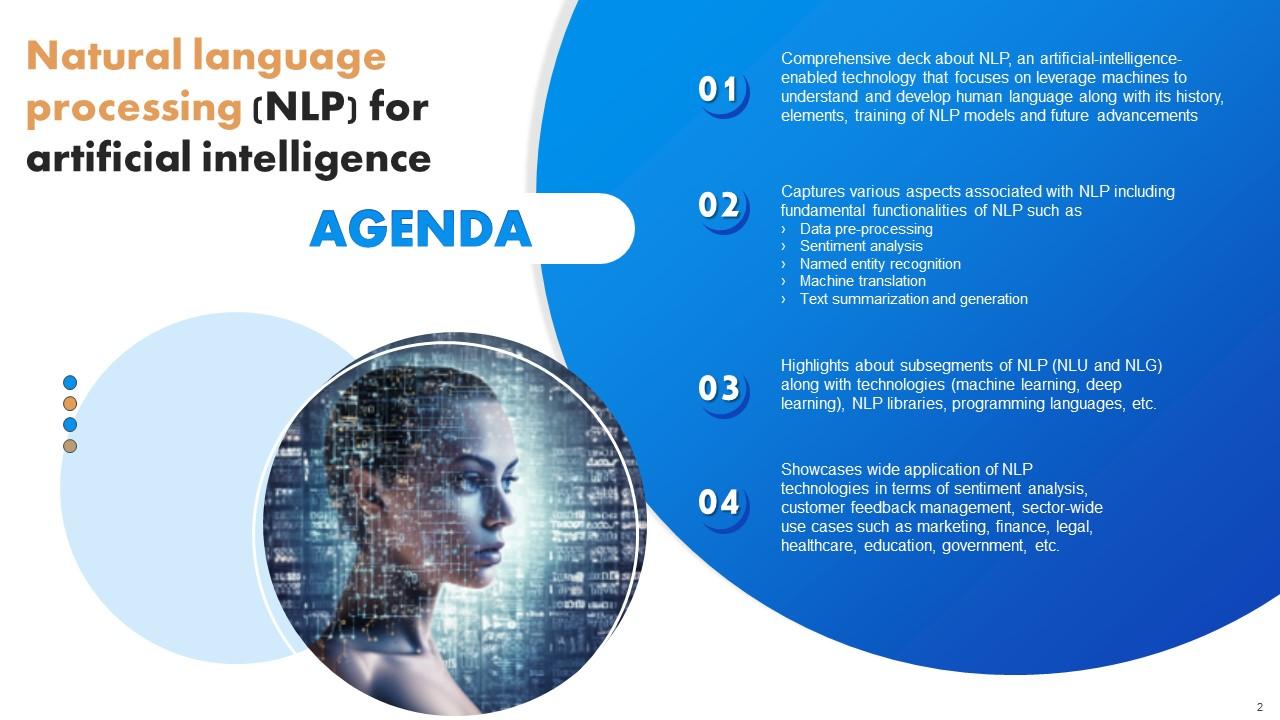
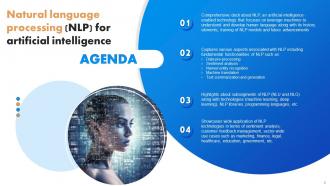
Slide 2: This slide depicts the Agenda of the presentation.
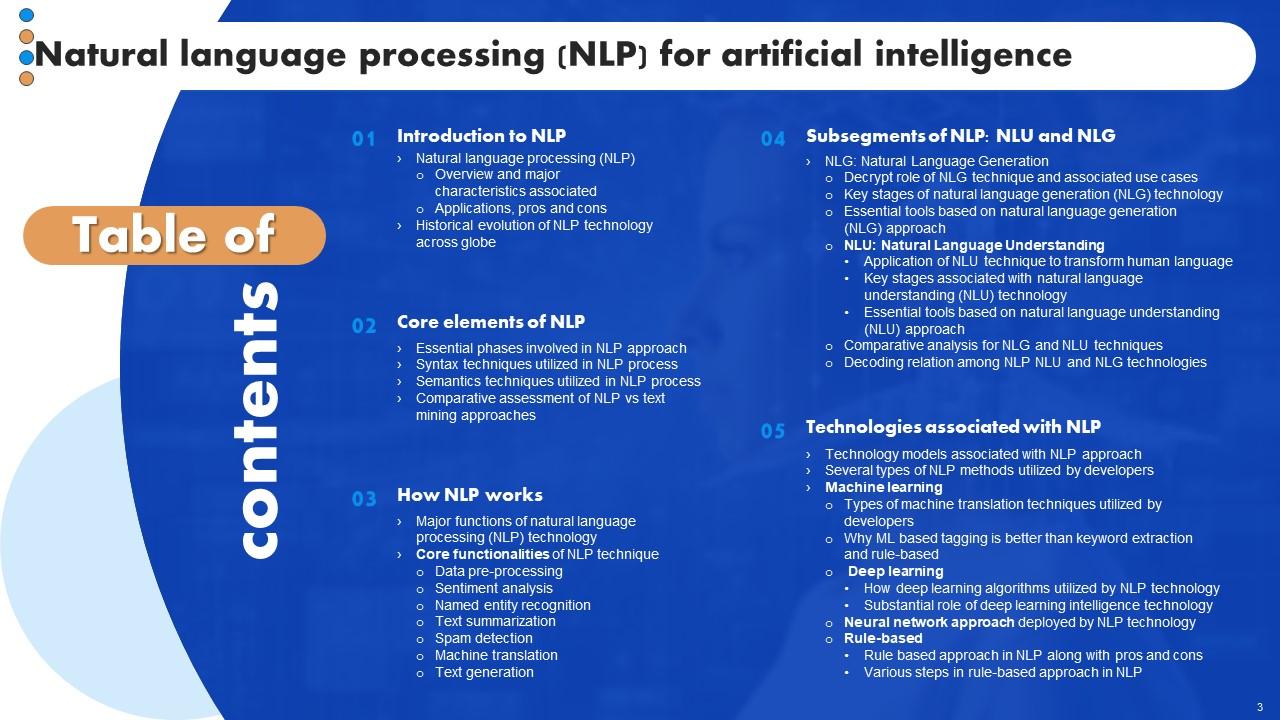
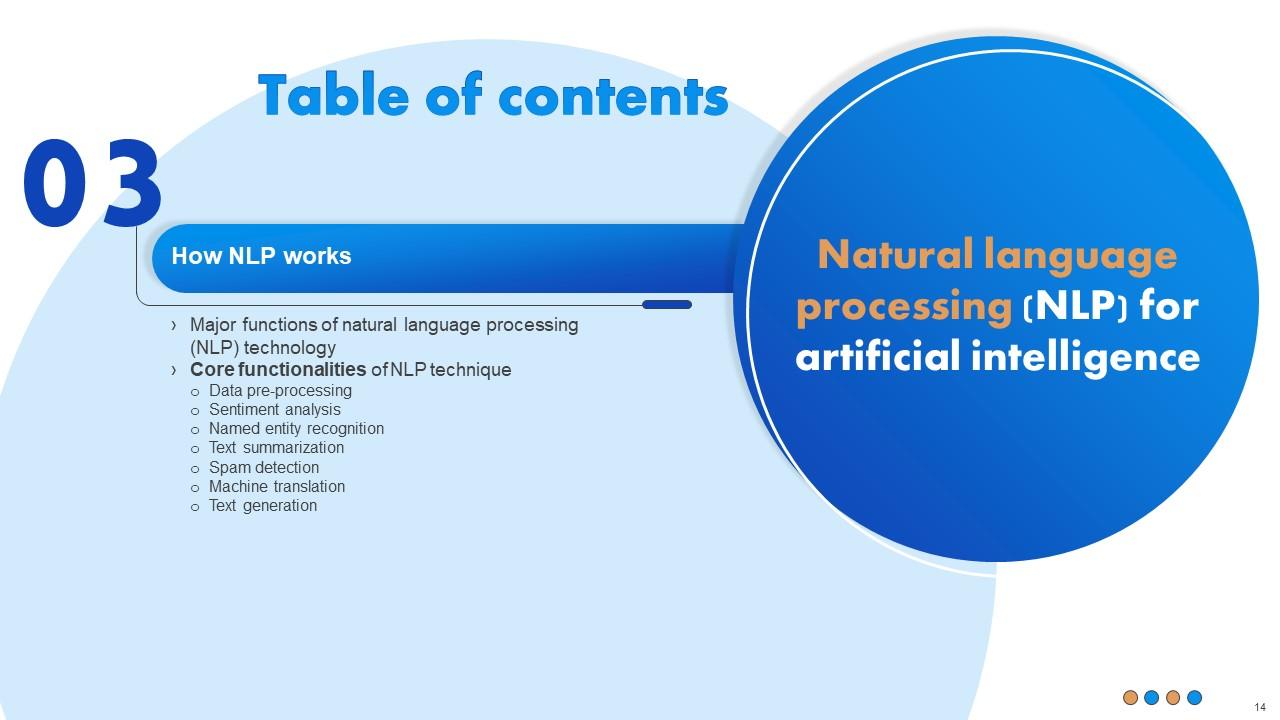
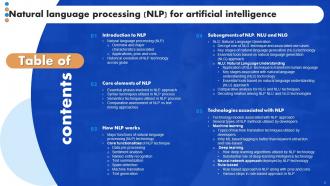
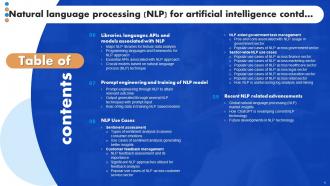
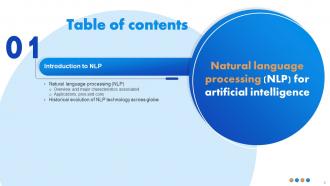
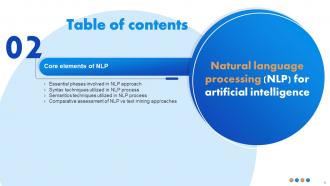
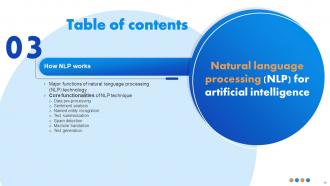
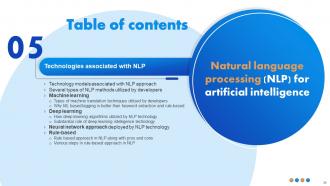
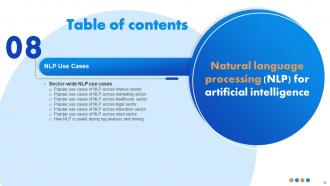
Slide 3: This slide includes the Table of contents.
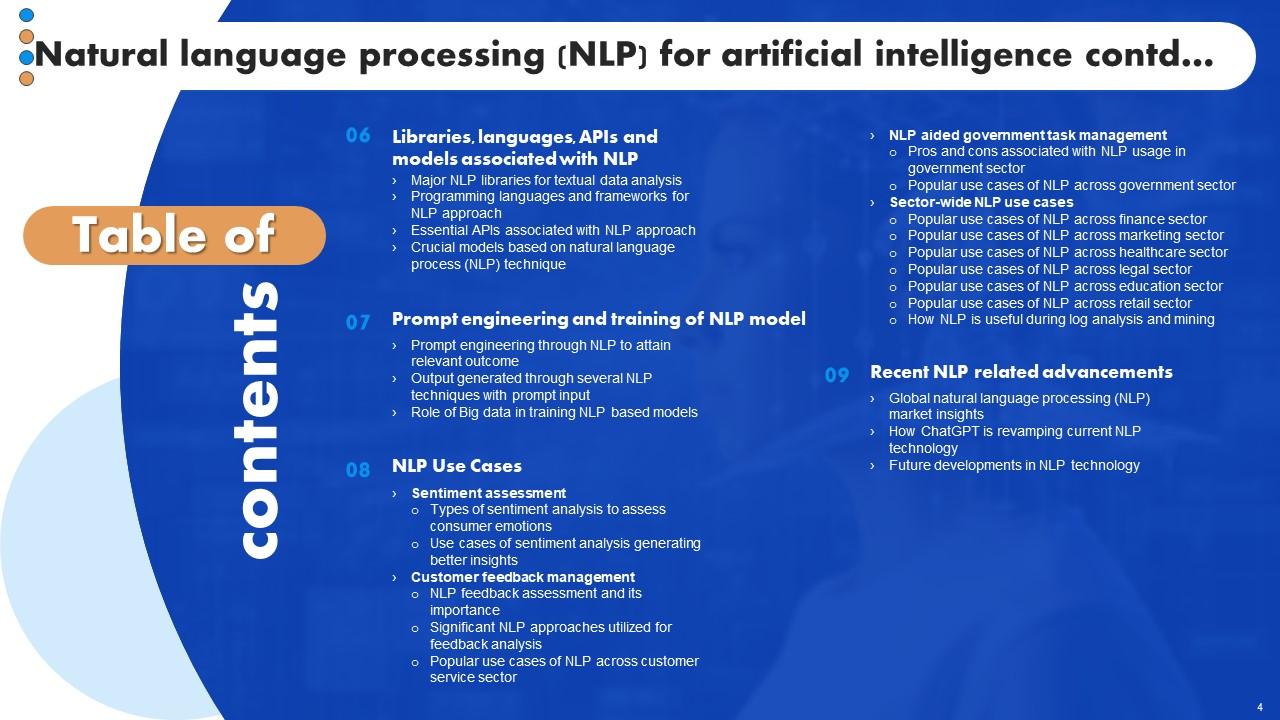
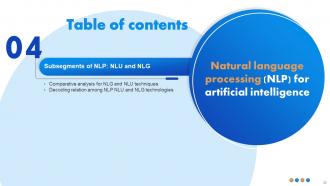
Slide 4: This slide further includes the Table of contents.
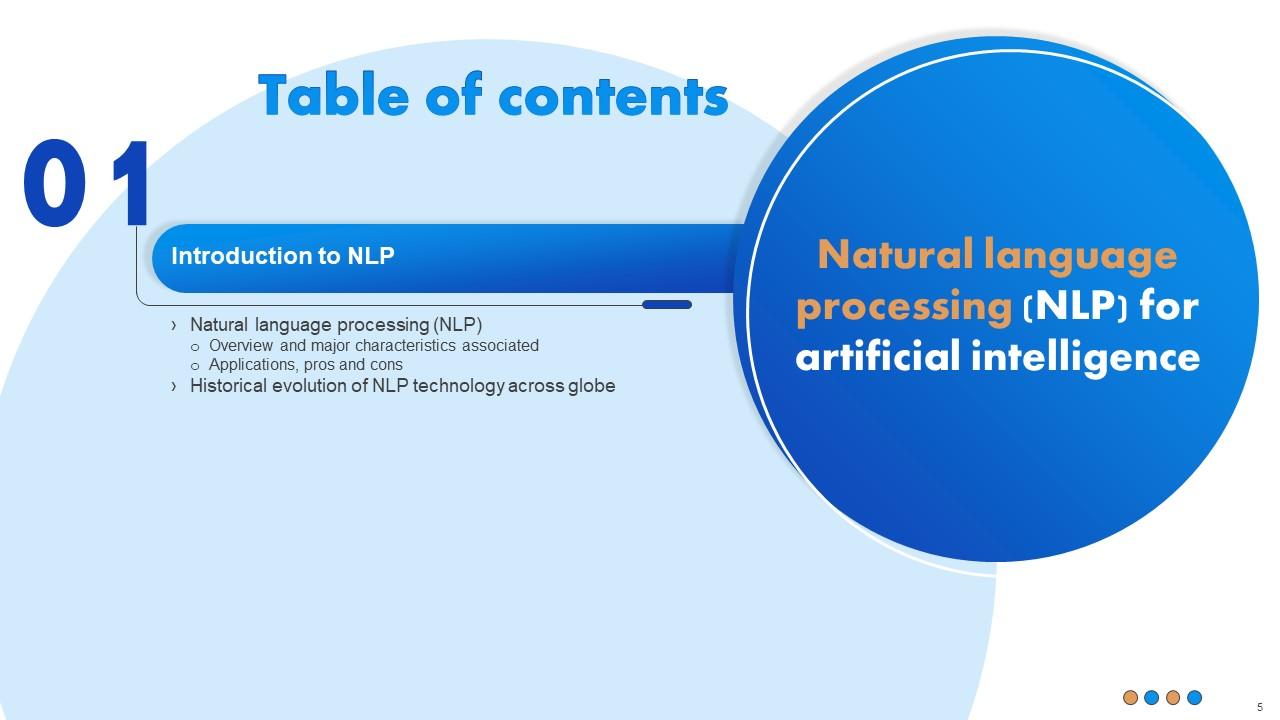
Slide 5: This slide highlights the Title for the Topics to be discussed further.
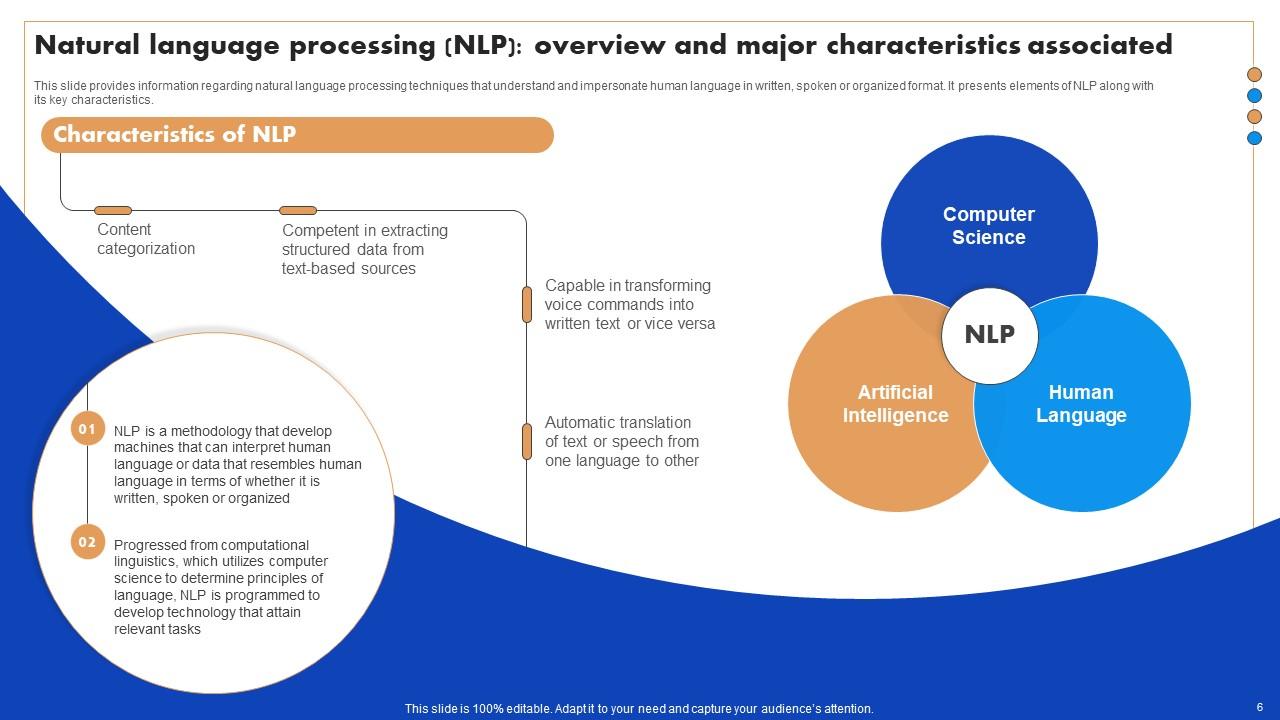
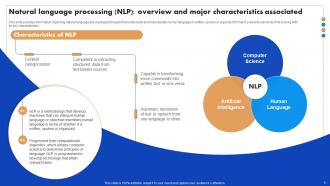
Slide 6: This slide provides information regarding natural language processing techniques.
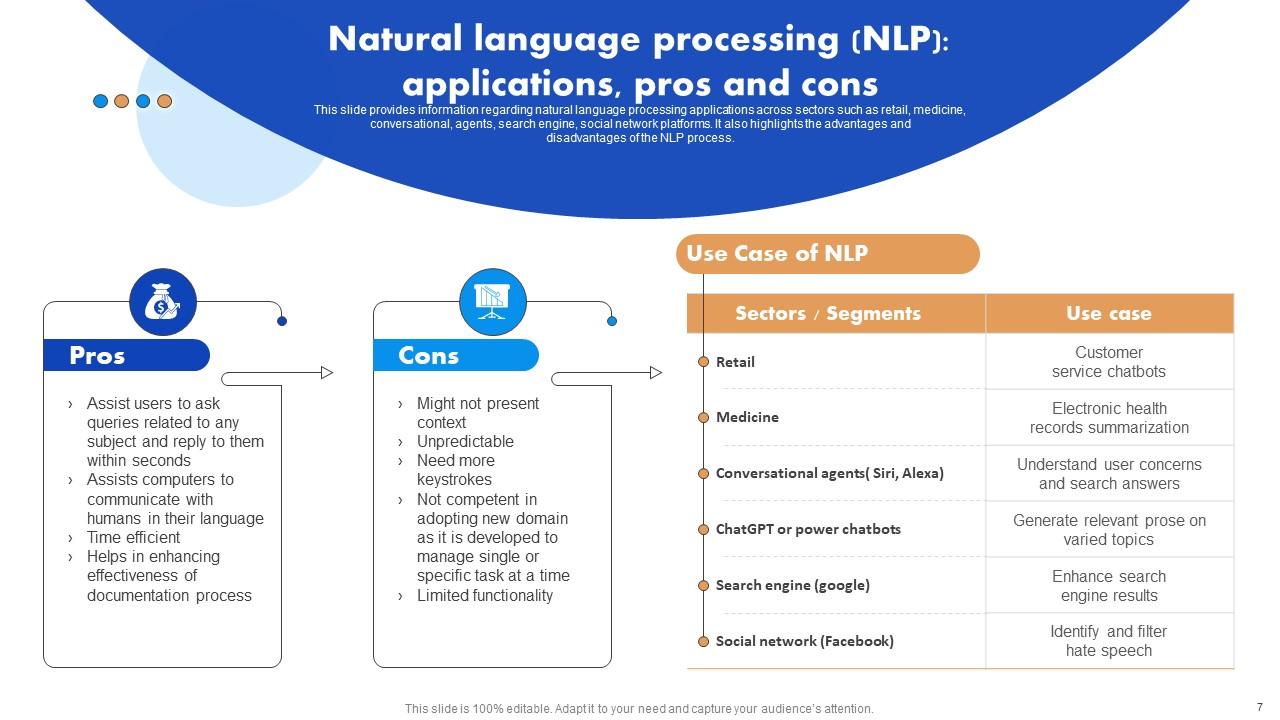
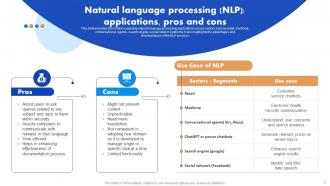
Slide 7: This slide states the natural language processing applications.
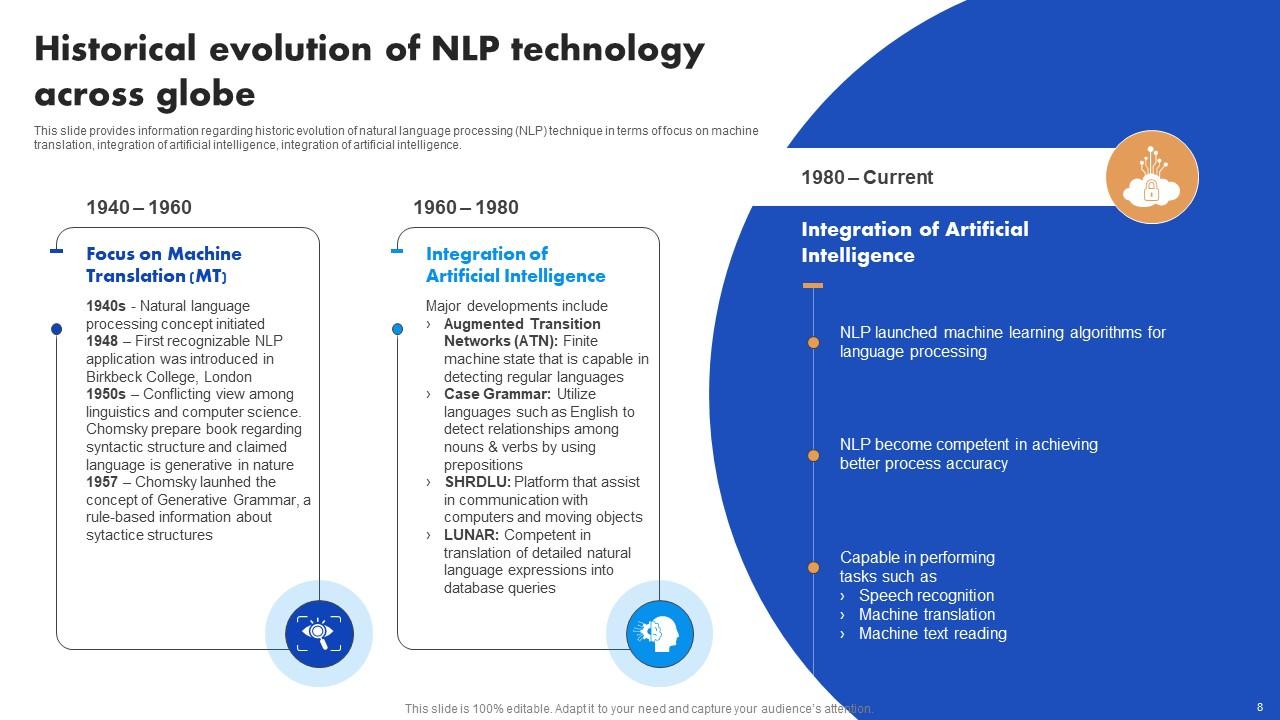
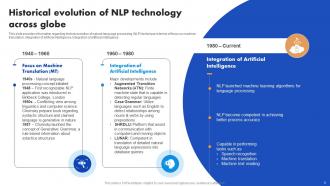
Slide 8: This slide reveals the Historical evolution of NLP technology across globe.
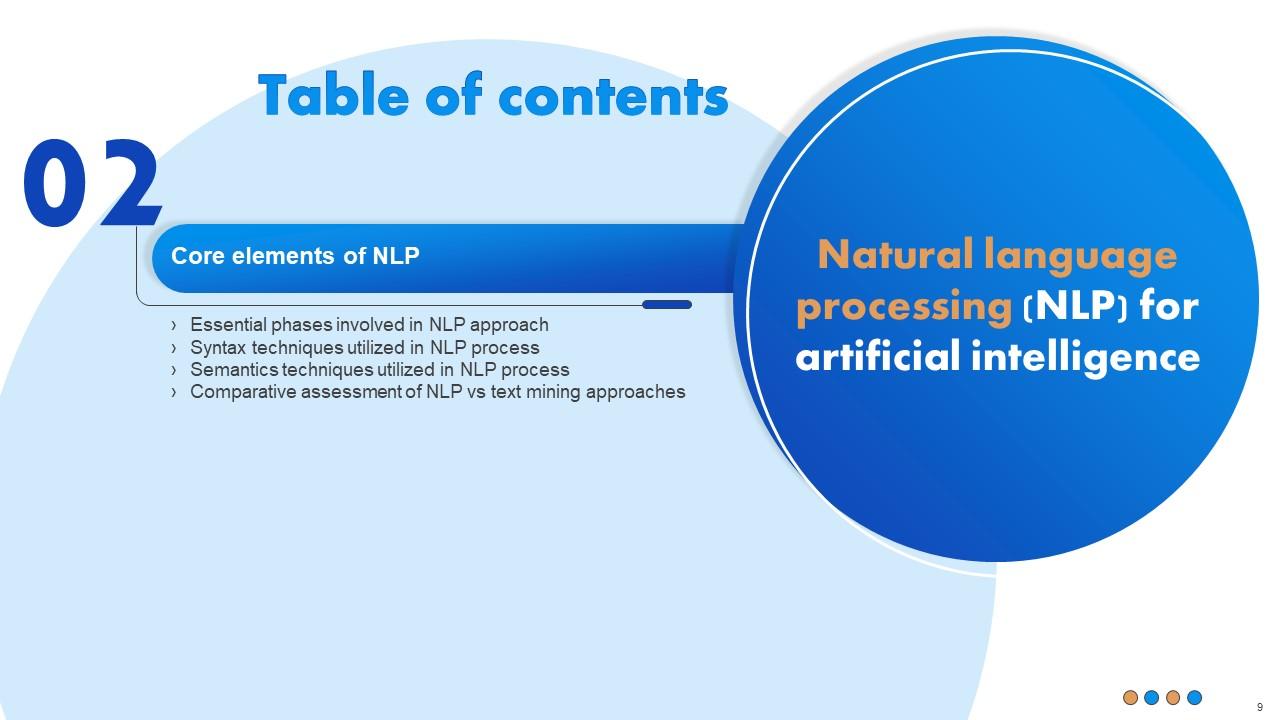
Slide 9: This slide indicates the Heading for the Contents to be covered further.
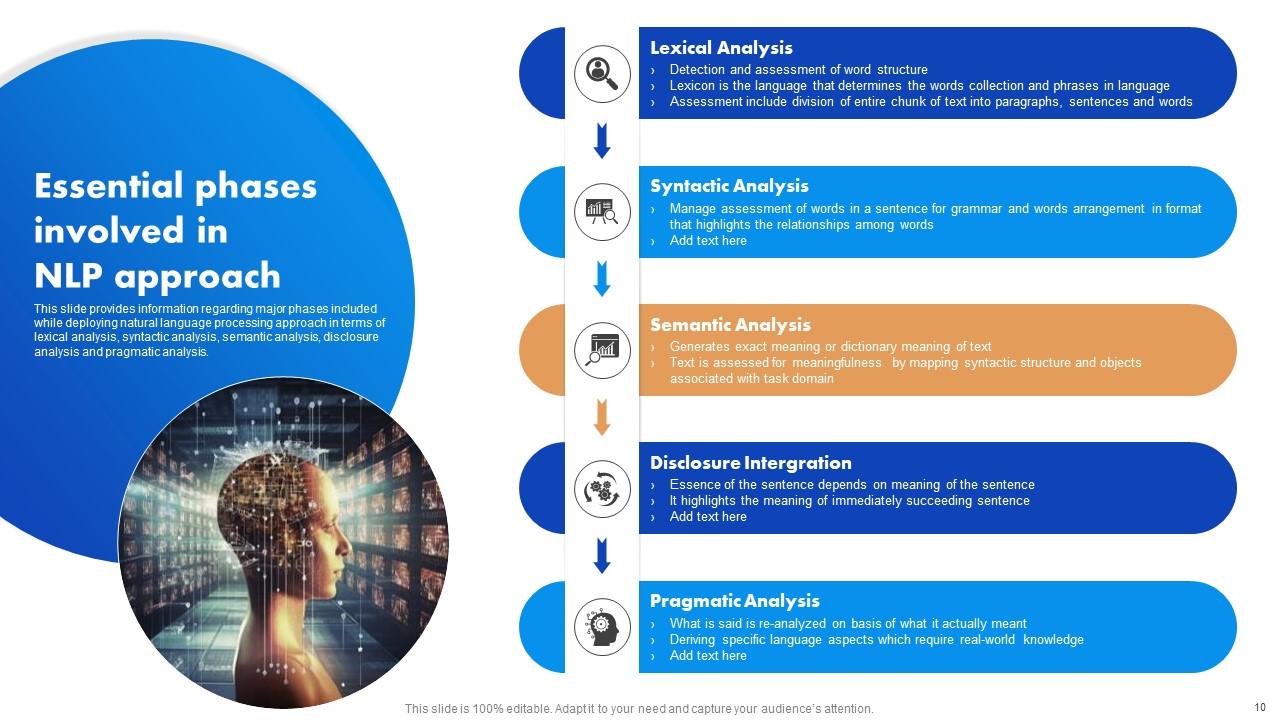
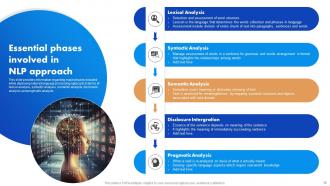
Slide 10: This slide showcases the Essential phases involved in NLP approach.
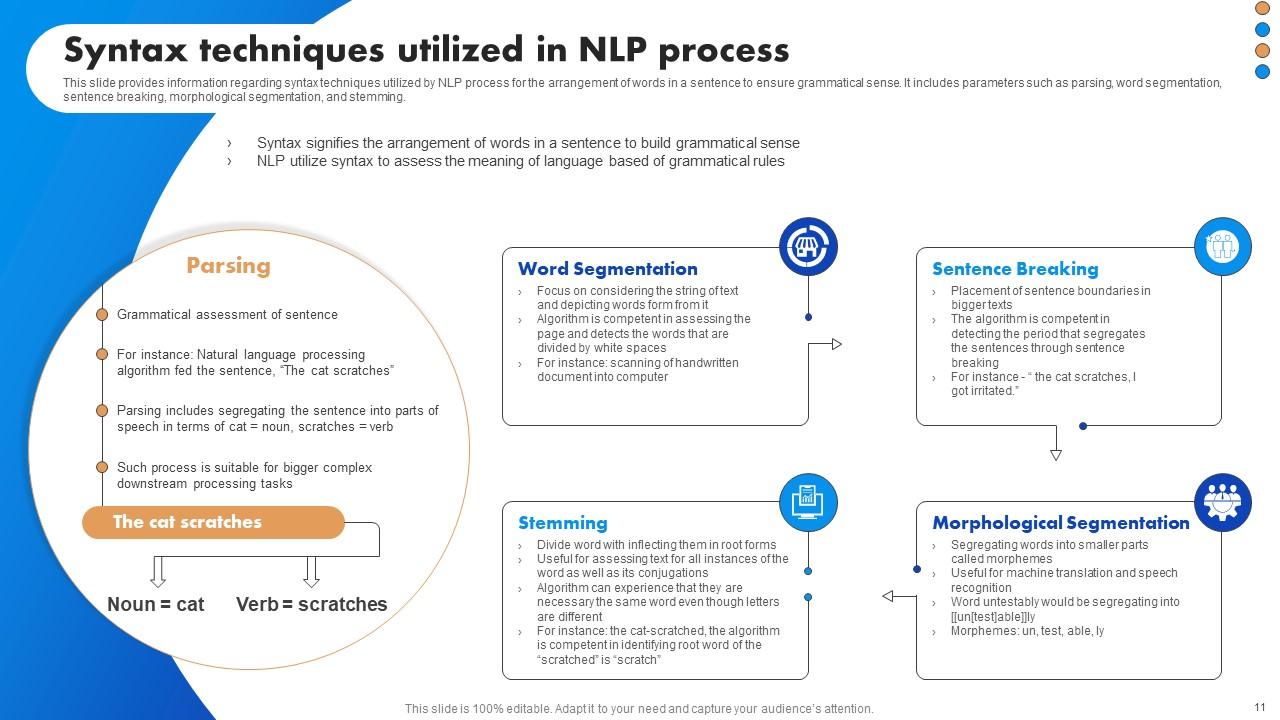
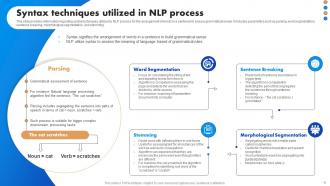
Slide 11: This slide highlights the Syntax techniques utilized in NLP process.
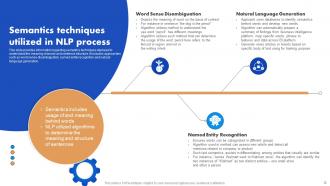
Slide 12: This slide reveals the Semantics techniques utilized in NLP process.
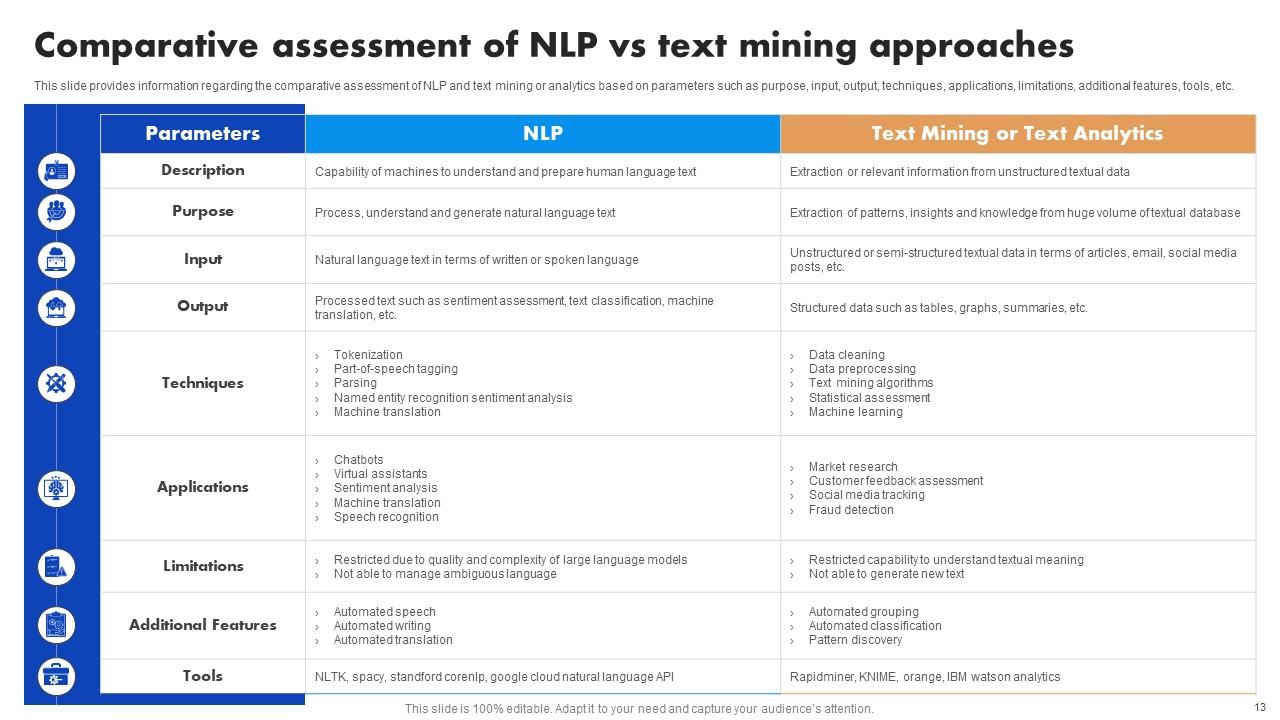
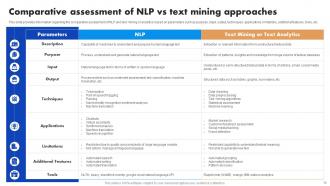
Slide 13: This slide shows the Comparative assessment of NLP vs text mining approaches.
Slide 14: This slide includes the Title for the Ideas to be discussed next.
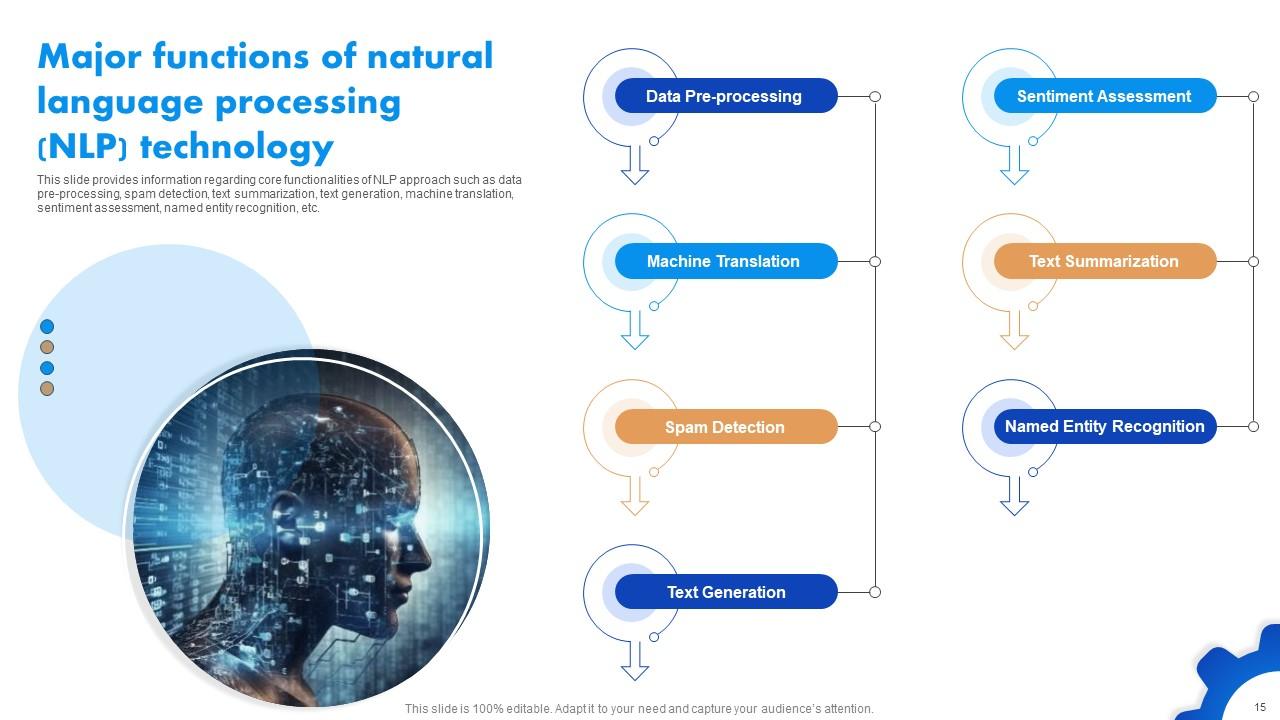
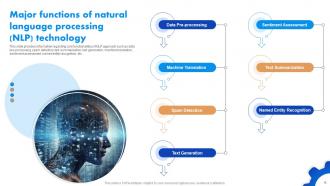
Slide 15: This slide exhibits the Major functions of natural language processing.
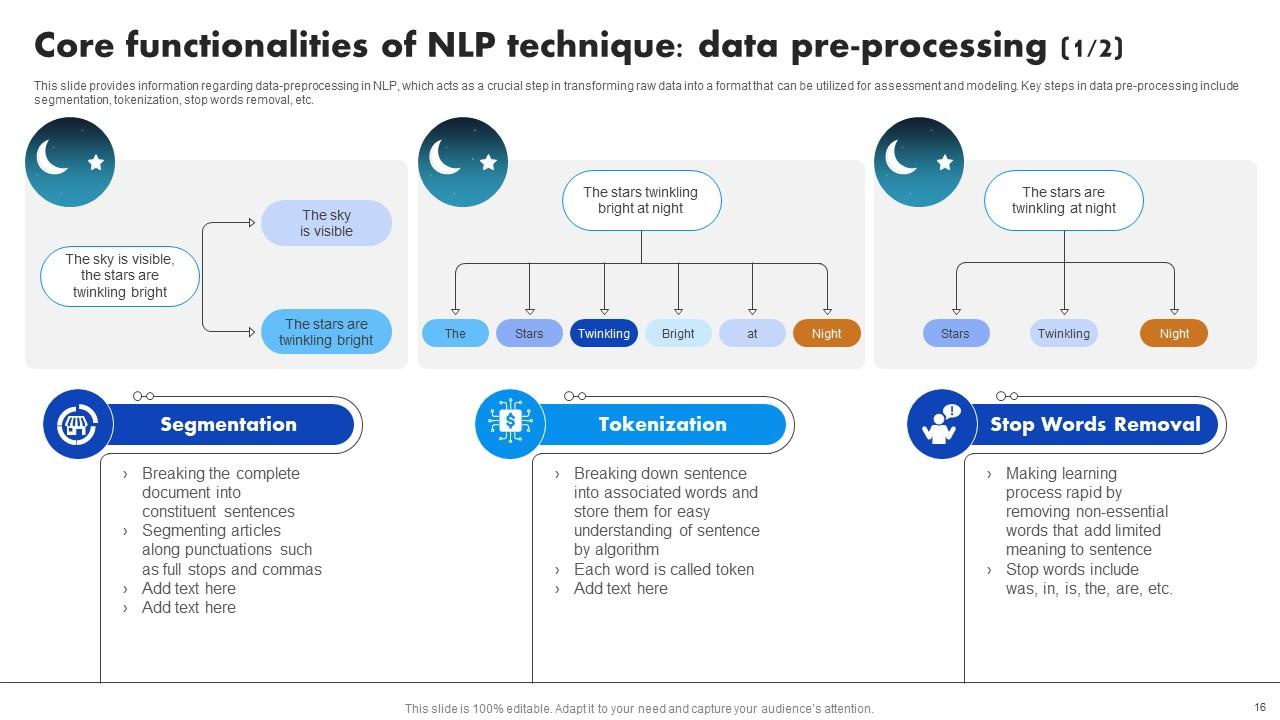
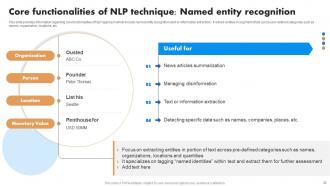
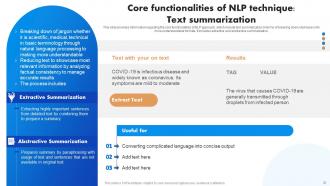
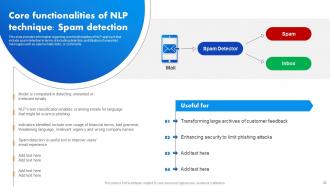
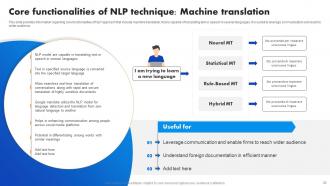
Slide 16: This slide shows the Core functionalities of NLP technique.
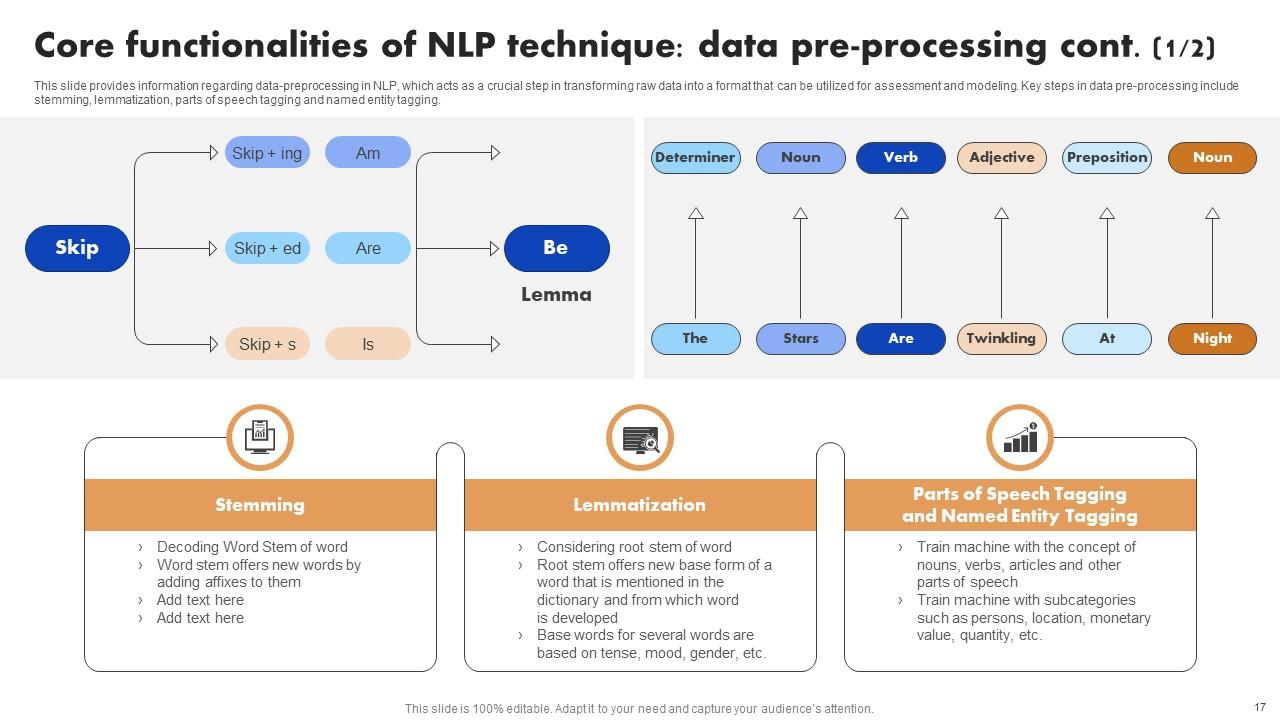
Slide 17: This slide continues the Core functionalities of NLP technique.
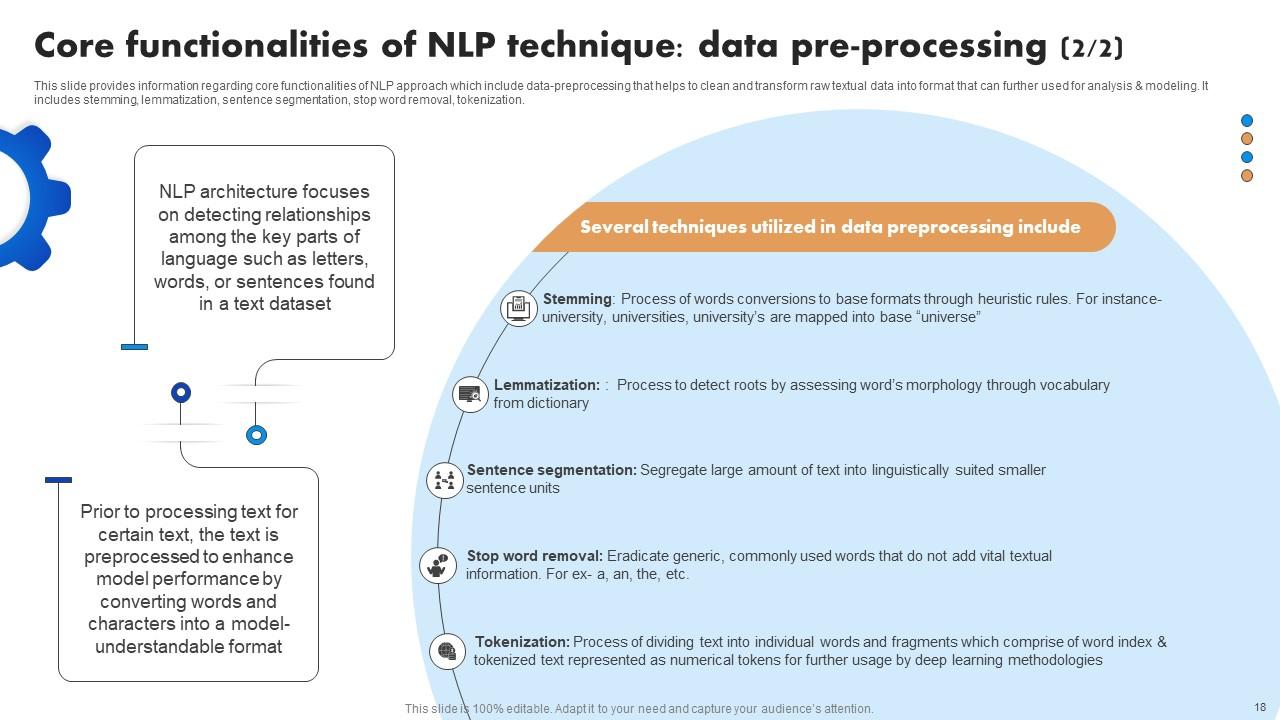
Slide 18: This slide continues the Core functionalities of NLP technique.
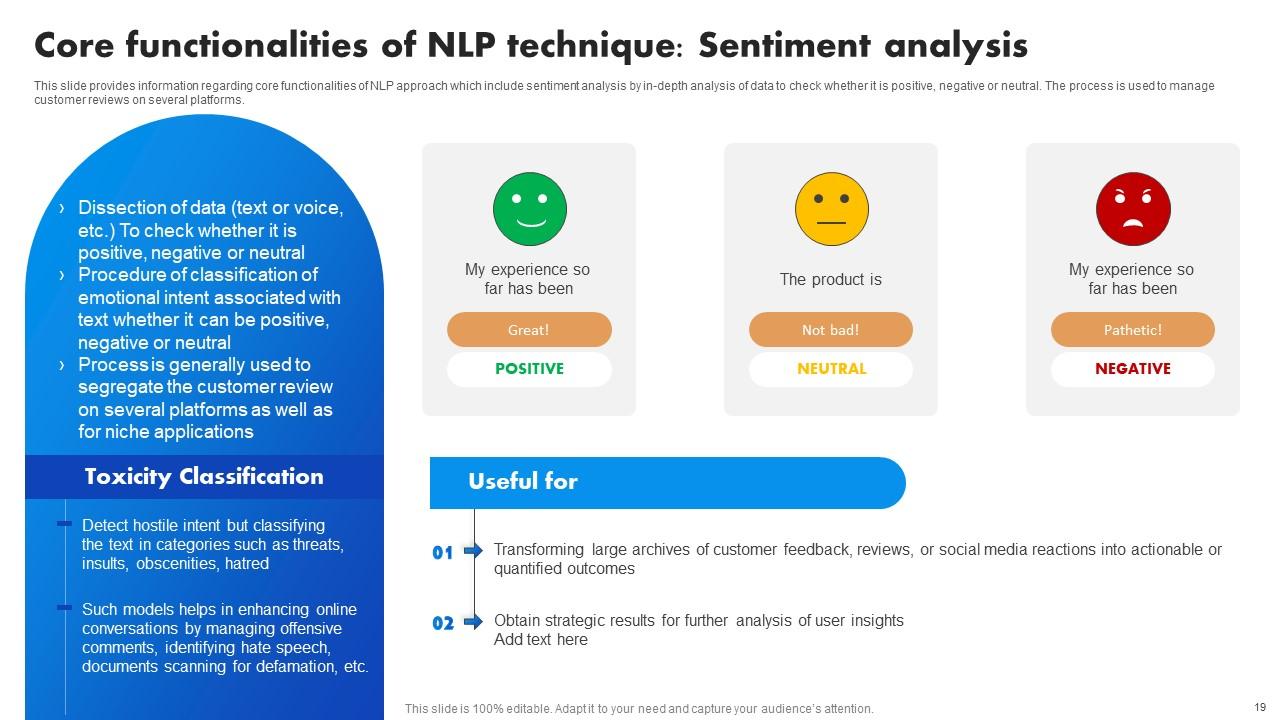
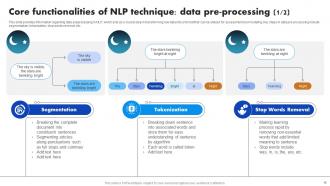
Slide 19: This slide highlights the Core functionalities of NLP technique.
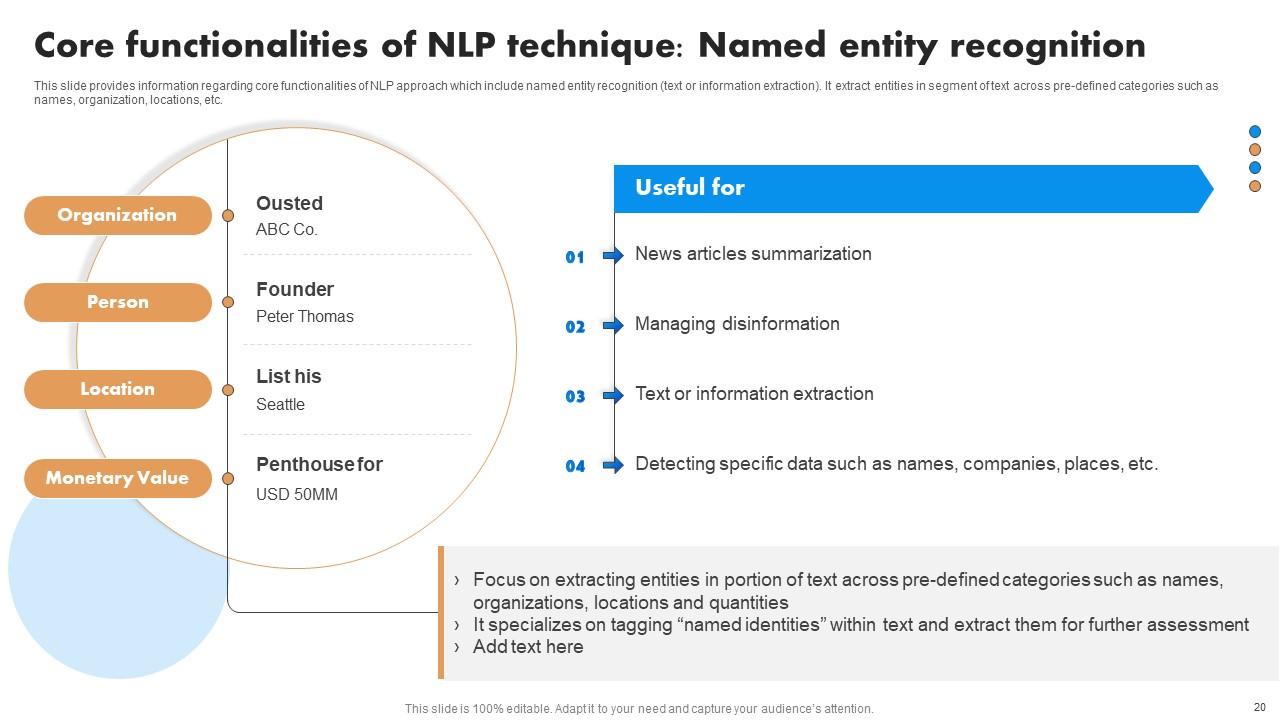
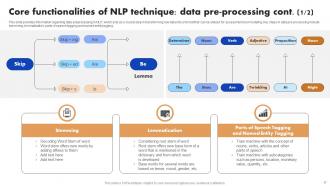
Slide 20: This slide portrays the Core functionalities of NLP technique.
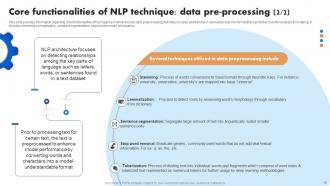
Slide 21: This slide exhibits the core functionalities of NLP approach.
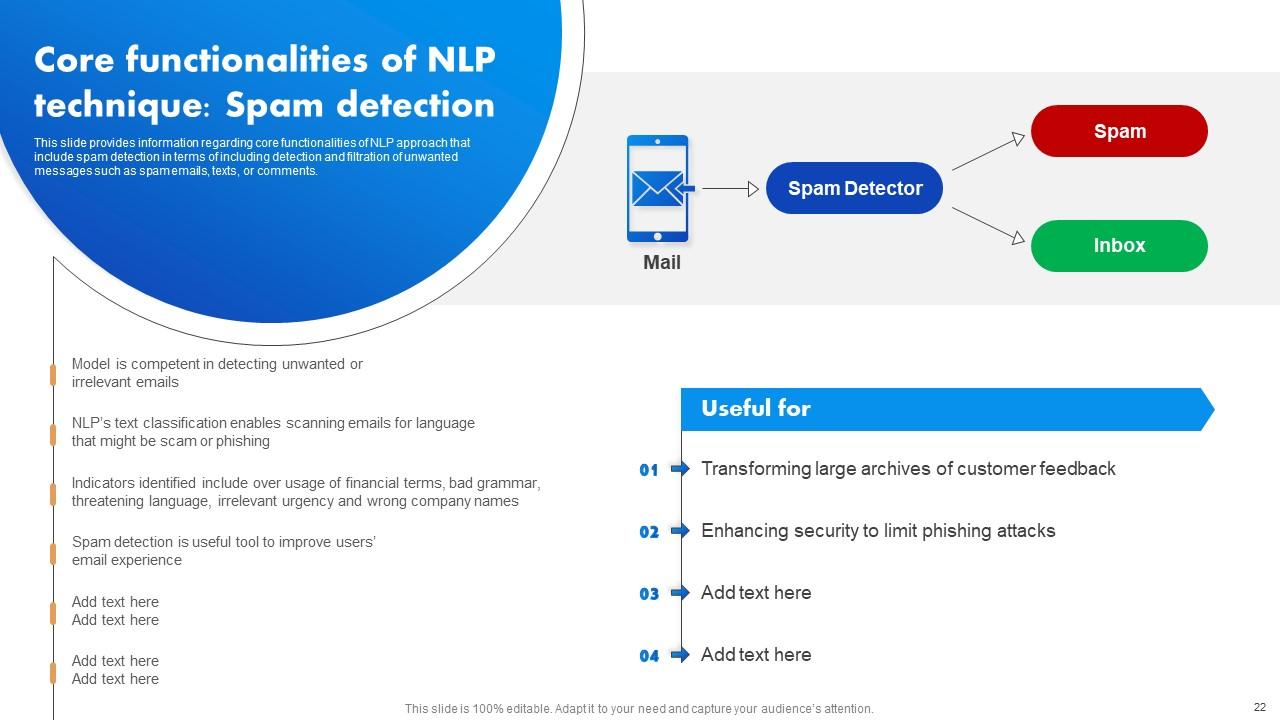
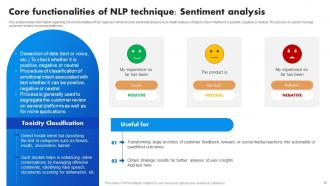
Slide 22: This slide displays the Core functionalities of NLP technique.
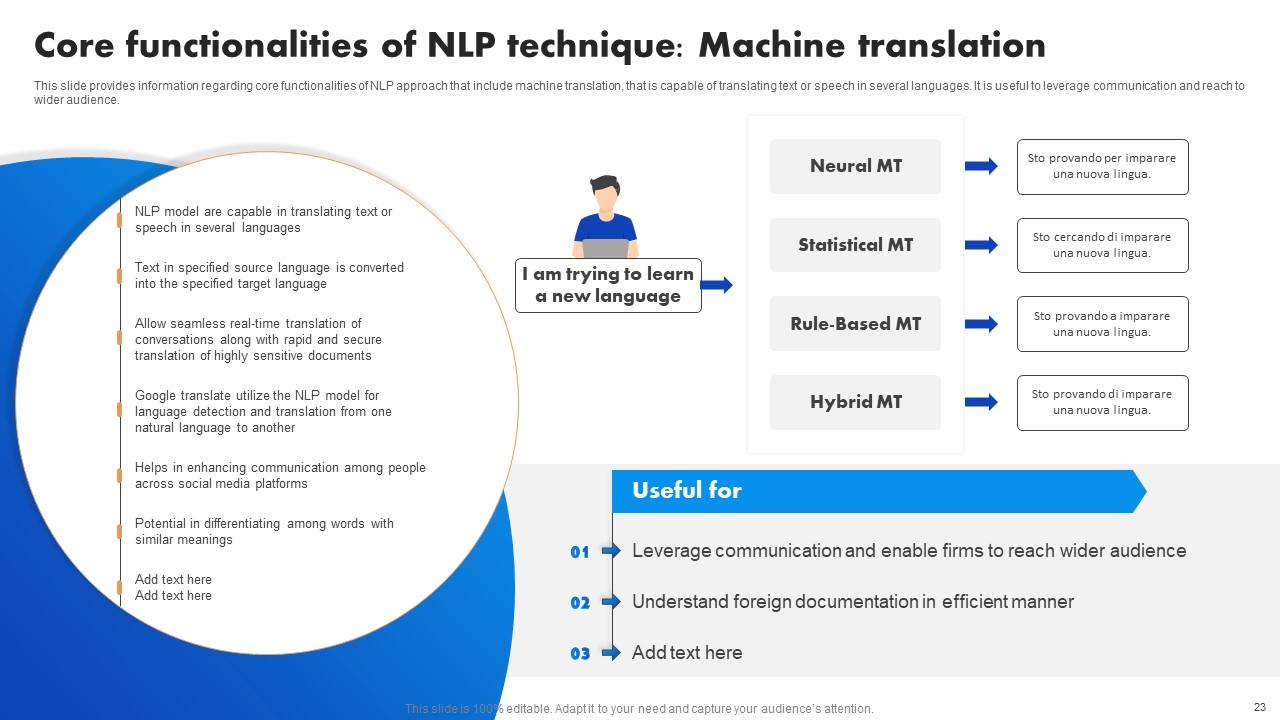
Slide 23: This slide provides information regarding core functionalities of NLP approach.
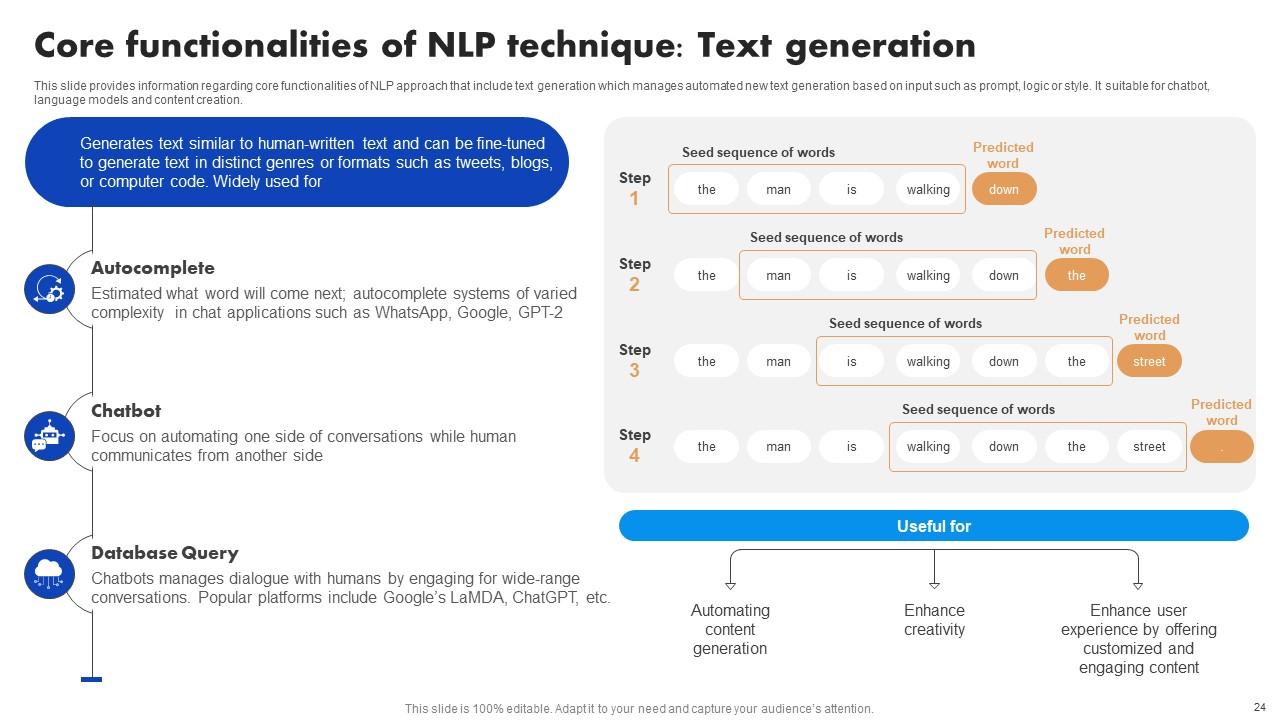
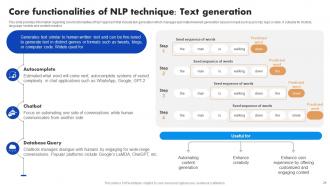
Slide 24: This slide exhibits the Core functionalities of NLP technique.
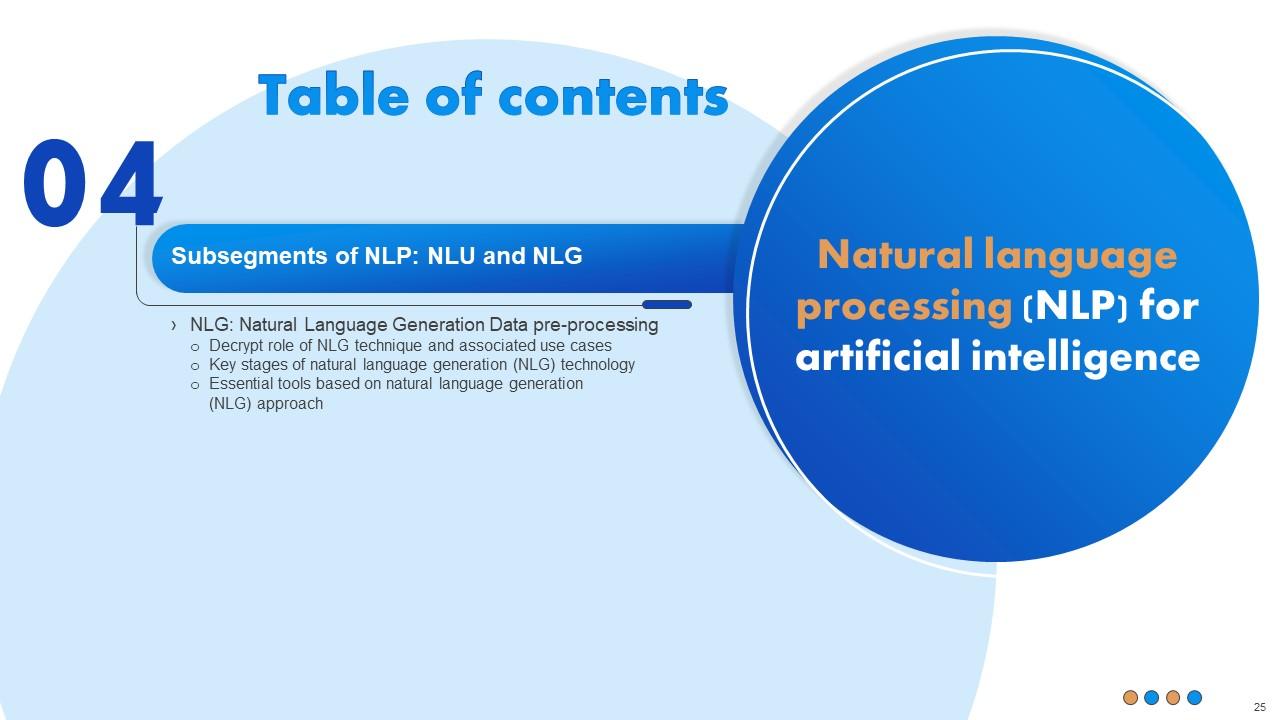
Slide 25: This slide contains the Heading for the Ideas to be covered further.
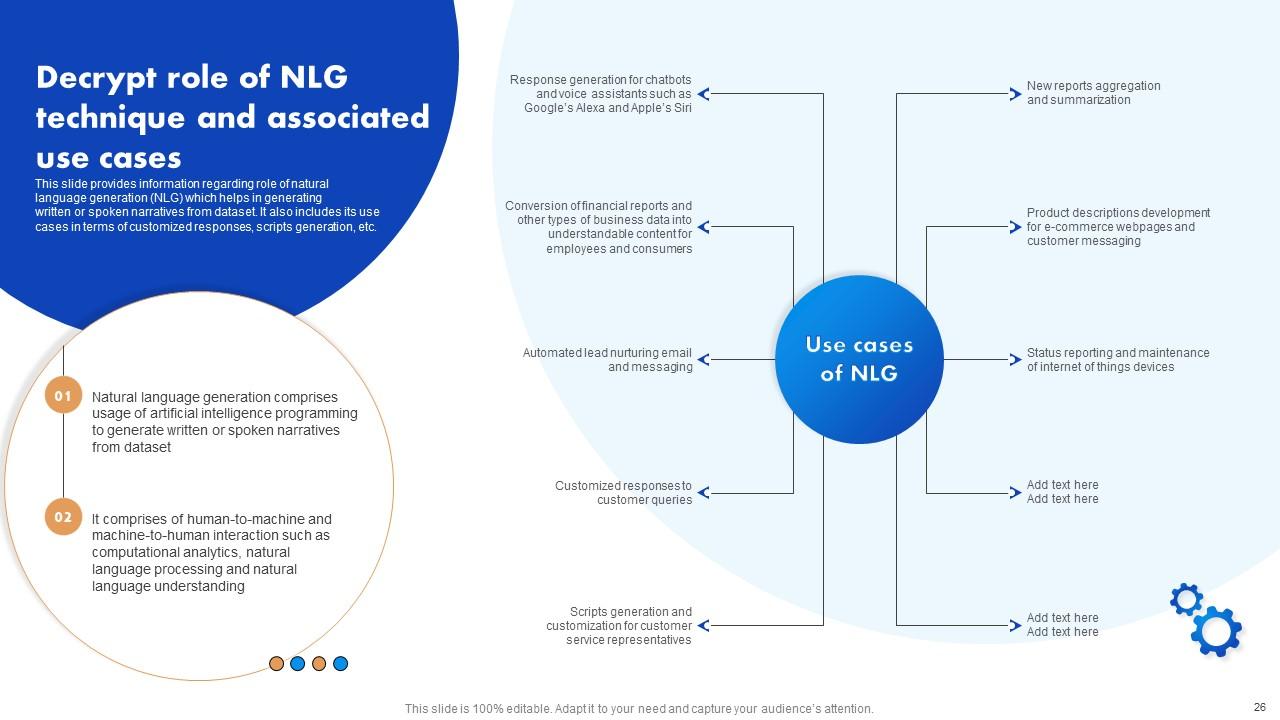
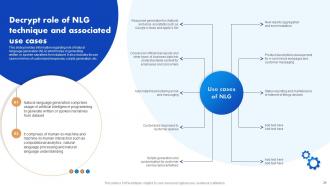
Slide 26: This slide showcases the Decrypt role of NLG technique and associated use cases.
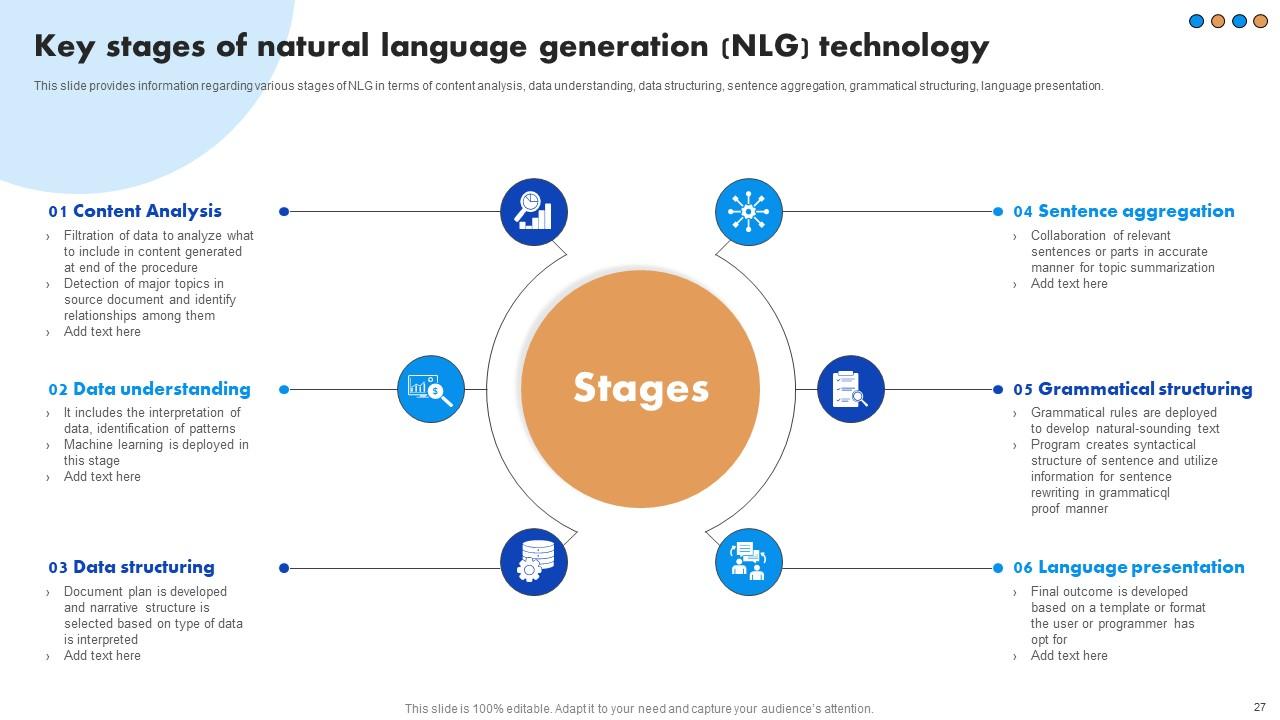
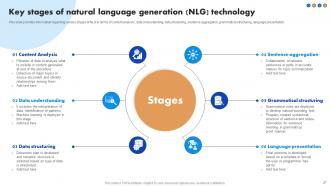
Slide 27: This slide highlights the Key stages of natural language generation (NLG) technology.
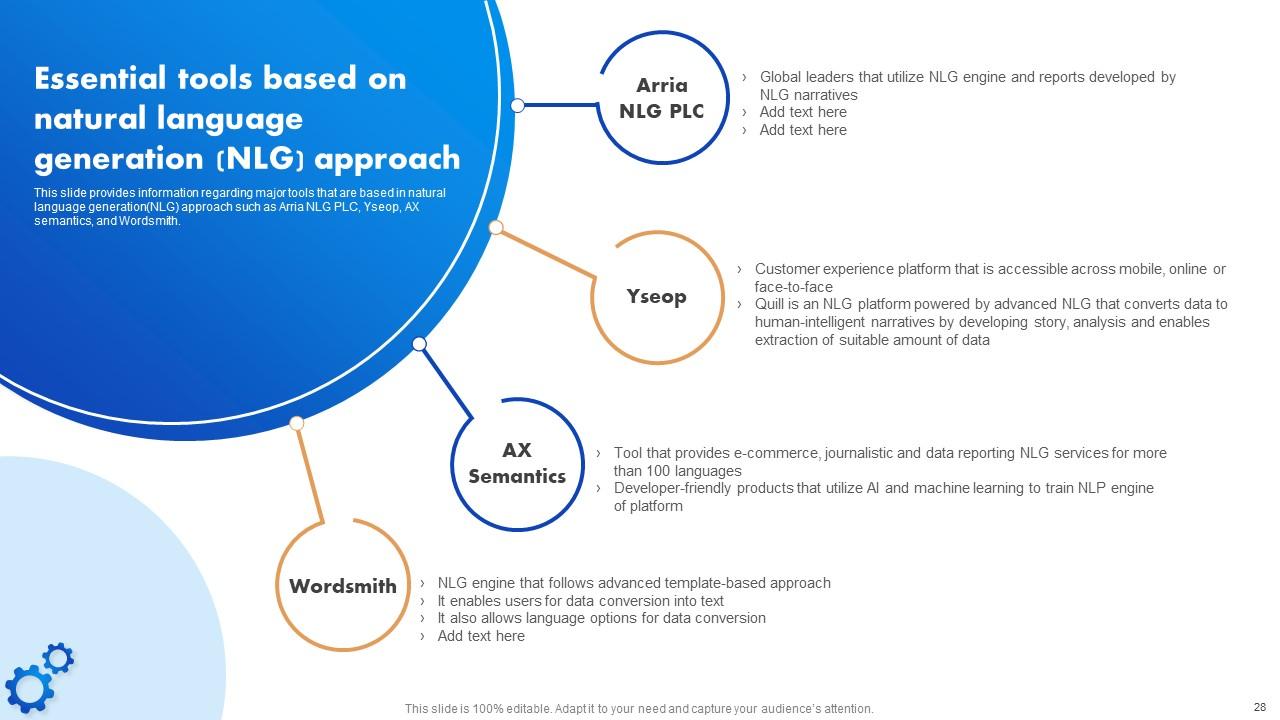
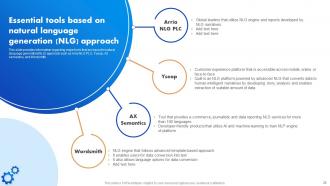
Slide 28: This slide displays the Essential tools based on natural language generation (NLG) approach.
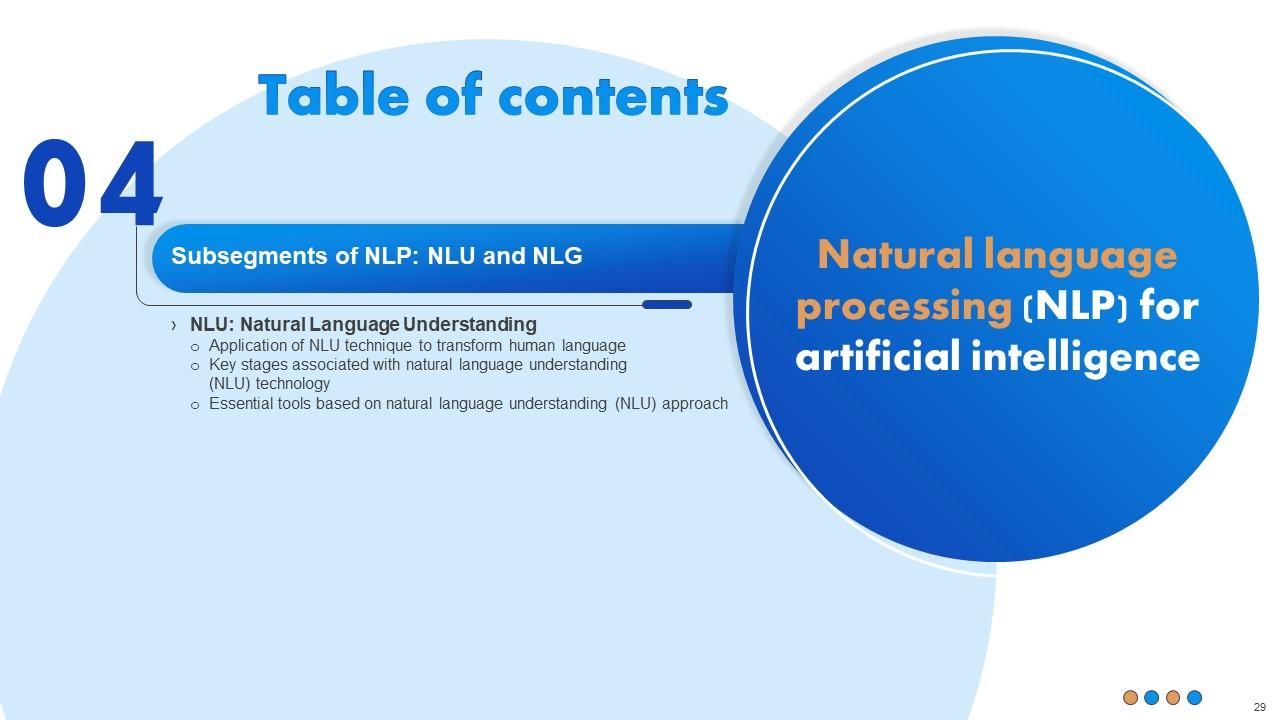
Slide 29: This slide contains the Title for the Contents to be discussed next.
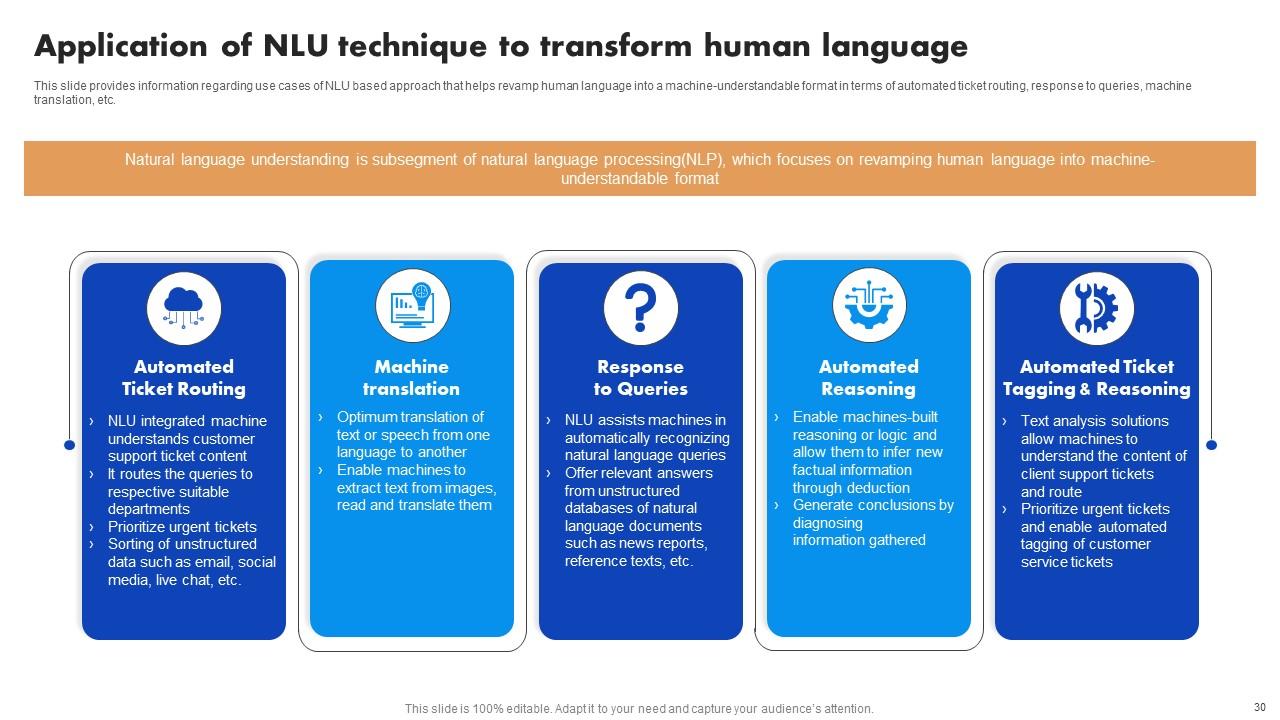
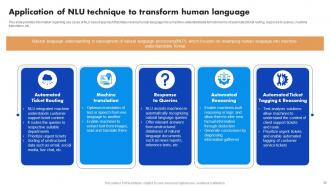
Slide 30: This slide presents the Application of NLU technique to transform human language.
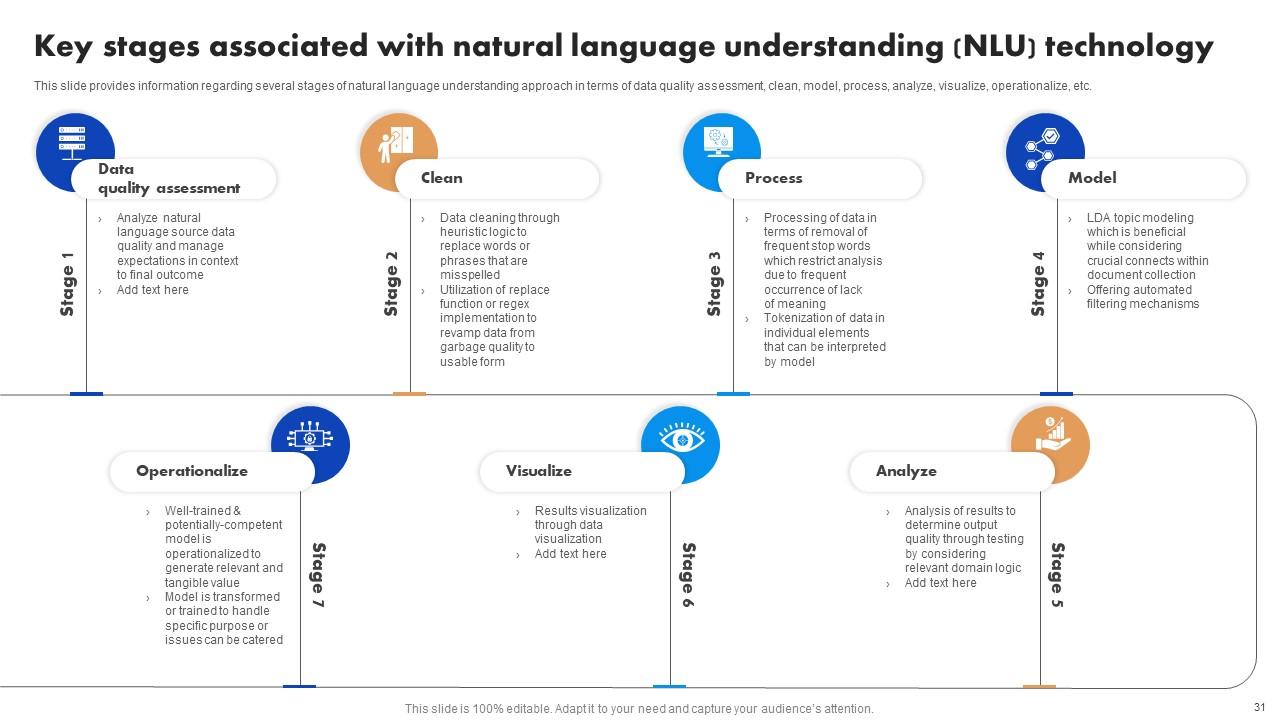
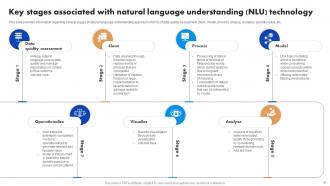
Slide 31: This slide states the Key stages associated with natural language understanding (NLU) technology.
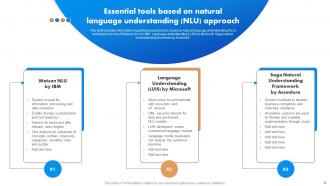
Slide 32: This slide depicts the Essential tools based on natural language understanding (NLU) approach.
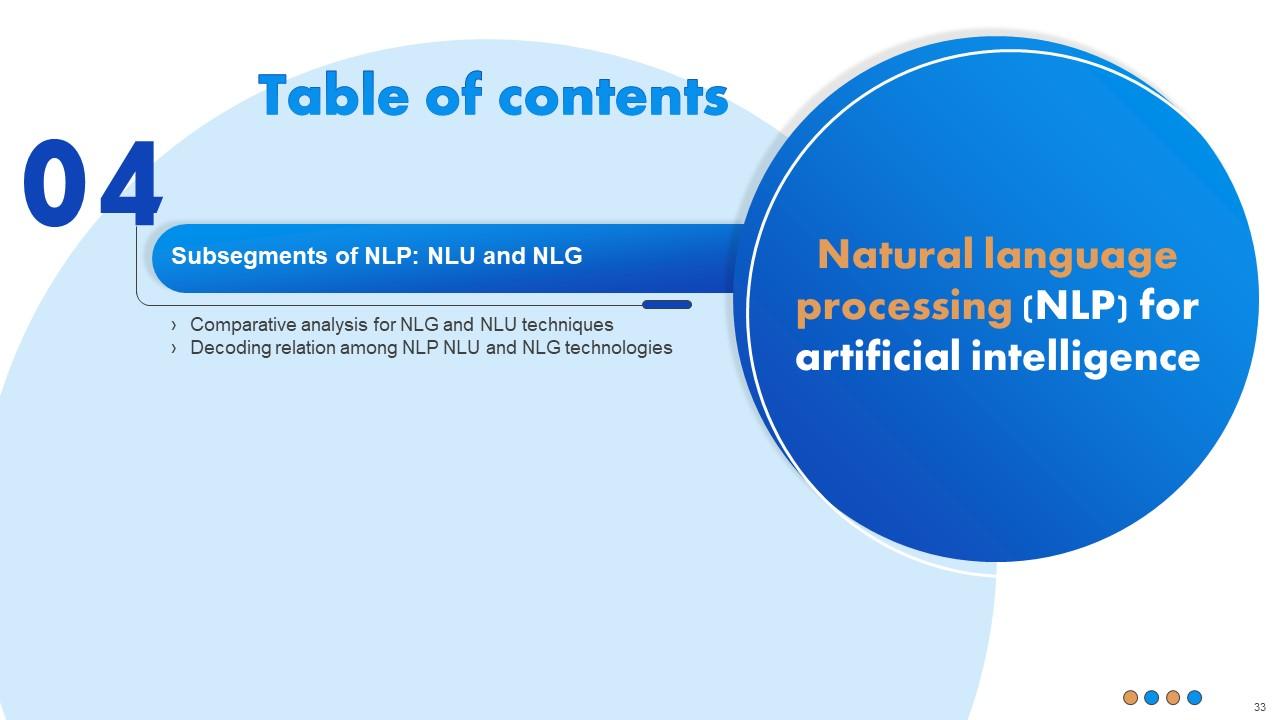
Slide 33: This slide indicates the Heading for the Topics to be covered in the upcoming template.
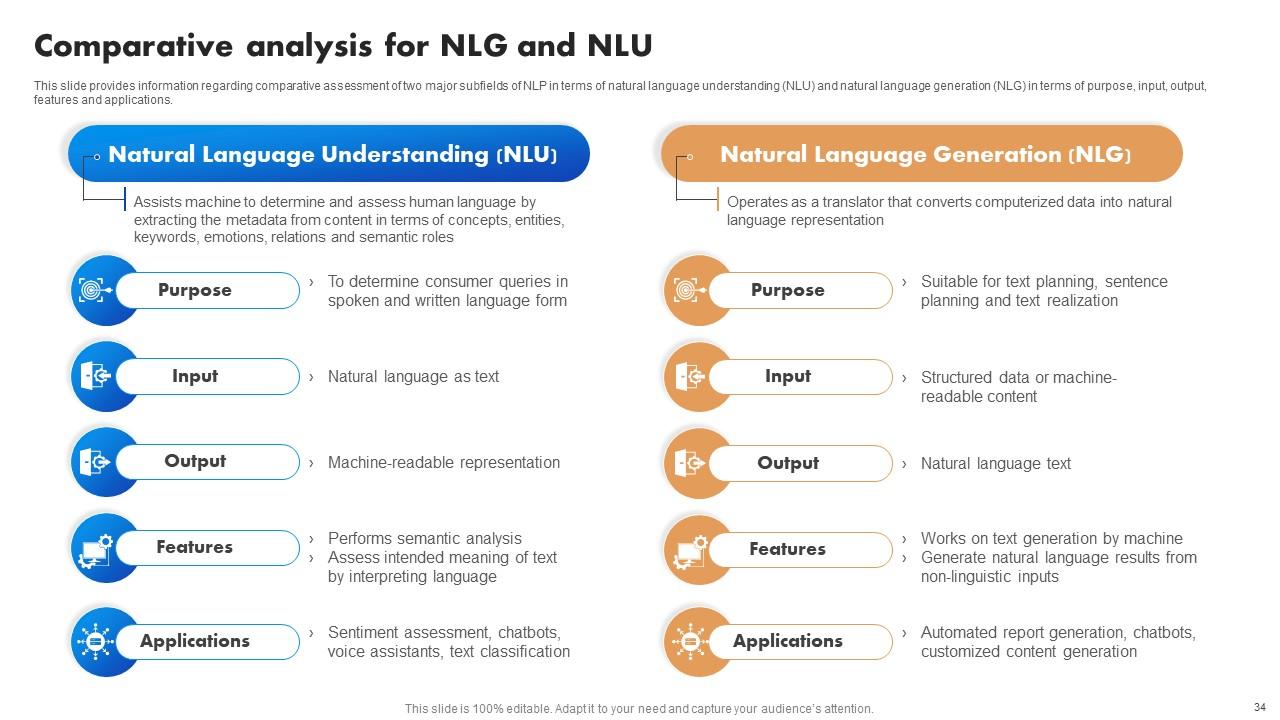
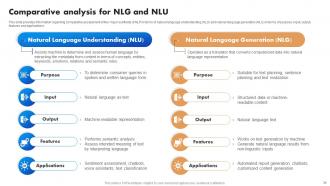
Slide 34: This slide reveals the Comparative analysis for NLG and NLU.
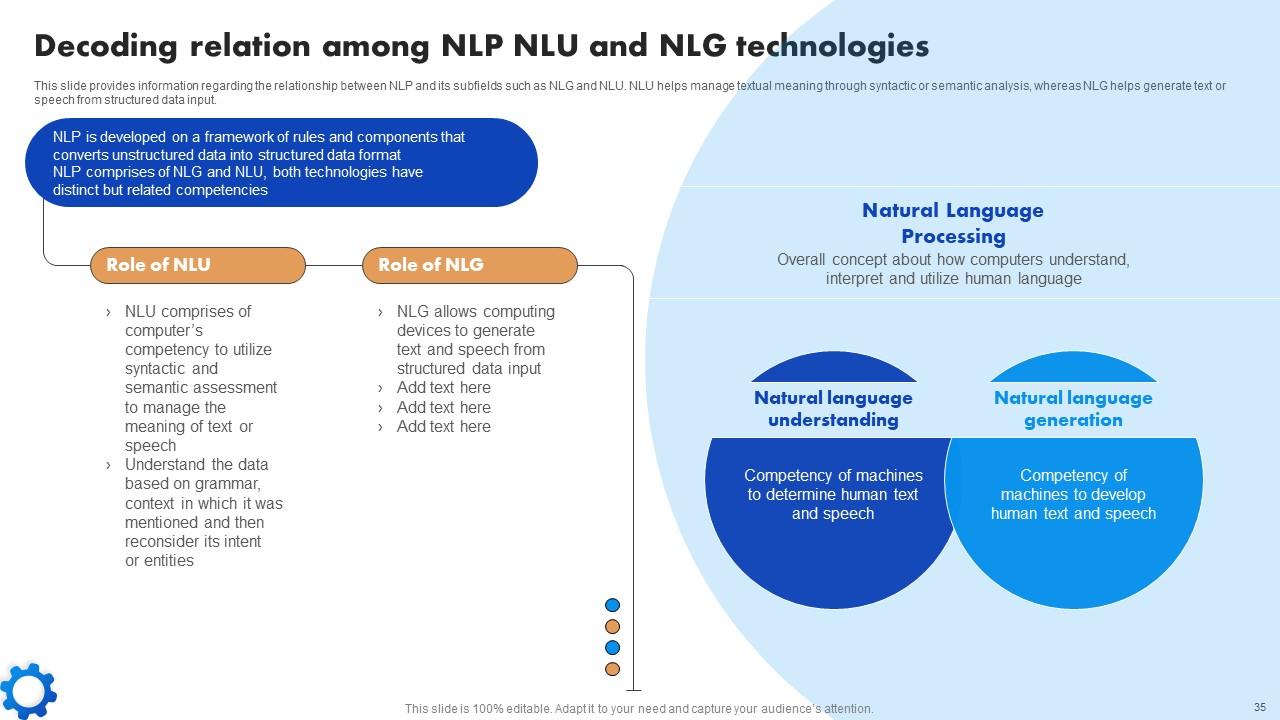
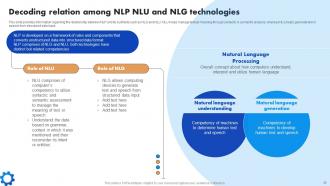
Slide 35: This slide talks about Decoding relation among NLP NLU and NLG technologies.
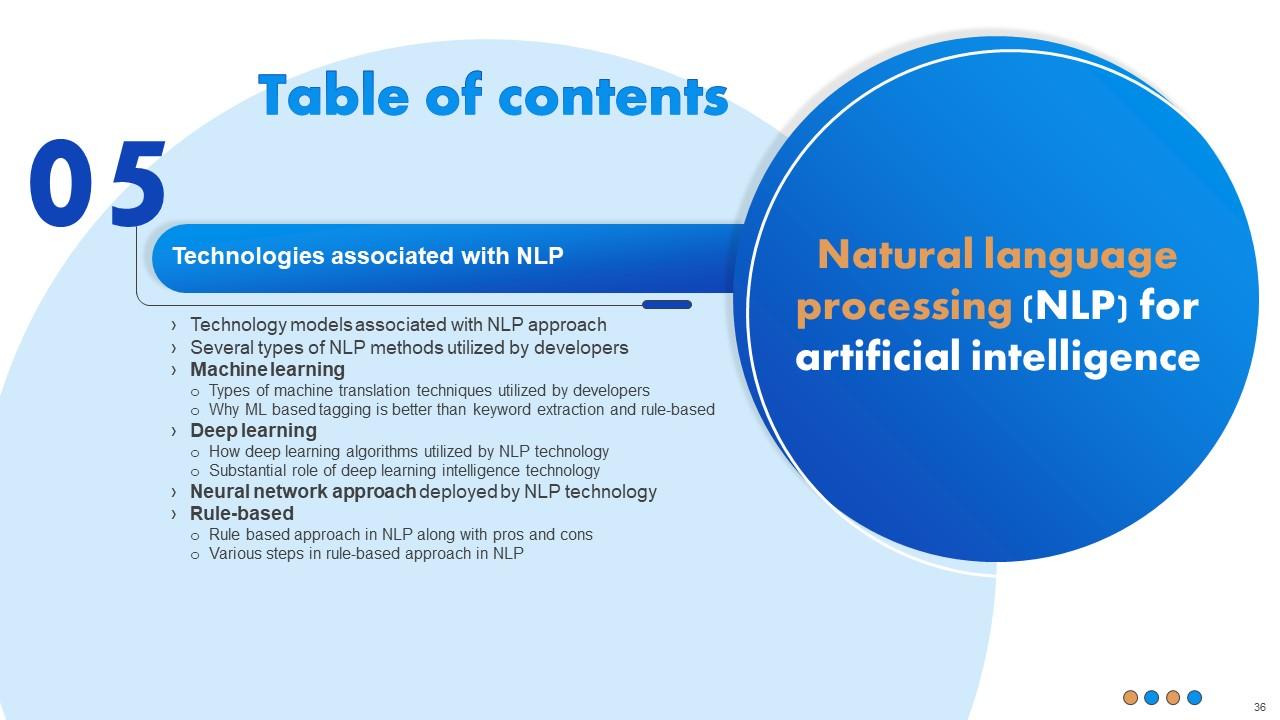
Slide 36: This slide exhibits the Title for the Topics to be discussed next.
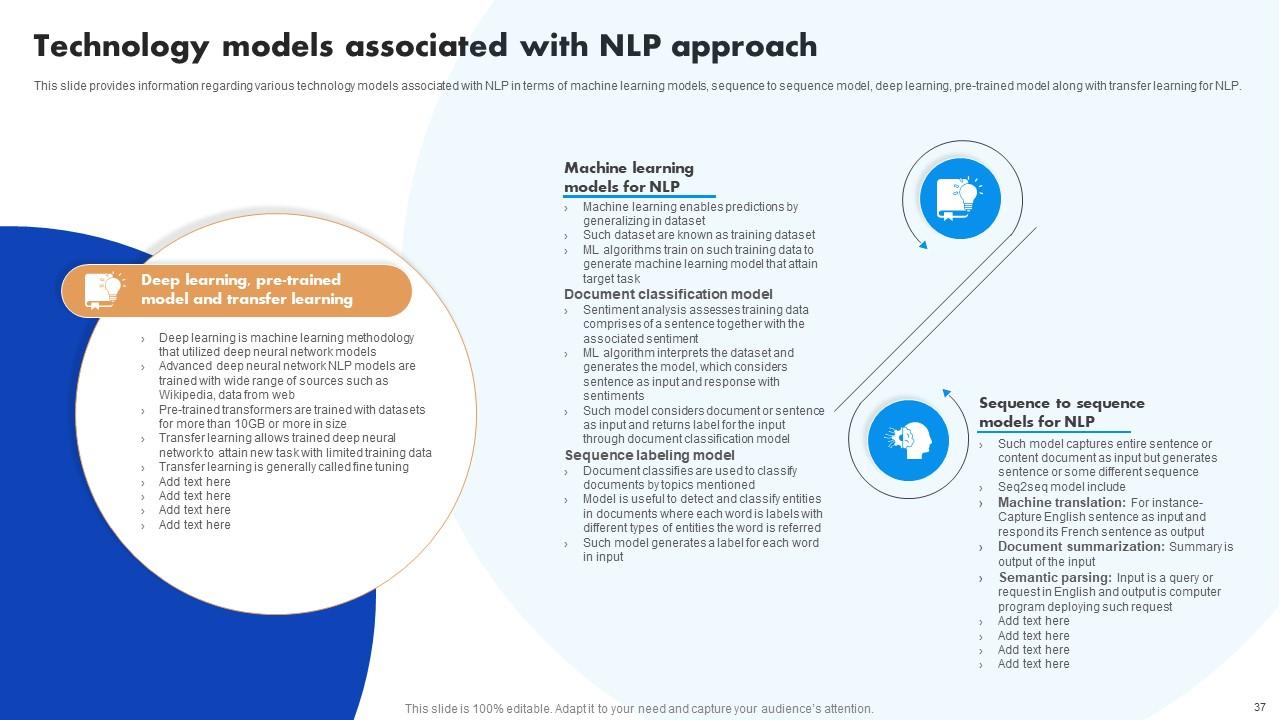
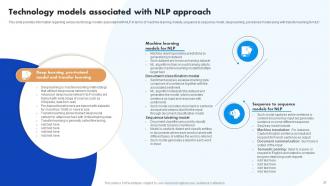
Slide 37: This slide provides information regarding various technology models associated with NLP.
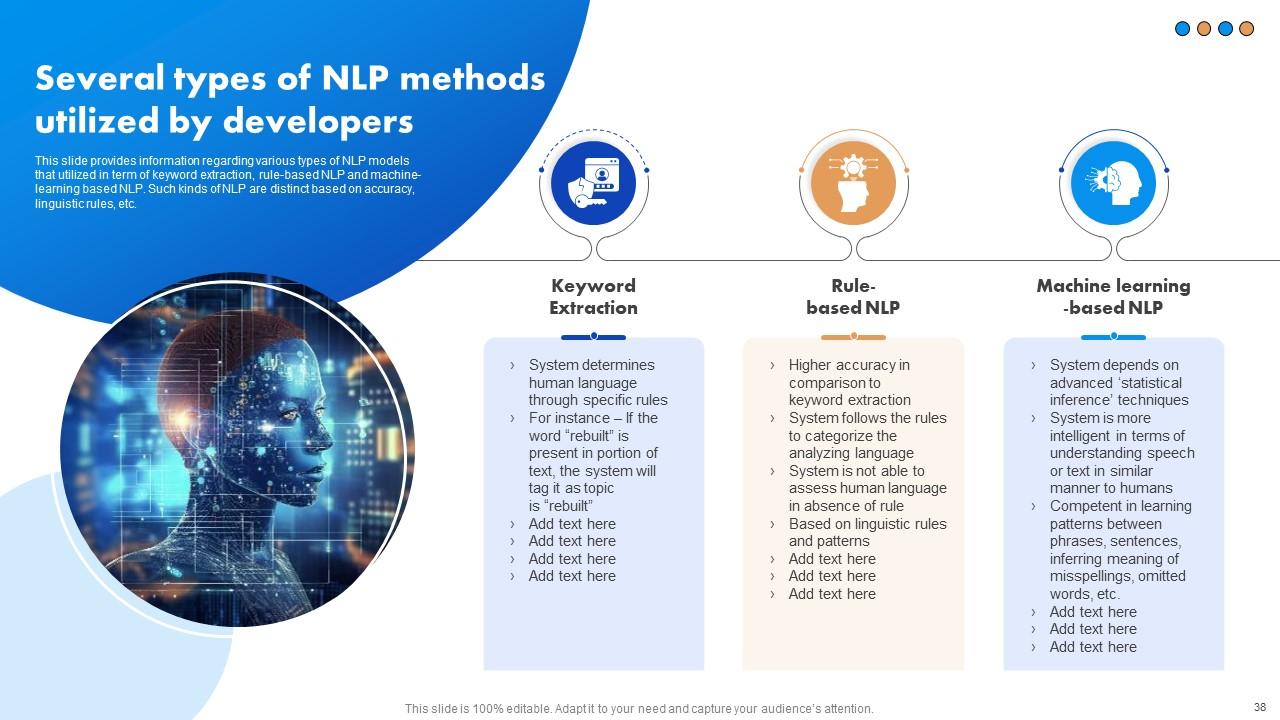
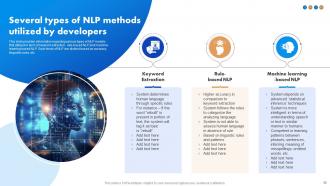
Slide 38: This slide depicts the Several types of NLP methods utilized by developers.
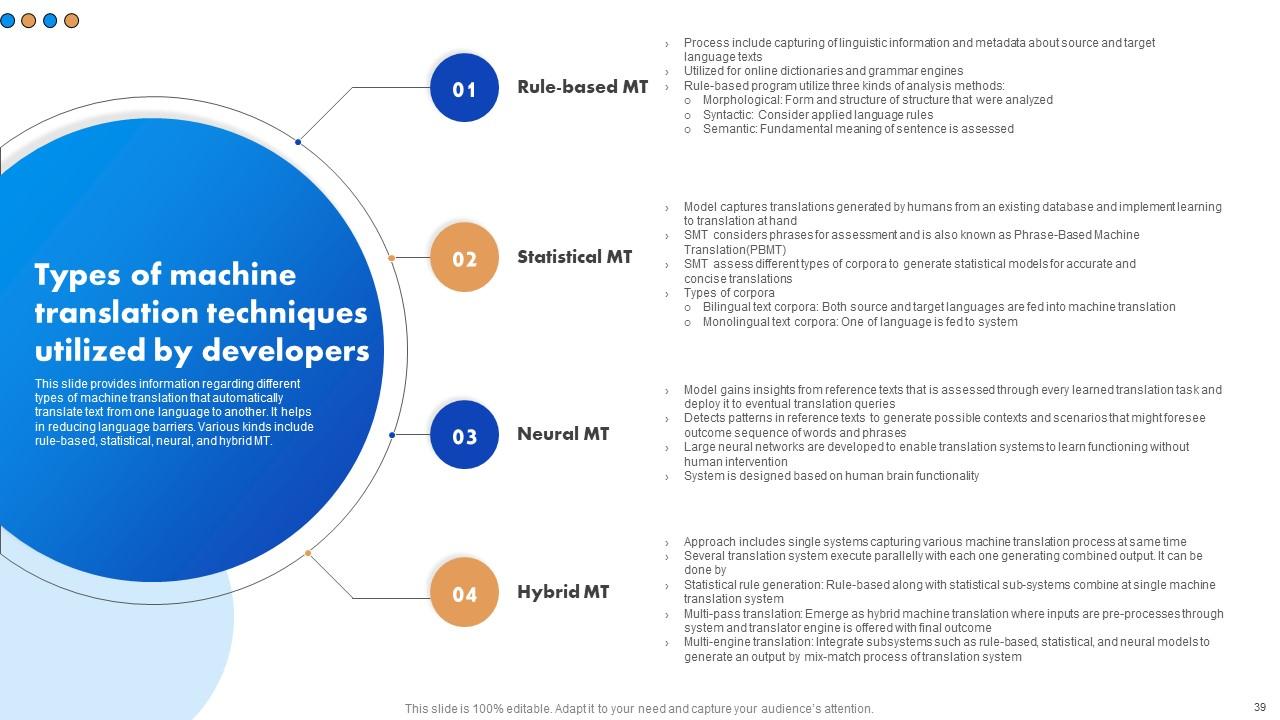
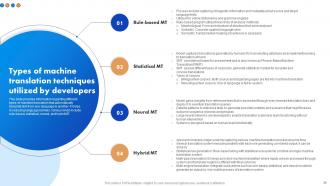
Slide 39: This slide provides information regarding different types of machine translation that automatically translate text from one language to another.
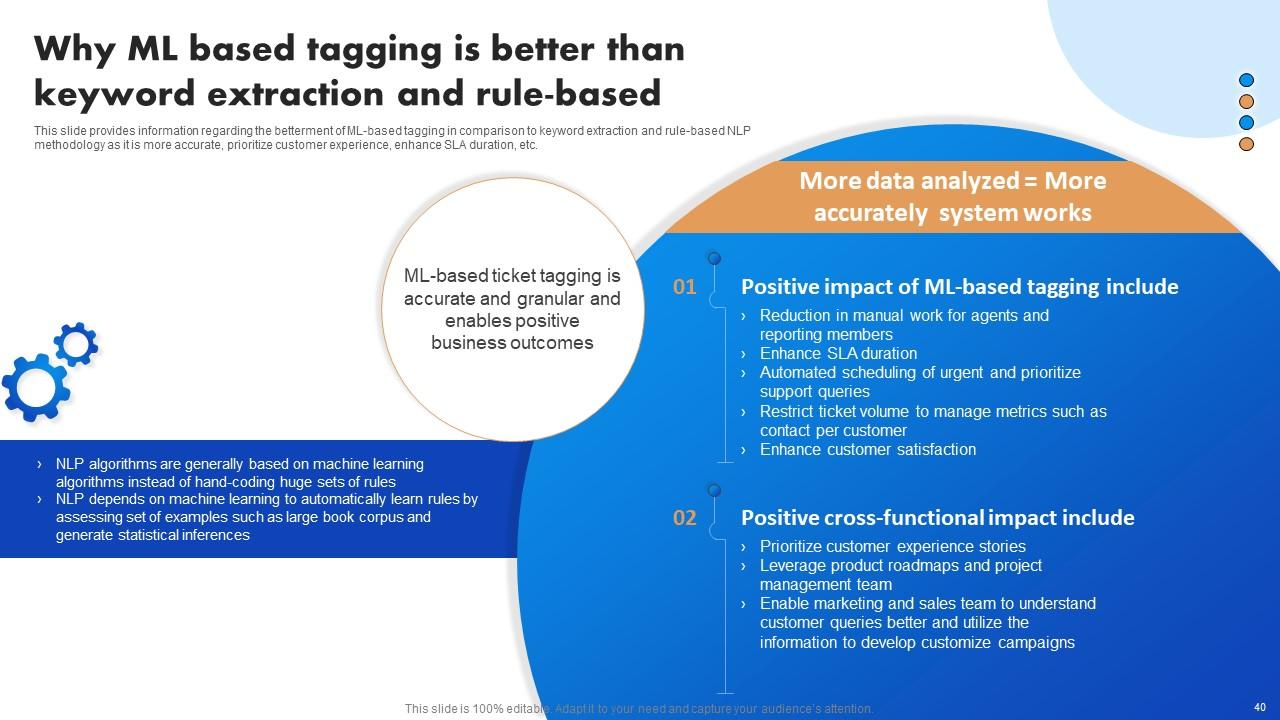
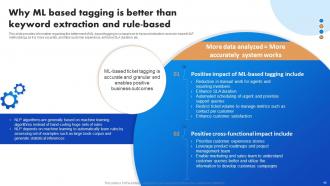
Slide 40: This slide shows the betterment of ML-based tagging in comparison to keyword extraction and rule-based NLP methodology.
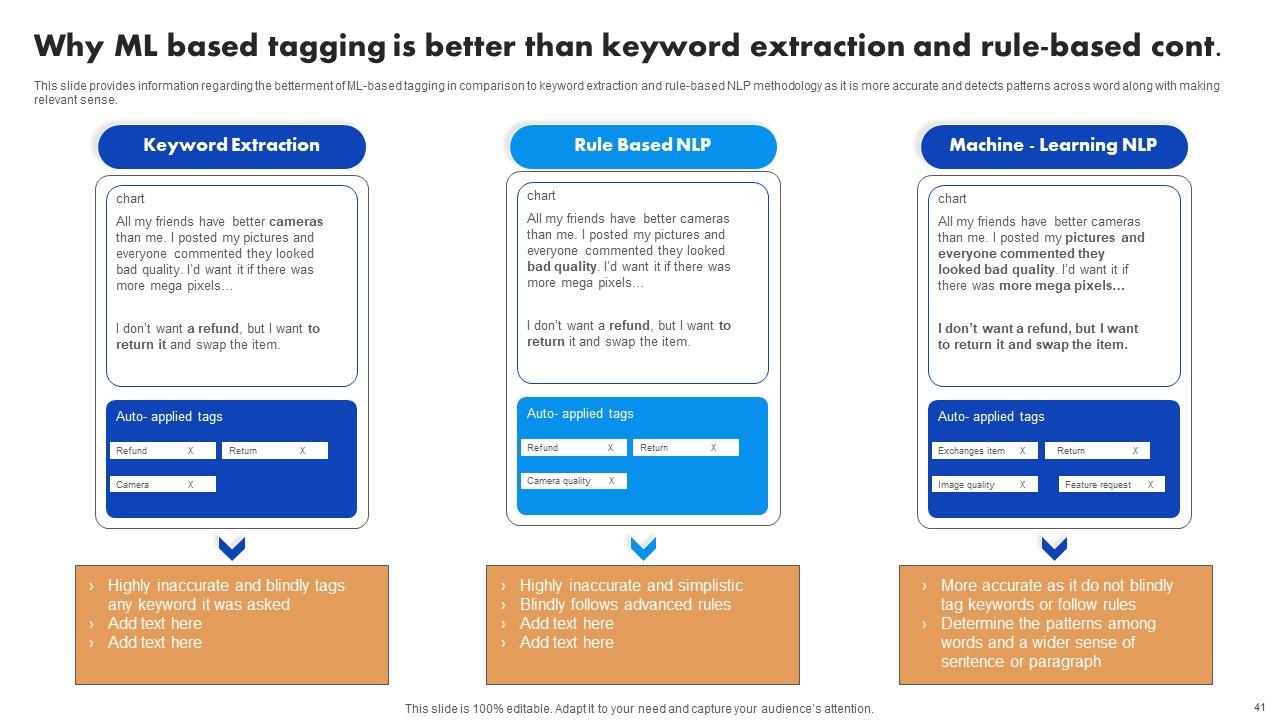
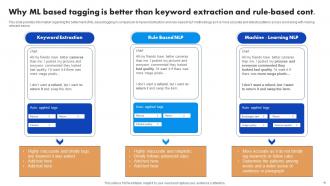
Slide 41: This slide continues the comparison and betterment of ML tagging over keyword extraction.
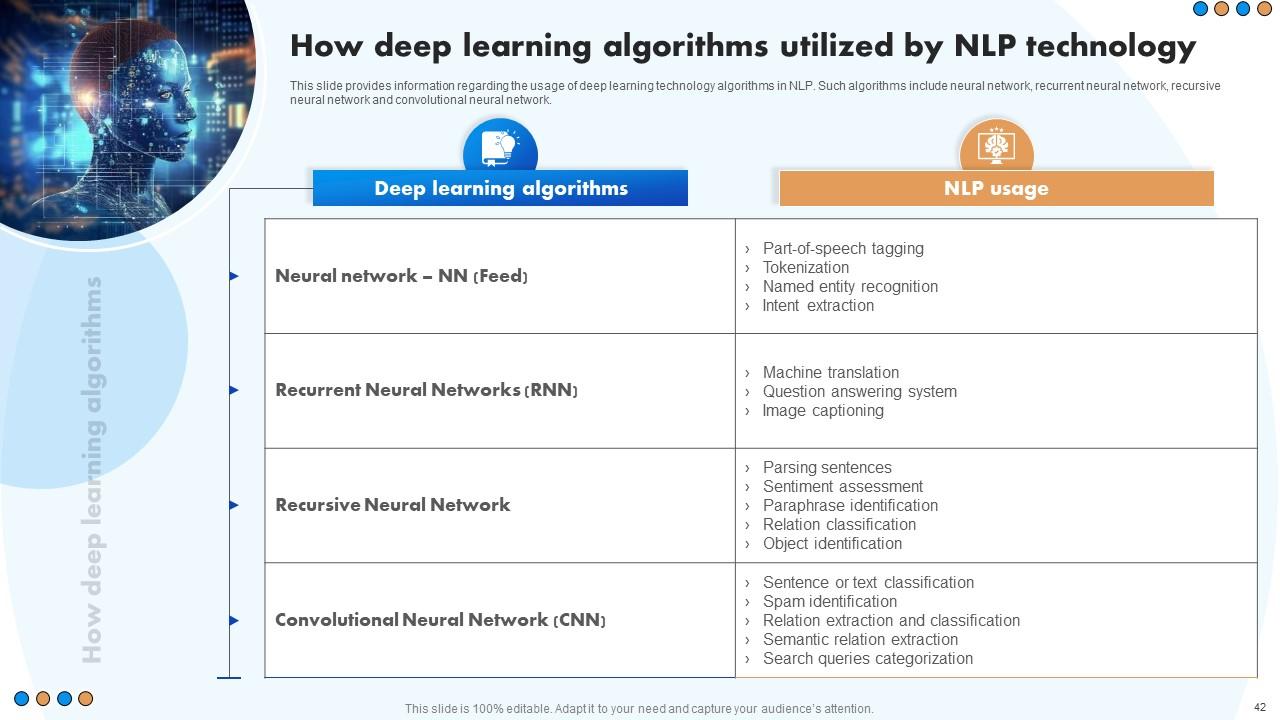
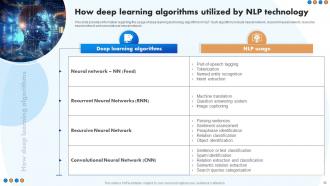
Slide 42: This slide provides information regarding the usage of deep learning technology algorithms in NLP.
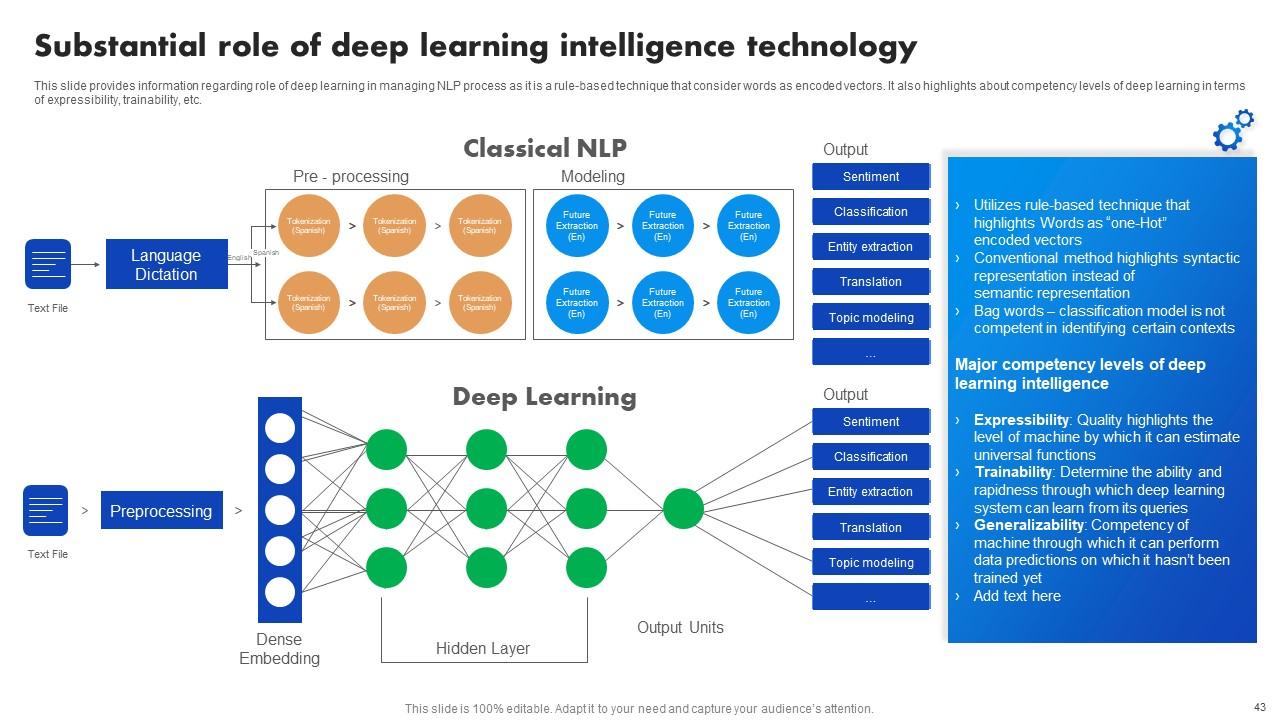
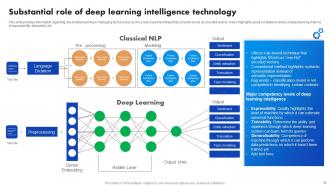
Slide 43: This slide highlights the Substantial role of deep learning intelligence technology.
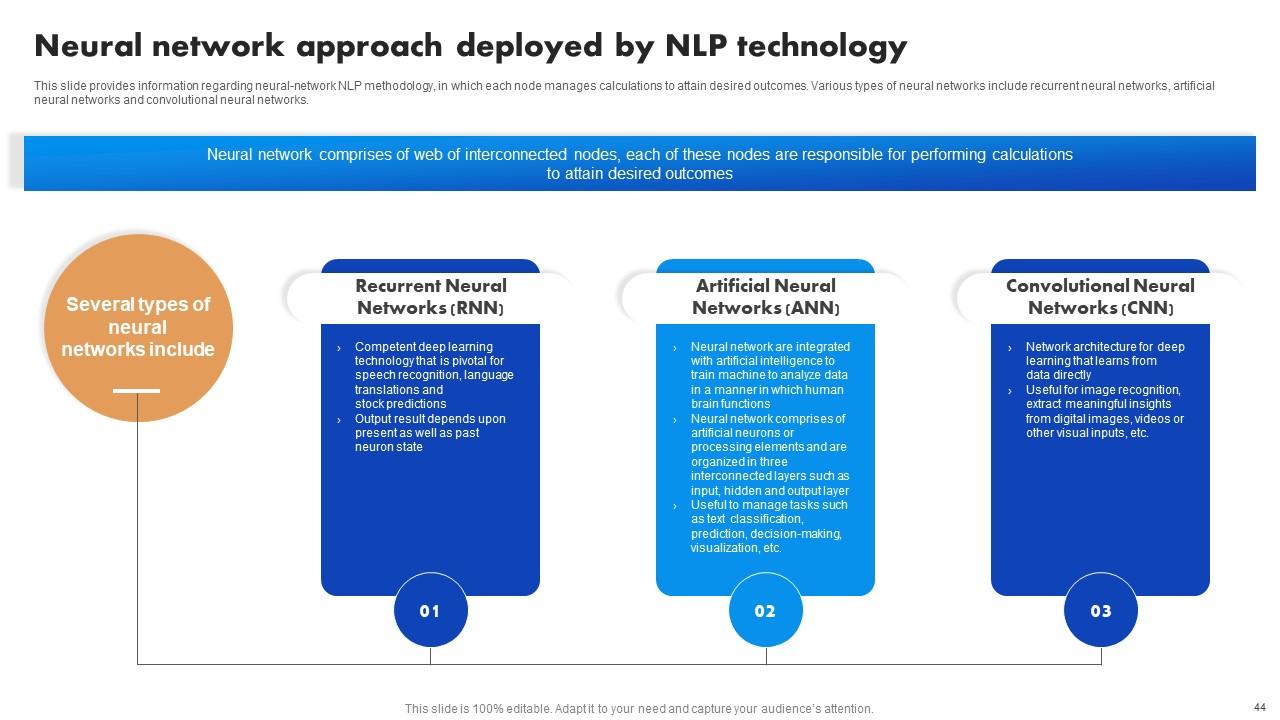
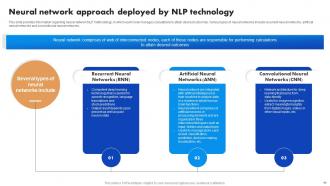
Slide 44: This slide contains the Neural network approach deployed by NLP technology.
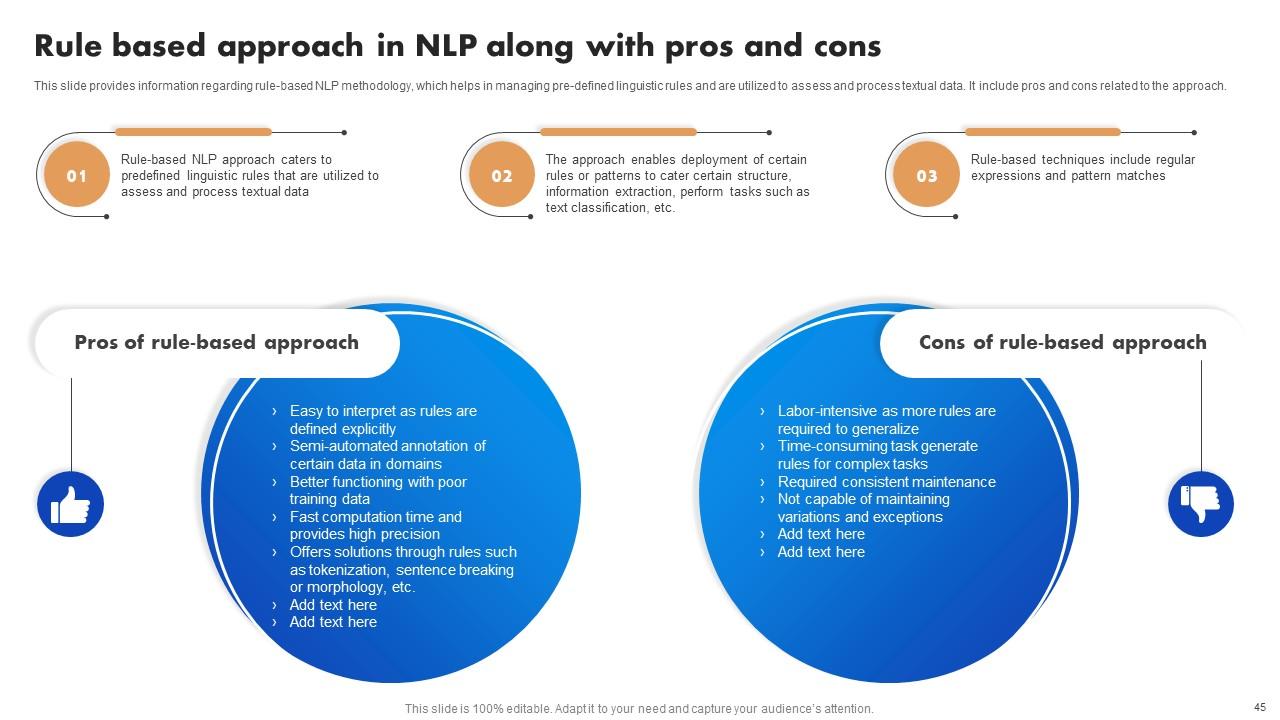
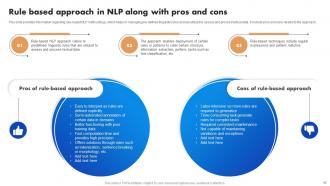
Slide 45: This slide talks about the Rule based approach in NLP along with pros and cons.
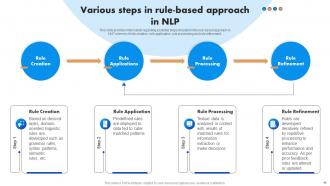
Slide 46: This slide states the Various steps in rule-based approach.
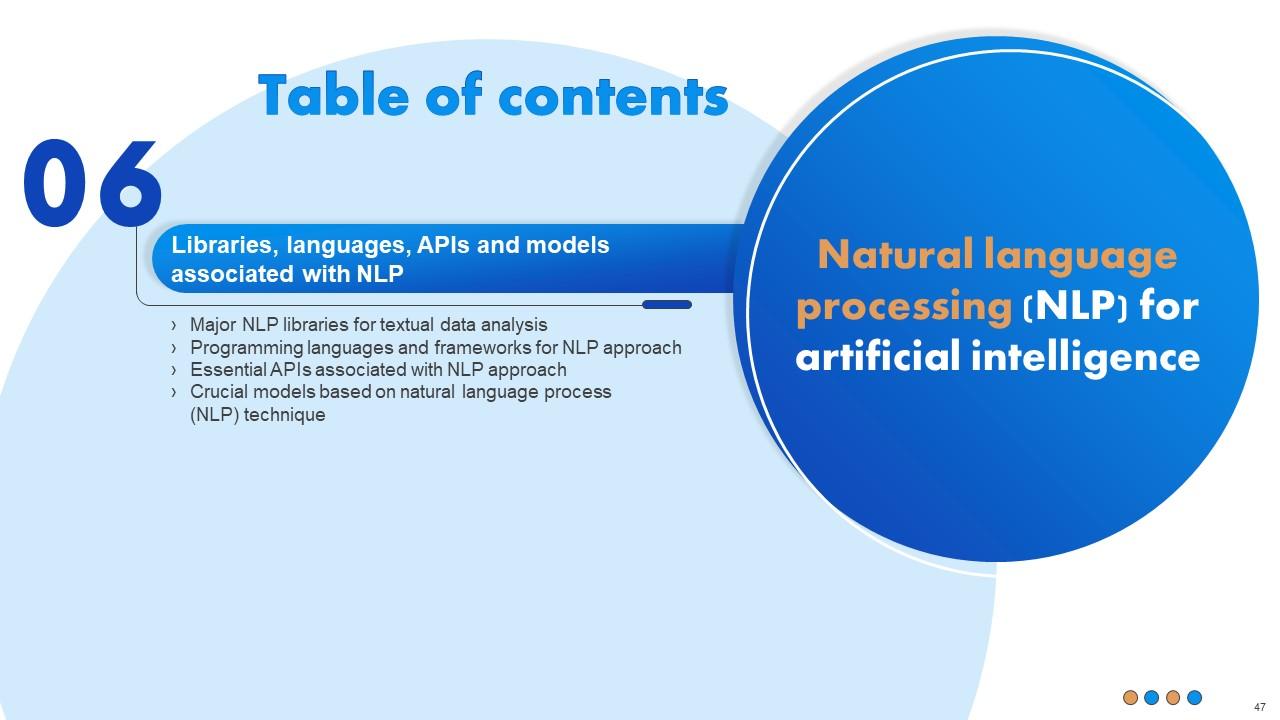
Slide 47: This slide indicates the Heading for the Contents to be covered further.
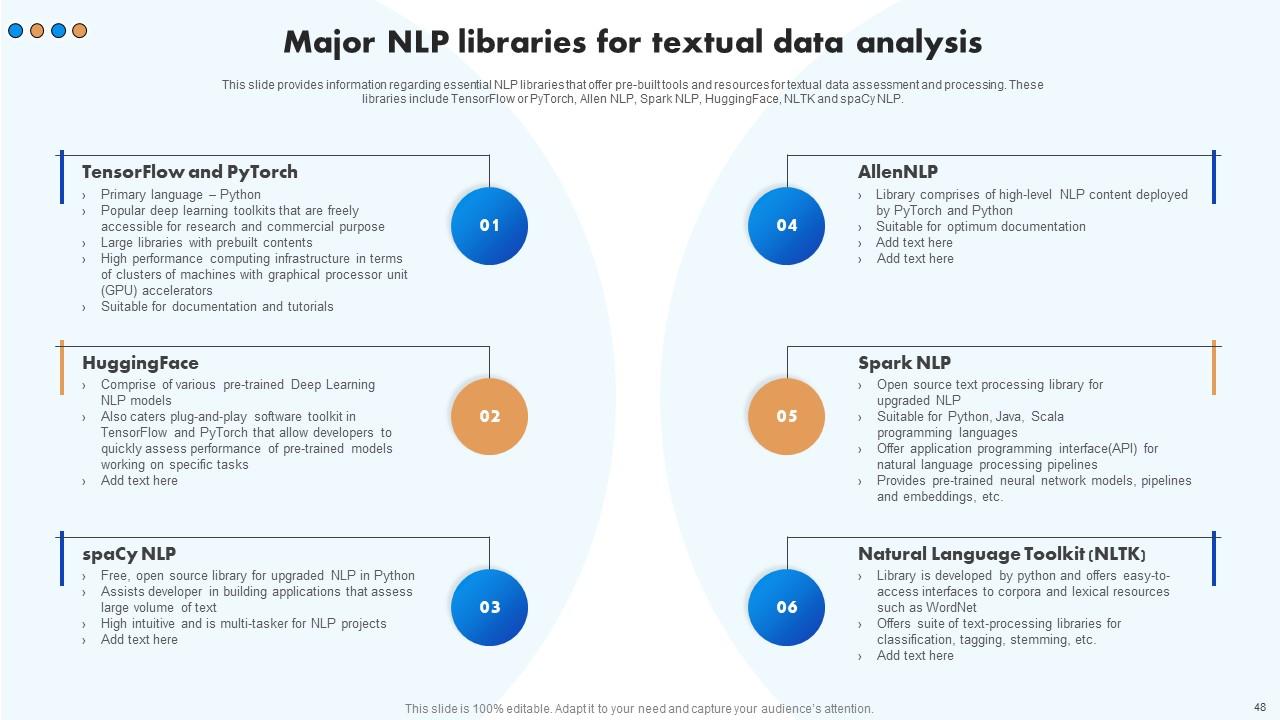
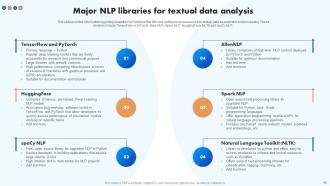
Slide 48: This slide exhibits the Major NLP libraries for textual data analysis.
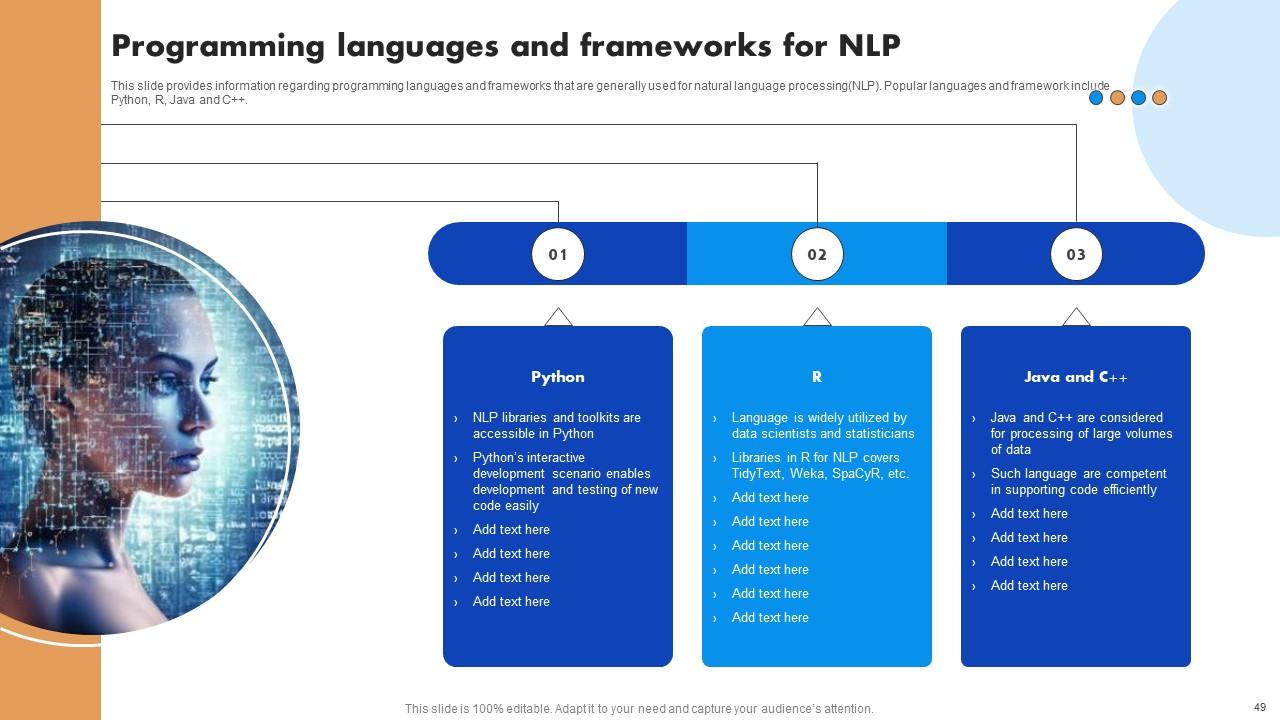
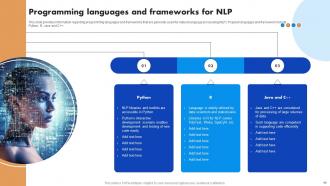
Slide 49: This slide deals with Programming languages and frameworks for NLP.
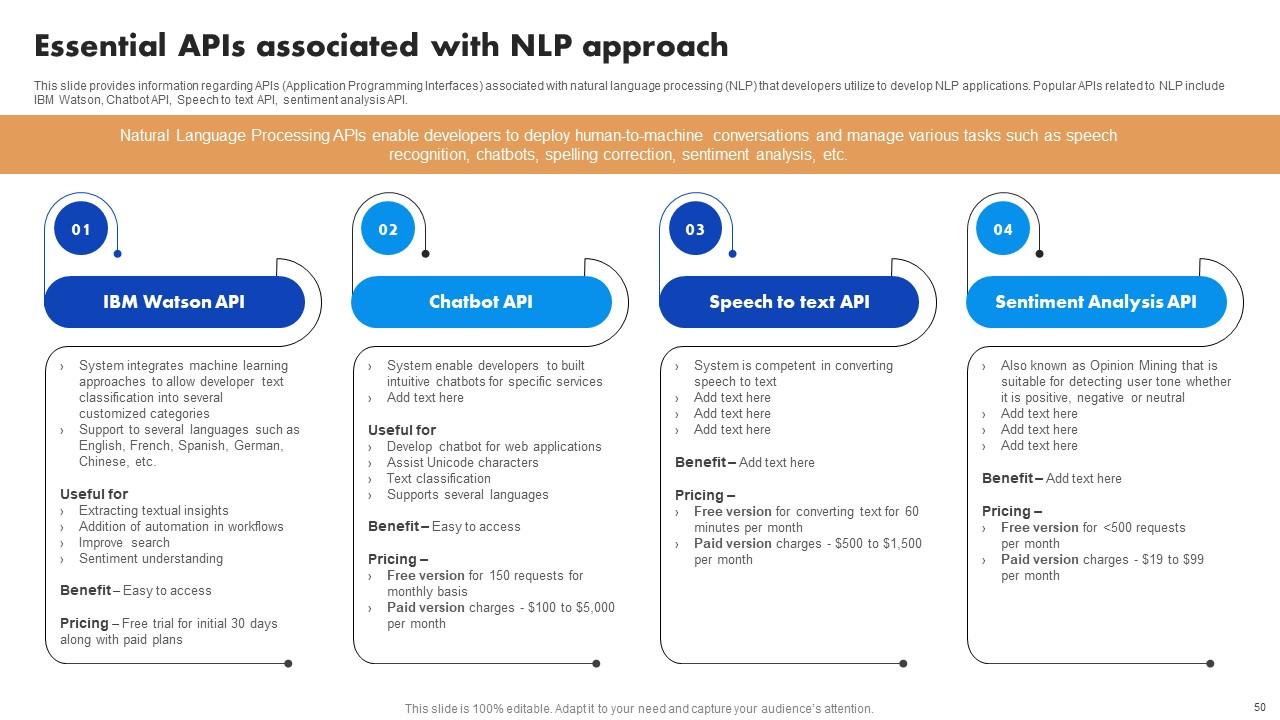
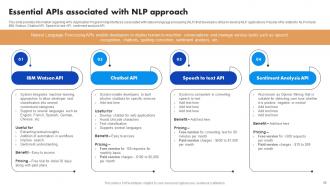
Slide 50: This slide highlights the Essential APIs associated with NLP approach.
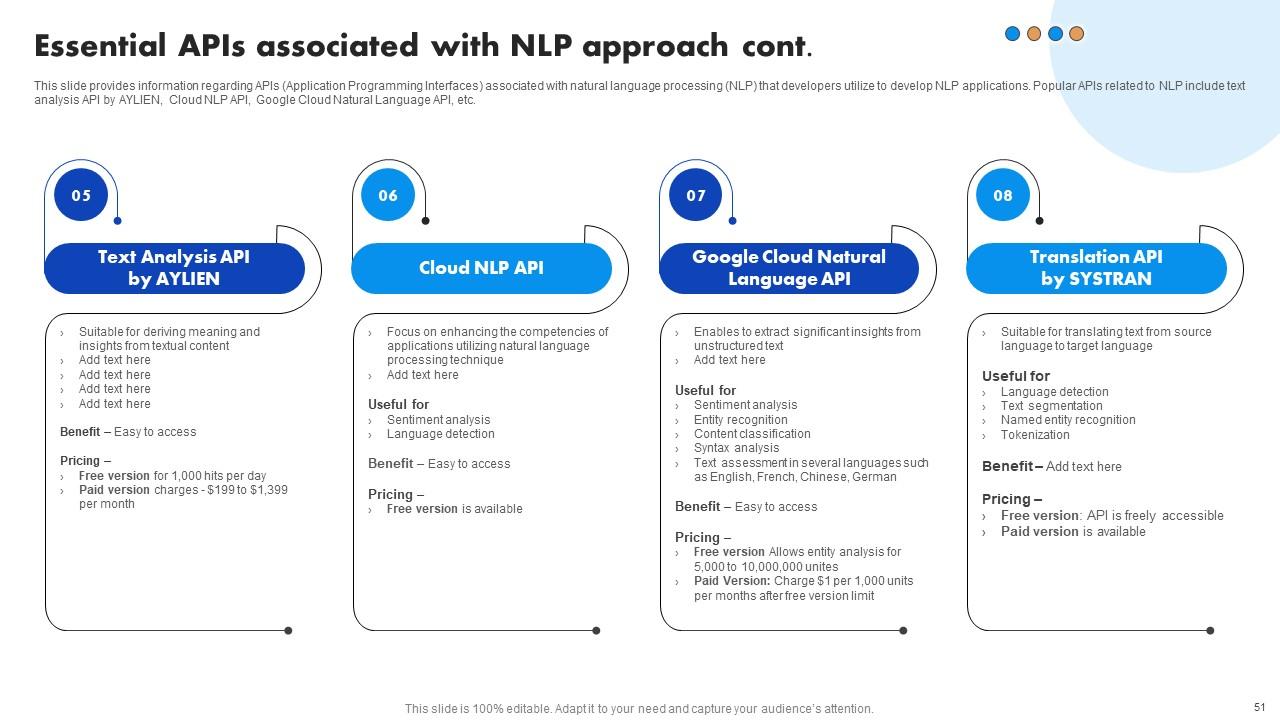
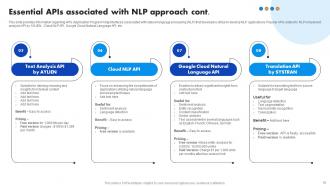
Slide 51: This slide continues the Essential APIs associated with NLP approach.
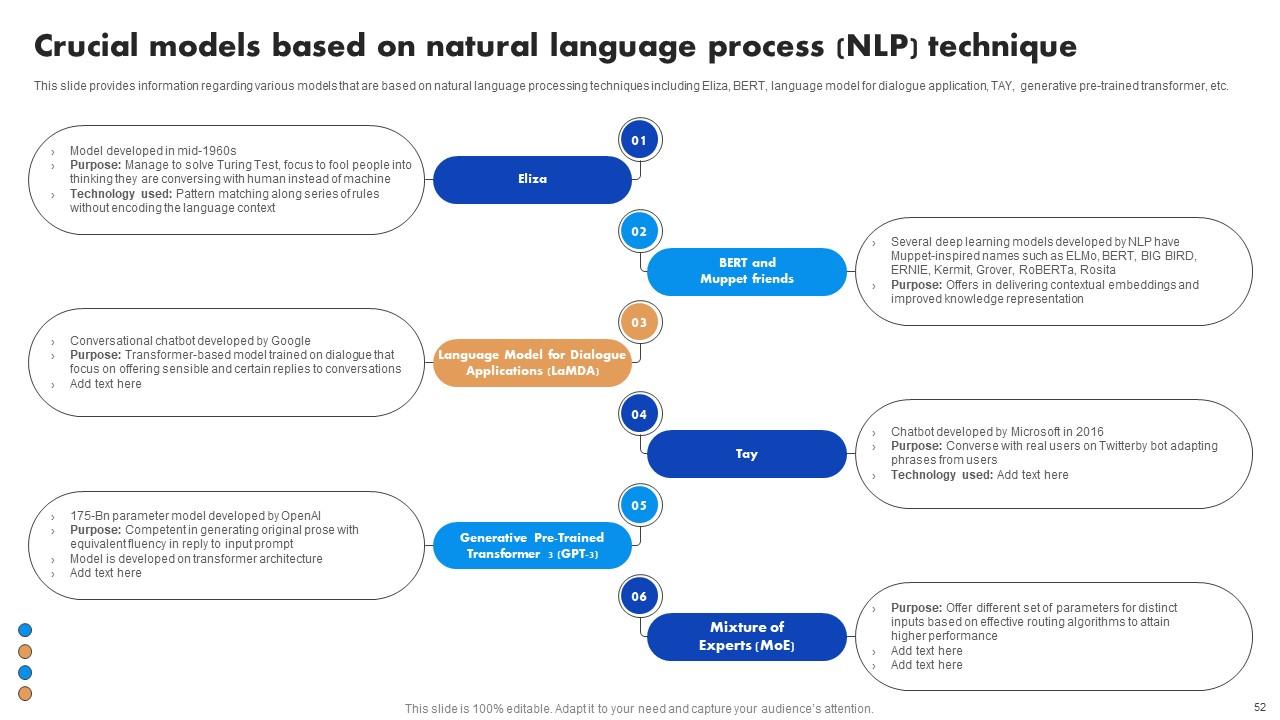
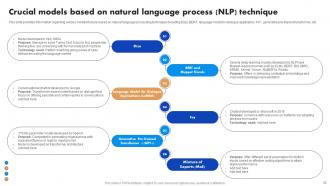
Slide 52: This slide shows the Crucial models based on natural language process (NLP) technique.
Slide 53: This slide portrays the Title for the Ideas to be discussed next.
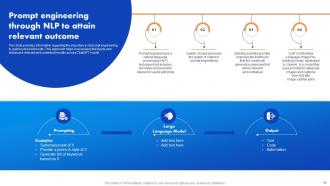
Slide 54: This slide talks about Prompt engineering through NLP to attain relevant outcome.
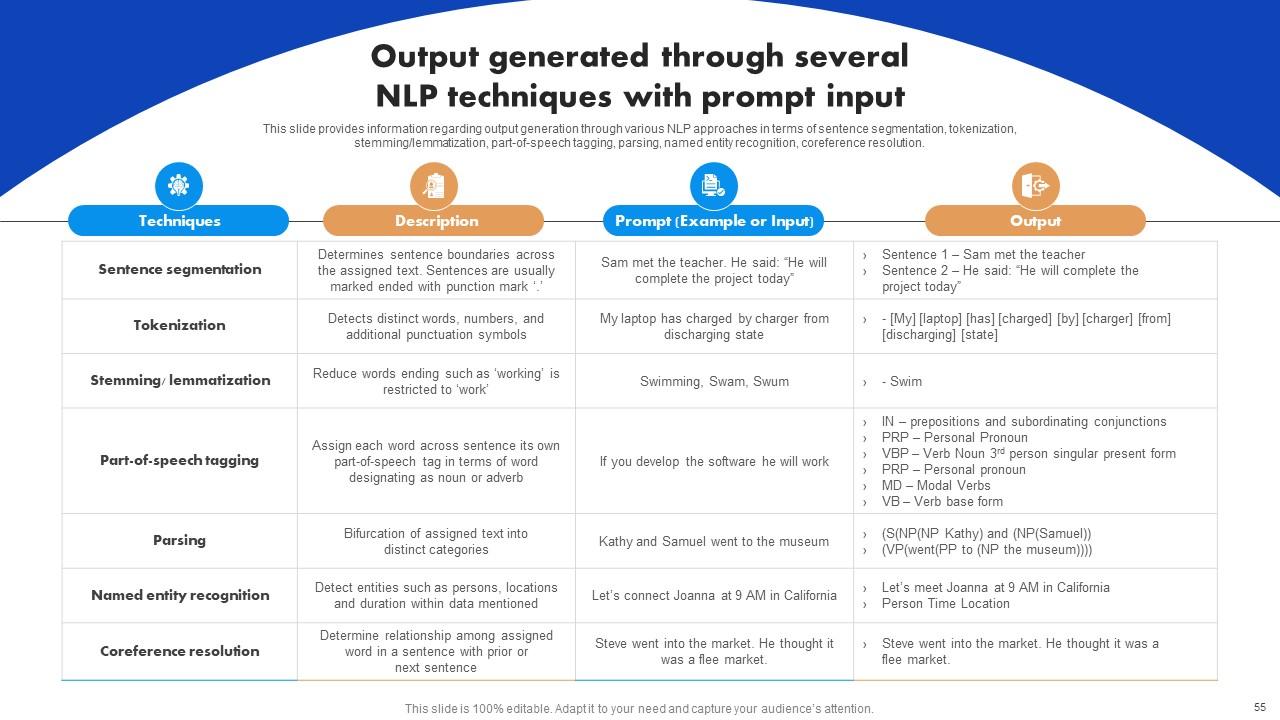
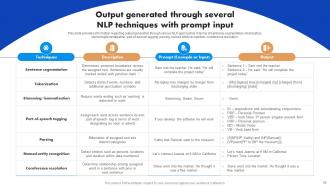
Slide 55: This slide provides information regarding output generation through various NLP approaches.
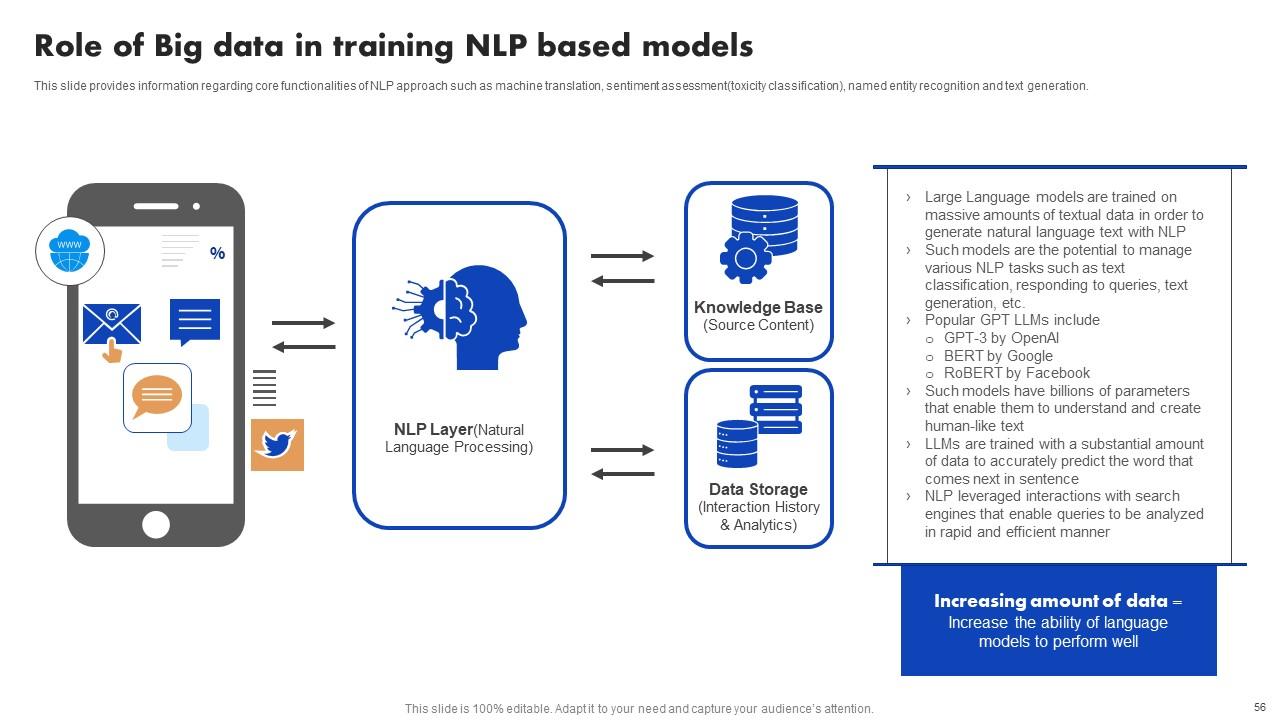
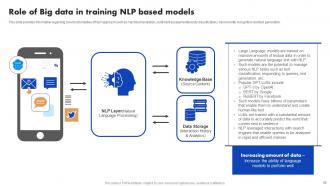
Slide 56: This slide shows the Role of Big data in training NLP based models.
Slide 57: This slide includes the Heading for the Ideas to be covered in the upcoming template.
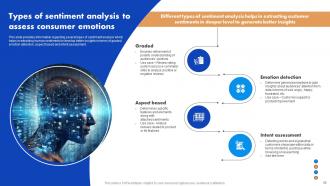
Slide 58: This slide states the Types of sentiment analysis to assess consumer emotions.
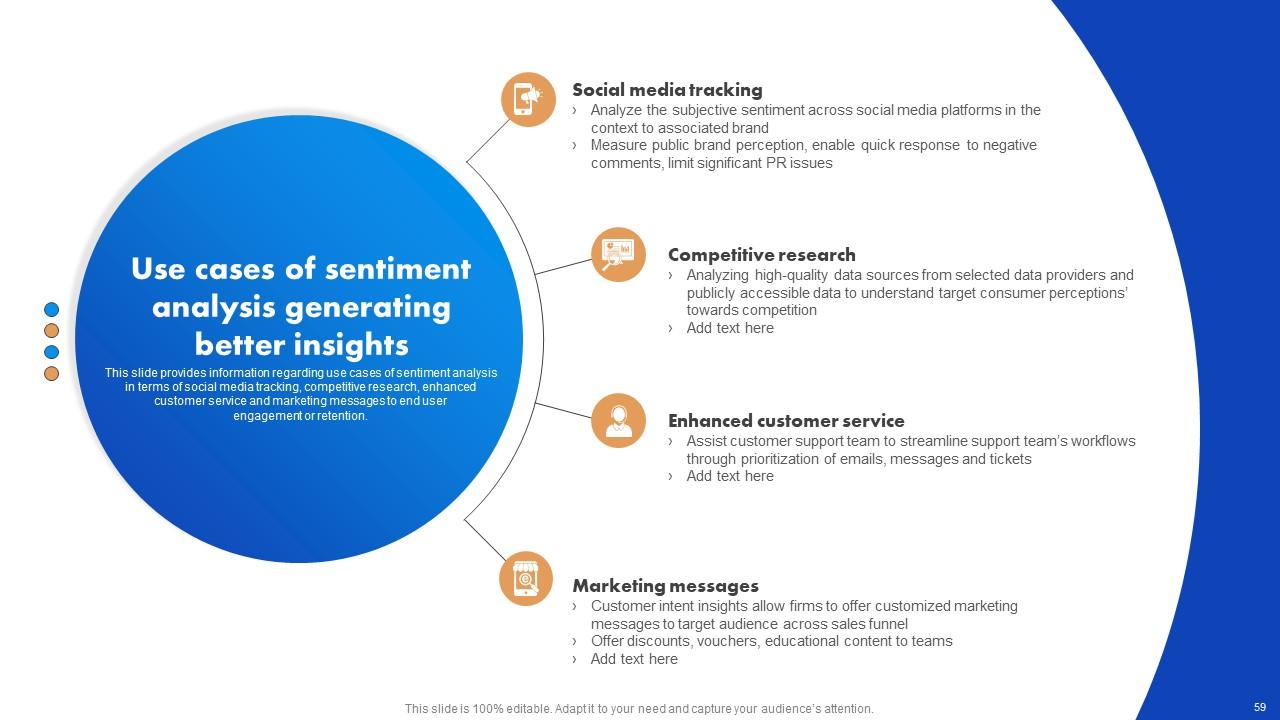
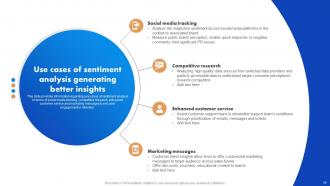
Slide 59: This slide represents the Use cases of sentiment analysis generating.
Slide 60: This slide includes the Title for the Contents to be discussed next.
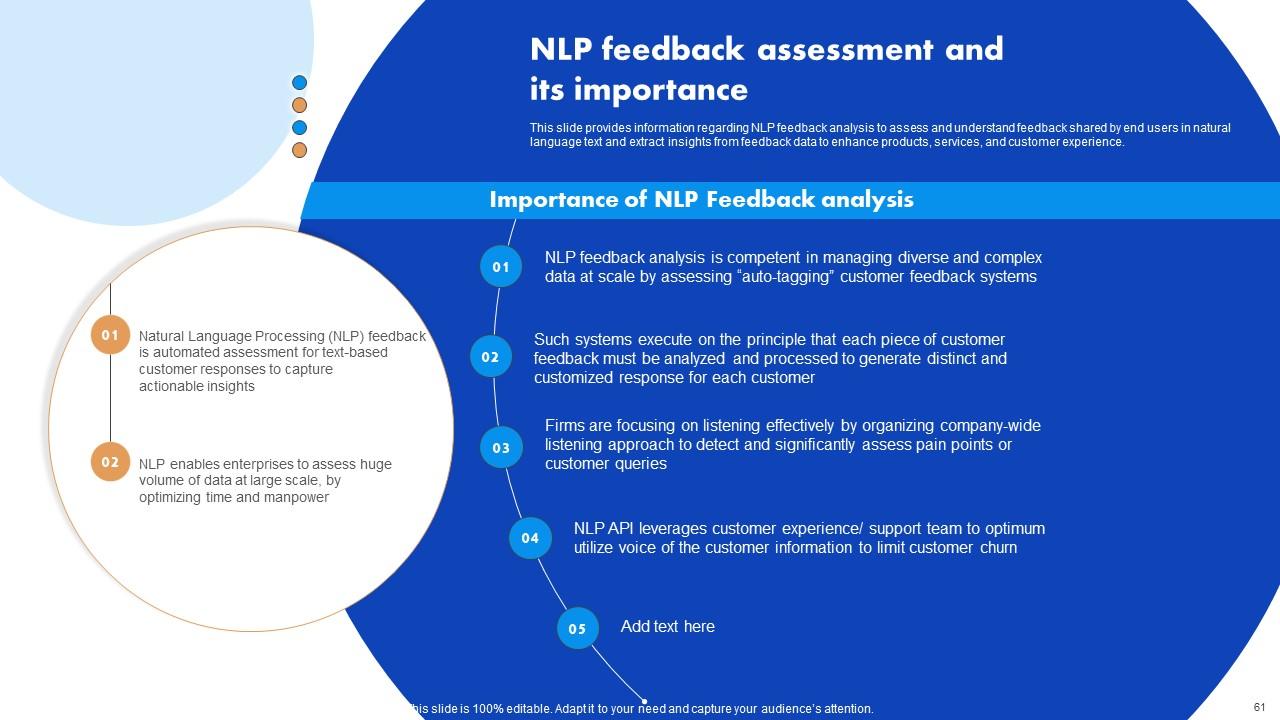
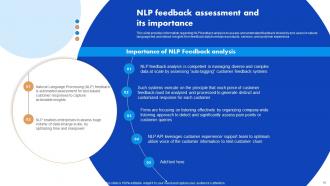
Slide 61: This slide provides information regarding NLP feedback analysis.
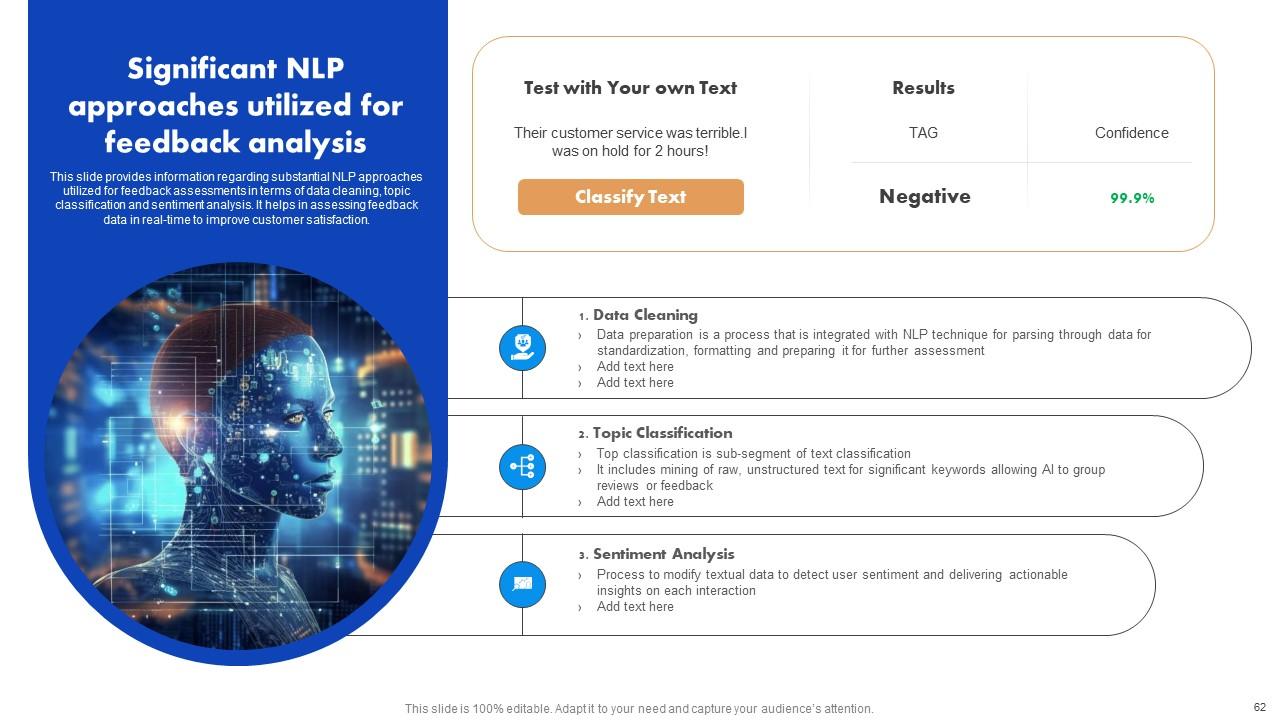
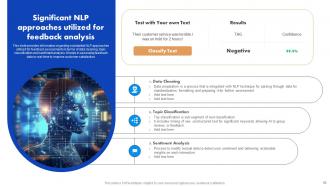
Slide 62: This slide presents the Significant NLP approaches utilized for feedback analysis.
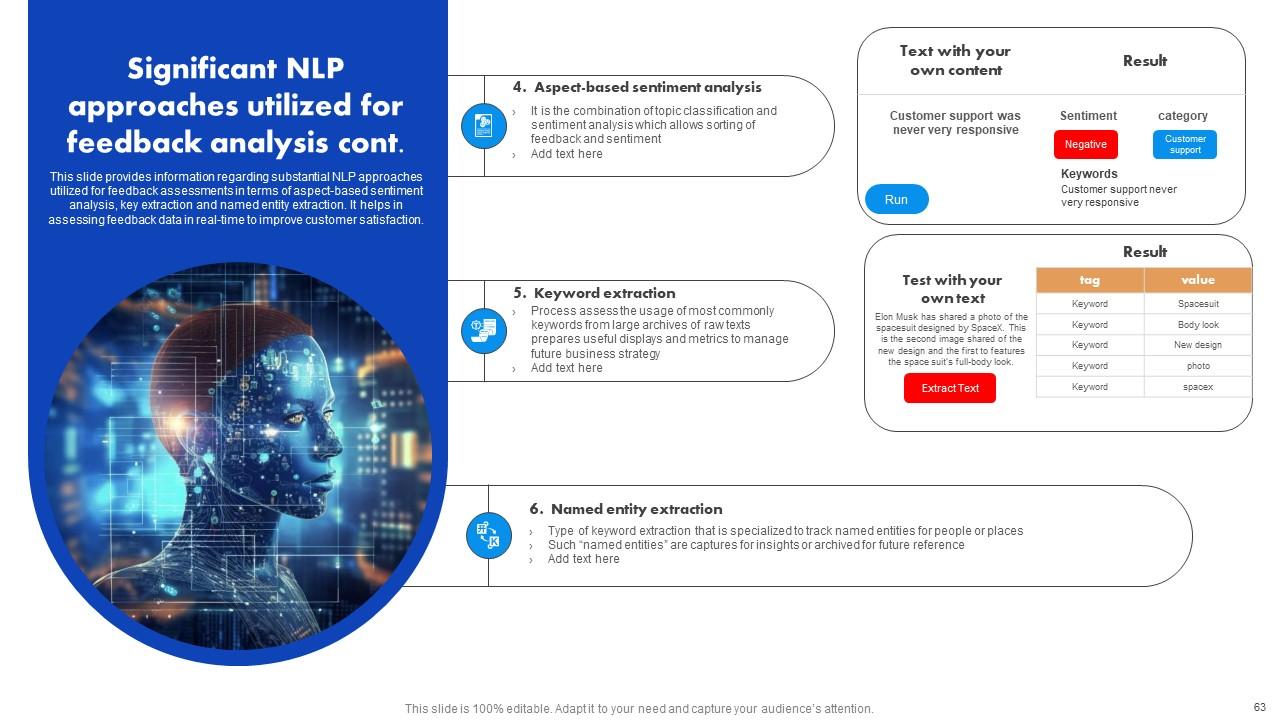
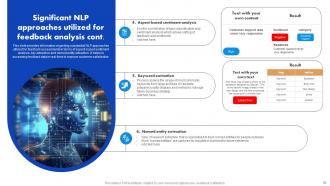
Slide 63: This slide continues the Significant NLP approaches utilized for feedback analysis.
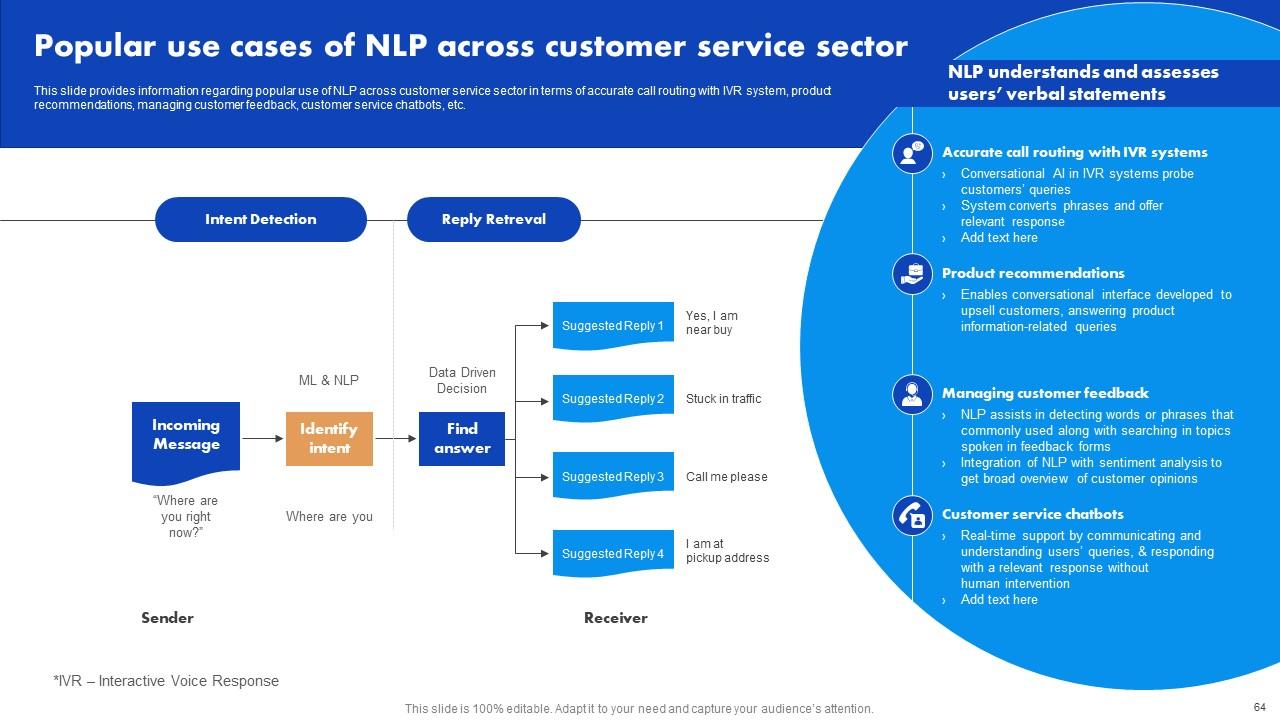
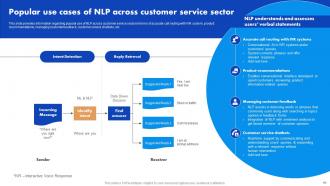
Slide 64: This slide reveals the Popular use cases of NLP across customer service sector.
Slide 65: This slide exhibits the Heading for the Topics to be coveerd further.
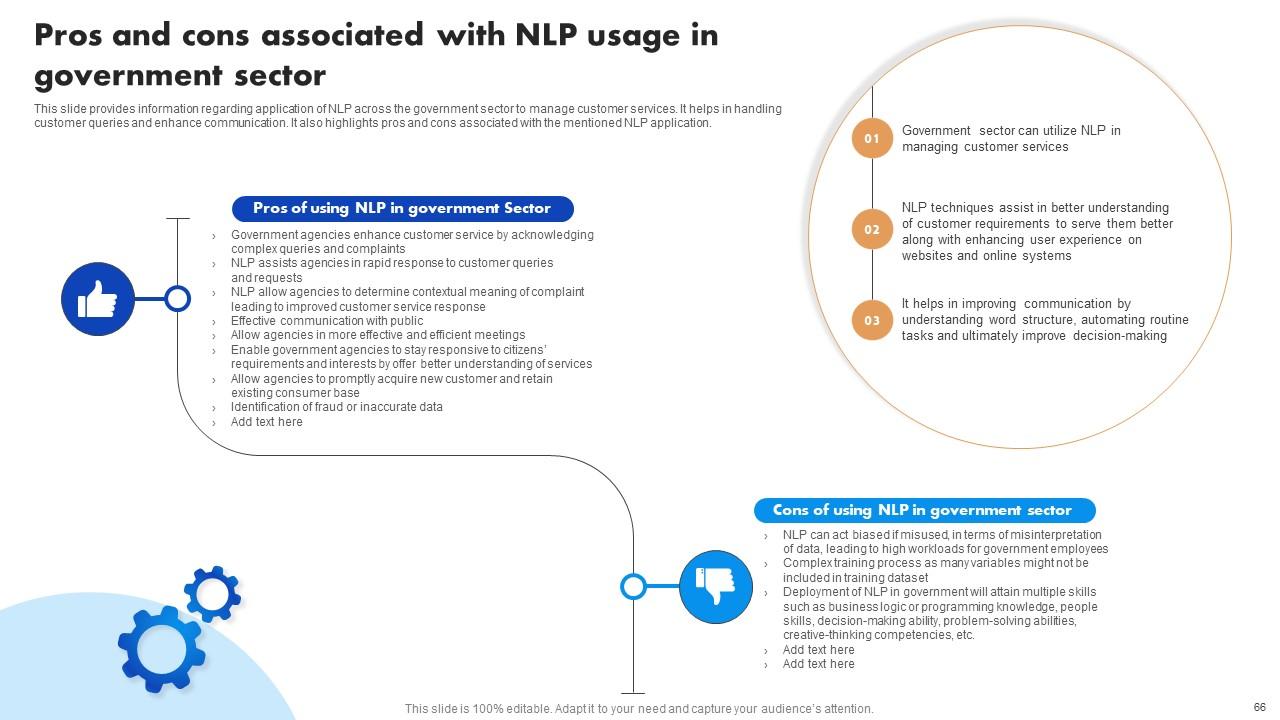
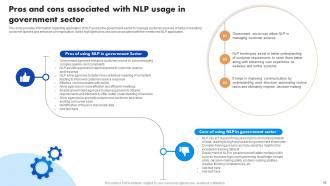
Slide 66: This slide highlights the Pros and cons associated with NLP usage in government sector.
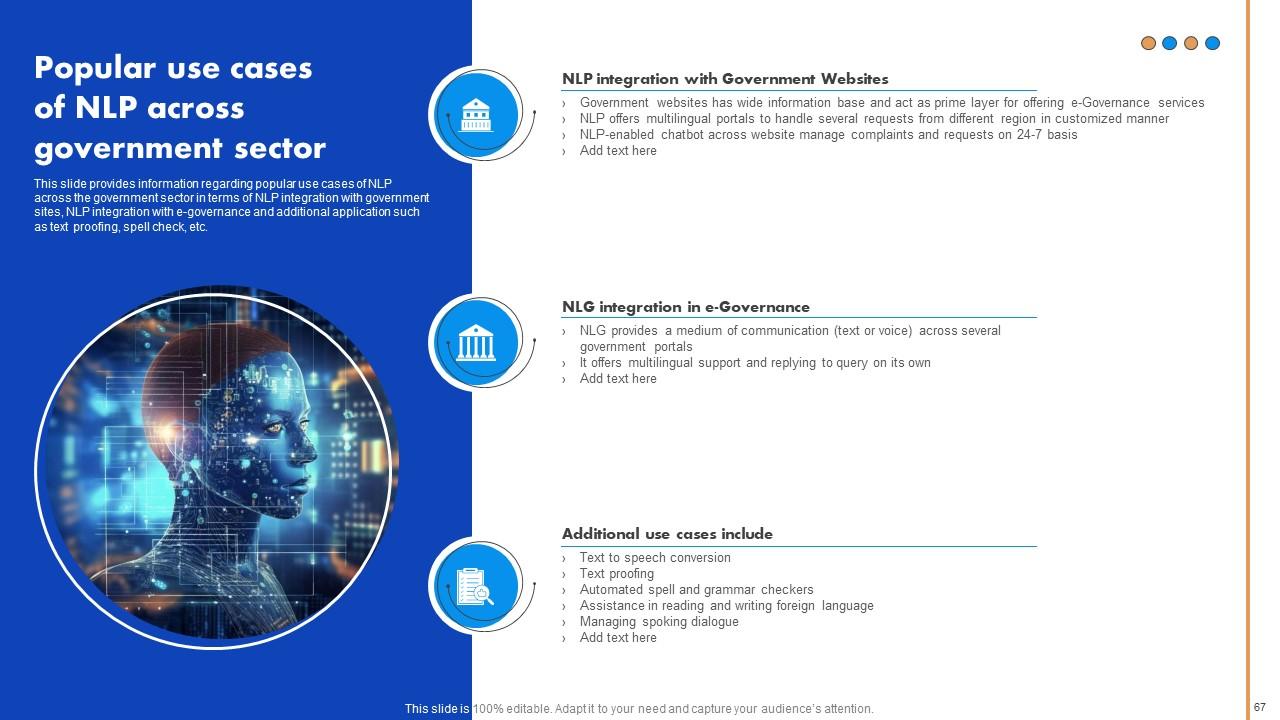
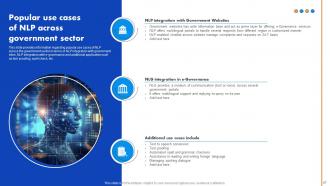
Slide 67: This slide provides information regarding popular use cases of NLP across the government sector.
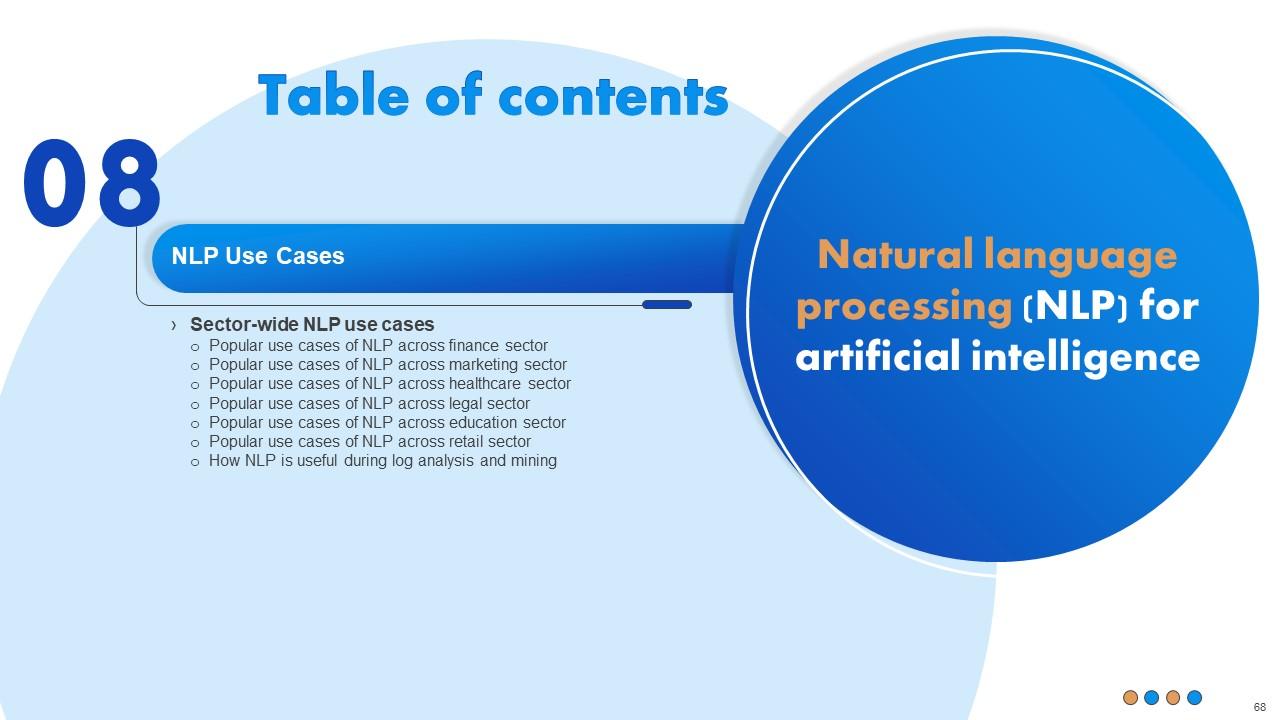
Slide 68: This slide includes the Title for the Topics to be discussed next.
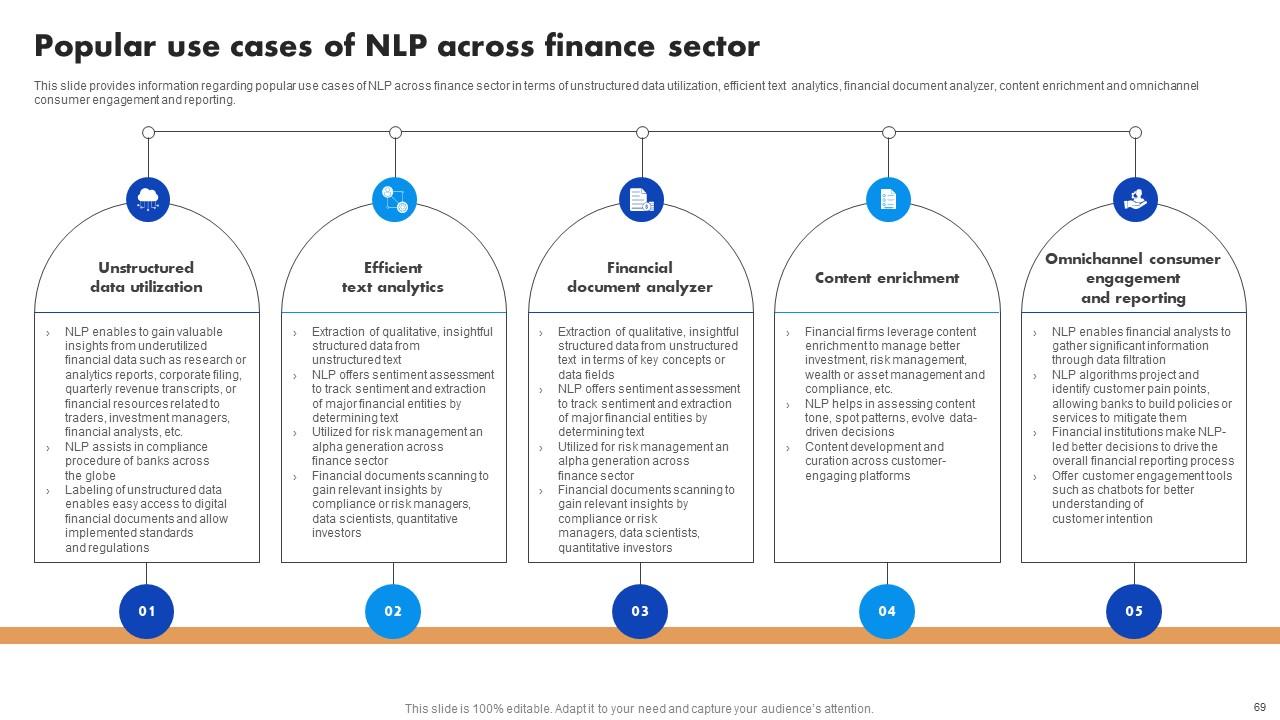
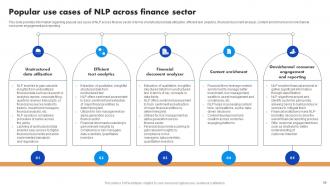
Slide 69: This slide talks about the Popular use cases of NLP across finance sector.
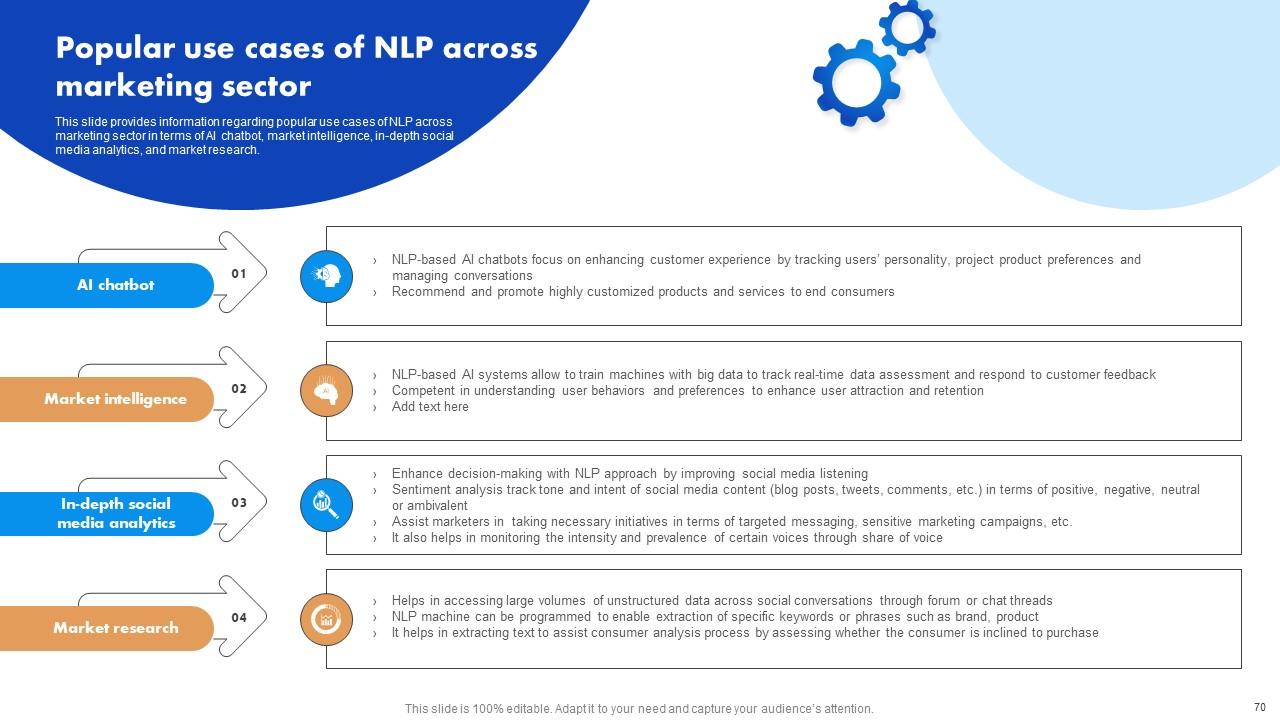
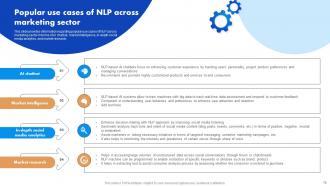
Slide 70: This slide deals with Popular use cases of NLP across marketing sector.
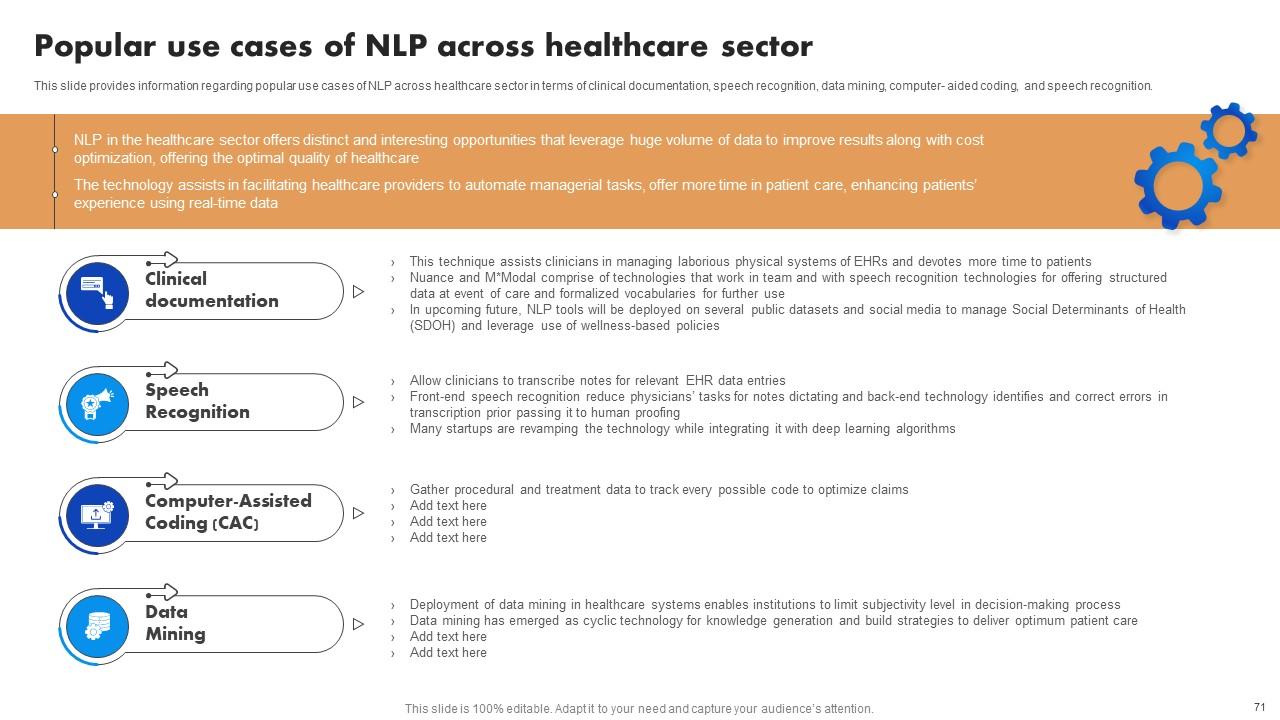
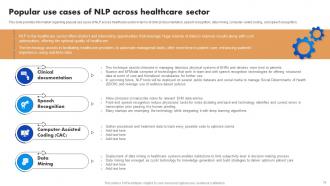
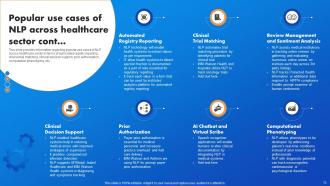
Slide 71: This slide shows the Popular use cases of NLP across healthcare sector.
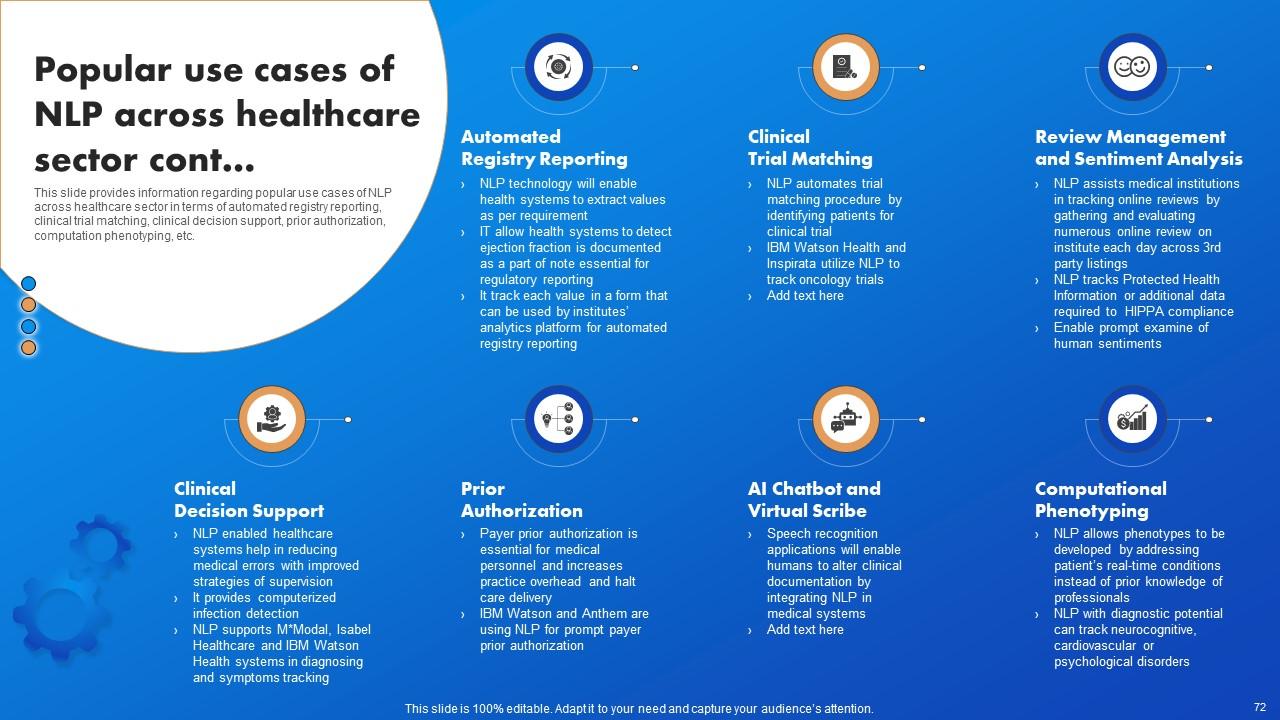
Slide 72: This slide continues the Popular use cases of NLP across healthcare sector.
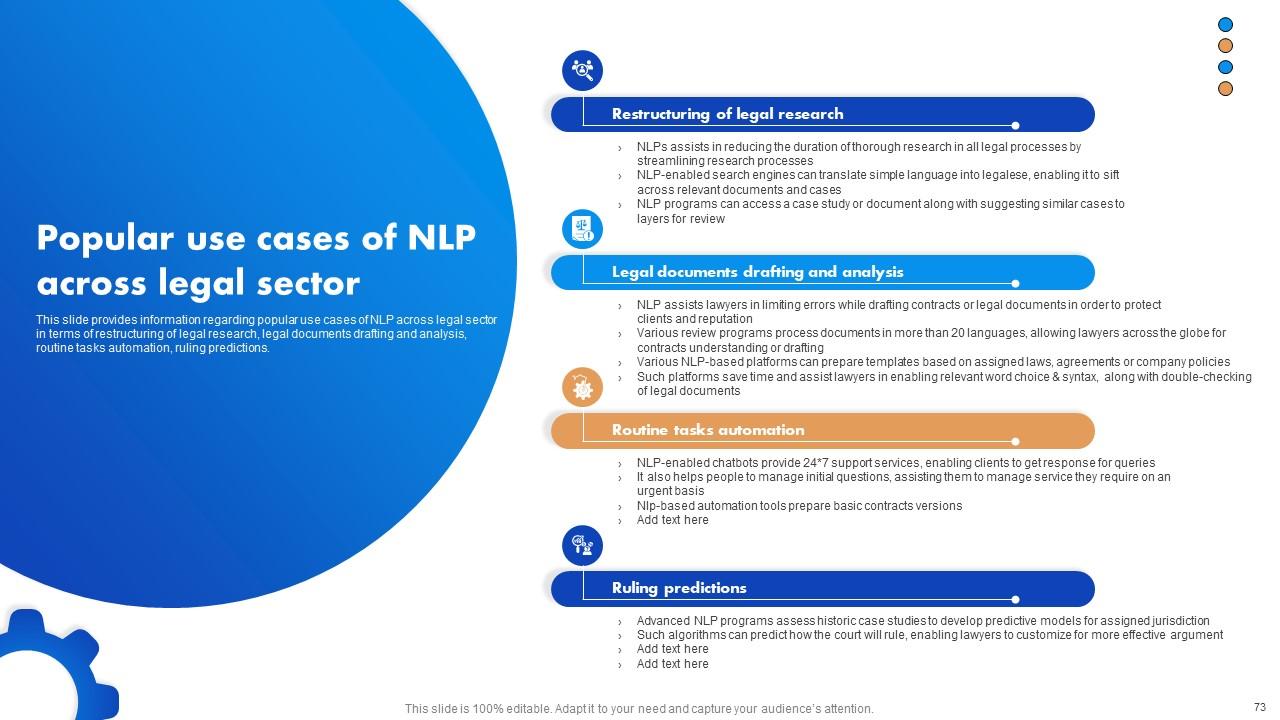
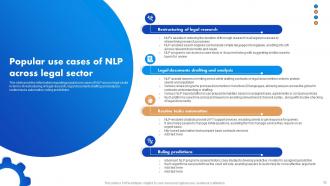
Slide 73: This slide provides information regarding popular use cases of NLP across legal sector.
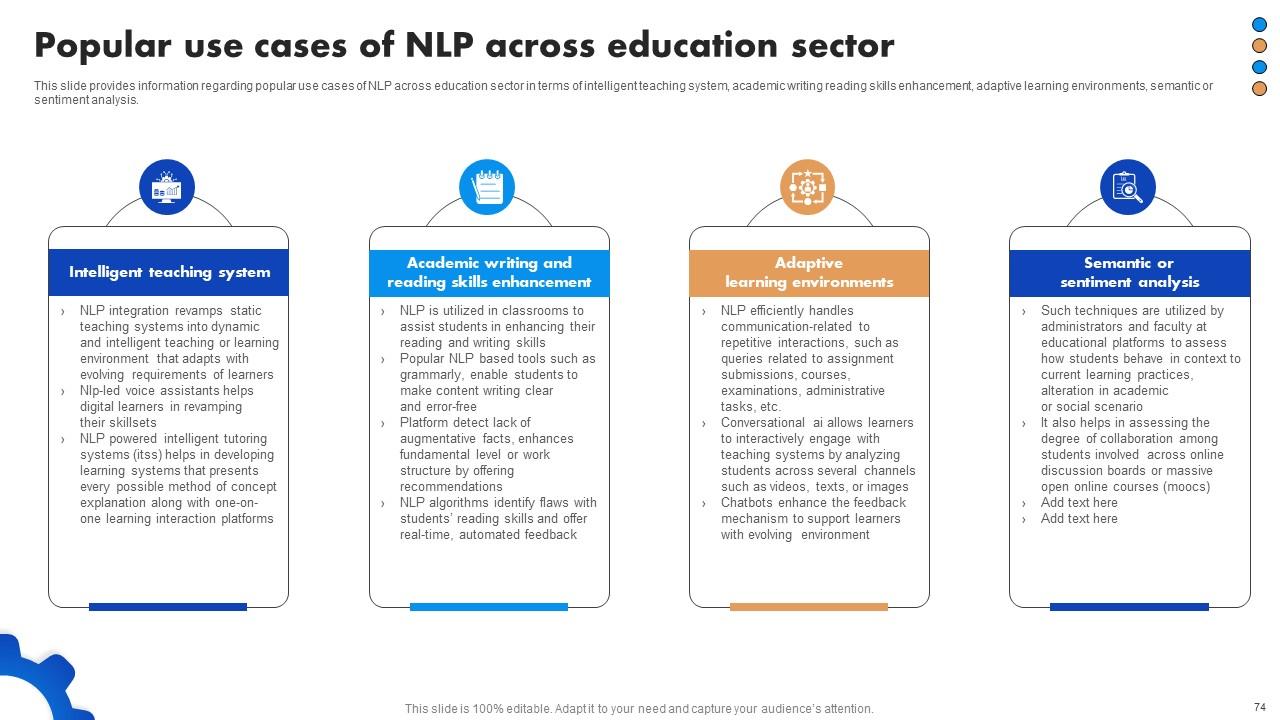
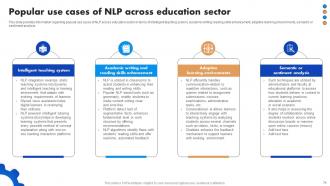
Slide 74: This slide indicates the Popular use cases of NLP across education sector.
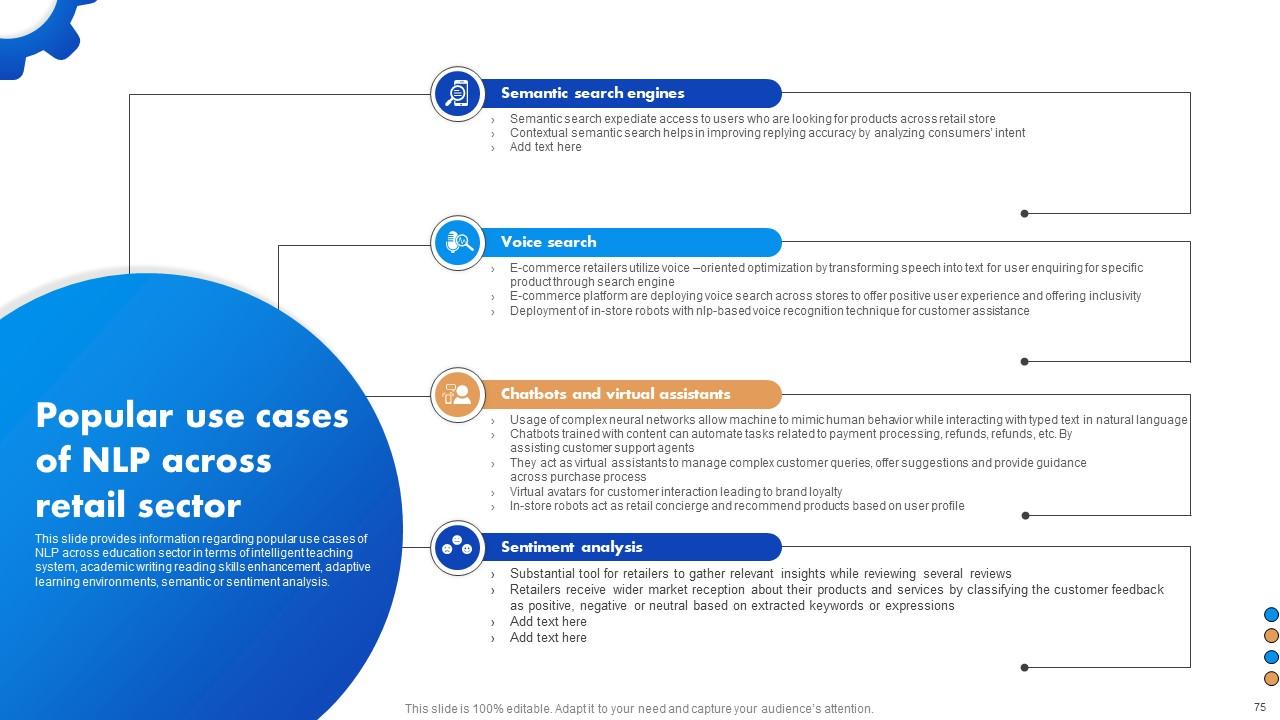
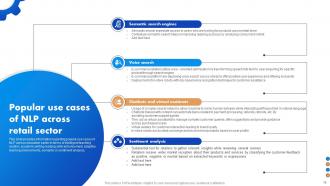
Slide 75: This slide reveals the Popular use cases of NLP across.
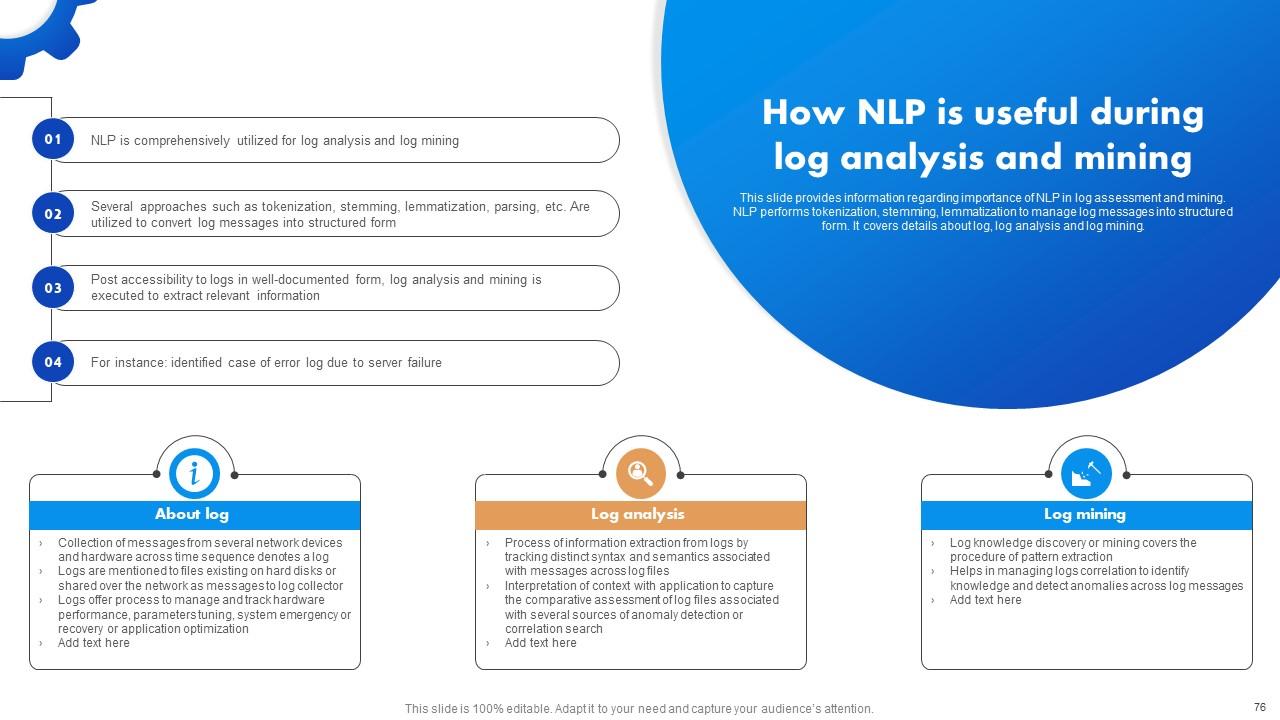
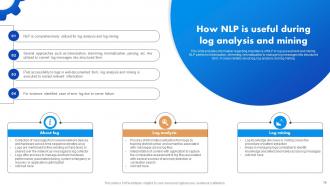
Slide 76: This slide provides information regarding importance of NLP in log assessment and mining.
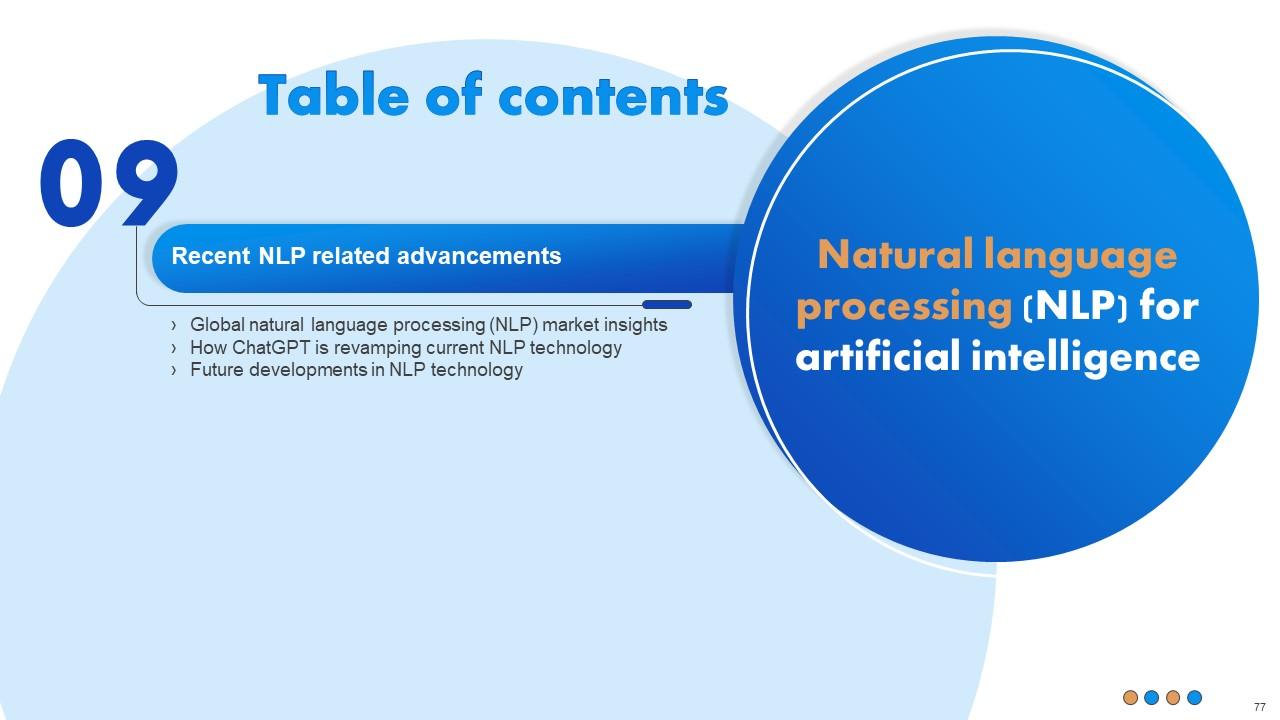
Slide 77: This slide states the Heading for the Contents to be covered further.
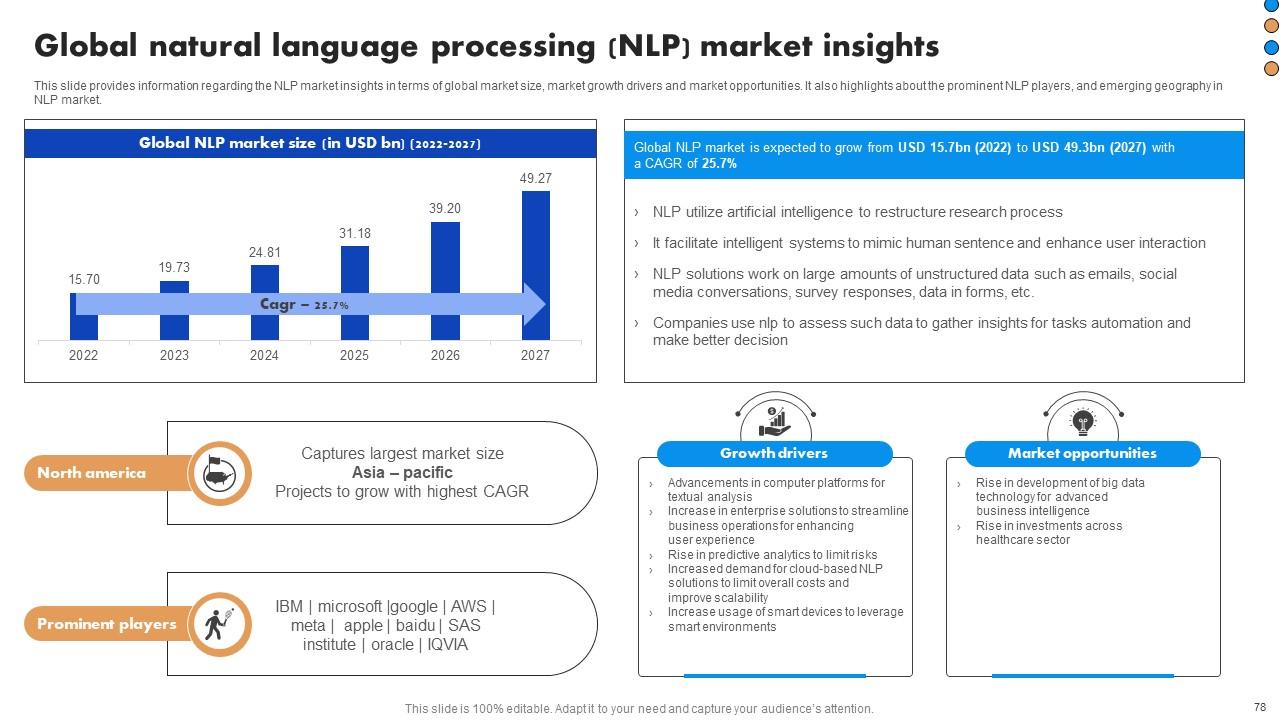
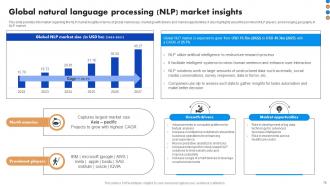
Slide 78: This slide portrays the Global natural language processing (NLP) market insights.
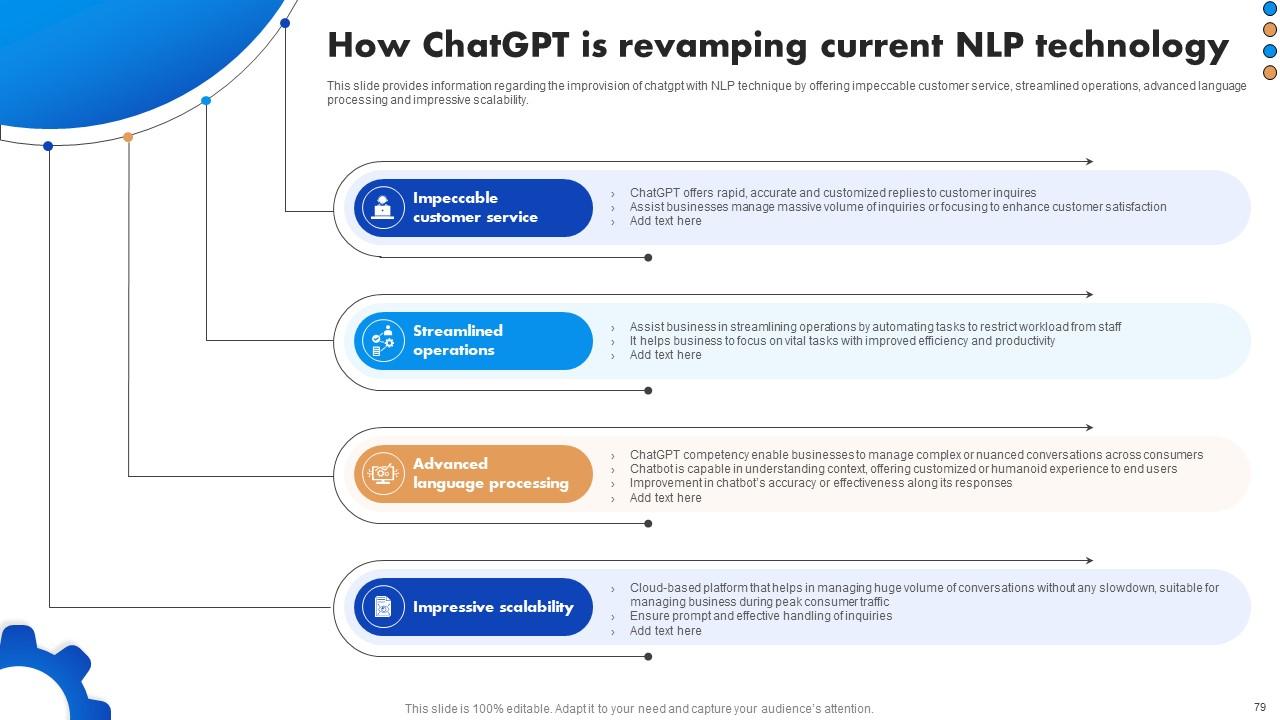
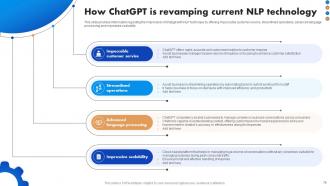
Slide 79: This slide provides information regarding the improvision of chatgpt with NLP technique.
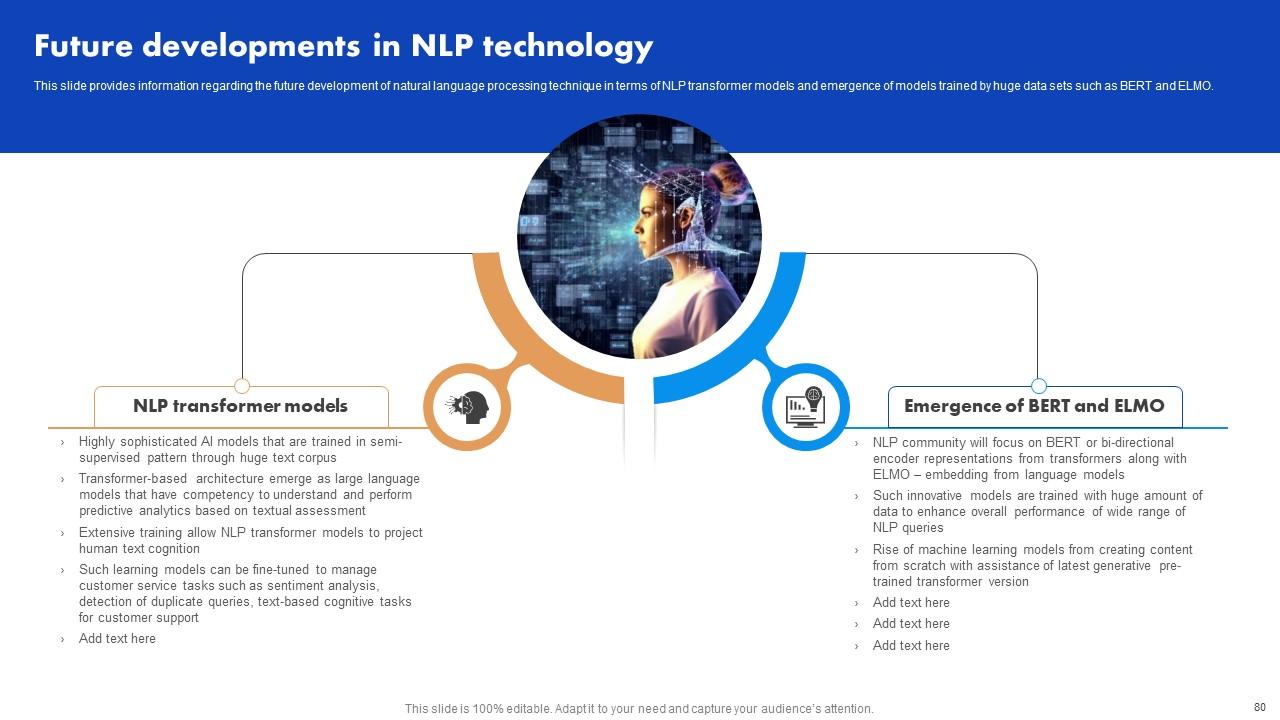
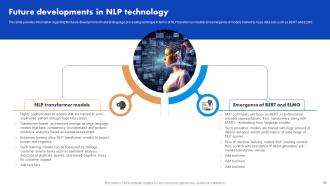
Slide 80: This slide talks about the Future developments in NLP technology.
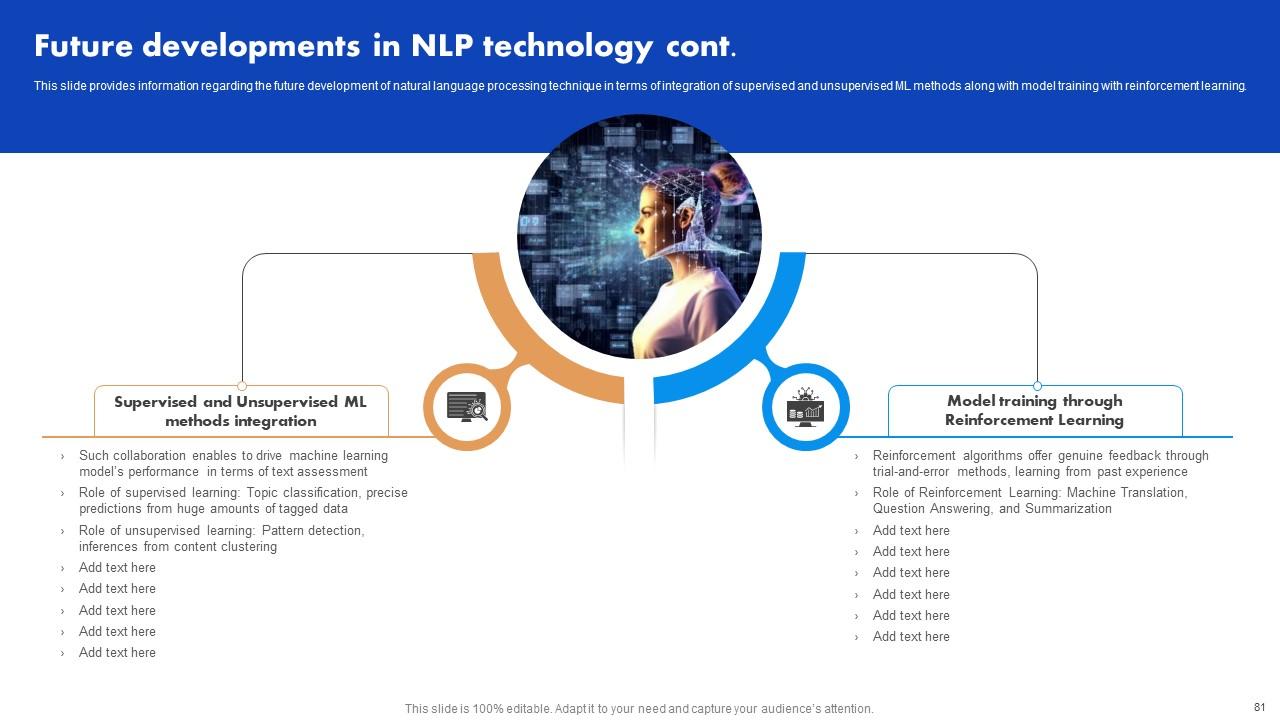
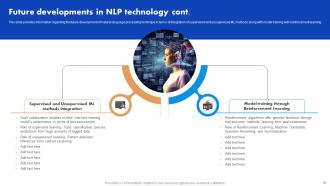
Slide 81: This slide continues the Future developments in NLP technology.
Slide 82: This is the Icons slide containing all the Icons used in the plan.
Slide 83: This slide is used for depicting some Additional information.
Slide 84: This is the About us slide. State your company-related information here.
Slide 85: This is Meet our team slide. State your team-related ifnormation here.
Slide 86: This slide incorporates the organization's mission, vision, and goals.
Slide 87: This is the Puzzle slide with related imagery.
Slide 88: This slide showcases the company's Roadmap.
Slide 89: This is the 30 60 90 Days plan slide for effective planning.
Slide 90: This slide presents the firm's Timeline.
Slide 91: This is the Venn diagram slide.
Slide 92: This is the Thank you slide for acknowledgement.
Natural Language Processing NLP For Artificial Intelligence Powerpoint Presentation Slides AI CD with all 97 slides:
Use our Natural Language Processing NLP For Artificial Intelligence Powerpoint Presentation Slides AI CD to effectively help you save your valuable time. They are readymade to fit into any presentation structure.
-
This PowerPoint layout is very helpful from a business point of view, and it's visually stunning too! I'm so happy with this product because it has helped me understand and deliver great presentations.
-
Happy to incorporate such stunning templates in my presentation. Made my presentation look professional and engaging.
