


INTEL Company Profile Powerpoint Presentation Slides CP CD




Try Before you Buy Download Free Sample Product
 Impress Your
 Audience
 100%
100% Editable
 Save Hours
 of Time


Check out our professionally designed Intel Company Profile PowerPoint presentation. This Mobile Processors PPT covers the executive summary, company introduction, business model, global presence, product portfolio, employee base, partners, and alliances. Also, this Integrated circuits presentation shows the Board of Directors, key stats and figures, and revenue growth from 2018 to 2023. Moreover, this Quantum computing research PowerPoint outlines business finances such as revenue by segment and region. Finally, this Software development tools Template illustrates business performance evaluation with competitor analysis and SWOT analysis. Download our 100 percentage editable and customizable template, also compatible with Google Slides.
People who downloaded this PowerPoint presentation also viewed the following :
Content of this Powerpoint Presentation
Slide 1: The slide introduces INTEL Company Profile. State your company name.
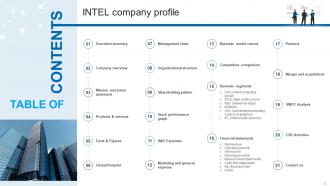
Slide 2: The slide displays Table of Contents for the presentation.
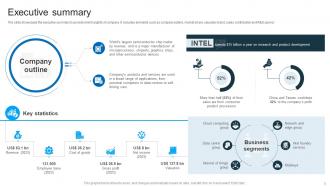
Slide 3: The slide showcases the executive summary to provide brief insights of company.
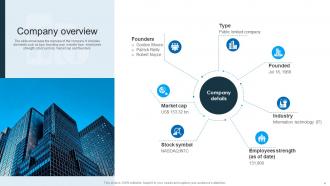
Slide 4: The slide highlights the overview of the company.
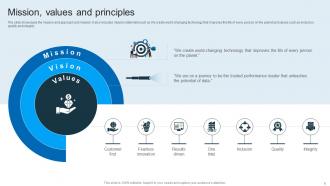
Slide 5: The slide depicts the mission and approach and mission.
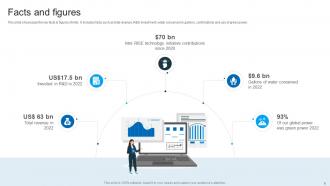
Slide 6: This slide renders the key facts & figures of Intel.
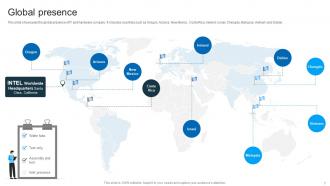
Slide 7: This slide showcases the global presence of IT and hardware company.
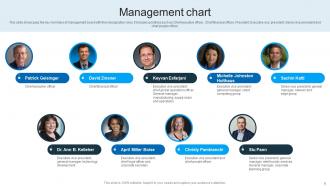
Slide 8: This slide highlights the key members of management board with their designation roles.
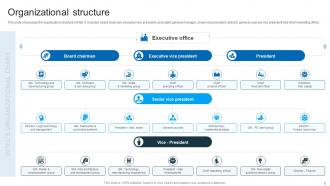
Slide 9: This slide shows the organization structure of Intel.
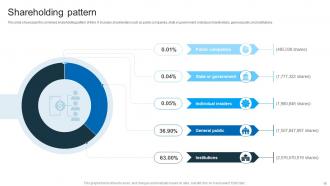
Slide 10: This slide displays the combined shareholding pattern of Intel.
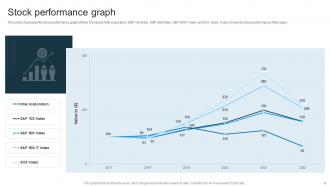
Slide 11: This slide demonstrates the stock performance graph of Intel.
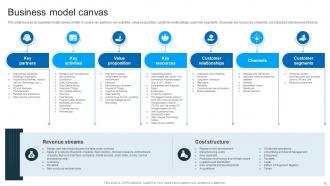
Slide 12: This slide focuses on business model canvas of Intel.
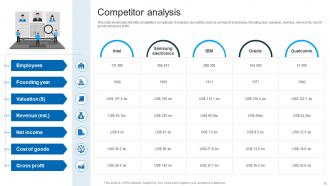
Slide 13: This slide shows the Intel competitors comparison.
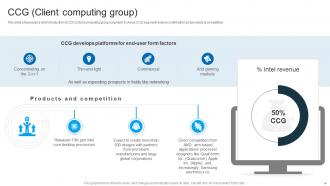
Slide 14: This slide provides a brief introduction of CCG (Client computing group) segment.
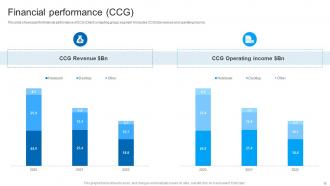
Slide 15: This slide highlights the financial performance of CCG (Client computing group) segment.
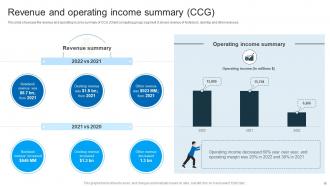
Slide 16: This slide showcases the revenue and operating income summary of CCG (Client computing group) segment.
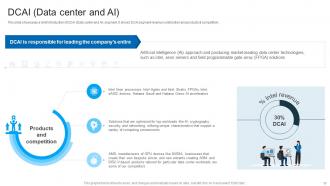
Slide 17: This slide gives a brief introduction of DCAI (Data center and AI) segment.
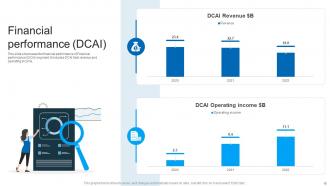
Slide 18: This slide showcases the financial performance of Financial performance (DCAI) segment.
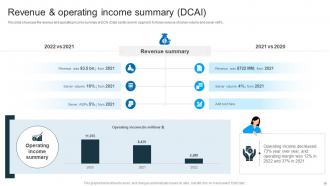
Slide 19: This slide highlights the revenue and operating income summary of DCAI (Data center and AI) segment.
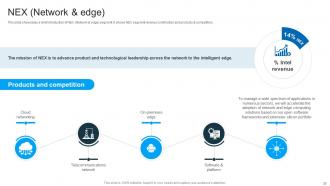
Slide 20: This slide provides a brief introduction of NEX (Network & edge) segment.
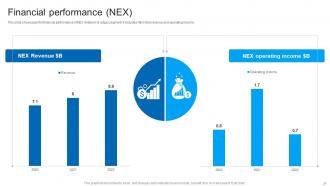
Slide 21: This slide showcases the financial performance of NEX (Network & edge) segment.
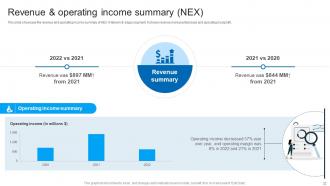
Slide 22: This slide depicts the revenue and operating income summary of NEX (Network & edge) segment.
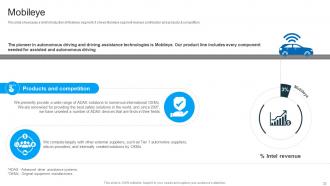
Slide 23: This slide showcases a brief introduction of Mobileye segment.
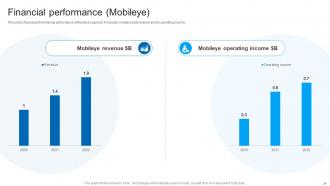
Slide 24: This slide highlights the financial performance of Mobileye segment.
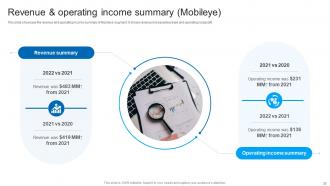
Slide 25: This slide showcases the revenue and operating income summary of Mobileye segment.
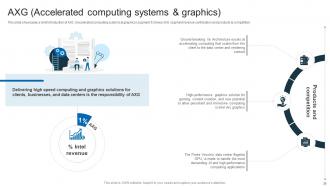
Slide 26: This slide provides a brief introduction of AXG (Accelerated computing systems & graphics) segment.
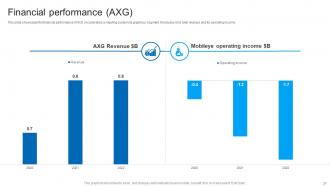
Slide 27: This slide renders the financial performance of AXG (Accelerated computing systems & graphics) segment.
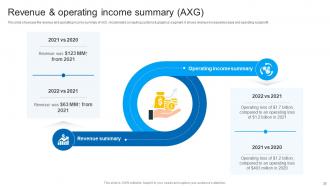
Slide 28: This slide showcases the revenue and operating income summary of AXG (Accelerated computing systems & graphics) segment.
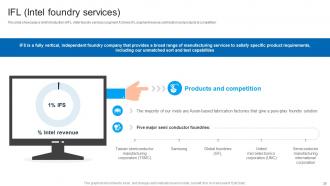
Slide 29: This slide provides a brief introduction of IFL (Intel foundry services) segment.
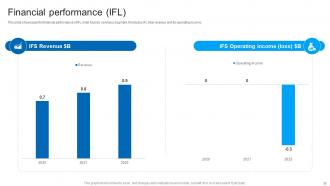
Slide 30: This slide showcases the financial performance of IFL (Intel foundry services) segment.
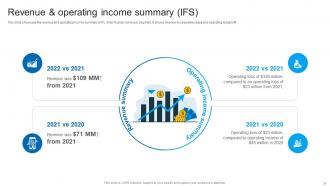
Slide 31: This slide highlights the revenue and operating income summary of IFL (Intel foundry services) segment.
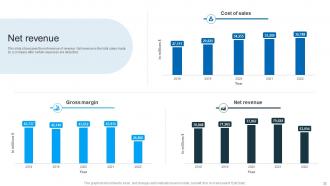
Slide 32: This slide showcases the net revenue of revenue.
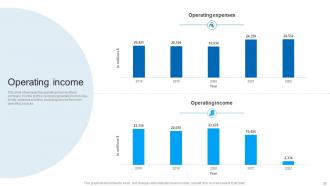
Slide 33: This slide displays the operating income of tech company.
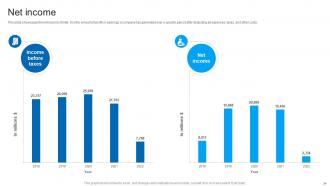
Slide 34: This slide showcases the net income of Intel.
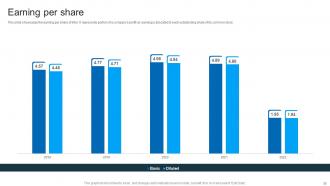
Slide 35: This slide demonstrates the earning per share of Intel.
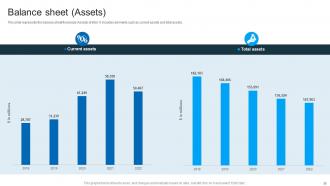
Slide 36: This slide presents the balance sheet financials (Assets) of Intel.
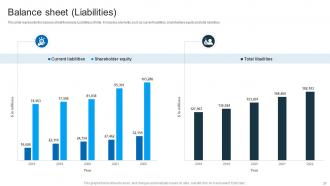
Slide 37: This slide represents the balance sheet financials (Liabilities) of Intel.
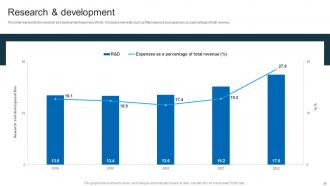
Slide 38: This slide renders the research and development expenses of Intel.
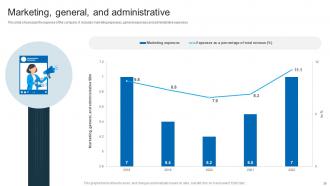
Slide 39: This slide showcases the expense of the company.
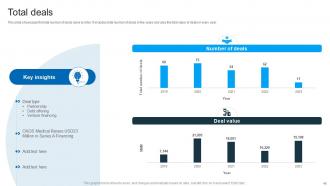
Slide 40: This slide highlights the total number of deals done by Intel.
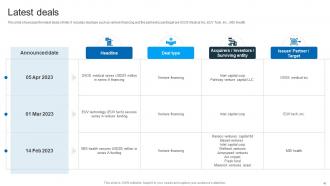
Slide 41: This slide showcases the latest deals of Intel.
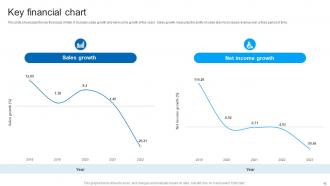
Slide 42: This slide renders the key financials of intel.
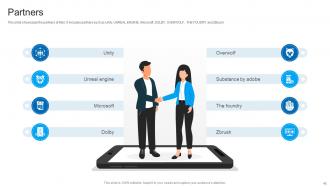
Slide 43: This slide showcases the partners of Intel.
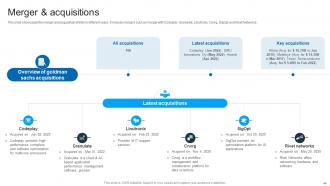
Slide 44: This slide highlights the merger and acquisition of Intel in different years.
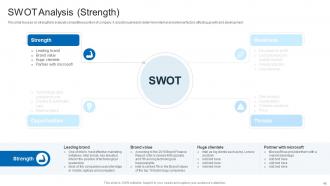
Slide 45: This slide focuses on strengths to evaluate competitive position of company.
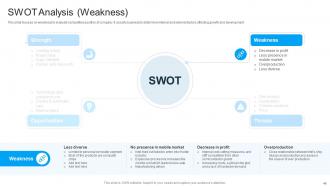
Slide 46: This slide covers on weakness to evaluate competitive position of company.
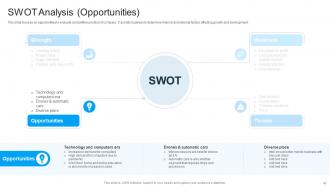
Slide 47: This slide focuses on opportunities to evaluate competitive position of company.
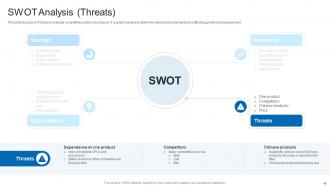
Slide 48: This slide shows Threats to evaluate competitive position of company.
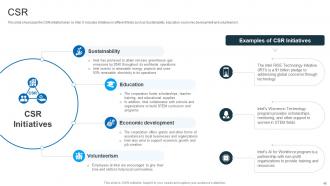
Slide 49: This slide showcases the CSR initiative taken by Intel.
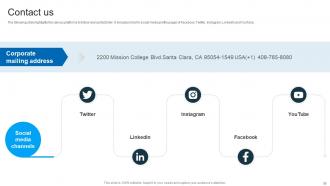
Slide 50: The slide highlights the various platforms to follow and contact Intel.
Slide 51: This slide shows all the icons included in the presentation.
Slide 52: This slide is titled as Additional Slides for moving forward.
Slide 53: This slide provides 30 60 90 Days Plan with text boxes.
Slide 54: This is an Idea Generation slide to state a new idea or highlight information, specifications etc.
Slide 55: This slide depicts Venn diagram with text boxes.
Slide 56: This slide displays Mind Map with related imagery.
Slide 57: This is a Thank You slide with address, contact numbers and email address.
INTEL Company Profile Powerpoint Presentation Slides CP CD with all 65 slides:
Use our INTEL Company Profile Powerpoint Presentation Slides CP CD to effectively help you save your valuable time. They are readymade to fit into any presentation structure.










FAQs for INTEL Company Profile Powerpoint Presentation
So Intel's huge in semiconductors - their chips are literally in your laptop and those massive servers running Netflix and ChatGPT. Wild to think about, right? They're also going hard on AI stuff and self-driving cars now. Data centers are another big thing for them. Basically anywhere you see computing happening, there's probably Intel involved somehow. Oh and if you're following this stuff for work, definitely watch what they're doing with AI and edge computing - that's where things get interesting. They're kind of shaping how all this future tech will actually work.
So Intel basically realized they can't just coast on laptop chips forever. They're now pushing hard into data centers and AI stuff - Pat Gelsinger's been CEO for a while now and he's actually trying to catch up to TSMC on the manufacturing side. Their whole "IDM 2.0" thing is about building new fabs and doing foundry work for other companies, which honestly might be their smartest move. Oh, and they finally launched those Arc graphics cards to compete with NVIDIA. If you're watching their stock, the foundry business is probably where the real action is. Way different company than it was five years ago.
Intel's got huge manufacturing scale and they've basically owned the x86 world for decades. Their enterprise connections are solid too - honestly, try finding a server room that doesn't run Intel chips. They can dump billions into R&D that smaller companies just can't touch. The software ecosystem is pretty mature at this point. But AMD's been stepping up their game lately (ARM too), so it's not the easy choice it used to be. For enterprise stuff, Intel's still the safe bet for reliability. Just make sure you check current AMD benchmarks before deciding - sometimes the performance difference is wild.
Intel's definitely taking the green thing seriously - they want net-zero emissions by 2040. They've dumped billions into renewable energy and water recycling stuff. Their water treatment systems recycle about 80% of process water, which is pretty impressive honestly. Most of their facilities run on renewable power now. The newer chips are way more energy-efficient too, so data centers don't suck up as much electricity. Oh, and they put out detailed sustainability reports every year if you need actual numbers for your project - might save you some digging around.
Dude, Intel's basically betting everything on AI right now. They're making specialized AI chips, plus their regular processors now have built-in AI acceleration. Xeon data center chips, Arc GPUs, even consumer stuff - it all has AI features now. Makes sense though, since literally everyone needs AI processing these days. They want to be the go-to company for AI infrastructure, whether you're training models or just running them. Honestly pretty smart move on their part. If you're looking at Intel products, definitely check out what AI stuff they can do - that's where they're really focusing their energy.
So Intel basically gave up trying to shove x86 into phones after ARM crushed them there. Smart move honestly - that was never gonna work. Now they're focusing on data centers and AI chips where they actually have an edge. The funny part? They're even manufacturing ARM chips for other companies now lol. But yeah, makes sense - why keep banging your head against the wall in mobile when you can dominate servers and high-performance stuff instead. Way better strategy.
Dude, Intel literally built the foundation for cloud computing. Their Xeon chips are what's running in basically every major data center - AWS, Google Cloud, Azure, you name it. The whole reason these platforms can handle crazy workloads is because Intel designed their processors for virtualization and parallel processing. They've also done a ton of work on memory tech and networking stuff that makes everything scalable. It's actually pretty insane when you think about it - like 90% of what we call "the cloud" is just Intel hardware somewhere. If you're doing any cloud planning, definitely check out their roadmap first.
So Intel's got their hands in pretty much everything 5G-related. They make the processors and modems for base stations, plus all the chips going into phones and devices. The network infrastructure stuff too - data centers handling 5G traffic, that whole side of things. Honestly, they're kind of unavoidable if you're thinking about this space. Their telecom partnerships are speeding up rollouts worldwide. Oh, and they're putting serious money into edge computing, which is what actually makes 5G apps worth using. Definitely worth watching if you're considering any investments there.
So Intel's basically everywhere with partnerships - they've got these huge developer programs and throw money at startups through Intel Capital. They also create those industry groups that set tech standards, which is honestly pretty smart. You'll find them working with Microsoft and Google on chip stuff, plus AI projects with OpenAI. They're super aggressive about it because, let's face it, nobody can innovate alone anymore. Joint R&D projects are big for them too. They give partners early access to new processors so they can tweak their software. Their partner portal's actually worth checking out if you're thinking about this stuff - decent blueprint for scaling partnerships.
So Intel's dropped like $300+ million on diversity stuff - pretty serious money. They're partnering with HBCUs and coding bootcamps through this "Rise Above" thing to get more women and minorities into tech. What's actually smart is they tie exec bonuses to hitting diversity targets. Money talks, right? Oh, and they make leadership roles have diverse candidate pools before hiring. Their annual reports are worth checking out if you're curious - they don't sugarcoat the failures either. Honestly refreshing compared to most corporate BS.
Dude, Intel drops like $15-20 billion yearly on R&D - absolutely insane numbers. What you're seeing in stores right now? That's from research they did 5 years ago. They're already working on chips that won't hit shelves until 2029-ish. Right now they're big into AI accelerators and edge computing stuff, but honestly that pivot started in their labs ages ago. Here's the thing though - if you want to know what's actually coming, check out their patent filings. Way more telling than their flashy announcements. Manufacturing processes, new architectures, all that good stuff gets hinted at years early if you're paying attention.
So Intel's whole thing is "security by design" - they build protection directly into their chips. Hardware features like TXT and SGX create these secure little bubbles for sensitive stuff. Pretty smart approach if you ask me. They bought McAfee a while back and use AI for threat detection too. Basically covers everything from the actual silicon up to cloud level. Oh, and definitely ask about their built-in security when you're looking at Intel solutions - might save you from buying extra security tools later.
So Intel's been scrambling to fix their supply chain mess - they're spreading out suppliers and building more stuff domestically. The CHIPS Act was huge for them, honestly. Now they're making components closer to where people actually need them instead of shipping everything from Asia. Better forecasting too, plus they're keeping more inventory on hand (should've done that ages ago but whatever). If your team's looking at semiconductor suppliers, Intel's actually worth considering now - they seem way more reliable than they used to be.
So Intel's basically trying to get their chips into everything connected - your fridge, factory machines, you name it. They're huge on edge computing right now, which makes sense since nobody wants lag when their car's making split-second decisions. Smart cities and autonomous vehicles are their big focus areas, plus manufacturing and retail stuff. The numbers are pretty wild - trillions of devices by 2030. If you're doing any IoT work, their edge AI tools are worth checking out. That's where they're putting most of their energy these days.
So Intel basically runs analytics on everything - chip design, supply chains, you name it. They're constantly analyzing data to predict when fab equipment might fail, which honestly saves them crazy money on downtime. Manufacturing processes get optimized this way too, plus they can predict what types of processors will actually sell. Customer usage data feeds back into their R&D process, which makes sense. Oh and if you're thinking about doing something similar, their whole approach of focusing on predictive maintenance first is pretty solid - that's where you'll see the biggest wins right away.
-
The presentations are very helpful. I am always able to get appropriate templates for the different topics related to my profession.
-
Attractive design and informative presentation.