


Vendor Audit PowerPoint Presentation Slides





Try Before you Buy Download Free Sample Product
 Impress Your
 Audience
 100%
100% Editable
 Save Hours
 of Time


Our Vendor Audit PowerPoint Presentation Slides are topically designed to provide an attractive backdrop to any subject. Use them to look like a presentation pro.
People who downloaded this PowerPoint presentation also viewed the following :
Content of this Powerpoint Presentation
Slide 1: This slide introduces Vendor Audit. State Your Company Name and begin.
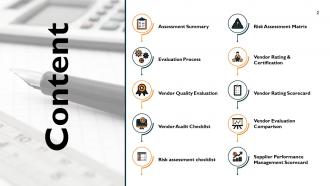
Slide 2: This slide shows Content of the presentation.
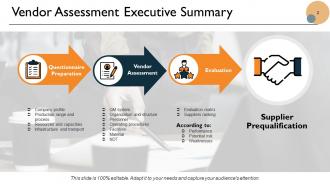
Slide 3: This slide presents Vendor Assessment Executive Summary describing- Questionnaire Preparation, Vendor Assessment, Evaluation, Supplier Prequalification.
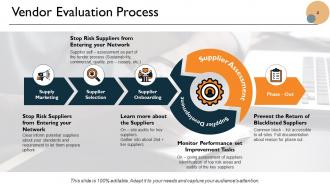
Slide 4: This slide represents Vendor Evaluation Process as- Supply Marketing, Supplier Selection, Supplier Onboarding, Phase - Out.
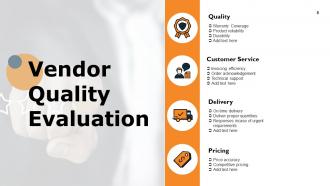
Slide 5: This slide displays Vendor Quality Evaluation describing- Quality, Delivery, Customer Service, Pricing.
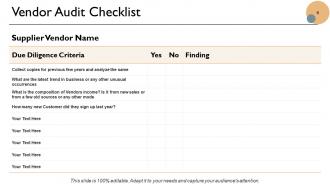
Slide 6: This slide showcases Vendor Audit Checklist with related test to show information. You can add or edit text as per needs.
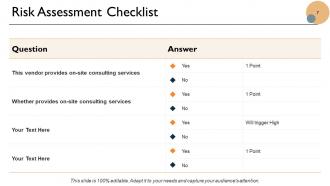
Slide 7: This Risk Assessment Checklist slide with questions, answers and points.
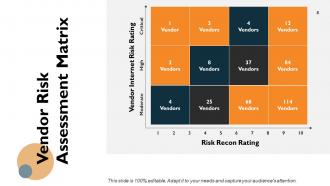
Slide 8: This slide presents Vendor Risk Assessment Matrix with modern, high and critical stages.
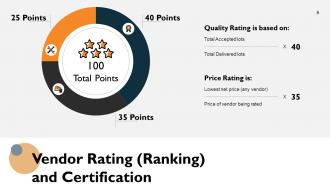
Slide 9: This slide displays Vendor Rating (Ranking) and Certification with quality rating and price rating.
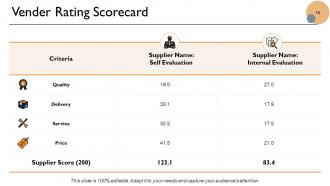
Slide 10: This slide represents Vender Rating Scorecard with- Criteria, Self evaluation and Internal evaluation.
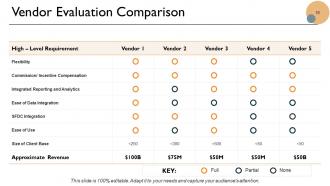
Slide 11: This slide showcases Vendor Evaluation Comparison in a table form with related information.
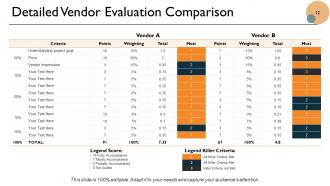
Slide 12: This slide shows Detailed Vendor Evaluation Comparison with Criteria, Points, Weighing etc. of different vendors.
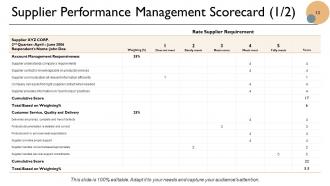
Slide 13: This slide shows Supplier Performance Management Scorecard with related information. You can add or edit data as per requirements.
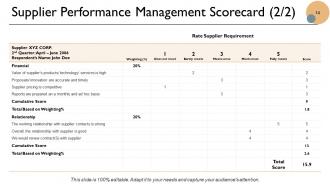
Slide 14: This is another slide continuing Supplier Performance Management Scorecard.
Slide 15: This slide shows Vendor Audit Icons.
Slide 16: This slide is titled as Additional Slides for moving forward.
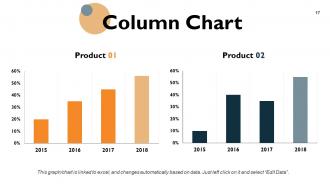
Slide 17: This slide shows Column Chart with two products comparison.
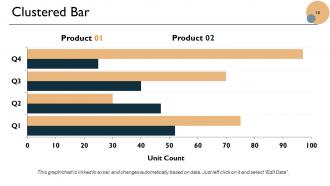
Slide 18: This slide presents Clustered Bar graph for product comparison.
Slide 19: This is Our Mission slide with related imagery and text boxes.
Slide 20: This is Our Team slide with names and designation.
Slide 21: This is a Puzzle slide with text boxes to show information.
Slide 22: This is Our Goal slide. Show your organisation's goals here.
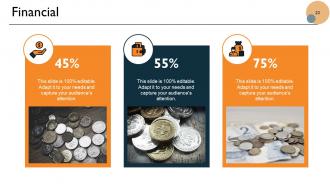
Slide 23: This is a Financial slide. Show your finance related stuff here.
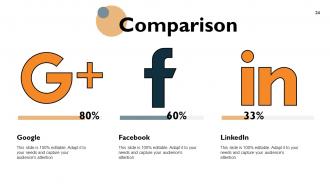
Slide 24: This is a Comparison slide to compare products, entities etc.
Slide 25: This slide shows Magnifying Glass with text boxes.
Slide 26: This is a Venn slide with text boxes to show information.
Slide 27: This is Our Target slide. Show your targets here.
Slide 28: This is a Timeline slide. Show information related with time periods here.
Slide 29: This slide shows Mind Map for representing entities.
Slide 30: This is Idea Or Bulb slide to state new idea or highlight specifications/ information etc.
Slide 31: This is a Thank You slide with Address, contact number and Email address.
Vendor Audit PowerPoint Presentation Slides with all 31 slides:
Use our Vendor Audit PowerPoint Presentation Slides to effectively help you save your valuable time. They are readymade to fit into any presentation structure.







FAQs for Vendor Audit
Look, you're basically making sure your vendor isn't screwing you over. Check if they're actually doing what they promised and aren't gonna put your business at risk. Financial stability matters too - last thing you want is them going under mid-contract. Security's huge, especially with all the data breaches lately. Plus you gotta verify they're following compliance rules or you could be liable. Honestly, I'd rather catch problems early than deal with a crisis. These audits help you figure out if you should stick with them, negotiate better terms, or just dump them entirely. Don't wait for red flags.
Honestly, documentation is your best friend here - track every email, deliverable, and performance metric from day one. Schedule regular check-ins with vendors to catch compliance issues early. I've watched so many teams panic during audits because they weren't keeping tabs on this stuff properly. Set up alerts for contract milestones and SLA deadlines so nothing slips through the cracks. Run your own internal reviews every quarter. Seriously, auditors love seeing a good paper trail that proves you were actually managing vendor performance instead of just hoping for the best.
Hey! Start with their finances - can they actually stick around long-term? Data security is huge too, plus making sure they're compliant with whatever regulations apply to your industry. Check their business continuity plans because when stuff hits the fan, you don't want to be left hanging. Their reputation matters more than people think - trust me, their mess becomes your mess real quick. Look at quality control, insurance coverage, contract terms. Oh and pricing transparency (some vendors love their hidden fees). I'd make a checklist so you don't forget anything important. Always ask for proof, don't just take their word.
Honestly, most vendors need auditing once a year, but it totally depends on how risky they are. The really critical ones? I'd hit them quarterly or every six months. Low-risk vendors can probably wait 2-3 years - though I've learned that lesson the hard way before. Performance problems are a red flag to audit sooner. Same goes if they're touching sensitive data or there's new regulations. Here's what works: sort your vendors into risk buckets first. High, medium, low. That way you're not just winging it with timing. Trust me, the "we'll deal with it later" approach always bites you eventually.
Data security should be your top priority when auditing vendors. You're handing over sensitive company info, so dig into their encryption standards, access controls, and compliance certs like SOC 2. Check their breach history too - how they handled past incidents tells you everything. Don't just take their word for it though. Ask for recent pen testing results and security assessments upfront. I've watched too many businesses get screwed because they didn't verify this stuff beforehand. Oh, and make sure their incident response procedures actually make sense - some are just fluff on paper.
Track the obvious stuff first - delivery times, quality scores, cost overruns, SLA compliance. Numbers don't lie. Response time matters way more than people think though - like when something breaks, how fast do they actually jump on it? Also monitor their financial health and security compliance because nobody wants surprises there. Communication quality is honestly make-or-break but super hard to measure. Oh, and track any improvements they're bringing to the table. Put it all in a simple scorecard so you can spot patterns quickly. Makes contract renewals way less painful when you've got real data.
Honestly, audit management platforms are where it's at - they'll automate all that boring compliance tracking stuff. Set up automated reminders so you don't forget renewals (been there, it sucks). Digital workflows mean no more drowning in Excel hell, which... thank god. Real-time dashboards show you everything at once instead of hunting through emails. I'd start small though - maybe pilot with your top 10 vendors using something that plays nice with whatever systems you've already got. Way less headache than the old-school approach.
Dude, get all your docs together first - contracts, compliance stuff, security certs, financials. Everything needs to be current and organized (learned this the hard way). Brief your team on who's answering what because trust me, awkward silence when the auditor asks basic questions is not a good look. Check the audit scope ahead of time so you know what they're actually looking at. Give them a decent workspace and pick one person to be the main contact. Oh, and definitely do a practice run with your team beforehand to spot any issues.
So first things first - document everything you found, then talk directly to your vendor contact about it. Half the time it's honestly just messy paperwork or someone dropped the ball on communication. Give them a shot to explain or show you missing docs. If the problems are real though, you'll want to hammer out a plan together with actual deadlines they need to hit. Serious compliance stuff? That might mean looping in your boss or tweaking the contract. Just stay friendly but don't budge on your standards.
You definitely want different departments looking at your vendors together. Procurement knows contracts inside out, but they'll miss technical issues that IT spots right away. Finance catches cost problems, ops sees service delivery risks, legal finds compliance stuff. Honestly, I've seen so many audit disasters that could've been avoided if someone had just asked "wait, what about this?" during the review. Get 3-4 departments involved minimum - those "oh crap" moments in team meetings are where you catch the real problems. Trust me, multiple expert eyes beats going solo every time.
Oh man, global vendor audits are wild. Different cultures communicate so differently - some are super blunt, others beat around the bush forever. Time zones suck obviously, but what really gets you is how they handle decisions. Some places need like 5 meetings before anyone agrees to anything. Your normal timeline? Forget it. I learned this the hard way on my first Asia audit - total disaster. Do yourself a favor and research their business culture first. Build in way more time than you think you need. Also try to find someone local who can translate the cultural stuff, not just language.
Check out MetricStream or ServiceNow if you want the full package - they'll handle risk assessments, doc tracking, all that vendor audit stuff. I swear I've watched teams pull their hair out using Excel when better options exist. Smaller company? Airtable or Monday.com work fine for tracking schedules and findings. You definitely need automated reminders, somewhere to store documents, and decent reporting. Oh, and map your current process first - don't just pick the fanciest tool and force everyone to deal with it. That never ends well.
First thing - get that report to procurement, legal, and senior management. I always do an executive summary up front with the big issues, then break everything down using red/yellow/green because honestly, who doesn't understand traffic lights? Each finding needs a clear timeline and someone's name attached to fix it. Oh, and definitely include the vendor in the conversation - being upfront about problems actually makes the partnership stronger, weird as that sounds. The whole point is calling out what's broken while giving everyone a realistic roadmap they can actually execute.
First thing - data privacy laws like GDPR will absolutely wreck you if vendors mess up your info during audits. Get those audit agreements locked down with clear data access rules upfront. Your vendor contracts need audit rights baked in from day one, not added later when you're panicking. Legal teams hate being blindsided (learned that the hard way), so loop them in early. Oh, and watch out for IP issues if you're digging into their systems. Run everything by legal before contacting vendors - trust me on this one.
Start by figuring out your main risk areas - financial stuff, data security, compliance, operations. Most generic checklists are honestly pretty useless since they don't fit your actual business. Mix hard numbers (financial ratios) with softer questions about their backup plans and disaster recovery. Check references early and ask for certifications upfront. I learned this the hard way with a vendor who looked great on paper but had zero redundancy. Keep it focused - maybe 25 questions max that actually relate to your risks. Don't overwhelm them, but be thorough about what could really hurt you if they mess up.
-
Colors used are bright and distinctive.
-
Innovative and attractive designs.
-
Excellent products for quick understanding.
-
very good