

Financial Audit Powerpoint Presentation Slides




Try Before you Buy Download Free Sample Product
 Impress Your
 Audience
 100%
100% Editable
 Save Hours
 of Time


Introducing Financial Audit PowerPoint Presentation Slides. This financial due diligence PPT theme gives you a layout to represent technological due diligence, customer due diligence, and other fundamentals. Showcase financial reports like P&L, balance sheet, and cash flow statement by easily editing this financial due diligence PPT template. Take the assistance of readily available stunning infographics of Commercial Due Diligence Process Presentation Slides to consolidate factual information about any organization. Compile data like highest revenue-generating customers, and customer satisfaction in moments with the help of our commercial analysis PowerPoint deck. Our content-ready operational diligence PowerPoint slideshow also offers a layout to emphasize questions that influence technical due diligence. Use this business diligence PowerPoint presentation’s KPI diagrams, line chart, area chart, etc. to present bland stats with visual distinction. Our PPT assists in mergers and acquisitions by addressing vital strategic fit components like business compatibility. You may even present legal highlights such as litigation, and taxation via layouts included in this financial analysis PowerPoint presentation.
People who downloaded this PowerPoint presentation also viewed the following :
Content of this Powerpoint Presentation
Slide 1: This slide introduces Financial Audit. State your Company name and begin.
Slide 2: This slide depicts Outline of Due Diligence.
Slide 3: This slide showcases Financial Due Diligence
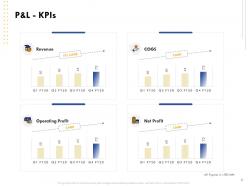
Slide 4: This slide depicts P&L - KPIs.
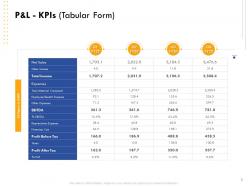
Slide 5: This slide showcases P&L - KPIs in tabular form.
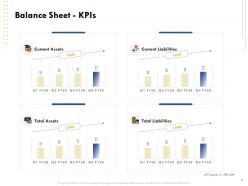
Slide 6: This slide depicts Balance Sheet - KPIs
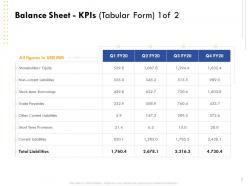
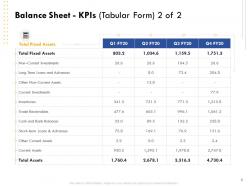
Slide 7: This slide shows Balance Sheet - KPIs in Tabular Form.
Slide 8: This slide showcases Total Assets of the Organization.
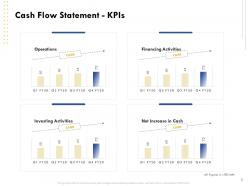
Slide 9: This slide showcases Cash Flow Statement - KPIs.
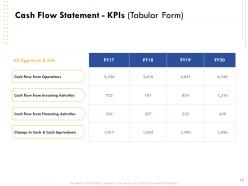
Slide 10: This slide presents Cash Flow Statement - KPIs in Tabular Form.
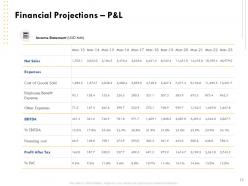
Slide 11: This slide depicts Financial Projections – P&L.
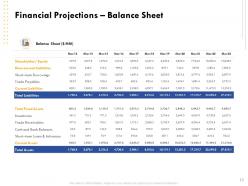
Slide 12: This slide displays Financial Projections – Balance Sheet.
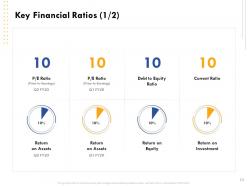
Slide 13: This slide presents Key Financial Ratios.
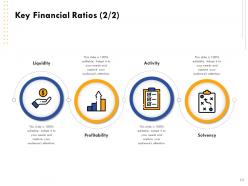
Slide 14: This slde presents Key Financial Ratios with- Profitability, Liquidity, Activity, Solvency.
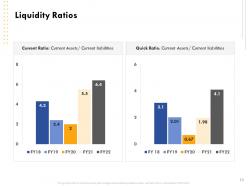
Slide 15: This slide depicts Liquidity Ratios.
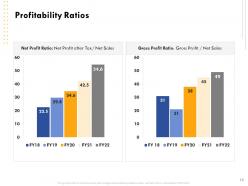
Slide 16: This slide showcases Profitability Ratios.
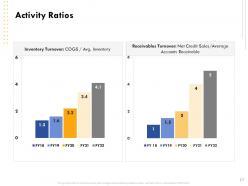
Slide 17: This slide presents Activity Ratios.
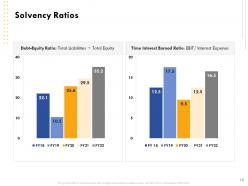
Slide 18: This slide showcases Solvency Ratios.
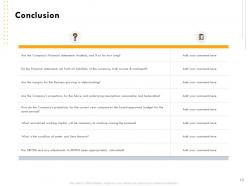
Slide 19: This slide showcases Conclusion.
Slide 20: This slide describes Technology/Intellectual Property.
Slide 21: This slide depicts Technology/Intellectual Property.
Slide 22: This slide showcases Customers/Sales.
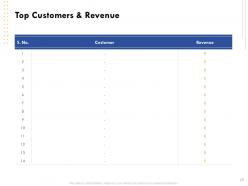
Slide 23: This slide displays Top Customers & Revenue
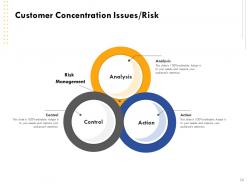
Slide 24: This slide showcases Customer Concentration Issues/Risk.
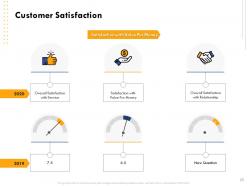
Slide 25: This slide showcases Customer Satisfaction with- Key Performance Indicators
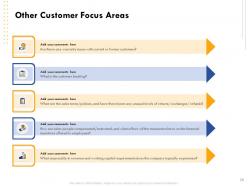
Slide 26: This slide depicts Other Customer Focus Areas.
Slide 27: This slide displays Strategic Fit with Buyer
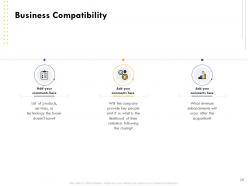
Slide 28: This slide showcases Business Compatibility.
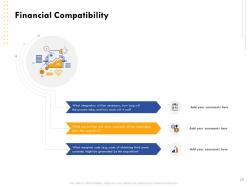
Slide 29: This slide displays Financial Compatibility.
Slide 30: This slide displays Material and Contract with related inforamtion.
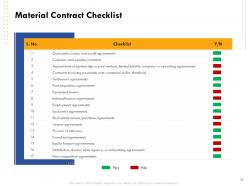
Slide 31: This slide displays Material Contract Checklist.
Slide 32: This slide displays Employee Management Issues.
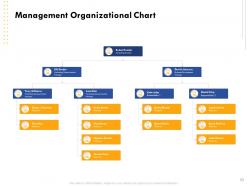
Slide 33: This slide showcases Management Organizational Chart.
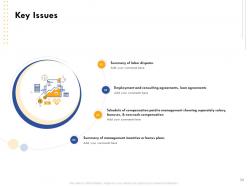
Slide 34: This slide showcases Key Issues.
Slide 35: This slide describes Litigation.
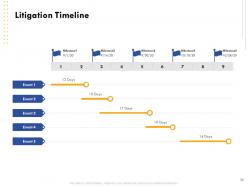
Slide 36: This slide showcases Litigation Timeline.
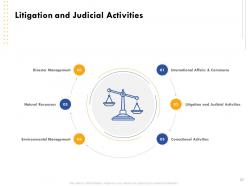
Slide 37: This slide presents Litigation and Judicial Activities.
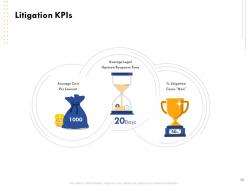
Slide 38: This slide showcases Litigation KPIs.
Slide 39: This slide showcases Taxation.
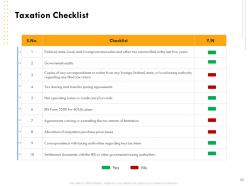
Slide 40: This slide depicts Taxation Checklist
Slide 41: This slide showcases Insurance Antitrust & Regulatory Issues.
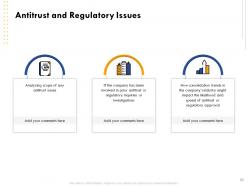
Slide 42: This slide showcases Antitrust and Regulatory Issues.
Slide 43: This slide displays Insurance Checklist.
Slide 44: This slide describes Environmental Issues & General Business Affairs.
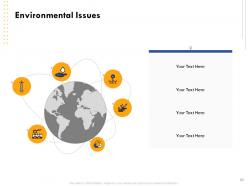
Slide 45: This slide presents Environmental Issues.
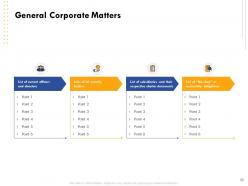
Slide 46: This slide showcases General Corporate Matters with- List of Current Officers and Directors, Lists of all Security Holders, List of subsidiaries and their respective charter documents, List of “No-shop” or exclusivity obligations.
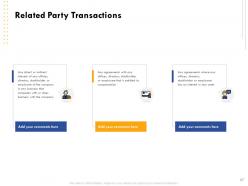
Slide 47: This slide depicts Related Party Transactions
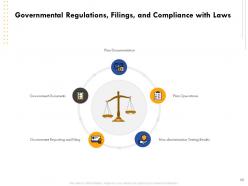
Slide 48: This slide showcases Governmental Regulations Filings and Compliance with Laws.
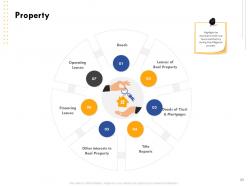
Slide 49: This slide showcases Property with- Deeds, Leases of Real Property, Deeds of Trust & Mortgages, Title Reports, Other Interests in Real Property, Financing Leases, Operating Leases.
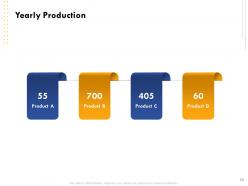
Slide 50: This slide showcases Yearly Production with products.
Slide 51: This slide depicts Marketing & Business Development.
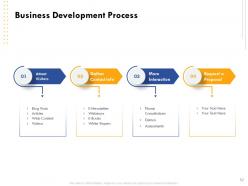
Slide 52: This slide depicts Business Development Process.
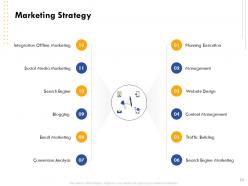
Slide 53: This slide showcases Marketing Strategy.
Slide 54: This slide showcases Competitive Analysis.
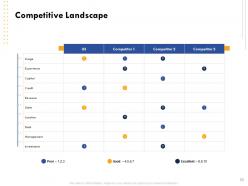
Slide 55: This slide shows Competitive Landscape.
Slide 56: This slide depicts Competitor Analysis.
Slide 57: This slide presents the Summary.
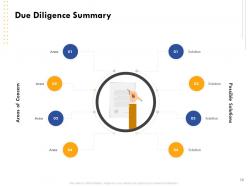
Slide 58: This slide showcases Due Diligence Summary
Slide 59: This is Financial Due Dilligence Icons Slide.
Slide 60: This slide is titled as Additional Slides for moving forward.
Slide 61: This slide displays Mission, Vision and Goals.
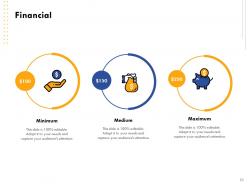
Slide 62: This slide shows Finance related stuff.
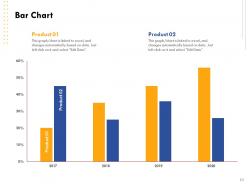
Slide 63: This slide shows Bar Chart with product comparison.
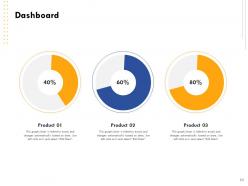
Slide 64: This slide displays Dashboard
Slide 65: This slide shows Roadmap process.
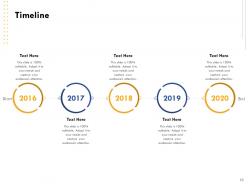
Slide 66: This slide shows Timeline process.
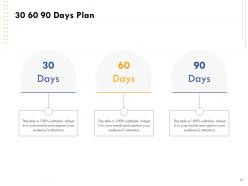
Slide 67: This is 30 60 90 Days Plan slide.
Slide 68: This is Thank you slide with Contact details.
Financial Audit Powerpoint Presentation Slides with all 68 slides:
Use our Financial Audit Powerpoint Presentation Slides to effectively help you save your valuable time. They are readymade to fit into any presentation structure.











FAQs for Financial Audit
Okay so basically auditors come in to give an independent thumbs up (or down) on your financial statements - making sure they're accurate and follow proper accounting rules. They'll also check out your internal controls. It's kinda like getting your car inspected, but way more boring. Oh, and they assess whether your company might go under, which sounds dramatic but it's standard stuff. The whole point is building trust with investors and lenders who want proof you're not fudging numbers. My advice? Get your documentation organized beforehand because scrambling during the audit sucks.
So basically, internal audits are your own company's people checking things out - they're looking at processes, risks, stuff like that all year round. External audits? That's outside firms (think Big Four accounting companies) coming in once a year to verify your financial statements are accurate. Internal is more like "hey, how can we improve this?" while external auditors are there to tell investors "yeah, these numbers check out." Honestly, external audits can be a pain but they're necessary. Either way, start collecting your paperwork early - you'll thank yourself later when you're not scrambling around looking for receipts.
So you'll need to prep four financial statements for the audit. Balance sheet shows your assets, liabilities, and equity at one point in time. Income statement covers revenue and expenses over a period - auditors always dig into this one the most, honestly. Cash flow tracks money moving in and out. Then there's the stockholders' equity statement showing ownership changes. Oh, and definitely get everything reconciled beforehand. Trust me, you don't want auditors finding messy numbers - it just creates more work for everyone.
Risk assessment is your roadmap for the whole audit - shows you exactly where to spend your time. Look for areas with the highest chance of material misstatement, then build your procedures around those spots. Honestly, it's like triaging in an ER. High risk areas need way more substantive testing. This helps you figure out what procedures to do, when to do them, and how much testing you actually need. I always tell people to spend serious time on this upfront part because it makes fieldwork so much smoother later. Trust me on this one.
Honestly, tech can totally transform how you audit - just don't go overboard at first. Data analytics lets you examine whole datasets instead of tiny samples, which is huge. AI catches weird patterns you'd probably miss, and automated testing runs controls monitoring 24/7. Cloud platforms are a game-changer too since your team can actually work together without those awful Excel version nightmares (ugh, been there). My advice? Start with whatever's driving you most crazy right now. Don't try revolutionizing your entire process overnight - you'll just stress yourself out. Pick one tool that solves your biggest headache first.
Auditors go crazy for anything that looks off - weird revenue jumps, missing paperwork, transactions without proper approval. They'll dig into weak internal controls and undisclosed related-party deals too. Management being sketchy or dodging questions? Huge red flag. Those last-minute journal entries right before period-end are basically screaming "audit me harder" lol. Cash flow weirdness and assets they can't verify will also catch their attention fast. Honestly, just keep your docs organized and don't try to hide stuff. Makes the whole process way smoother and they won't treat you like you're running some shady operation.
Honestly, most companies do it yearly - public ones have to by law, and if you hit certain revenue numbers you're stuck with it anyway. Smaller private companies can stretch it to every 2-3 years, but good luck explaining that to your bank when you need a loan. Annual's pretty much expected now, even for smaller businesses. Your CPA will probably push for yearly too (steady income for them, right?). The timing matters more than you'd think - keeping it consistent helps catch problems before they get ugly. Really depends on your size and where you're headed though, so definitely worth asking your accountant what works.
Obviously you need someone with their CPA - that's like, table stakes. Industry experience in your field is huge too. Can't tell you how many times I've seen auditors miss stuff because they don't get the business. Make sure they're up on tech since everything's cloud-based now. Communication matters more than you'd think - some of these people are brilliant but can't explain what they found to save their lives. Oh, and definitely verify they've got fraud detection training and know GAAP inside out. Quick check: ask about their continuing ed credits so you know they're not stuck in 2015.
Dude, audits are like getting your financials fact-checked by someone who actually knows what they're doing. Investors love seeing clean audit results because it means your numbers aren't total BS. Nobody's gonna throw money at sketchy financials, obviously. But here's the thing - if auditors find problems or give you one of those "qualified opinion" things, investors will run for the hills. My old boss learned this the hard way actually. Keep your books tight all year instead of panicking when audit season hits. Trust me on this one.
Hey! So get your financial stuff together like 6-8 weeks before the audit - bank statements, receipts, invoices, all that paperwork. Yeah, it's tedious but honestly way better than scrambling last minute. Make sure your books are current and fix any weird discrepancies now. Set up a clean workspace for the auditors too. Oh, and pick one person from your team to be their go-to contact - auditors hate bouncing between different people for answers. Being organized upfront seriously saves you from major headaches later.
Okay so independence is literally everything - zero financial ties to your client and no personal relationships that mess with your judgment. Don't just believe whatever management tells you either, you've got to actually check their work. Keep all client info locked down tight, obviously. The independence rules are honestly where most new auditors screw up because they're way stricter than you'd think. Also can't take any gifts or fancy dinners that might sway you. Oh and if you're ever unsure about something ethical? Call your firm's ethics line first - way better than guessing wrong.
So basically these standards tell you exactly how to audit financial statements - what procedures to follow, what evidence you need, all that stuff. IFRS clients have totally different revenue recognition and asset valuation rules than US GAAP ones. Honestly it gets confusing sometimes keeping track of which framework does what! Your whole audit approach changes depending on what your client uses - risk assessment, testing procedures, materiality thresholds. I learned this the hard way on my first engagement when I didn't check which standards they followed first. Always figure out their framework before you start planning because it literally shapes everything you'll do.
Fraud's a pain because these people are actively hiding their mess - totally different from regular mistakes that just pop up. Management override is the worst since they can skip right past controls. When employees team up? Forget about it, way harder to catch than solo acts. Sample sizes are usually tiny too, so red flags slip through cracks. Honestly, I'd watch anything with heavy management fingerprints super closely. And yeah, trust your instincts - even when the numbers look squeaky clean, that weird feeling might be telling you something important.
Dude, that's rough. A failed audit basically torpedoes your credibility with everyone - banks, investors, customers, the works. Your loan terms will get violated, credit rating tanks, and suddenly nobody trusts you can handle money properly. Regulators start sniffing around too, which never ends well. The crazy part is how fast suppliers and clients bail once word gets out. Look, you gotta move quick on fixing whatever they flagged. Be upfront about the problems and get better controls in place. Otherwise you're looking at way more expensive financing down the road, if you can even get it.
Honestly, audits are like getting a second opinion on your finances - they'll show you what's actually happening versus what you think is happening. Sometimes the reality is way different than expected! They catch inefficiencies your team might be too close to see and reveal cash flow patterns you'd otherwise miss. The independent perspective usually spots risks and opportunities that aren't obvious from the inside. You can use those findings to figure out where to cut costs, what deserves more investment, and how to reallocate resources better. It's basically your financial reality check before making big strategic moves.
-
Very unique, user-friendly presentation interface.
-
Great experience, I would definitely use your services further.
-
It saves your time and decrease your efforts in half.
-
Amazing product with appealing content and design.
-
Innovative and attractive designs.
-
Unique and attractive product design.
-
Visually stunning presentation, love the content.
-
Great quality slides in rapid time.
-
Qualitative and comprehensive slides.
-
Attractive design and informative presentation.