


Cost Accounting Powerpoint Presentation Slides




Try Before you Buy Download Free Sample Product
 Impress Your
 Audience
 100%
100% Editable
 Save Hours
 of Time


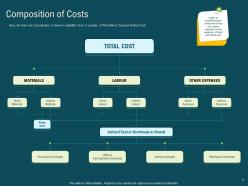
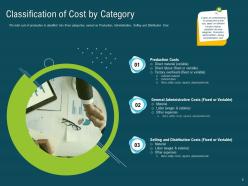
Introducing Cost Accounting PowerPoint Presentation Slides. Showcase composition of costs by taking the assistance of a readily available PPT slide deck. The presentation showcases the total cost of production, which are classified into categories of direct and indirect costs. Take the assistance of this composition of costs PPT slide deck and analyze the elements of prime costs such as direct material costs, direct labor costs, other prime costs including opening and closing stock of material. Showcase the detailed analysis of the inventory of different products by including information on costing and unit sold. Take advantage of the production cost PowerPoint slide deck and present the elements of indirect cost by explaining production overheads, office, and administration overheads, selling overheads, distribution overheads, etc. Also, the cost sheet helps to show a detailed description of the cost of goods sold. Utilize our easy-to-use cost components PPT templates and analyze the cost sheet ratio. Download this ready-to-use production cost components PPT slides and assessing the variable costs of each step of production.
People who downloaded this PowerPoint presentation also viewed the following :
Content of this Powerpoint Presentation
Slide 1: This slide introduces Cost Accounting. State your Company name and begin.
Slide 2: This slide displays Table of Contents
Slide 3: This slide shows Table of Contents of the presentation.
Slide 4: This slide depicts Composition of Costs.
Slide 5: This slide shows Classification of Cost by Category.
Slide 6: This slide displays Table of Contents
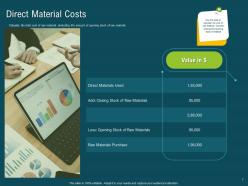
Slide 7: Use this slide to calculate the cost of raw material, includes closing and opening stock of material
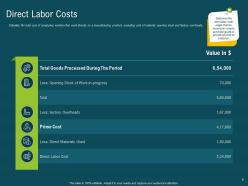
Slide 8: This slide provides Direct Labor Costs.
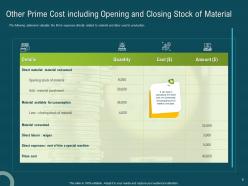
Slide 9: This slide depicts Other Prime Cost including Opening and Closing Stock of Material
Slide 10: This slide displays Table of Contents.
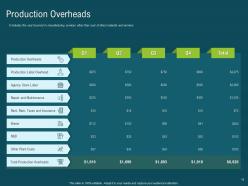
Slide 11: This slide displays Production Overheads.
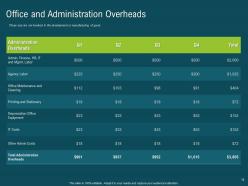
Slide 12: This slide shows Office and Administration Overheads.
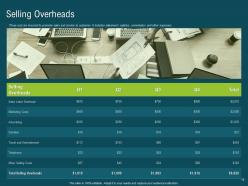
Slide 13: This slide depicts Selling Overheads
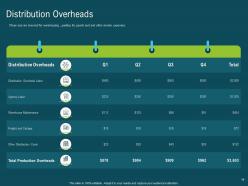
Slide 14: This slide shows Distribution Overheads.
Slide 15: This slide displays Table of Contents.
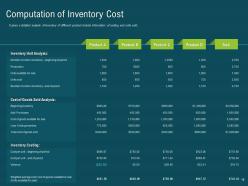
Slide 16: This slide provides gives a detailed analysis of inventory of different product include information of costing and units sold.
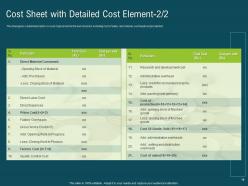
Slide 17: The sheet gives a detail description on cost of good sold at the end of period, including cost of sales, raw material, overheads and production
Slide 18: This slide gives a detailed analysis of inventory of different product include information of costing and units sold.
Slide 19: This slide displays Table of Contents.
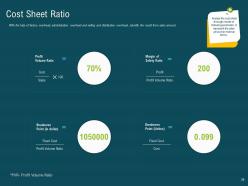
Slide 20: This slide show Cost Sheet Ratio.
Slide 21: This slide is continued with Cost Sheet Ratio Cont.
Slide 22: This is Icons Slide for Cost Accounting.
Slide 23: This slide is titled as Additional Slides for moving forward.
Slide 24: This slide displays Our Mission, Vision and Goals.
Slide 25: This is About Us slide to showcase Company specifications.
Slide 26: This slide depicts Goals.
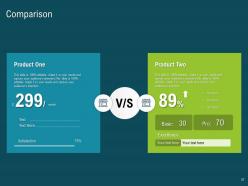
Slide 27: This slide shows Comparison of two products.
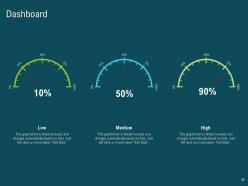
Slide 28: This slide presents Dashboard process.
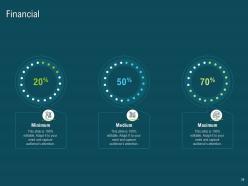
Slide 29: This slide present Financial process.
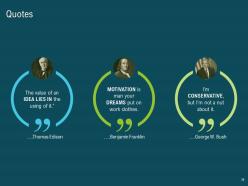
Slide 30: This is Quotes slides.
Slide 31: This slide shows Puzzle process.
Slide 32: This slide displays Target process.
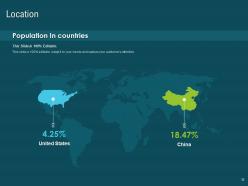
Slide 33: This slide displays Location.
Slide 34: This slide shows Circular process.
Slide 35: This slide shows Venn
Slide 36: This slide displays Mind Map
Slide 37: This slide shows Magnifying Glass
Slide 38: This is Idea Generation slide.
Slide 39: This is Thank You slide with Contact details.
Cost Accounting Powerpoint Presentation Slides with all 39 slides:
Use our Cost Accounting Powerpoint Presentation Slides to effectively help you save your valuable time. They are readymade to fit into any presentation structure.






FAQs for Cost Accounting
So you'll need cost classification first - basically separating direct from indirect costs. Then figure out how to allocate overhead properly using job or process costing (depends what kind of business you're running). Variance analysis is honestly where you get the best insights - comparing what you budgeted vs actual spending. Activity-based costing helps if your operations are complicated, but don't overthink it at first. Start simple with clean data collection. I'd focus on getting consistent cost data before getting fancy with allocation methods - learned that the hard way! Good reporting systems tie it all together.
So basically, job order costing tracks each individual project separately - like if you're making custom cabinets or doing consulting work. Process costing just averages everything out when you're cranking out identical stuff, think cereal boxes or soap bottles. Honestly, job order is such a pain to manage because you're constantly tracking materials and hours for every single order. Process costing? Way simpler since you're dividing total costs by total units. If your stuff is unique every time, go with job order. Mass producing the same thing over and over? Process costing all the way. Just look at what you're actually making first.
So standard costing is your way of setting expected costs upfront for materials, labor, and overhead - then you compare what actually happened to catch problems early. Think of it like a budget roadmap. When you spot variances, dig into why they're happening. That's honestly where the magic happens. You can stop cost overruns before they spiral, keep departments on track, and make smarter calls about pricing. My advice? Don't get overwhelmed trying to analyze every little variance. Focus on the big ones first - that's where you'll see real results and actually move the needle on your bottom line.
So cost behavior analysis is basically how you figure out which expenses stay the same vs. which ones change when business picks up or slows down. Super helpful for budgeting because you're not just throwing numbers at a wall anymore. Fixed costs like rent? Those don't budge whether you sell 100 units or 1000. Variable costs though - materials, shipping, that stuff - they'll move with your sales volume. I'd start by sorting your biggest expenses into those buckets first. Then when you're planning budgets, you can actually model realistic scenarios. Like what if we grow 20% next quarter? Makes forecasting way less of a guessing game honestly.
You'll mainly use material price/quantity variance, labor rate/efficiency variance, and overhead spending/volume variance. Sales price and volume variance too if you're analyzing revenue. Break down your total variance into these components so you can see exactly where costs went off track. Honestly the formulas become second nature after a while - kinda like riding a bike. Start with material and labor since those usually have the biggest impact. Oh, and focus on variances that are both significant dollar-wise AND actually controllable by your team. No point stressing over stuff you can't change anyway.
Materials and labor costs are straightforward - you can see exactly where your money goes. But overhead stuff like utilities and admin expenses? That's where things get messy. These indirect costs get divided up between your products, and honestly, most people suck at figuring out the real allocation. Both types hit your profits hard though. You've gotta track everything properly or you'll end up pricing wrong and wondering why you're losing money. I'd start by looking at how you're splitting up those overhead costs - that's usually where the weird surprises are hiding.
So basically, fixed costs are your baseline - that's what you gotta cover no matter what. Variable costs mess with your margins per unit, which changes how fast you hit break-even. Here's what sucks: if your variable costs eat up too much of your selling price, you'll need crazy high volume just to break even. The sweet spot is maximizing that gap between what you sell for and what each unit actually costs you. Honestly, try plugging in different variable cost numbers - it's wild how much they swing your break-even point. Helps you figure out which expenses to attack first too.
ABC is a game-changer for figuring out what your products actually cost you. Traditional costing just dumps overhead everywhere based on labor or machine hours - pretty useless honestly. With ABC, you're tracking costs to the real activities that cause them. I can't tell you how many times I've seen companies realize their "star" products were secretly bleeding money. Plus you'll catch inefficient processes you never noticed before. Makes decisions about outsourcing and product mix way easier too. Oh, and definitely start by mapping out your main activities first - see where you've been getting things wrong.
Dude, cost accounting is a game changer - you actually see where your cash goes instead of just guessing. Most of us small business owners (myself included, oops) stick with basic bookkeeping and hope for the best. But when you track real costs? You'll price smarter and catch problems early. Like, you'll finally know which products actually make money and which customers are worth keeping. Overhead becomes way less mysterious too. Start with your biggest expenses first - don't overcomplicate it at the beginning. My accountant friend always says the businesses that track costs properly rarely go under, and honestly, that makes sense.
Look, cost accounting is like having x-ray vision for your pricing decisions. You'll know exactly what each product actually costs you - the variable stuff, fixed overhead, margins, all of it. That way you can figure out where you have wiggle room to drop prices and where you absolutely can't budge. Honestly, it's a game-changer when competitors start getting aggressive. You can identify which products might work as loss leaders, spot your rock-bottom price floors, and know which items have fat margins. Without these numbers? You're basically throwing darts blindfolded - either walking away from good deals or accidentally selling stuff at a loss.
Look, the golden rule is don't fudge numbers to make your boss happy - I know it's tempting when they're breathing down your neck. Document everything so you can back up your cost allocations later. Keep that financial data locked down tight since competitors would kill for it. If you see sketchy stuff in the books, you've gotta speak up even if it's awkward. Oh and be upfront about what you don't know - nobody expects you to be an expert at everything. Stay independent in your analysis and avoid anything that screams conflict of interest.
Honestly, the right tech makes cost accounting so much easier. You'll automate data collection and cut down on those annoying manual errors. ERP systems pull everything together - procurement, production, the whole deal. AI catches cost patterns you'd miss otherwise (and trust me, there are always patterns hiding). Cloud tools are clutch for remote teams since everyone can access the same data. Automated reports? Total lifesaver - no more drowning in spreadsheets. Here's the thing though: pick something that works with how you already do things. Don't torture your team with some overcomplicated system. Start small with one area, then build out from there once you see what works.
Honestly, the hardest part is that overhead doesn't map cleanly to any specific product. You're stuck making educated guesses about how to divvy it up. Those old-school methods like splitting by labor hours? Pretty useless if you've got automated stuff running. Activity-based costing works better but takes forever to set up right - learned that the hard way. Fixed costs act weird compared to variable ones when production shifts around. Some expenses just get shared across everything no matter what you do. I'd say pick something simple to start, then tweak it once you see what actually drives your costs.
So basically, cost accounting reports show you exactly where you're making money and where you're not. You get breakdowns by product, department, whatever - then you can figure out which stuff to focus on and which to ditch. Without this data you're just guessing at strategy, which is pretty much useless. Plus you can run different scenarios to see how changes might affect your profits. Oh, and start by figuring out which reports actually answer your biggest strategic questions first. Don't just pull every report available - that's overwhelming and won't help much.
Break down your expenses into detailed categories - that's where you'll see what's really happening with your money. Activity-based costing rocks for this because it shows the actual cost drivers. Hunt for patterns: which activities burn through resources, where you're overspending versus competitors, anything that looks weirdly expensive. Comparing actual costs to budgets and benchmarks is clutch. Honestly, I'd tackle your three biggest cost categories first since that's usually where the easiest wins are hiding. Sometimes the obvious stuff gets overlooked when you're buried in spreadsheets all day.
-
Really like the color and design of the presentation.
-
Awesomely designed templates, Easy to understand.
-
Very well designed and informative templates.
-
Unique and attractive product design.
-
Great designs, Easily Editable.
-
Graphics are very appealing to eyes.
-
Awesomely designed templates, Easy to understand.
-
Hello there,
The presentation seems good. I really enjoy reading it. This is in a professional way. As company this presentation helps a lot. Saving a lot of wasting time on searching for information. -
Top Quality presentations that are easily editable.