


Project Cost Estimation Methods Powerpoint Presentation Slides




Try Before you Buy Download Free Sample Product
 Impress Your
 Audience
 100%
100% Editable
 Save Hours
 of Time


Successful projects require accurate cost estimates, discuss major estimating techniques with this content ready Project Cost Estimation Methods Powerpoint Presentation Slides. Incorporate easy to use project estimation methods PPT slides to monitor project spending. The project estimation techniques PowerPoint complete deck includes various professional slides such as project description, process, management team, budget, timeline, work break down structure, activities sequence, Gantt chart, cost estimate, progress summary, dashboard, budgeting planned vs. actual, conclusion report, etc. Utilize project management budget PowerPoint templates to forecast the cost of completing a project with a defined scope. Assess the financial feasibility of a project using visually appealing cost estimating tools PPT visuals. Furthermore, with the help of planning cost management PPT slides, you can forecast the resources and associated costs. The methods of project estimation presentation deck have eye-appealing designs with relevant content. Simply download this professionally designed project estimation techniques presentation deck to impress your audience. Draw in fresh customers with our Project Cost Estimation Methods Powerpoint Presentation Slides. Your earnings are bound to improve.
People who downloaded this PowerPoint presentation also viewed the following :
Content of this Powerpoint Presentation
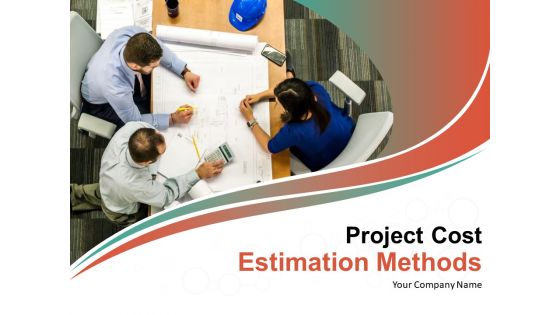
Slide 1: This slide introduces Project Cost Estimation Methods. State Your Company Name and begin.
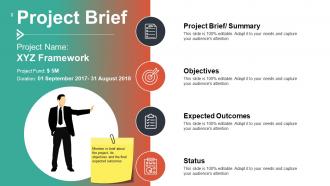
Slide 2: This slide shows Project Brief describing- Status, Project Brief/ Summary, Objectives, Expected Outcomes.
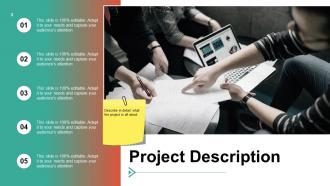
Slide 3: This slide presents Project Description. Describe in detail about the project.
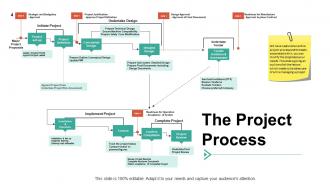
Slide 4: This slide displays The Project Process as- Initiate Project, Undertake Design, Undertake Tender, Implement Project, Complete Project.
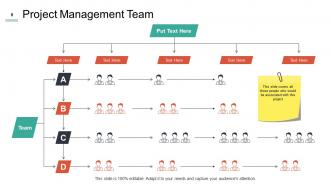
Slide 5: This slide represents Project Management Team. Show names and other information of the people associated with the project.
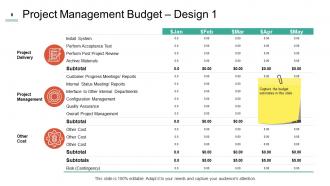
Slide 6: This slide showcases Project Management Budget with- Project Delivery, Project Management, Other Cost.
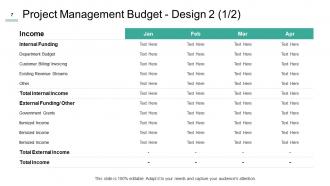
Slide 7: This is another slide on Project Management Budget describing Internal and external income.
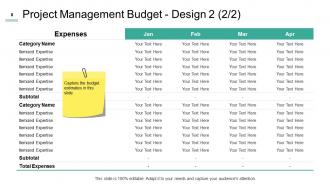
Slide 8: This is another slide on Project Management Budget describing expenses.
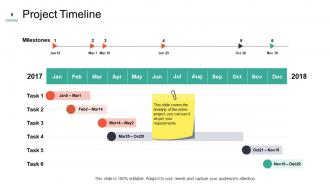
Slide 9: This slide shows Project Timeline of the entire project. You can use it as per your own requirements.
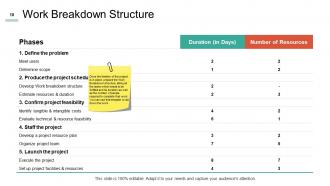
Slide 10: This slide presents Work Breakdown Structure with tasks, duration and number of people required to complete the project.
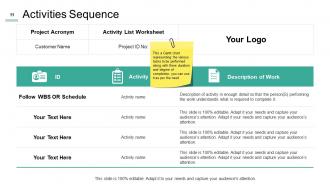
Slide 11: This slide displays Activities Sequence with list of work which needs to be performed and its description.
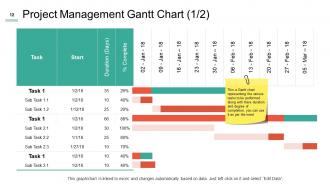
Slide 12: This slide represents Project Management Gantt Chart with various tasks that need to be performed along with there duration and degree of completion.
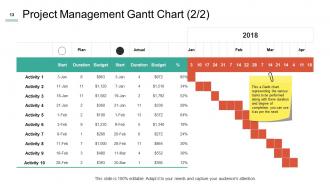
Slide 13: This is another slide presenting Project Management Gantt Chart with task duration and degree of completion.
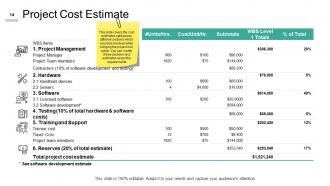
Slide 14: This slide showcases Project Cost Estimate to describe the cost estimates split across different sections which would be involved while bringing the project in to action.
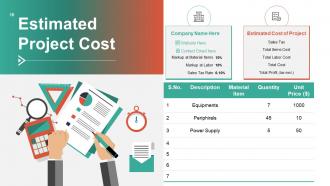
Slide 15: This slide shows Estimated Project Cost with description, material item and quantities.
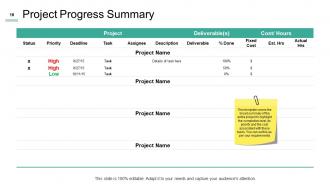
Slide 16: This slide presents Project Progress Summary of the entire project to highlight the completion level, its priority and the cost associated with these tasks.
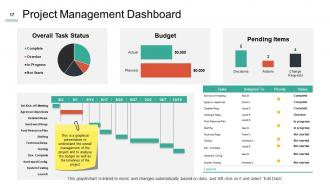
Slide 17: This slide displays Project Management Dashboard describing pending items, overall task status, budget etc.
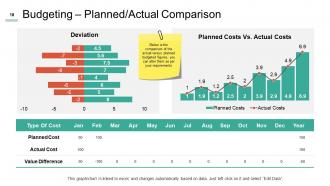
Slide 18: This slide represents Budgeting - Planned/ Actual Comparison. You can alter the items as per requirements.
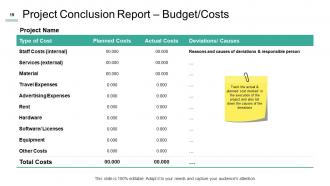
Slide 19: This slide showcases Project Conclusion Report -Budget/ Costs to track the actual & planned cost involved in the execution of the project and also list down the causes of the deviations.
Slide 20: This slide displays Project Cost Estimation Methods Icons.
Slide 21: This slide reminds about 15 minutes Coffee Break.
Slide 22: This slide is titled as Additional Slides for moving forward.
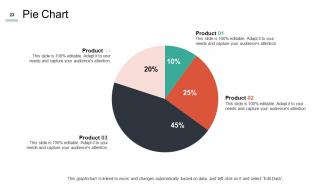
Slide 23: This slide displays Pie Chart with data in percentage.
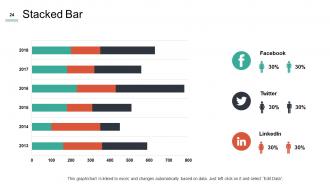
Slide 24: This slide showcases Stacked Bar chart with three products comparison.
Slide 25: This is Our Mission slide with imagery and text boxes.
Slide 26: This is Our Team slide with names and designation.
Slide 27: This is Our Goal slide. State your important goals here.
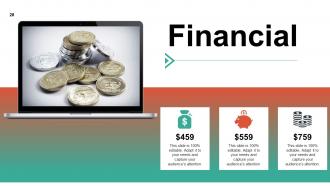
Slide 28: This is a Financial slide. Show finance related stuff here.
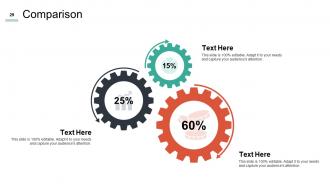
Slide 29: This is a Comparison slide to state comparison between commodities, entities etc.
Slide 30: This is Quotes slide to highlight or state anything specific.
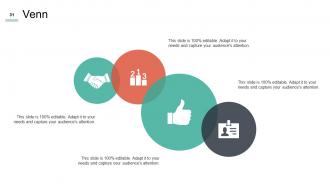
Slide 31: This is a Venn slide with text boxes.
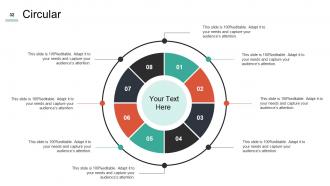
Slide 32: This is a Circular diagram slide with text boxes to show information.
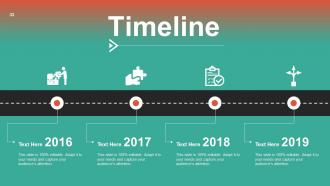
Slide 33: This is a Timeline slide to show information related with time period.
Slide 34: This is Silhouettes slide to show people specific information etc.
Slide 35: This is Our Target slide. Show your targets here.
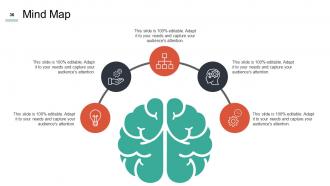
Slide 36: This slide shows Mind Map for representing entities.
Slide 37: This is Bulb or Idea slide to state a new idea or highlight specifications, information etc.
Slide 38: This slide displays Magnifying Glass with additional text boxes.
Slide 39: This is a Thank You slide with address, contact numbers and email address.
Project Cost Estimation Methods Powerpoint Presentation Slides with all 39 slides:
Use our Project Cost Estimation Methods Powerpoint Presentation Slides to effectively help you save your valuable time. They are readymade to fit into any presentation structure.


FAQs for Project Cost Estimation Methods
Honestly, it comes down to a few key things. Project scope clarity is huge - if requirements are fuzzy, you're basically guessing. Team experience matters too, especially with familiar tech versus something totally new. I've learned the hard way that historical data can save your butt if it's actually good quality. Time pressure screws everything up though. You rush the estimate and boom, disaster. External dependencies? They'll kill you every time. Resource availability is another wildcard - like when Sarah suddenly goes on maternity leave mid-project. Always pad your estimates and write down your assumptions. Future you will thank present you.
Honestly, your estimation method makes or breaks your budget accuracy. Analogous estimating gets you quick ballpark numbers by comparing to old projects, but you might miss weird stuff that's unique to this one. Parametric uses math models for better precision. Bottom-up is my go-to though - yeah it takes forever, but breaking everything into detailed work packages gives you the most accurate results. Oh, and match your method to where you are in the project. Start rough for initial budgets, then get super detailed once you actually know what you're dealing with.
So bottom-up means you estimate each tiny task first, then add everything up. Top-down is the reverse - you look at the big picture (maybe similar projects you've done) and work backwards from there. Here's the thing though - bottom-up takes forever but it's super accurate. Top-down? Fast as hell but you might miss stuff. Most PMs I know actually do both and see if the numbers match up. If they're way off, something's weird. I'd probably start with top-down when you're just figuring out budgets, then get into the weeds with bottom-up once things are clearer.
So analogous estimating is basically your go-to when you're super early in planning and need a rough number fast. You'll want 2-3 similar past projects to compare against - the closer they match your current scope and team size, the better. Honestly, it's just a fancy way of saying "educated guessing" but it actually works pretty well. The trick is having decent historical data from projects that aren't totally different from what you're doing now. Perfect for when you don't have all the details figured out yet but someone's asking "how much will this cost?"
You know how spreadsheets can miss the weird stuff that always comes up? That's where getting a few experienced people to weigh in really helps. They'll catch things like "oh crap, we totally forgot about permits" or whatever. Don't just ask one person though - get multiple opinions since everyone has different blind spots. Use them to double-check your initial numbers and spot what you might've missed. The key is writing down why they think certain things will cost more. Honestly, I've seen too many projects blow up because someone didn't think to ask the person who'd actually done this before.
Dude, historical data is like having a crystal ball for project costs. Pull up what you spent on similar projects - same scope, team size, that kind of stuff. Way better than throwing darts at numbers. You'll start noticing patterns too, like how testing always goes over budget (surprise, surprise). Just don't compare a mobile app to a full enterprise system - that's useless. If you don't have this data yet, start collecting it now. Trust me, future you will thank you when you're not wildly guessing on estimates.
Reserve analysis is basically your backup plan for when costs go sideways. List out your biggest risks first, then figure out how much extra cash you'd need if they actually happen. Most projects need around 5-20% contingency - depends how messy things could get. I always tell people to bake this into your baseline budget right away, don't just slap it on at the end. Contingency planning means having actual responses ready, not just crossing your fingers. Honestly seen way too many projects tank because someone thought they didn't need the extra buffer. Be systematic about it though.
Dude, the worst trap is being way too optimistic about timelines. Hidden costs will destroy you every time - training, maintenance, all that integration stuff that seems obvious after the fact. Past projects aren't as similar as you think they were, trust me on this one. Stakeholders will absolutely try to sneak in extra features without paying for them (so annoying). You'll probably skip planning for when things go wrong too. Always pad your estimate by at least 10-20% and write down why you chose those numbers. That way when someone questions your math later, you're covered.
Dude, these tools will save you so much time. No more endless spreadsheet calculations - just punch in your project details and boom, instant numbers. Way fewer mistakes too. The best part? They save data from old projects, so you can pull up similar work for reference. Microsoft Project is decent to start with, or grab actual estimation software if you're doing this regularly. Honestly wish I'd started using them sooner instead of being stubborn about doing everything manually. Built-in templates are clutch too - gives you industry standards without hunting around for benchmarks.
Oh parametric estimating is solid for big projects - you can pump out estimates fast using stuff like cost per square foot or hours per feature. More data actually makes it more accurate, which is nice. Problem is you're trusting that your old data still applies today. Market rates change, your project might be weird in ways you haven't seen before. I learned this the hard way on a project last year, honestly. You'll want to double-check your numbers against recent similar work and pad things for those random curveballs that definitely will happen.
Ugh, scope changes are the absolute worst for cost estimates. Your original numbers become totally meaningless once you start adding features or changing requirements mid-project. I mean, you based those estimates on completely different assumptions! It's honestly like planning a trip to one city then randomly deciding to hit five others - of course your budget's gonna explode. The bigger and more frequent the changes, the more your costs spiral. My advice? Nail down the scope as early as possible, then use proper change control so you're recalculating costs every time something shifts. Learned this the hard way!
Dude, never give just one number - always do best case, likely, and worst case scenarios. Trust me on this one. People need to see the uncertainty or they'll think your estimate is a promise (learned that the hard way). Document your assumptions upfront and explain what might change things. Charts beat spreadsheets every time - way easier for people to actually understand. Oh, and definitely schedule regular check-ins as the project moves along. Costs shift constantly and you don't want anyone caught off guard when numbers change.
So basically, risk assessment makes you pad your estimates with buffer money for when stuff goes sideways. I usually bump up risky items - like untested tech or crazy deadlines - by 10-30% depending how bad things could get. It's your safety net against those "oh crap" moments that always happen halfway through projects. Also helps you figure out where to actually spend time getting precise estimates. Why stress over low-risk stuff, right? Just rate each major cost area for risk level first, then adjust your numbers from there. Honestly saves you from looking like an idiot when things inevitably cost more than expected.
So basically, management reserves are for the crazy stuff nobody saw coming - like when COVID hit and flipped everything upside down. Senior management controls those. Your contingency reserves? Those are different. You get to manage them for risks you've already spotted, like knowing Dave from procurement always runs behind schedule. Honestly, the biggest thing is figuring out who controls what money before you start. I learned that the hard way on my last project when I thought I had access to funds that were actually locked up with the executives. Management reserves are usually just some percentage they tack on top.
Honestly, those first estimates are just your best guess with limited info. New stuff comes up constantly - scope creeps, costs change, random problems nobody saw coming. I'd update whenever something significant shifts, maybe monthly or at big milestones. The teams that treat their original budget like it's set in stone? They're the ones scrambling later when reality hits. Catching cost drift early means you can actually do something about it instead of just apologizing to stakeholders after the fact. Trust me, it's way less painful than those awkward "we're 40% over" conversations.
-
The content is very helpful from business point of view.
-
Excellent design and quick turnaround.
-
Use of different colors is good. It's simple and attractive.