


Financial Scheme Powerpoint Presentation Slides




Try Before you Buy Download Free Sample Product
 Impress Your
 Audience
 100%
100% Editable
 Save Hours
 of Time


Put your company in the best light possible using content-ready Financial Scheme PowerPoint Presentation Slides. Seeks funds, debt or equity capital. Get your organization under the spotlight with ready-made financial proposal PPT presentation slideshow. Showcase how you intend to achieve your business plan and amount of money you need with the help of financial scheme PowerPoint presentation templates. This deck comprises of templates such as proposal outline, company profile, executive summary, vision mission, company timeline, our services, key developments, business performance, business highlights, financial summary, revenue split, market analysis, competitive landscape, and so on. These templates will help you outline a professional financial proposal. Whether you are a new business or an existing one, having a financial report is a must. This professionally designed deck will give you a headstart to the report. Not just this, it will help you set your budget accordingly. Grab financial scheme PowerPoint presentation templates and ensure the financial well being of your business. Our Financial Scheme Powerpoint Presentation Slides are a huge draw for customers. It will increase footfalls.
People who downloaded this PowerPoint presentation also viewed the following :
Content of this Powerpoint Presentation
Slide 1: This slide introduces Financial Scheme. State Your Company Name
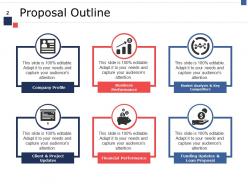
Slide 2: This slide presents Proposal Outline with these six of the points- Company Profile, Client & Project Updates, Financial Performance Market Analysis & Key Competitors, Business Performance, Funding Updates & Loan Proposal.
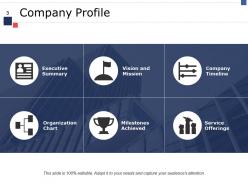
Slide 3: This slide showcases Company Profile with these of the factors- Executive Summary, Vision and Mission, Company Timeline, Organization Chart, Milestones Achieved, Service Offerings.
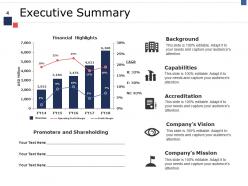
Slide 4: This slide presents Executive Summary with these of the practical parameters- Financial Highlights, Promoters and Shareholding, Background, Capabilities, Accreditation, Company’s Vision, Company’s Mission, Revenue.
Slide 5: This is a Vision, Mission and Goals slide. State them here.
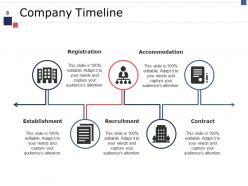
Slide 6: This slide presents Company Timeline with five of the factors.
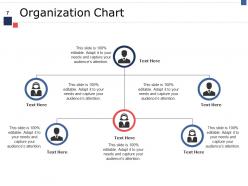
Slide 7: This slide showcases Organization Chart.
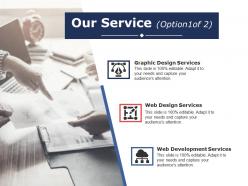
Slide 8: This slide presents Our Service (Option1of 2) with these of the three parameters- Graphic Design Services, Web Design Services, Web Development Services.
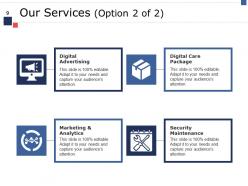
Slide 9: This slide showcases Our Services (Option 2 of 2) with these four parameters- Digital Advertising, Digital Care Package, Marketing & Analytics, Security Maintenance.
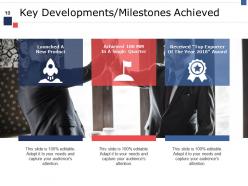
Slide 10: This slide shows Key Developments/Milestones Achieved with these three factors- Launched A New Product, Achieved 100 MM In A Single Quarter, Received “Top Exporter Of The Year 2018” Award.
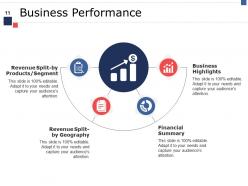
Slide 11: This slide presents Business Performance with these four phases- Financial Summary, Revenue Split-by Geography, Business Highlights, Revenue Split-by Products/Segment.
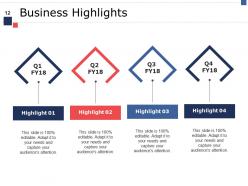
Slide 12: This slide presents Business Highlights.
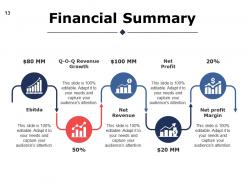
Slide 13: This slide showcase Financial Summary with the factors.
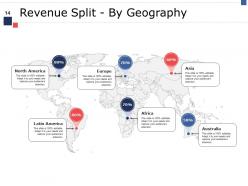
Slide 14: This slide shows Revenue Split - By Geography.
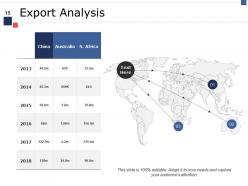
Slide 15: This slide presents Export Analysis. You can add the data and use it.
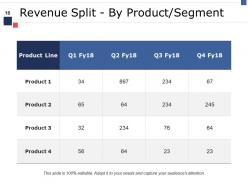
Slide 16: This slide showcases Revenue Split - By Product/Segment.
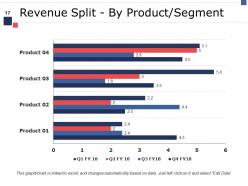
Slide 17: This slide presents Revenue Split - By Product/Segment.
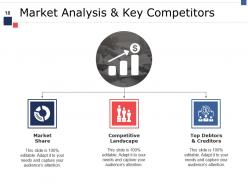
Slide 18: This slide shows Market Analysis & Key Competitors with these three of the factors- Top Debtors & Creditors, Market Share, Competitive Landscape.
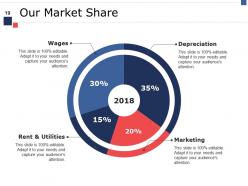
Slide 19: This slide presents Our Market Share with these four factors- Depreciation, Marketing, Rent & Utilities, Wages.
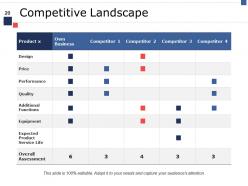
Slide 20: This slide showcases Competitive Landscape with which you can compare the business from the competitors.
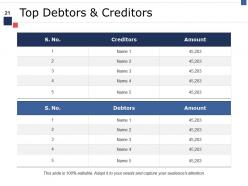
Slide 21: This slide presents Top Debtors & Creditors.
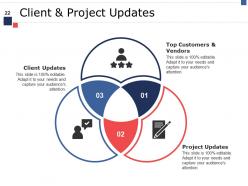
Slide 22: This slide showcases Client & Project Updates with these of the three categories- Top Customers & Vendors, Project Updates, Client Updates.
Slide 23: This slide presents Client Updates with these two majorly used categories- New Clients Acquired, Major Clients Acquired.
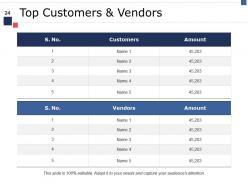
Slide 24: This slide presents Top Customers & Vendors with a table and add the name of the customers.
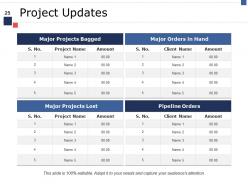
Slide 25: This slide showcases Project Updates.
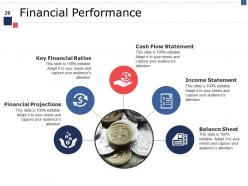
Slide 26: This slide showcases Financial Performance with these five objectives- Income Statement, Balance Sheet, Key Financial Ratios, Financial Projections, Cash Flow Statement.
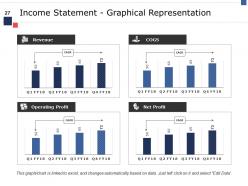
Slide 27: This slide shows Income Statement - Graphical Representation.
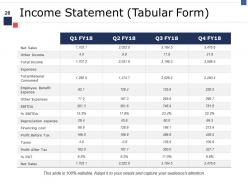
Slide 28: This slide showcases Income Statement (Tabular Form).
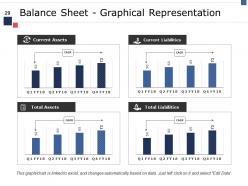
Slide 29: This slide presents Balance Sheet - Graphical Representation.
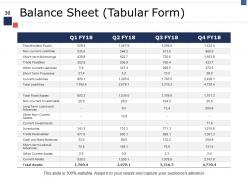
Slide 30: This slide showcases Balance Sheet (Tabular Form).
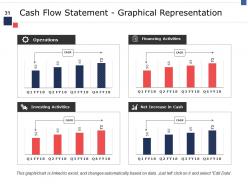
Slide 31: This slide presents Cash Flow Statement - Graphical Representation.
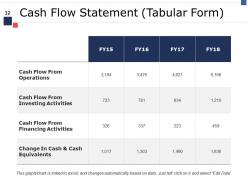
Slide 32: This slide showcases Cash Flow Statement (Tabular Form). You can add your data/information and use it.
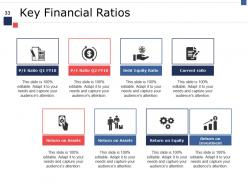
Slide 33: This slide presents Key Financial Ratios with these of parameters- P/E Ratio Q1 FY18, Debt Equity Ratio, Current ratio, Return on Assets, Return on Equity, Return on Investment.
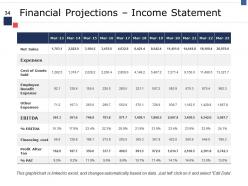
Slide 34: This slide showcase Financial Projections – Income Statement.
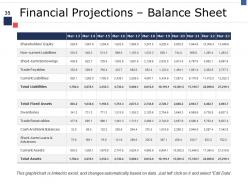
Slide 35: This slide Financial Projections – Balance Sheet.
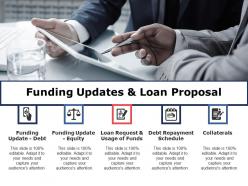
Slide 36: This Funding Updates & Loan Proposal with these Funding Update - Debt, Funding Update - Equity, Loan Request & Usage of Funds, Debt Repayment Schedule, Collaterals.
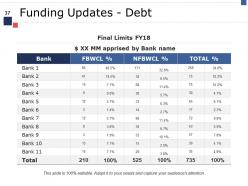
Slide 37: This slide showcases Funding Updates - Debt.
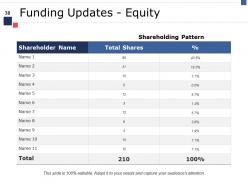
Slide 38: This slide presents Funding Updates - Equity with Shareholding Pattern.
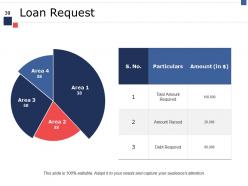
Slide 39: This slide showcases Loan Request.
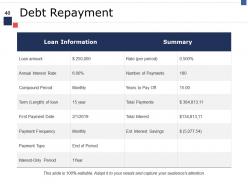
Slide 40: This slide presents Debt Repayment.
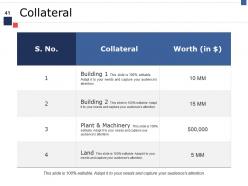
Slide 41: This slide showcases Collateral with which you can add the information.
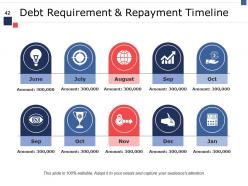
Slide 42: This slide shows Debt Requirement & Repayment Timeline.
Slide 43: This slide showcases Financial Plan Icons Slide.
Slide 44: This is a Coffee Break slide to halt. You may change it as per requirement.
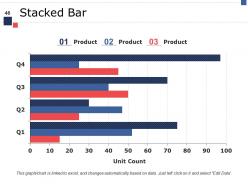
Slide 45: This slide is titled Charts & Graphs to move forward.
Slide 46: This slide shows a Stacked Line graph in terms of percentage and years for comparison of Product 01, Product 02, Product 03 etc.
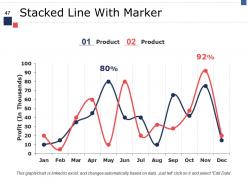
Slide 47: This slide presents Stacked Line With Marker.
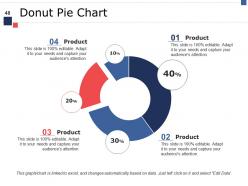
Slide 48: This slide showcases Donut Pie Chart.
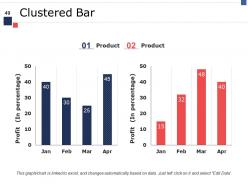
Slide 49: This slide presents Clustered Bar.
Slide 50: This slide is titled Additional Slides.
Slide 51: This slide represents Our Mission. State your mission, goals etc.
Slide 52: This slide helps show- About Our Company. The sub headings include- Creative Design, Customer Care, Expand Company
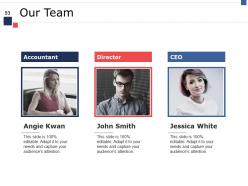
Slide 53: This slide presents Management Team with name and designation.
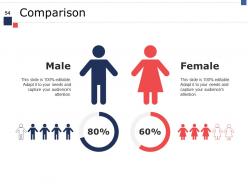
Slide 54: This slide shows Comparison of Positive Factors v/s Negative Factors with thumbsup and thumb down imagery.
Slide 55: This slide shows Our Goals for your company.
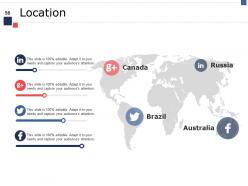
Slide 56: This slide showcases Global Project Locations with a World map and text boxes to make it explicit.
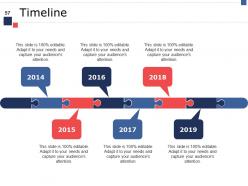
Slide 57: This slide shows Project Events Timeline with icons and text boxes.
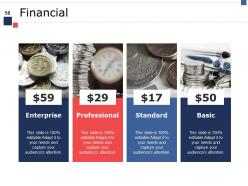
Slide 58: This slide shows Vital financial circles with percentage and text boxes.
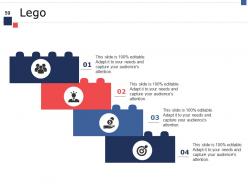
Slide 59: This is a Lego Box slide with the following subheadings- Teach, Encourage, Increase, Build.
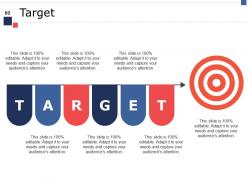
Slide 60: This slide shows Target image with text boxes.
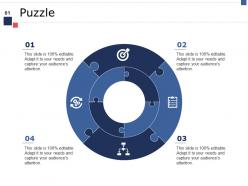
Slide 61: This slide presents a PUZZLE slide with the following subheadings- Integrity and Judgment, Critical and Decision Making, Leadership, Agility.
Slide 62: This is a Business Quotes slide to quote something you believe in.
Slide 63: This is a Venn diagram image slide to show information, specifications etc.
Slide 64: This slide shows a Mind map for representing entities.
Slide 65: This slide shows an image with text boxes titled Business Person with Post It notes.
Slide 66: This is a Magnifying glass image slide to show information, specification etc.
Slide 67: This is a Silhouettes image slide with the subheadings- INVENTORY, PAYMENT, CASH, CREDITCARD, CHECKOUT.
Slide 68: This is a Bulb Or Idea image slide to show information, innovative aspects etc.
Slide 69: This is a Thank You slide for acknowledgement.
Financial Scheme Powerpoint Presentation Slides with all 69 slides:
Develop an inclusive agenda with our Financial Scheme Powerpoint Presentation Slides. Bring about equitable distribution of the benefits of growth.









FAQs for Financial Scheme
Honestly, you need three main things for any solid financial plan. First, know exactly what you're aiming for and when. Set realistic deadlines - none of that "I'll be rich in 6 months" nonsense. Risk assessment is probably the biggest piece though. I've watched so many people crash because they expected crazy returns without thinking it through. Diversify however you can and always have backup plans. Oh, and don't just set it and forget it - you'll need to check in regularly and tweak things. My advice? Write down your goals first, then figure out how to get there step by step.
Honestly, different savings setups totally mess with how we actually save money. 401(k) matching is literally free cash, so obviously people contribute way more. Auto-enrollment? Pure genius because we're all too lazy to opt out once we're already in. High-yield accounts make you want to leave money alone since you're actually earning something decent. Oh, and those IRA contribution deadlines create this weird December scramble - I swear half my friends panic-deposit right before New Year's. The trick is finding what works with your personality instead of fighting it.
So basically regulations are like the rules of the game - they tell you what's legal and what'll get you in trouble. You've got disclosure requirements, registration stuff, who can invest in what. The SEC's pretty intense about enforcement these days too. Fee structures, marketing rules, investor protections - all that gets shaped by whatever regulations are current. And they change constantly, especially with all the fintech stuff happening. Honestly, I'd double-check everything before launching because the fines are brutal if you mess up. Probably worth getting a lawyer tbh.
Honestly, tech can fix so many headaches with financial schemes. Automation cuts down on those annoying manual errors, and you get way better compliance tracking. Real-time dashboards are a total game-changer - you can actually see what's happening instead of waiting for reports. Mobile apps let people access stuff whenever they want, which they love. AI's getting pretty good at spotting problems before they blow up too. I'd say start with whatever's driving you most crazy right now and find tech that tackles that specific issue first. Don't try to fix everything at once though.
Track your ROI and cash flow first - that's the stuff that actually matters. Also watch how many people sign up vs stick around, because high dropout rates are a red flag. I'd throw in some satisfaction surveys too, maybe NPS if you're feeling fancy. Oh and compliance metrics if you're dealing with regulations (ugh, the paperwork). Set up monthly tracking so you can catch problems before they tank everything. Honestly though, engagement rates tell you more than most people think - if users aren't participating, your other numbers won't save you.
Oh man, culture plays a huge role in this stuff. Trust levels vary wildly between countries - some places are super skeptical of anything that sounds too good to be true. In places like Japan or Korea, you'd probably need family buy-in before someone would even consider it. Meanwhile Americans might just go for it solo. Religious factors matter too, especially Islamic finance rules. I learned that the hard way on a project last year. Your messaging has to totally shift based on where you're launching. Honestly? Run focus groups first or you'll waste a ton of money.
Look, market swings can wipe you out fast, and some investments will trap your cash right when you need it. Fraud's a huge problem too - those sketchy "guaranteed returns" schemes are basically screaming scam. My uncle fell for one of those once, lost like 15k. Don't chase the flashy stuff promising quick money. Higher returns = higher risk, period. Spread your investments around instead of going all-in on one thing. Stick with boring, established options that won't vanish overnight. Only invest what you're cool with losing completely.
Look, the biggest thing is just understanding the basics so you're not intimidated by all the jargon. Once you get compound interest and how fees work, you'll actually want to invest instead of leaving everything in savings earning basically nothing. Reading those investment documents won't feel like deciphering ancient Greek anymore. You can figure out what matches your goals and how much risk you're cool with. Honestly, I wish someone had told me this earlier. Try learning one new concept each week - sounds boring but it builds up quick and makes a huge difference.
Honestly, if something sounds too good to be true, it always is. Every major scam follows the same playbook - Ponzi, Madoff, that whole Theranos mess. They promise crazy returns with zero risk, which is bullshit. Don't get caught up in fancy presentations or testimonials. Instead, actually research how they're supposedly making money. Regulatory warnings are massive red flags that people constantly ignore (I'll never understand why). My take? Stick with boring, regulated stuff and only invest what you won't miss if it vanishes overnight.
So age is huge here - young people can handle risky investments since they've got time to recover from losses. Older folks? They want steady income, not wild swings. Income matters too obviously - rich people love those tax breaks. Where you live changes things because of local rules and how your culture views risk. Some places are just way more conservative, you know? Oh and apparently women tend to prefer safer options according to studies I've seen. Bottom line though - if you're picking investments, figure out someone's age and risk tolerance first. That'll tell you most of what you need.
Honestly, people are super skeptical about financial stuff right now, so don't go heavy on the sales pitch. Start with educational content that breaks down your scheme clearly - transparency wins over flashy ads every time. Target them where they actually spend time online. Social proof helps a ton, like real testimonials from people who've done well. Focus on their specific problems and show concrete results. Oh, and definitely get your legal team to check everything first - compliance issues will kill you faster than bad marketing. Trust me, addressing their pain points upfront works way better than being pushy.
Okay so basically you want to ditch all the traditional banking BS - no high minimum deposits or crazy fees. Most people have smartphones even in low-income areas, so go mobile-first for sure. The biggest thing though? Don't assume everyone gets paid monthly like some office worker. Design around weekly or daily money coming in because that's reality for a lot of folks. Partner with local community groups since people trust them way more than some random fintech startup. Oh and remove barriers instead of adding more hoops to jump through - I can't stress this enough. Start simple with what people actually need, then expand later.
Honestly, everything's moving toward personalization and automation right now. AI is making risk assessment way smarter, and apps are getting better at customizing stuff based on how you actually use them. Mobile design is absolutely critical - like, if it doesn't work perfectly on phones, you're dead in the water. Real-time processing is just baseline now. People want instant approvals, instant everything. Oh, and compliance can't be an afterthought anymore - you've got to bake it into the foundation from the start. If you're building something new, focus hard on mobile and don't try to bolt compliance on later. Trust me on that one.
Social media is crazy for financial stuff - good opportunities blow up from influencer posts, but scams get the same treatment and look totally legit. Everything spreads so fast now. The algorithms just show you what you already believe anyway, so if you're into crypto you'll see "moon" posts everywhere, and if you're cautious you'll get all the warning stories. I swear my feed is like 50% people either getting rich or losing everything lol. Just double-check anything you see with actual financial sites before you do anything stupid with your money.
Look, be upfront about everything - risks, fees, how money actually moves around. Don't target people who can't afford to lose what they put in. That's just scummy. Make sure returns are realistic, not some pipe dream that'll blow up later. Honestly? If participants aren't getting real value and you're just shuffling money around, that's a red flag. I'd think about whether you'd want your own mom or sister joining this thing. If the answer's no, then you probably already know what you need to fix. Clear communication goes a long way too.
-
Helpful product design for delivering presentation.
-
Appreciate the research and its presentable format.