


Financial internal controls and audit solutions powerpoint presentation slides




Try Before you Buy Download Free Sample Product
 Impress Your
 Audience
 100%
100% Editable
 Save Hours
 of Time


Internal control is a mechanism for assuring that an organizations goals in organizational effectiveness and performance, accurate financial reporting, and compliance with laws, regulations, and policies are met, as specified by accounting and auditing. The aim of this presentation is to create a Responsibility assignment, delegation of authority, division of responsibilities, and the establishment of relevant policies and procedures to provide a framework for accountability and control. This presentation helps to enable proactive anti fraud controls and a fraud risk management system to mitigate the companys fraud risks. It includes various slides such as risks and limitations, risks and testing of control, limitations related to financial internal control, risks of weak internal control, benefits related to financial internal control, expected responsibility of the stakeholders, financial approach to risk, risk mapping tolerance, and appetite, implementation methodology for internal control, etc. It also covers risk strategies for financial internal control, risk assessment increased financial reporting risk. In the end, this presentation includes financial information such as a consolidated statement of income, balance sheet statement, statement of cash flows, etc.
People who downloaded this PowerPoint presentation also viewed the following :
Content of this Powerpoint Presentation
Slide 1: This slide introduces Financial Internal Controls and Audit Solutions. State Your Company Name and begin.
Slide 2: This slide shows Key Objectives or Agenda of the presentation.
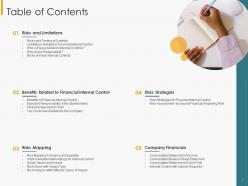
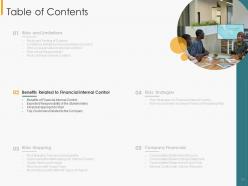
Slide 3: This slide presents Table of Content for the presentation.
Slide 4: This is another slide continuing Table of Content for the presentation.
Slide 5: This slide shows the risks and testing of controls which includes risk of material, control activity, test of control activity, etc.
Slide 6: This slide displays the limitations related to financial internal control which includes mistakes by result from misunderstanding, controls based on the decision of responsibilities, etc.
Slide 7: This slide presents the responsible persons for internal control which includes upper management, supervisors, accountants and auditors, all employees, etc.
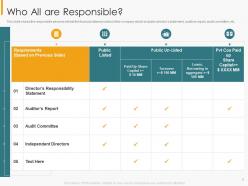
Slide 8: This slide shows the responsible persons behind the financial internal control of the company which includes director’s statement, auditors report, audit committee, etc.
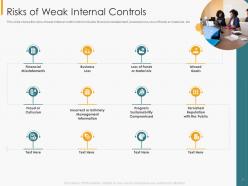
Slide 9: This slide displays the risks of weak internal control which includes financial misstatement, business loss, loss of funds or materials, etc.
Slide 10: This slide represents Table of Content for the presentation.
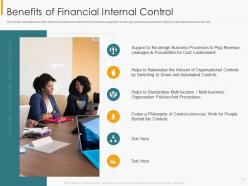
Slide 11: This slide shows the benefits of financial internal control which includes support to re-design business processes, helps to rationalize the amount, etc.
Slide 12: This slide presents the expected responsibilities of the stakeholders which includes company management, auditors, audit committee, board of directors, etc.
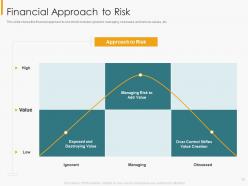
Slide 13: This slide displays the financial approach to risk which includes ignorant, managing, obsessed, and various values, etc.
Slide 14: This slide shows the top customers related to the company which includes customers details of the company.
Slide 15: This slide represents Table of Content for the presentation.
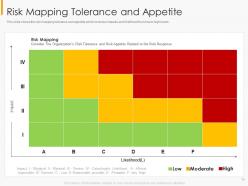
Slide 16: This slide shows the risk mapping tolerance and appetite which includes impacts and likelihood from low to high levels.
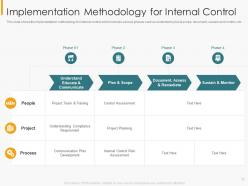
Slide 17: This slide presents the implementation methodology for internal control which includes various phases such as understand, plan & scope, document, sustain and monitor, etc.
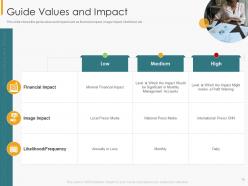
Slide 18: This slide displays the guide value and impact such as financial impact, image impact, likelihood, etc.
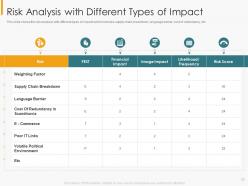
Slide 19: This slide shows the risk score with impact type such as financial impact, image impact, likelihood, frequency, etc.
Slide 20: This slide shows the risk analysis with different types of impact which includes supply chain breakdown, language barrier, cost of redundancy, etc.
Slide 21: This slide presents Table of Content highlighting Risks Strategies.
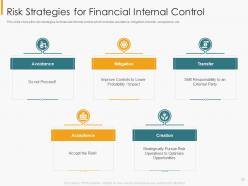
Slide 22: This slide displays the risk strategies for financial internal control which includes avoidance, mitigation, transfer, acceptance, etc.
Slide 23: This slide represents the risk assessment- increased financial reporting risk which includes changes in the operational or regulatory environment, changes in personnel, etc.
Slide 24: This slide shows Table of Content for the presentation.
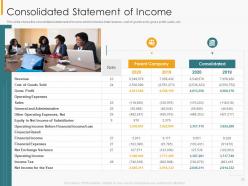
Slide 25: This slide represents the consolidated statement of income which includes total revenue, cost of goods sold, gross profit, sales, etc.
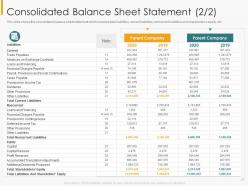
Slide 26: This slide presents the consolidated balance sheet statement of ABC Corporation which includes total assets, current assets, fixed assets, etc.
Slide 27: This slide displays the consolidated balance sheet statement.
Slide 28: This slide shows the consolidated statement of cash flow.
Slide 29: This slide shows the consolidated statement of cash flow which includes cash flow from investing activities, cash flow from financing activities, etc.
Slide 30: This slide presents the internal control with action required such as review the quarterly listings, manually raised order, etc.
Slide 31: This slide displays Icons for Financial Internal Controls and Audit Solutions.
Slide 32: This slide is titled as Additional Slides for moving forward.
Slide 33: This slide displays Column chart with two products comparison.
Slide 34: This slide represents Stacked Bar with two products comparison.
Slide 35: This is About Us slide to show company specifications etc.
Slide 36: This is Our Mission slide with related imagery and text.
Slide 37: This is Our Team slide with names and designation.
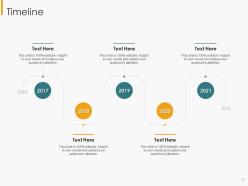
Slide 38: This is a Timeline slide. Show data related to time intervals here.
Slide 39: This slide shows Post It Notes. Post your important notes here.
Slide 40: This is a Financial slide. Show your finance related stuff here.
Slide 41: This slide shows 30 60 90 Days Plan with text boxes.
Slide 42: This is a Comparison slide to state comparison between commodities, entities etc.
Slide 43: This slide shows Venn diagram with text boxes.
Slide 44: This slide shows Roadmap with related icons and text.
Slide 45: This is a Thank You slide with address, contact numbers and email address.
Financial internal controls and audit solutions powerpoint presentation slides with all 45 slides:
Use our Financial Internal Controls And Audit Solutions Powerpoint Presentation Slides to effectively help you save your valuable time. They are readymade to fit into any presentation structure.





















FAQs for Financial internal controls and audit solutions
Start with segregation of duties - never let one person handle everything. Authorization levels are massive too, so set clear approval limits for different transactions. You'll need solid record-keeping and regular reconciliations (boring but critical). Physical safeguards matter more than people think. Document your policies, but honestly, make sure people actually use them instead of letting them collect dust. Regular management reviews help catch issues early. Map out what you're doing now first - you'll probably find some scary single points of failure. Independent audits are worth the cost if you can swing it.
Start with regular testing - walkthroughs, sample checks, automated monitoring. Get department heads to do self-assessments of their own processes (though honestly, they're not always great at admitting problems). Outside audits help catch what internal teams miss. Document everything and track issues over time so you can spot trends. Don't make it just an annual thing - that's useless. Set up continuous monitoring and train people to report control failures right away. Way better to catch stuff early before it snowballs into something worse.
Honestly, tech is probably your best bet for tightening up those financial controls. Automation cuts down on stupid mistakes and gives you real-time monitoring instead of finding problems months later. Set up automated approvals and exception alerts - way better than manual reviews. Your ERP system will track everything automatically too, which is a lifesaver when auditors come knocking. Just make sure whatever tools you pick actually work with what you're already doing. I've seen people add fancy software that just creates more headaches for their team.
Officially you're supposed to do it yearly, but that's kinda cutting it close tbh. Quarterly reviews work way better - catches problems before they blow up. Also update them whenever you make big changes like new software or restructuring stuff. I learned this the hard way at my last job when we waited too long and missed some compliance issues. Short sentences help too. Set those calendar reminders now or you'll totally forget. And actually write down what you change as you go - future you will thank you for decent documentation.
Honestly, the worst thing companies do is going way too big from day one. They build these crazy complex systems that everyone just ignores because who has time for that? Plus you'll see places roll out controls but never actually train people - so it becomes this weird checkbox exercise nobody gets. Leadership buy-in is huge too. If your CEO isn't following the rules, good luck getting anyone else to care. My take? Start small with maybe 3-4 controls that actually matter, make sure people understand why they exist, then grow it once it's actually working.
Honestly, just start with the basics - have different people handle cash versus recording transactions and reconciling accounts. Even with a tiny team you can split these up. Monthly bank reconciliations are a must, and require two signatures on bigger checks. Spot check your petty cash too. Most small business fraud happens because there's literally no oversight at all, not because the controls are fancy enough. You don't need expensive software either - spreadsheets and simple approval processes work fine when you're starting out. Build from there as you grow. I've seen too many businesses get paralyzed trying to create the "perfect" system that never actually gets used.
So basically, internal controls are like security systems for your money - they make fraud way harder to pull off. You want multiple people involved in financial processes so nobody can just steal on their own. Regular check-ups and approval steps force scammers to either rope in accomplices (sketchy for them) or jump through tons of hoops. Honestly, most fraud happens when controls are weak or nonexistent. Map out who currently touches your financial stuff - that's where I'd start. Strong controls catch the sneaky fraud early and scare off the opportunistic idiots completely.
Look, regulations aren't something you slap on later - they're literally your starting point. SOX alone means you need documented processes, duty separation, regular testing. Banking or healthcare? Even more headaches tbh. My advice: figure out which regs actually hit your company first, then design controls that check multiple boxes at once. Way more efficient than building separate stuff for each requirement. The segregation of duties part trips people up most, but once you map it out it's not terrible. Just don't try to retrofit compliance later - learned that one the hard way.
Focus on stuff they'll actually use day-to-day - expense reports, approval processes, who handles what tasks. Real scenarios work way better than those boring compliance manuals everyone ignores. Train them to catch weird things like duplicate invoices or sketchy transactions. Fraud awareness is huge too, so they know what looks suspicious. Make sure there's a clear process for reporting problems when something feels off. Honestly, the trick is tying it directly to their specific role instead of generic theory. Nobody wants to sit through abstract compliance stuff that doesn't apply to them.
Honestly, just focus on the stuff that could really mess you up financially - don't waste time micromanaging every tiny transaction. Map out where things could go wrong, then put your strongest controls there. Automate whatever you can because manual reconciliations are basically torture. I'd also ditch any controls that aren't actually catching problems - half of them are probably outdated anyway. Train your people so this becomes second nature instead of extra busywork they hate. Short version: figure out what matters most, protect that well, and keep everything else simple.
Honestly, I'd focus on tracking how often your controls actually fail first - that's your biggest red flag. Book closing times matter too, along with any corrections you're making after the fact. Error detection rates are probably the most telling metric though. Like, what's the point of having controls if they're not catching problems, right? Compliance test results give you another angle to work with. The remediation speed when issues come up is worth watching as well. I'd throw together a basic monthly dashboard - sounds boring but it really helps you catch patterns early. Way better than scrambling later.
So basically, public companies get hammered with SOX requirements - like, you're talking documented controls everywhere, management has to certify stuff, plus external auditors testing your internal controls. Private companies? Way more chill since those regs don't apply. But honestly, you still want solid controls even if you're private. Banks and investors will judge you either way. Oh, and here's the thing - if you might go public someday, don't wait until the last minute to get your act together. Build good controls now so you're not totally scrambling later.
Honestly, culture makes or breaks financial controls - I've seen this play out so many times. When your company actually values transparency, people follow the rules instead of just going through the motions. But if there's fear around reporting problems or nobody questions broken processes? Even perfect controls will fail. People just work around them. Leadership has to walk the walk first. If executives take compliance seriously and talk openly about issues, everyone else will too. You gotta build psychological safety before rolling out any fancy systems. Otherwise you're just wasting time.
Start by building risk assessment directly into how you design controls - don't treat it as an afterthought. Map out your main financial risks first: fraud, errors, compliance stuff (honestly, compliance changes are the worst). Then see where your current controls actually protect you vs where you're wide open. The key part? Make this a regular thing, not something you do once and forget about. Business changes, new rules drop, controls break down - you've got to stay on top of it. Document what risks you're facing now and where the gaps are. That'll show you exactly what needs fixing first.
Document everything like you're writing a recipe - step-by-step so anyone can follow it. Who does what, when, what approvals they need. Screenshots and flowcharts work way better than walls of text (nobody reads those anyway). Don't just explain how to do stuff - explain why each control exists. Store it where people can actually find it, not buried in some random folder. Oh, and update it regularly or it becomes useless fast. Best test? Give your docs to someone new and see if they can do the process without bugging you with questions.
-
Wonderful templates design to use in business meetings.