


Finance and accounting business process outsourcing powerpoint presentation slides
A critical aspect of any corporate enterprise is finance and accounting. It is necessary to arrange all your finances and accounts meticulously. This is not accomplished at the end of the year alone; rather, it should be a year-long process conducted with utmost care and precision. Check out our professionally designed Finance and Accounting Business Process Outsourcing template that helps analyze the cost incurred on finance outsourcing compared to business accounting. This proposal covers the financial outsourcing slides, including company details such as mission, vision, main objectives, professional profile, top clients, top services, etc. It helps reduce operating expenses, improve business core focus, improve quality of work, etc. This template covers the main slides such as reasons to outsource, managing the accounts, workflow, strategies and techniques related to outsourcing, etc. business model and analysis are also covered under this proposal. In the end, one can acknowledge facts related to actual business expenses, cost comparison, outsourcing vs permanent hiring comparison, etc. Customize this 100 percent editable template based on your specific needs. Download it now.










































-

- Google Slides is a new FREE Presentation software from Google.
- All our content is 100% compatible with Google Slides.
- Just download our designs, and upload them to Google Slides and they will work automatically.
- Amaze your audience with SlideTeam and Google Slides.
-

Want Changes to This PPT Slide? Check out our Presentation Design Services
-

- WideScreen Aspect ratio is becoming a very popular format. When you download this product, the downloaded ZIP will contain this product in both standard and widescreen format.
-

- Some older products that we have may only be in standard format, but they can easily be converted to widescreen.
- To do this, please open the SlideTeam product in Powerpoint, and go to
- Design ( On the top bar) -> Page Setup -> and select "On-screen Show (16:9)” in the drop down for "Slides Sized for".
- The slide or theme will change to widescreen, and all graphics will adjust automatically. You can similarly convert our content to any other desired screen aspect ratio.
Compatible With Google Slides

Get This In WideScreen
You must be logged in to download this presentation.


Do you want to remove this product from your favourites?
PowerPoint presentation slides
Deliver an informational PPT on various topics by using this Finance And Accounting Business Process Outsourcing Powerpoint Presentation Slides. This deck focuses and implements best industry practices, thus providing a birds-eye view of the topic. Encompassed with fifty nine slides, designed using high-quality visuals and graphics, this deck is a complete package to use and download. All the slides offered in this deck are subjective to innumerable alterations, thus making you a pro at delivering and educating. You can modify the color of the graphics, background, or anything else as per your needs and requirements. It suits every business vertical because of its adaptable layout.

People who downloaded this PowerPoint presentation also viewed the following :
Content of this Powerpoint Presentation
Slide 1: This slide introduces Finance and Accounting Business Process Outsourcing. State Your Company Name and begin.
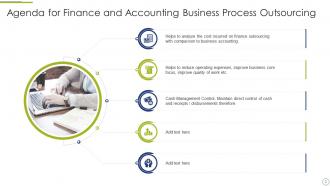
Slide 2: This slide shows Agenda for Finance and Accounting Business Process Outsourcing.
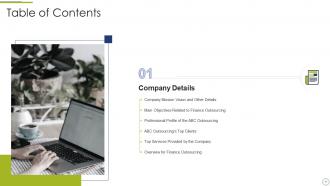
Slide 3: This slide presents Table of Content for the presentation.
Slide 4: This slide shows title for topics that are to be covered next in the template.
Slide 5: This slide covers the ABC company details which covers headquarter, Mission, Vision, etc.
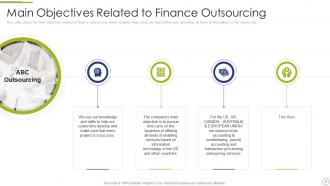
Slide 6: This slide shows Main Objectives Related to Finance Outsourcing.
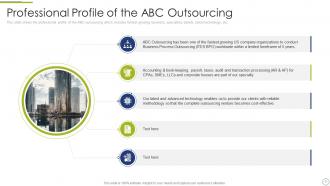
Slide 7: This slide shows the professional profile of the ABC outsourcing which includes fastest growing business, specialties details, latest technology, etc.
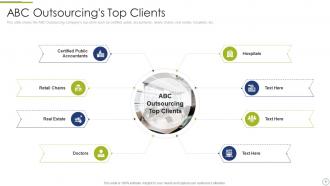
Slide 8: This slide presents the ABC Outsourcing company’s top client such as certified public accountants, retails chains, real estate, hospitals, etc.
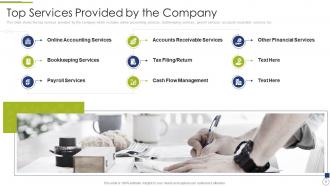
Slide 9: This slide shows the top services provided by the company which includes online accounting services, bookkeeping services, etc.
Slide 10: This slide displays the overview for finance outsourcing which includes reduces manpower, reduces infrastructure costs, better management control, etc.
Slide 11: This slide represents Table of Content for the presentation.
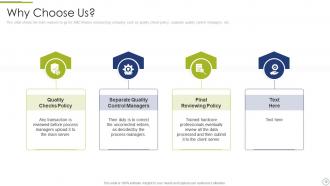
Slide 12: This slide shows the main reasons to go for ABC finance outsourcing company such as quality check policy, separate quality control managers, etc.
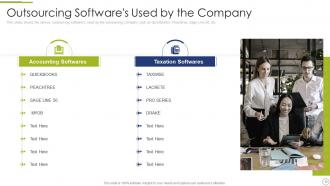
Slide 13: This slides presents the various outsourcing software's used by the outsourcing company such as QuickBooks, Peachtree, Sage Line 50, etc.
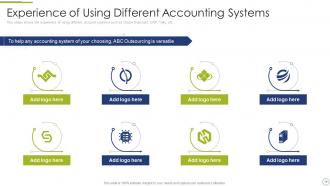
Slide 14: This slides shows the experience of using different account systems such as Oracle financials, SAP, Tally, etc.
Slide 15: This slide displays the key benefits of finance outsourcing to the company which includes improve company focus, improve quality, etc.
Slide 16: This slide represents Table of Content for the presentation.
Slide 17: This slide shows the main reasons to finance outsourcing which includes cut down on costs, better use of time, fewer mistakes, etc.
Slide 18: This slide presents the reasons to pick finance outsourcing from ABC company such as strategic initiatives, tactical issues, etc.
Slide 19: This slide shows Table of Content for the presentation.
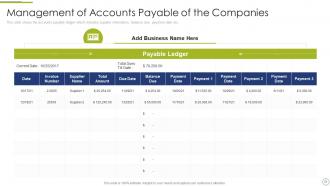
Slide 20: This slide displays the management of accounts payable by outsourcing company which includes supplier invoices with different modules.
Slide 21: This slide represents Management of Accounts Payable of the Companies.
Slide 22: This slide shows the account receivable format of the company which includes client information, invoices, total amount, date of issue etc.
Slide 23: This slide presents Managing Accounts Receivables by the Outsourcing Company.
Slide 24: This slide shows Management of Fixed Assets by the Outsourcing Company.
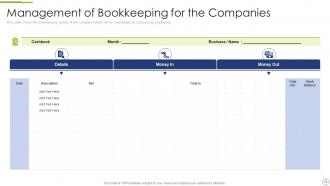
Slide 25: This slide displays the bookkeeping record of the company which will be maintained by outsourcing employees.
Slide 26: This slide represents Table of Content for the presentation.
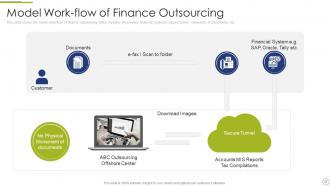
Slide 27: This slide shows the model work-flow of finance outsourcing which includes documents, financial systems, secure tunnel, movement of documents, etc.
Slide 28: This slide presents Network of Finance Outsourcing Specialists for Customers.
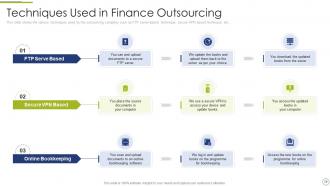
Slide 29: This slide shows the various techniques used by the outsourcing company.
Slide 30: This slide displays Table of Content for the presentation.
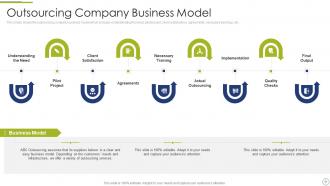
Slide 31: This slides represents the outsourcing company business model which includes understanding the need, pilot project, etc.
Slide 32: This slide shows the details related to employee payroll which includes employee number, name, department, basic salary etc.
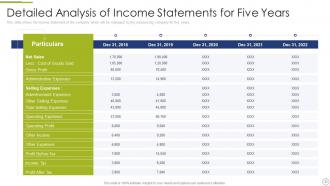
Slide 33: This slide presents Detailed Analysis of Income Statements for Five Years.
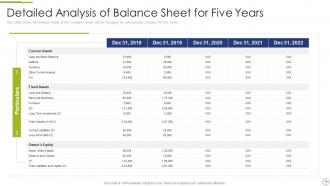
Slide 34: This slide shows the balance sheet of the company which will be managed by outsourcing company for five years.
Slide 35: This slide displays the cash flow analysis of the company which will be managed by outsourcing company.
Slide 36: This slide represents Table of Content for the presentation.
Slide 37: This slide shows the planned vs actual cost incurred with variance percentage and expense category.
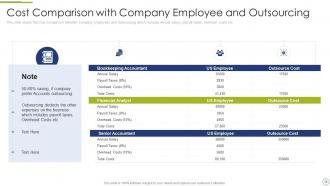
Slide 38: This slide presents Cost Comparison with Company Employee and Outsourcing.
Slide 39: This slide shows the cost comparison of part time employees, full time employees and outsourcing.
Slide 40: This slide displays Accounts Cost Comparison- Outsourcing vs Permanent Hiring.
Slide 41: This slide represents Table of Content for the presentation.
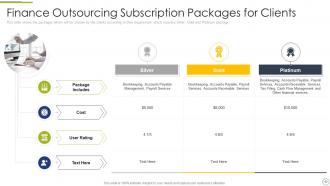
Slide 42: This slide shows Finance Outsourcing Subscription Packages for Clients.
Slide 43: This slide presents Table of Content for the presentation.
Slide 44: This slide shows the positive impacts after the accounts outsourcing on the company.
Slide 45: This slide shows Icons for Finance and Accounting Business Process Outsourcing.
Slide 46: This slide is titled as Additional Slides for moving forward.
Slide 47: This is About Us slide to show company specifications etc.
Slide 48: This is Our Mission slide with related imagery and text.
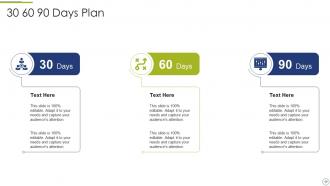
Slide 49: This slide shows 30 60 90 Days Plan with text boxes.
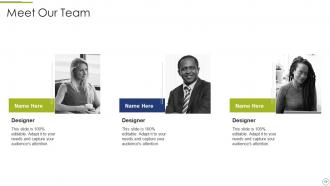
Slide 50: This is Our Team slide with names and designation.
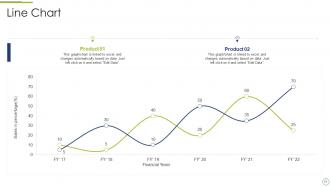
Slide 51: This slide displays Line chart with two products comparison.
Slide 52: This slide presents Post It Notes. Post your important notes here.
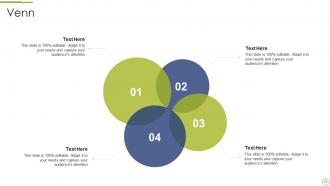
Slide 53: This slide shows Venn diagram with text boxes.
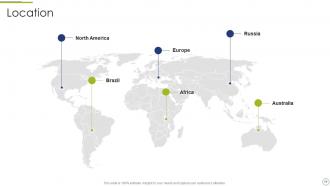
Slide 54: This is a Location slide with maps to show data related with different locations.
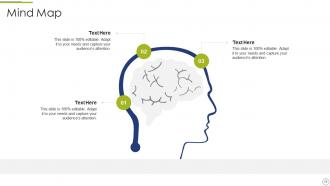
Slide 55: This slide shows Mind Map with related imagery.
Slide 56: This is an Idea Generation slide to state a new idea or highlight information, specifications etc.
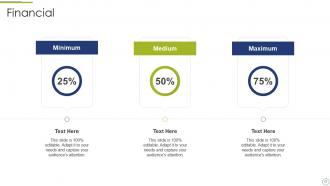
Slide 57: This is a Financial slide. Show your finance related stuff here.
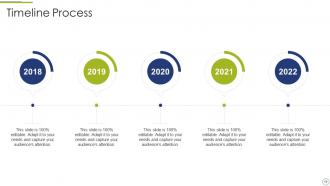
Slide 58: This is a Timeline slide. Show data related to time intervals here.
Slide 59: This is a Thank You slide with address, contact numbers and email address.
Finance and accounting business process outsourcing powerpoint presentation slides with all 68 slides:
Use our Finance And Accounting Business Process Outsourcing Powerpoint Presentation Slides to effectively help you save your valuable time. They are readymade to fit into any presentation structure.
-
Editable templates with innovative design and color combination.
-
Editable templates with innovative design and color combination.
-
Qualitative and comprehensive slides.
-
Illustrative design with editable content. Exceptional value for money. Highly pleased with the product.
-
Innovative and Colorful designs.
