Internal audit committee report with findings

Rating:
90%
Internal audit committee report with findings
Slide 1 of 2
Favourites Favourites

Try Before you Buy Download Free Sample Product

Audience Impress Your
Audience
Editable 100%
Editable
Time Save Hours
of Time
The Biggest Sale is ending soon in
0
0
:
0
0
:
0
0
Rating:
90%
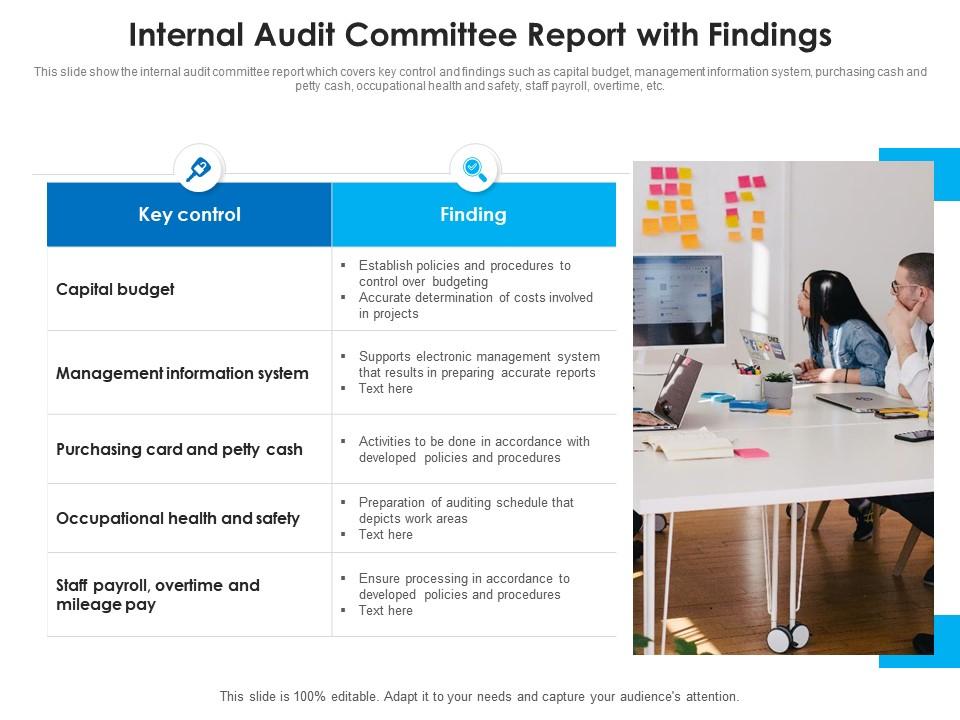
This slide show the internal audit committee report which covers key control and findings such as capital budget, management information system, purchasing cash and petty cash, occupational health and safety, staff payroll, overtime, etc. Introducing our Internal Audit Committee Report With Findings set of slides. The topics discussed in these slides are Management, Information, Occupational. This is an immediately available PowerPoint presentation that can be conveniently customized. Download it and convince your audience.
People who downloaded this PowerPoint presentation also viewed the following :

FAQs for Internal audit committee

Honestly, most companies trip up on the same basic stuff - bad documentation, messy approval processes, and IT controls that are basically held together with duct tape. Finance always gets hit on expense approvals (surprise surprise), and operations teams never follow their own procedures. Compliance stuff is brutal too, especially if you're in a regulated industry. The silver lining? This isn't rocket science to fix. Start with actually writing down your key processes - I swear that alone will solve like a third of your problems. Better training helps too, but documentation first.

Honestly, internal audits can flip your whole strategic plan upside down - and that's not always bad. They dig up risks you had no clue about. Like when auditors find major cybersecurity holes or compliance mess-ups, leadership scrambles to shift priorities immediately. I watched one company trash their entire digital roadmap after IT auditors basically roasted them. These reports show you what's really happening vs. what you think is happening (big difference). Don't just file them away - actually use the findings when you're planning next year's strategy. It's basically free intelligence.

Look, root cause analysis is your best friend here - dig into the actual "why" behind everything you find. I'd prioritize based on risk so you're not wasting time on tiny stuff. Excel pivot tables honestly work great for spotting patterns (unless your company splurged on fancy analytics software). Structure findings with condition-criteria-cause-effect so people actually get why it matters. Dashboards showing trends over time are clutch. Here's the thing though - always include specific recommendations with clear owners and deadlines. Otherwise you've just created really expensive paperwork that'll collect dust in someone's email.

Honestly, just rank everything by risk first - what's gonna hurt operations or compliance the worst? Grab those quick wins too since they make leadership happy and show you're actually doing something. Don't bite off more than you can chew though. I'd make a simple grid with risk vs how hard it is to fix, then just work through it step by step. Oh and definitely track your progress somewhere visible - people need to see you're not just sitting on their feedback. Resource constraints are real, so be realistic about timelines.

Dude, tech seriously transforms how you handle audit findings. Data analytics catches patterns you'd never spot manually - saves tons of time. Real-time monitoring flags problems as they happen, which is clutch. Good audit management software keeps everything in one place and tracks who's supposed to fix what (no more "I thought Jim was handling that" situations). Short sentences work. But mixing in longer ones keeps it readable without sounding robotic. Start with solid analytics tools and decent management software. They're pricey upfront but honestly worth every penny once you see how much faster everything moves.

Don't spring surprises on people in the final report - that's a recipe for disaster. Have those casual conversations first to test your findings and see what management thinks about root causes. Trust me, I've sat through some painfully awkward meetings because I skipped this step! Focus on business impact when writing up the formal stuff, not just a boring list of what's broken. Plain language works better than audit-speak. Prioritize the big risks clearly and give realistic deadlines - nobody wants impossible timelines. Oh, and actually follow up on the action items afterward. The whole point is fixing problems, not just writing pretty reports that sit on shelves.

Dude, you gotta build accountability right from the start or you'll just be writing reports nobody reads. Get specific with your recommendations - who's doing what by when. Leadership needs to actually care about fixing stuff, otherwise forget it. I learned this the hard way lol. Don't just hope people follow through either. Set up regular check-ins to track progress and make sure the fixes actually stick. Oh and verify nothing gets undone later - that's super annoying when it happens. Basically treat it like project management, not just audit paperwork.

First thing - make a formal action plan with clear owners and deadlines for each finding. Use some kind of centralized tracking system because auditors never forget anything (learned that the hard way). Check in regularly with whoever's responsible for fixes and document any delays or timeline changes. Don't wait for problems to come to you. Set up regular management reviews to go over progress and push through any stalled items. Oh, and here's the big one - never close a finding until you've actually confirmed the fix is working properly, not just implemented.

So audit findings are basically your company's way of catching problems before they explode in your face. You know how you ignore that weird noise your car makes until it breaks down? Same concept, except with business stuff. Fix the high-risk issues first - those are the ones that'll actually mess up your operations. The rest can wait a bit. Honestly, most places treat these like annoying paperwork, but they're actually showing you where your weak spots are. It's like having someone point out the cracks in your foundation before the whole house shifts.

So basically, government audits are all about "did we follow the rules?" - tons of procurement violations, budget mess-ups, transparency issues. Private sector? They want to know if you're making money and cutting risks efficiently. Public sector gets way more outside attention too since it's taxpayer money. I've noticed government findings always circle back to compliance stuff, while companies focus on actual performance and profit margins. Kind of makes sense when you think about it. Just adjust your whole approach depending on whether you're dealing with bureaucratic rule-following or straight business results.

Dude, you really need to dig into root cause analysis. Otherwise you're just slapping band-aids on everything and the same crap keeps happening. I've watched teams do quick fixes over and over - it's honestly exhausting to see. The real magic happens when you drill down with those "why" questions, like five times deep. That's how you catch the actual process gaps or whatever systemic mess caused the problem in the first place. Yeah, it takes longer upfront, but you'll actually solve things instead of playing whack-a-mole with symptoms forever.

Your internal audits matter way more than most people think. Findings usually expose control gaps or missing documentation that regulators actually check for. Don't fix them quickly? You're asking for trouble when the real auditors show up later. Honestly, the timing requirements alone are brutal - lots of industries make you report big issues to regulatory bodies within tight deadlines. I'd treat these findings like red flags, not just another box to tick. Track how you're fixing things and update your compliance reports as you go. Better to catch problems internally than have regulators find them first.

Honestly, you'll need solid analytical skills - like really digging into data and spotting weird patterns. Communication's huge too since you're constantly explaining complex stuff to people who don't get it. Critical thinking matters because you're always asking "wait, why did this actually happen?" The stakeholder management part is kind of brutal tbh - nobody wants to hear bad news. Technical skills depend on your industry, but you've gotta understand the business processes inside and out. Oh, and people skills matter way more than you'd think. I'd definitely try to shadow some experienced auditors if you can. Watch how they turn their findings into recommendations that people will actually follow instead of just ignore.

Think of internal audit findings as your crystal ball for risk management. Auditors spot control gaps and process breakdowns before they turn into disasters - honestly, it's like getting a heads up from the future. Map those findings to your risk register and figure out what needs fixing now versus later. Here's the real trick though: look for patterns. Same issues popping up across different departments? That's not coincidence, that's a company-wide problem waiting to explode. Don't just patch individual holes - sometimes you need to rebuild the whole dam.

Honestly, you need that feedback - it's like a sanity check on whether your audit findings actually make sense to real people. Send quick surveys after audits or just grab coffee with auditees and management. Sometimes we audit folks get way too deep in our own methodology (guilty as charged) and totally miss what's actually useful. Their input helps spot blind spots in your risk assessments. Plus you'll figure out if your reports are clear or just confusing jargon. Management and audit committee members are goldmines for this stuff. Make it regular though, not just when things go sideways.

Ratings and Reviews

90% of 100
Review Form
Write a review
Most Relevant Reviews
  1. 100%

    by Chauncey Ramos

    Great designs, Easily Editable.
  2. 80%

    by Jacob Wilson

    Editable templates with innovative design and color combination.

2 Item(s)

per page: