


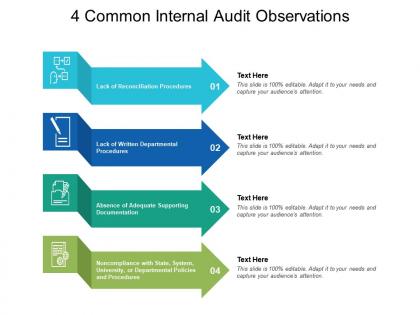
4 common internal audit observations




Try Before you Buy Download Free Sample Product
 Impress Your
 Audience
 100%
100% Editable
 Save Hours
 of Time


Our 4 Common Internal Audit Observations contain artistic images. It will immediately catch the eye.
People who downloaded this PowerPoint presentation also viewed the following :
4 common internal audit observations with all 5 slides:
Our 4 Common Internal Audit Observations immediately catch the eye. It contains artistic images.




FAQs for 4 common
Documentation gaps are huge - auditors hate that. Also watch your cash controls and expense approvals because honestly, half the companies I know just wing it there. Revenue recognition stuff trips people up constantly, especially around contract timing. Oh, and segregation of duties is a big one too (though that's harder to fix quickly). IT controls are another mess waiting to happen. Before they show up, I'd definitely clean up your approval processes first - easiest thing to tackle and makes you look way more organized. Whatever regulations hit your industry, double-check you're actually following them.
Start with the scary stuff - compliance violations, major control gaps, anything that could actually tank your business. Don't get sucked into knocking out easy fixes just to feel productive (I've seen teams waste weeks doing this). Sort everything into high/medium/low risk buckets first. Get management to commit to realistic deadlines and assign owners - nobody should be able to hide behind "we're working on it." Set up monthly check-ins because findings will absolutely sit there forever otherwise. Basic tracking spreadsheet works fine, nothing fancy needed.
Data analytics tools are honestly a lifesaver for catching weird patterns before auditors do. You'll want continuous monitoring too - basically like having someone watching your processes all the time. Real-time dashboards help you see compliance issues as they happen. Workflow automation cuts down on human screwups, which is huge. The trick is finding stuff that works with what you already have. Last thing you need is another system that makes everyone's job harder. Oh, and automated flagging beats manual checking every time.
Write everything in plain English - audit speak just confuses people. Be super clear about what you discovered and how you found it. Document your process so everyone gets it. Back up every finding with solid evidence, and don't sugar-coat the risks. Show both wins and problems fairly. Your recommendations need to be specific, not some wishy-washy "consider improving processes" nonsense. Run draft findings by management first for fact-checking, but don't let them dilute your conclusions. That's honestly where a lot of auditors mess up - they cave to pressure. The methodology part is crucial because stakeholders want to understand your approach before they'll trust your results.
Honestly, unresolved audit findings turn into a total mess pretty fast. Your operational risk shoots up, compliance gets sketchy, and internal controls fall apart. The board starts panicking - which, fair enough, I guess. Regulators and stakeholders lose trust in you. You're also bleeding money on inefficiencies that could've been fixed ages ago. Here's the kicker: the longer you wait, the more expensive and complicated everything gets to sort out. My take? Rank them by risk and knock out the scary ones first. Trust me on this one.
Oh man, regulatory changes are brutal for audit findings. You'll see way more issues pop up, and they get messy fast. Teams are usually scrambling to figure out the new rules, so instead of your typical operational stuff, suddenly you're drowning in compliance gaps and missing documentation. The worst part? Findings spike right after those implementation deadlines when everyone realizes they weren't actually ready. Then it slowly gets better as people sort their stuff out. Honestly, if you can swing it, try doing some prep assessments before the regs hit - saves you from that nightmare later.
Honestly, you need a good follow-up system after each audit. Track every finding and give someone ownership - otherwise stuff just falls through the cracks. Don't just slap Band-Aids on problems either. Figure out why things broke in the first place or you'll be dealing with the same mess again next year. Between formal audits, do your own quick checks monthly. This catches issues early. Oh and create an environment where people actually speak up about problems instead of hiding them until auditors show up (which never ends well). Start simple - even a basic spreadsheet works for tracking open items.
So basically you want an impact x likelihood matrix - just score both on a 1-5 scale and multiply them out. The impact part covers financial hits, operational mess-ups, that kind of stuff. For likelihood, think about how probable it actually is. Don't forget regulatory issues and reputation damage too - those can be huge. Yeah, it feels super subjective when you start (honestly still does sometimes), but you get the hang of it. The main thing is staying consistent so your boss can figure out what's urgent vs what can wait. Oh, and if your company already has some risk framework thing, definitely use that as your starting point.
Honestly, most auditors are technical wizards but can't present findings worth a damn. Three things will help: business writing courses (storytelling is huge), stakeholder communication workshops, and data viz tools like Tableau or Power BI. Your discoveries need to actually drive change, not just sit in reports gathering dust. The golden ticket though? Shadow senior auditors during client presentations. Watch how they frame problems and handle pushback - that's where you'll learn the real tricks. Oh, and practice explaining complex stuff to non-finance people. Game changer.
Honestly, the biggest thing is getting leadership to actually care about this stuff in public - like bringing it up in team meetings and celebrating when things get fixed. Don't let audit findings turn into those emails everyone ignores. Track progress where teams can see it, and definitely tie responses into performance reviews so there are real consequences. Remove the shame factor too - frame findings as ways to improve, not failures. Set deadlines and stick to them. I learned this the hard way at my last job - without visible executive buy-in, people just won't prioritize it.
Honestly, I'd track closure rates first - like what percentage you're actually fixing on time. Then look at recurrence rates because there's nothing worse than the same crap showing up audit after audit. Time-to-resolution matters too since dragged-out findings drive everyone nuts. Quality scores from follow-up testing tell you if fixes actually work or if people just slapped band-aids on things. The big one though? Measuring real business impact - fewer violations, less operational mess after you remediate stuff. Don't go crazy trying to track everything at once. Pick maybe 2-3 that actually matter to your team and stick with those consistently.
Right from the start, get them to agree on realistic deadlines - none of this wishful thinking BS. I've watched so many audit findings just sit there forever because everyone had different expectations about timing. Check in regularly but don't be annoying about it. Actually help them figure out what's blocking progress instead of just sending reminder emails. Document everything (obviously) and flag problems early if things start slipping. Oh, and this might sound obvious but treat them like they're on your team trying to fix stuff, not like you're the audit police hunting them down.
Skip the audit jargon completely - nobody wants to decode that stuff. Hit them with the business impact right away: what's this mean for their team's daily grind? Visuals work way better than those monster reports (seriously, who has time for 20 pages?). Talk about consequences, not compliance boxes. Book actual conversations - face-to-face or video calls where you can walk through everything together. Always bring real solutions they can actually pull off. The whole point is making it matter to them, not showing off how much audit terminology you know.
So basically, audit findings show you blind spots in your risk strategy that you totally missed before. They'll confirm stuff you were already worried about too. Once they find control gaps or process issues, you gotta rethink your whole approach - maybe you were being too aggressive or not careful enough in certain areas. Think of it like a doctor visit where they catch something unexpected. Use those insights to figure out what needs fixing right now vs. what can wait. Oh, and definitely update your risk documentation and loop in your team so everyone knows what's changed. Makes such a difference when everyone's on the same page.
Follow-up audits are honestly a game-changer for closing findings. They prove management actually did what they promised instead of just talking about it. You can test if fixes work in real life, catch new problems that come up during remediation, and keep people honest since they know you're checking back. Pretty smart system if you ask me. They also help spot patterns when the same crap keeps happening everywhere. My take? Time them right - give people enough runway to make changes but don't wait forever or they'll forget their commitments.
No Reviews