


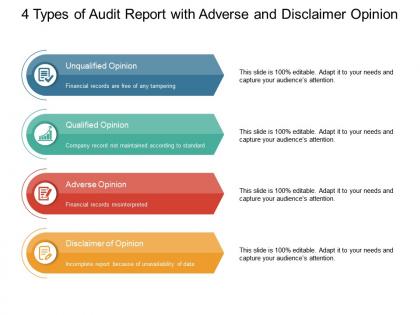
4 types of audit report with adverse and disclaimer opinion




Try Before you Buy Download Free Sample Product
 Impress Your
 Audience
 100%
100% Editable
 Save Hours
 of Time


Always be that bit ahead with our 4 Types Of Audit Report With Adverse And Disclaimer Opinion. They cater for growing competition.
People who downloaded this PowerPoint presentation also viewed the following :
4 types of audit report with adverse and disclaimer opinion with all 5 slides:
Our 4 Types Of Audit Report With Adverse And Disclaimer Opinion give you something different. They help you create a new look.



FAQs for 4 types of audit report with adverse
Okay so you need five main things in there. Start with an executive summary - honestly, that's probably all the higher-ups will read anyway. Then do your detailed findings with actual evidence, not just vague stuff. Rate each issue by risk level so people know what's urgent. After that, give them specific recommendations they can actually act on, not just "fix this." Oh and timelines are huge - nobody does anything without deadlines. I'd arrange the recommendations by how much damage they could cause if ignored. End with clear follow-up dates so it doesn't just sit on someone's desk forever.
Honestly, presentation is everything with audit reports. You'll lose executives instantly if you dump technical jargon and endless spreadsheets on them. Start with the business impact instead - like "this could cost us $500K" rather than diving into compliance details first. Visuals help a ton too. I've literally seen the same exact findings get ignored in one meeting, then suddenly become a priority when someone presented them differently. Weird but true. Focus on the story behind your numbers. Make it about what breaks if they don't act, not just what's wrong technically.
Okay so visual design seriously makes or breaks whether people will actually read your audit reports. I use lots of white space and bullet points to break up those horrible text walls. Charts help too - way better than paragraphs of numbers that nobody wants to parse through. Consistent headings and decent fonts make everything more scannable. Sounds basic but trust me, executives are swamped and they'll bail on messy reports instantly. Create a solid template once and you're set. Your findings deserve to be seen, not buried in dense blocks of text that look intimidating.
Honestly, templates are a lifesaver. You'll have this ready-made structure so you're not staring at a blank page every single time. Just plug in your specific findings and you're golden. They stop you from forgetting important stuff too - like management responses or key recommendations. Your reports will look way more professional and consistent, which clients definitely notice. The best part? Most templates have standard wording for common problems already baked in. No more explaining the same compliance issue for the hundredth time. Start simple and tweak it as you go based on what audits you do most.
Don't bury your main points - lead with what's actually broken. I've seen so many reports where you have to dig through three paragraphs to find the real issue. Skip the audit speak too, write like you're telling a colleague what happened. People get way too fancy trying to sound professional and it backfires. Make your recommendations something they can actually do, not just "strengthen oversight" or whatever. And here's the thing - always connect it to money or risk that executives care about. Otherwise they'll just file it away. Read your draft pretending you know nothing about the audit. If it's confusing, fix it.
Yeah so basically SOX and PCAOB rules pretty much lock you into a specific format. You'll need management's assessment, auditor opinions, material weakness stuff - all the standard sections. There's really no wiggle room to get creative, which is kind of annoying but whatever. The upside? Since everyone follows the same structure, comparing reports across different companies is way easier. Oh and definitely double-check for any regulatory updates before you wrap up your report - I learned that the hard way when requirements shifted and I had to redo sections.
Visual storytelling is your best friend here. Charts and infographics beat dense number tables every time - seriously, people's brains just shut off when they see too many rows of data. Lead with your "so what" moment right up front, then get into the nitty-gritty later. I always do an executive summary that hits the key points immediately. Break everything up with clear headings and bullets. Oh, and try that red/yellow/green traffic light thing for risk levels - makes it super obvious at a glance. Nobody wants to wade through 50 pages when they could get the gist in five.
Honestly, narrative storytelling is a game-changer for audit reports. Instead of boring bullet points, you're telling an actual story - "we found this issue, here's why it's a problem, and look what happened when we investigated further." Way more engaging than just dumping compliance findings on people. I mean, would you rather read a grocery list or follow along with how something unfolded? People remember stories, not random facts thrown at them. Next time, try walking through one issue from start to finish, or maybe structure a section like a timeline. Trust me, your readers will actually pay attention for once.
Track stuff that shows real impact - cost savings you found, compliance issues you fixed, process improvements you suggested. Time how long your audits take too because nobody wants you dragging things out forever. Honestly, numbers are everything here. Say "found $50K in savings" instead of some vague "identified inefficiencies" nonsense. Oh, and definitely include how many of your past recommendations actually got implemented. That's huge - shows you're solving problems, not just creating more paperwork. Start tracking this consistently and you'll look way more valuable.
Okay, so you basically have to become a chameleon with your writing. C-suite folks want the big picture stuff - strategic impact, high-level business speak, all that. But managers? They're gonna want the nitty-gritty operational details. Board members are weird though - they want everything super tight and risk-focused because honestly, they're skimming half the time anyway. Technical people can handle your complex explanations, but anyone outside finance needs plain English or they'll just zone out. Here's what I always do: write your executive summary first, then read it like you're that person. Would they actually get it? If not, you're probably still too in the weeds.
Honestly, infographics are a game changer for audit stuff. People's eyes just glaze over when you hit them with those massive reports full of tables and dense paragraphs. But show them a clean visual breakdown of your main findings? They actually pay attention. I've watched executives completely ignore 20-page documents, then spend like 15 minutes studying a good infographic summary. Makes sense though - trends and process flows are so much clearer when you can see them visually instead of trying to piece together paragraphs. Don't overthink it at first. Just grab your biggest 3-5 findings and turn those into simple charts or graphics before your next presentation.
Honestly, audit reports are like having someone point out exactly where your weak spots are before they bite you. Control gaps, compliance mess-ups, operational issues - all the stuff that could turn into expensive disasters later. Way better than learning about problems when they're already costing you big time. The findings help you figure out which issues actually matter most based on real risk and impact. Oh, and don't just shove these reports in a drawer somewhere. Use them to build your risk list and create action plans with actual deadlines and owners. Trust me on this one.
Start by connecting your audit procedures to whatever internal control framework your company uses - that's your baseline. Document everything when you're testing controls and call out any gaps. This part's honestly pretty boring but you can't skip it. Before finalizing reports, double-check them against compliance checklists. Get another person to review if you can swing it. Being methodical beats improvising every time. Oh, and create a standard template with all the required internal control stuff so nothing falls through the cracks. Trust me on the template thing - it'll save you headaches later.
Honestly, most companies do it annually and that works fine. But if you're in something super regulated like banking or healthcare, you'll probably need quarterly updates - those industries don't mess around. The main thing is not letting your reports get too outdated because then they're basically useless. I'd say stick to whatever schedule you pick, unless something big happens like new regulations drop or you had issues from the last audit that still aren't fixed. Oh, and if your business changes significantly, that's another reason to update sooner rather than later.
Okay so exit interviews right after audits are huge - clients are way more honest when it's all still fresh in their heads. Follow up 3-6 months later too, see if your recommendations actually helped or just collected dust. Getting another auditor to rip apart your draft before it goes out? Game changer. They'll spot stuff you're totally blind to. Skip the generic "how'd we do" questions - ask specific things about clarity and whether they can actually act on what you wrote. Oh and actually review the feedback quarterly, otherwise what's the point? Most people collect feedback then never look at it again.
No Reviews