

4 types of target market sample ppt presentation




Try Before you Buy Download Free Sample Product
 Impress Your
 Audience
 100%
100% Editable
 Save Hours
 of Time


Capture the house with our 4 Types Of Target Market Sample Ppt Presentation. Everyone attending will be fully engrossed.
People who downloaded this PowerPoint presentation also viewed the following :
4 types of target market sample ppt presentation with all 5 slides:
When you are well prepared for your presentation, you can be sure to impress your audience. However, since you dont have the time to prepare your presentation from scratch, we can help with our 4 Types Of Target Market Sample Ppt Presentation.
FAQs for 4 types of target market
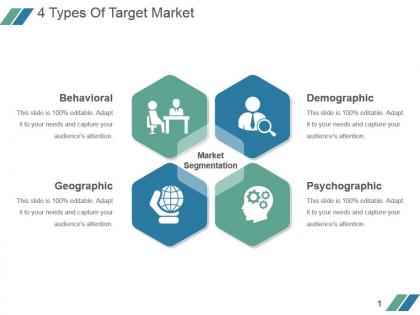
So basically you've got four main things to think about: demographics (age, income, that stuff), psychographics (what they care about, their lifestyle), where they live, and how they actually shop or stay loyal to brands. Don't fall into the trap of saying "everyone" - that's honestly just lazy and won't help you at all. Get weirdly specific about who your ideal customer actually is. What's their morning routine? What stresses them out? I'd pick maybe 2-3 of these characteristics and really dig deep. Build out some detailed personas from there and you'll be way ahead of most people.
Think of demographics as your cheat sheet for finding the right customers. Age, income, education, location, family situation - they all create pretty predictable buying patterns. You won't catch me trying to sell Ferraris to broke college kids, you know? Look at your current customers first and map out their basic info. I bet you'll spot some obvious clusters that show you exactly who's buying, how much they're spending, and where to find more like them. It's honestly one of the easiest ways to focus your marketing efforts instead of just throwing stuff at the wall.
Okay so psychographic segmentation is basically figuring out the *why* behind what people buy, not just their age or income. Like, two 35-year-old women could shop totally differently based on their values and what they actually care about. Demographics tell you someone's a millennial mom. Psychographics tell you she's stressed about work-life balance and buys organic everything because she feels guilty about screen time - way more useful, right? You can actually write ads that hit different when you know what keeps people up at night. Plus you'll know where they hang out online.
Dude, geographic segmentation is honestly a game-changer. Look at your customer data first - you'll probably spot some patterns you didn't notice before. Like, if you're selling winter coats, timing matters huge between Minnesota and Florida, right? Local preferences are totally different too. I'd test localized campaigns in your best areas first rather than going everywhere at once - way smarter with your budget. Climate, language differences, local economy... all that stuff shapes how people buy. Oh, and media spend becomes so much more efficient when you're not just throwing money at random markets. Start small, see what works.
So basically you group customers by what they actually DO - like how often they buy, if they're loyal to brands, or whether they hunt for deals vs impulse shop. Way better than just age/gender stuff honestly, because a 25-year-old might shop totally different than you'd think. Track these patterns over time and you'll start seeing when people are ready to buy again. Purchase history is pure gold for this - I'd start there with your current customers first. It's wild how predictable people get once you spot their habits.
Start with your customer data - dig into complaints and ignored feature requests. Social media is clutch for this too, honestly. See what people complain about with your competitors. Survey your current customers about what they're missing, then check if it's actually a big enough problem worth solving. You want something common enough to make money from but specific enough that you can dominate that niche. Also look at satisfaction scores by different customer groups. Sometimes certain demographics get overlooked and that's where you'll find your gap. The sweet spot is problems people have but nobody's really addressing well yet.
Dude, not knowing your target market is like burning money for fun. Your ads end up everywhere except where your actual customers are hanging out. Generic messaging that tries to please everyone? Nobody cares. I've seen companies waste months advertising productivity apps to retirees – makes zero sense. Product development becomes a hot mess too since you don't even know what problems you're solving. Pick one specific group of people first. Get really good at helping them, then worry about expanding later.
Honestly, your social media analytics are like having a crystal ball for market research. You can see exactly who's liking your stuff, their ages, where they live, when they're scrolling. The cool part? Real-time feedback on what works and what completely bombs (which is actually super helpful). Check out who's sharing vs just liking, what hashtags they use, their comments. I'd probably start looking at your insights every week and jotting down patterns. You'll discover audience groups you didn't even know were there - it's wild how much data is just sitting there waiting.
Oh man, cultural differences are huge for marketing! Different cultures care about completely different things - some want individual benefits, others focus on family impact. Colors, communication styles, shopping habits... it all varies like crazy. I bombed so hard once with a US campaign that totally flopped in Asia. Honestly, you can't just copy-paste strategies across regions. Do your research for each market first. Test locally before going big - saves you from looking like an idiot later. Even basic stuff you think is universal? It's probably not.
So when the economy shifts, your customers basically become different people. Premium buyers start pinching pennies. Budget shoppers might vanish if they're out of work - happened a ton during COVID actually. Recessions push everyone toward generic brands and just buying what they need. Luxury stuff? Forget about it. But here's the thing - booms work in reverse. People get loose with their wallets and try new things. You can't assume your customers will act the same way they did last year. Watch how they're actually behaving now, not how they used to behave.
Honestly, start with surveys and customer interviews - I know it's boring but most people skip this step and regret it later. Then test small with an MVP or pilot program to see if people actually buy, not just say they will. Social media ads work great for measuring real engagement when you target tight. Oh, and definitely check out your competitors to see what's working for similar audiences. Landing page tests are solid too for testing different pitches. Customer interviews are probably your best bet first though - they're cheap and you get those gut-check insights before dropping money on paid stuff.
Honestly, you gotta stay flexible and watch how different age groups actually interact with your stuff. Like, Gen Z lives on TikTok while Boomers are still all about email - the gap is pretty crazy when you think about it. Don't go switching everything overnight though. Test new stuff but keep doing what already works for your current people. I'd start by looking at your customer data to see where the age splits actually happen, then track how each group engages. Slowly move your budget toward whatever's clicking with the younger crowd.
Honestly, buyer personas are a game changer - they stop you from just throwing marketing stuff at the wall and hoping it sticks. Interview like 5-10 current customers about their actual problems and how they make decisions. Then you can write content that hits their real pain points instead of that generic "appeals to everyone" nonsense (which literally never works). Your campaigns get way more focused too. I used to think it was just busywork, but knowing exactly who you're talking to makes everything click. The messaging becomes so much sharper when you're solving specific problems people actually have.
So trends totally shake up who you're actually selling to. Your current customers start wanting different stuff - remember when everyone suddenly needed Zoom during COVID? Wasn't just tech nerds anymore, it was literally everyone's grandma learning video calls. New people jump into your market while others bounce. You can't just assume your audience stays the same forever, which honestly a lot of businesses do and then wonder why sales tank. Check your customer data every few months, maybe quarterly. Industry reports help too. Better to spot these shifts before your competition does and leaves you scrambling.
Honestly, there's so much good stuff out there. Google Analytics is free and solid for demographics - same with Facebook Audience Insights. SEMrush costs money but you'll get way better competitor intel. I'd probably start with those free ones first, see what you're missing, then upgrade. SurveyMonkey's great if you want to just ask people directly (which works better than you'd think). For social media monitoring, Hootsuite's decent. Oh, and Typeform makes pretty surveys if that matters to you. Don't blow your budget right away though - figure out what gaps you actually have before paying for the fancy tools.
-
Informative design.
-
Wonderful templates design to use in business meetings.