


Market trends ppt sample download
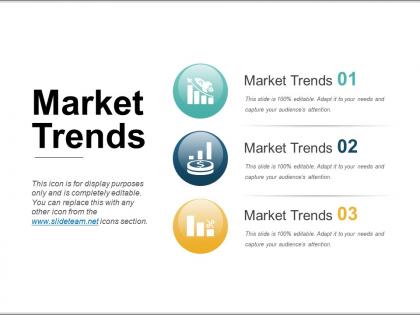




Try Before you Buy Download Free Sample Product
 Impress Your
 Audience
 100%
100% Editable
 Save Hours
 of Time


Ring a bell with our Market Trends Ppt Sample Download. Help the audience make a connection.
People who downloaded this PowerPoint presentation also viewed the following :
Market trends ppt sample download with all 5 slides:
Break through with our Market Trends Ppt Sample Download. Bring down the mental barriers of your audience.

FAQs for Market trends
AI is everywhere right now - customer service, manufacturing, you name it. Cloud and edge computing are massive too since companies need faster data processing. Honestly, IoT is getting ridiculous - my coffee maker has WiFi now, but all those connected devices create tons of data opportunities. Blockchain's moving beyond crypto, 5G is opening up new mobile stuff, and automation keeps replacing manual work. Here's the thing though - these aren't "future trends" anymore. They're happening right now, so you've got to work them into your strategy talks this quarter.
People are being way pickier with their money right now - they still want good stuff but they're doing their homework first. There's this whole "conscious frugality" thing happening where customers care about sustainability and values but won't overpay for it. Honestly, it's probably smart given how crazy everything's been economically. Your buyers are taking longer to decide and they're drawn to brands that actually stand for something. The magic combo seems to be affordable + ethical + quality all rolled together. I'd take a hard look at whether you're speaking to both their wallet AND their conscience, because that's what's working these days.
Dude, sustainability isn't just trendy anymore - it's literally make or break. Gen Z will drop your brand in a heartbeat if you're not walking the walk. Companies are overhauling their entire supply chains, going renewable, even turning waste into new products. Fast fashion trying to go "conscious" still cracks me up, but hey, at least they're trying I guess? The brands winning aren't just slapping green labels on everything though. They're actually changing how they operate because they have to. My advice? Figure out where you actually stand first, then pick one real thing to fix this quarter. Don't try to solve everything at once.
Honestly, geopolitical stuff throws everyone into panic mode. Markets get crazy volatile and people just stop spending on big things. Wars or trade fights mess up supply chains, so prices shoot up. During crises, everyone hoards basics - that whole toilet paper thing was wild, right? But luxury purchases? Forget it. The tricky part is how fast things change. News breaks and suddenly everyone's behavior shifts overnight. Could last weeks or months too. I'd definitely keep an eye on major headlines and maybe have backup plans ready. People get way more risk-averse and gravitate toward whatever feels safer.
Honestly, data analytics is a total game changer for catching market trends early. You're getting real-time insights from customer behavior and sales patterns instead of just winging it with gut feelings. Predictive models can spot emerging trends months before they go mainstream - I've watched teams completely pivot because they caught signals their competitors missed. Social media sentiment tracking is huge too, though setting that up can be a pain. The trick is finding the right metrics for your industry, then actually trusting what the data shows you instead of overthinking it.
Dude, entire industries are getting flipped upside down right now. Banks are losing customers to fintech apps that actually work well on your phone. Retail? Online isn't just extra anymore - it's everything. Traditional companies are scrambling to go digital-first while tech startups waltz in and steal their customers. Honestly, it's wild how fast this is happening. The winners aren't treating digital like some side hobby - they've made it their whole game plan. You should probably figure out what parts of your industry are about to get disrupted before someone beats you to it.
Dude, everything changed after COVID and it's not going back. Customers want that seamless online-to-store thing now - buy online, pickup in store is still massive. Mobile shopping totally dominates, plus TikTok and Instagram selling is everywhere. Everyone's doing subscriptions too, which honestly makes sense. Fast shipping and easy returns? Non-negotiable now. The stores crushing it are the ones who actually invested in their tech early and can adapt quick. Oh, and if you haven't nailed your mobile experience yet, start there first. That's like priority number one.
Look, startup ecosystems are totally flipping industries on their heads right now. Banks had to scramble when fintech companies started eating their lunch. Healthcare's getting disrupted by tech startups too. Even boring manufacturing is dealing with IoT and automation companies shaking things up - which honestly surprises me sometimes. The speed is what's nuts though. Twenty years ago this stuff took forever. Now startups drop new business models and big companies either buy them out or straight up copy them just to survive. I'd watch whatever startup hubs are popping up in your space. They're usually the canary in the coal mine for where disruption's headed.
Volume spikes are huge - watch for those first. Price breaking key support or resistance levels matters too. Moving averages crossing? Classic signal, though honestly everyone uses those so they're kinda obvious now. Sentiment indicators are underrated - when everyone's freaking out or way too optimistic, that's your cue things might flip. Don't forget economic data and earnings trends since fundamentals still drive everything. But here's the thing - never rely on just one. Wait for multiple signals to line up, then you can actually trust what you're seeing.
So demographics totally flip markets on their head - you've gotta watch age, income, where people live, lifestyle stuff. Millennials are in their big spending phase right now. Meanwhile boomers are downsizing and want completely different things, which is kinda obvious when you think about it. Your targeting needs to shift with this stuff. Younger families moving in? Talk convenience and value. Area getting older? Quality and service matter more. I'd say check your customer data and census info regularly, then tweak campaigns every few months instead of doing those huge annual overhauls.
Dude, social media is literally running the show now when it comes to trends. Like, TikTok can make Stanley cups blow up overnight - it's insane how fast things happen compared to old-school marketing. Instagram influencers sell products out in hours just by posting once. The crazy part? Brands can actually see what's working in real-time and change course super quickly. Those feedback loops are everything now. Honestly, if you're not watching social conversations in your space, you're gonna miss where things are headed. It's like having a crystal ball but actually ignoring it.
So the gig economy is totally changing how businesses work - no more long-term contracts, everything's on-demand now. Apps like Uber and TaskRabbit have basically trained us to expect instant everything (guilty as charged). Traditional companies are scrambling to keep up with this "I want it now" culture. Plus everyone's got a side hustle these days, so spending habits are all over the place. When you're mapping out your customer strategy, definitely think about how people expect that instant, personalized experience. It's wild how much flexibility has become the norm.
So companies are basically pulling back from those crazy long supply chains after getting burned during COVID. They're building more regional hubs instead - way less risky. Automation's the other huge thing. Smart warehouses that can predict what you'll need before you even know it? Yeah, that's happening now. Carbon tracking is becoming mandatory too, which honestly makes sense but adds another layer of complexity. My advice? Start looking at your supplier list and figure out who might get squeezed by all this. Diversifying geographically sooner rather than later could save you major headaches down the road.
Dude, inflation hits people's wallets hard - suddenly groceries and gas cost way more. Then interest rates go up too, so borrowing gets expensive. People skip big purchases like cars and focus on paying off credit cards instead. Honestly, it's brutal when both happen at once. Your customers get super careful with money. The speed matters though - gradual changes? People adapt. Sudden spikes? Spending drops fast. Oh, and don't just look at total sales numbers. Track how often customers actually buy stuff, that'll tell you more.
Dude, AI's changing everything right now. Manufacturing and logistics are getting automated like crazy, plus companies are getting scary good at predicting what we'll buy before we even know it. Healthcare's throwing money at diagnostic tools and drug research platforms. The job thing is honestly weird - some positions are vanishing but there's also a ton of new AI jobs popping up. Customer service is basically all chatbots now (which is annoying but whatever). Oh, and fintech's using it for catching fraud and trading algorithms. Whatever industry you're in, this stuff's probably headed your way faster than you think.
-
Best way of representation of the topic.
-
Excellent products for quick understanding.